

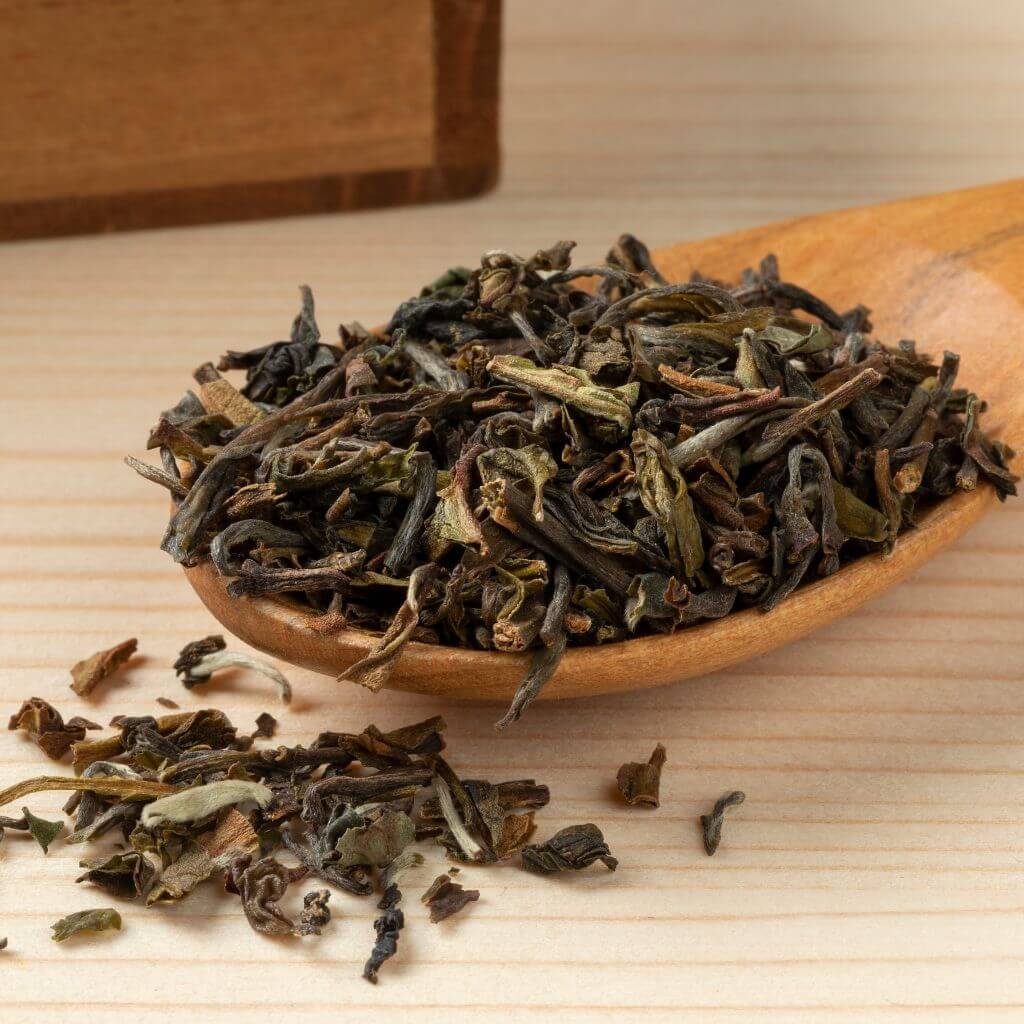
Darjeeling tea, often referred to as the champagne of teas, is one of the most sought-after black teas in the world. The tea originates from the Darjeeling district in West Bengal in northern India and is known for its fine, light flavour and delicate, floral aroma.

Advertisement: The page displays ads and contains advertising links (affiliate links). See our advertisers here.
Unlike other black teas, which are often bold and full-bodied, Darjeeling offers a more subtle and refined tea experience, making it a favourite among tea lovers around the world.
Estimated reading time: 4 minutes
History and Origin
Tea cultivation in Darjeeling began in the mid-19th century, when the British established the first plantations on the mountain slopes around the town of Darjeeling. Unlike the Assam tea grown further east, growers here primarily chose the small-leaved Chinese tea plant, Camellia sinensis var. sinensis, which thrives in the cool highland climate. Today, the name Darjeeling is protected, so only tea from the district’s registered plantations may be sold under the name.
What makes it so special are the unique growing conditions in the high-altitude areas of the Himalayan mountains, where the tea is grown. The tea plantations lie at altitudes between 600 and 2000 metres above sea level, which gives the tea its characteristic flavour profile. The cool climate, rich soil, and frequent fog that envelops the mountains all contribute to creating the ideal conditions for growing this unique tea.
First Flush and Second Flush
Another important factor that affects the flavour of Darjeeling tea is the different harvest periods. The first harvest, known as first flush, takes place in early spring and produces tea leaves that yield a light, delicate, and floral tea. The second harvest, or second flush, happens later in spring and produces a slightly fuller tea with a characteristic muscatel flavour. This particular harvest is highly prized by tea connoisseurs.
Flavour and Aroma
Darjeeling tea is known for its light colour and its delicate, almost wine-like flavour. The delicate, floral notes in the tea make it an ideal drink for those who prefer a more subtle tea experience. The flavour can vary depending on the harvest, but it is generally characterised by a complex yet light flavour profile that is often compared to wine.
Culinary Uses
Without Milk
This tea is traditionally drunk without milk, so the fine flavour nuances can be fully enjoyed. For those who want to bring out the tea’s natural sweetness, a small amount of sugar or honey can be added, but it’s important to avoid overpowering the subtle flavour notes that make this tea so unique.
For Afternoon Tea and Baked Goods
The light, floral character makes Darjeeling an elegant choice for the afternoon tea table. It pairs particularly well with fruit-based baked goods, where the tea’s muscatel notes play together with the sweetness of the fruit without overpowering it.
Health Benefits
Like other types of black tea, Darjeeling is rich in beneficial compounds:
- Antioxidants, especially flavonoids, which can help protect the body against harmful free radicals
- A moderate caffeine content, providing a mild energy boost without the negative effects often associated with coffee
- Few calories, making it a great alternative to sugary drinks
The caffeine in Darjeeling tea is released slowly, providing a longer-lasting feeling of alertness and focus, and the high levels of flavonoids can help support cardiovascular health.
How to Brew Darjeeling Tea
Total time: 5-8 minutes
- Boil and cool the water
Heat fresh water to around 85-90 degrees – slightly cooler than boiling water, which helps preserve the tea’s delicate flavour nuances.
- Measure the tea leaves
Use about 2 grams of tea leaves per 200 ml of water.
- Let the tea steep
Let the tea steep for 3-5 minutes, depending on how strong you want it. First flush tends to work best with a shorter steeping time.
- Serve
Serve the tea without additions, so the full flavour nuances can be enjoyed. If you prefer a bit of sweetness, a little sugar or honey can be added – but avoid milk, as it overpowers the delicate flavour.
Storage
Darjeeling is more delicate than stronger black teas, and its fine aromas fade quickly if stored incorrectly:
- Store the tea in an airtight container, in a dark, dry place
- Keep it away from strong smells like coffee and spices – tea leaves easily absorb other aromas
- Properly stored, Darjeeling stays aromatic for up to a year – first flush should be enjoyed as fresh as possible
Conclusion
Darjeeling tea is a true gem among black teas, often called the champagne of teas because of its fine, delicate flavour and gentle aroma. Grown in the unique highlands of the Himalayas, this tea offers an unforgettable experience that is both subtle and complex. Whether you’re an experienced tea enthusiast or new to the world of black tea, Darjeeling will undoubtedly give you a deep appreciation for what this noble drink has to offer. Savour your Darjeeling with care, and let every cup take you on a journey to the misty mountains of West Bengal, where this exceptional tea was born.
Try This Recipe
Darjeeling’s floral muscatel notes and the apple’s tangy sweetness are made for each other at the afternoon tea table. Try our Apple Scones in the Air Fryer.
Equipment and Products
If you love light, lively teas like Darjeeling, try our Just T Dynamic Day Brev te – a fresh blend that gets your day going.
Frequently Asked Questions
Darjeeling tea is a light, floral black tea from the Darjeeling district in West Bengal, India, grown at altitudes of 600-2000 metres in the Himalayas.
Because of its fine, delicate flavour and exclusive status – and because, like champagne, the name is protected, so only tea from the district may bear it.
First flush is harvested in early spring and is light and floral, while second flush is harvested later and is fuller-bodied with muscatel notes.
No, it is traditionally drunk without milk, as the milk overpowers the delicate flavour nuances.
3-5 minutes at 85-90 degrees. First flush tends to work best with a shorter steeping time.
Facts about Darjeeling Tea
| Field | Value |
|---|---|
| Type | Black tea |
| Plant | Camellia sinensis var. sinensis |
| Origin | Darjeeling, West Bengal, India |
| Flavour | Light, floral, muscatel notes |
| Caffeine | Moderate |
| Brewing temperature | 85-90 degrees |
| Steeping time | 3-5 minutes |
| Storage | Airtight, dark, and dry |
