

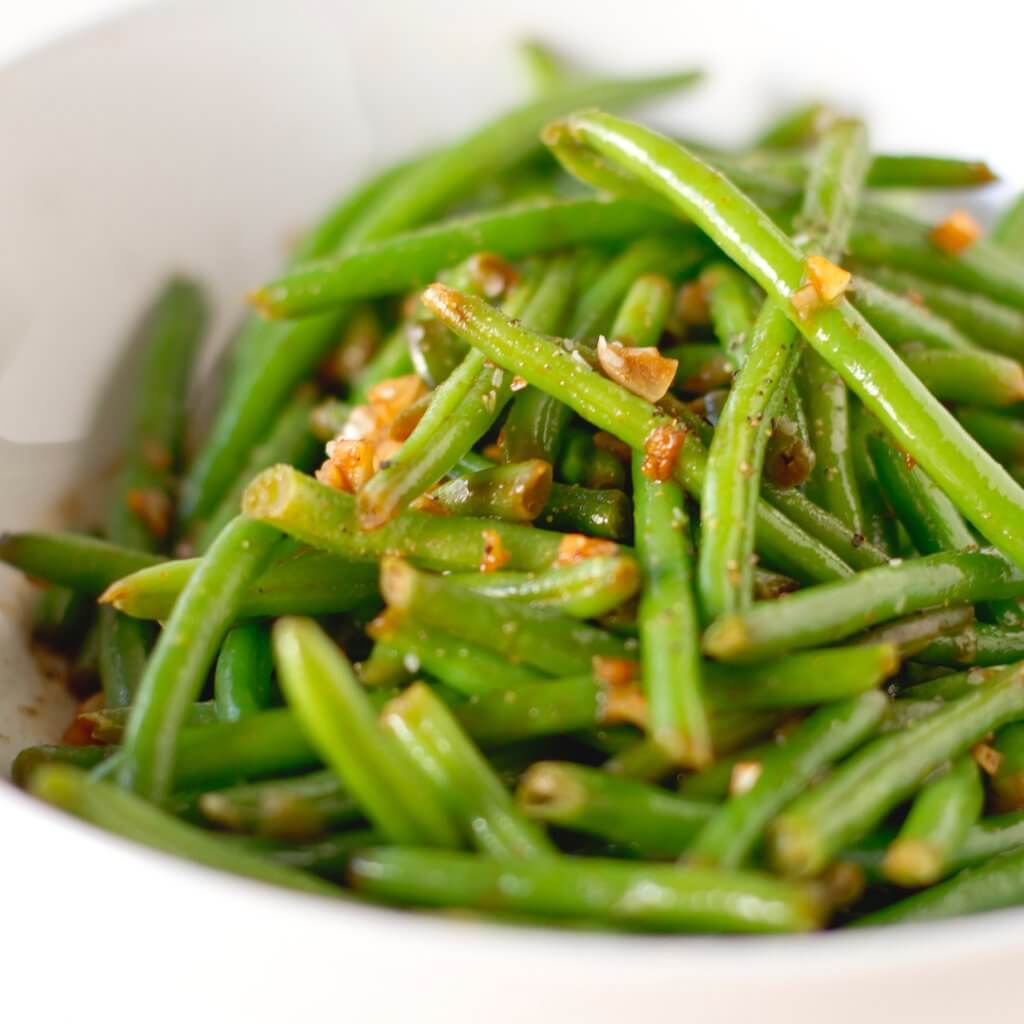
Haricots verts are the classic, slender green beans known from both French and Danish cooking. They’re harvested early, while the pods are still thin and crisp, and the whole pod is eaten. The flavour is fresh and green with a slight nutty sweetness, and they work well as a quick side dish, in salads, stir-fries and warm dinner dishes.

Advertisement: The page displays ads and contains advertising links (affiliate links). See our advertisers here.
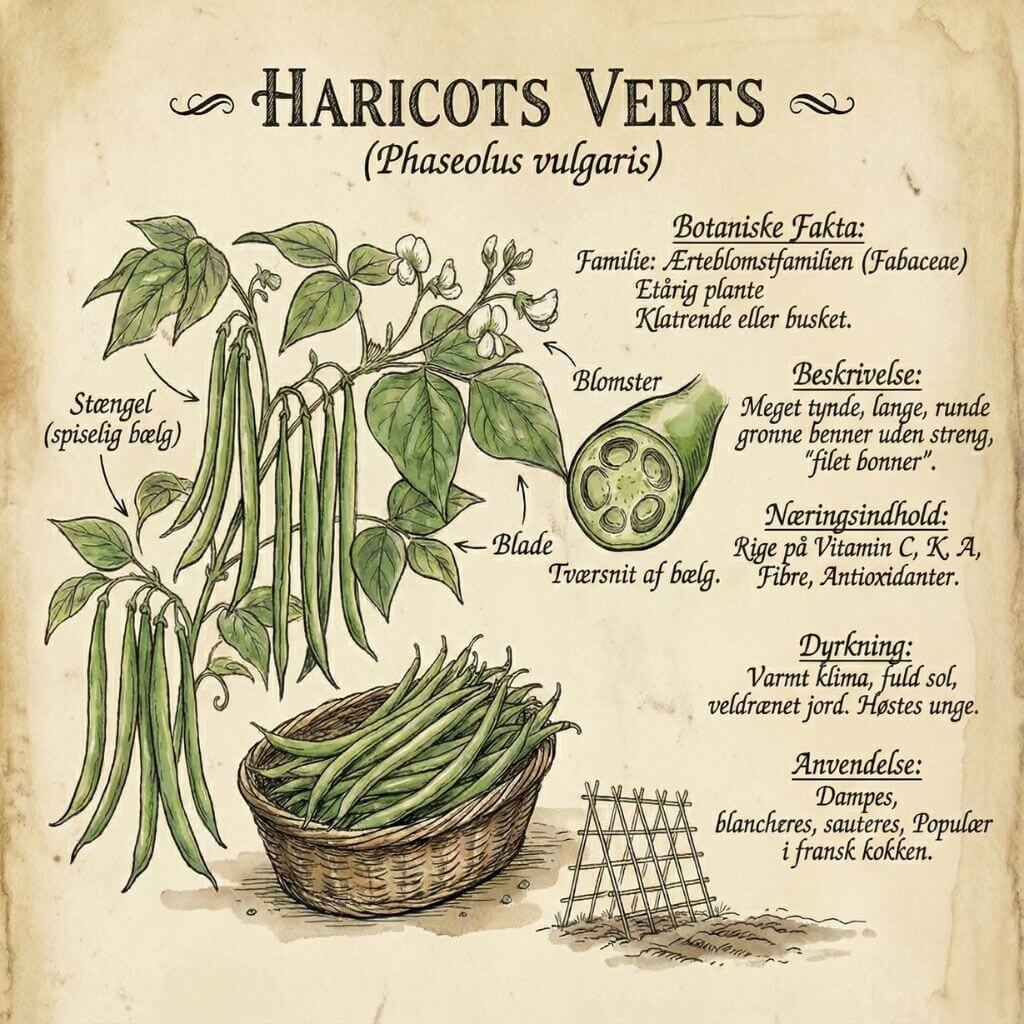
Haricots verts are slender, green beans from the species Phaseolus vulgaris – the same species as many other garden beans. Rather than being left to mature into dried beans, they’re harvested early, while the pods are still tender and the seeds inside are small. That’s why they’re also sometimes called “fillet beans” or “fine beans”, and they’re regarded as a vegetable rather than a classic dried legume crop.
Estimated reading time: 8 minutes
History and origin
Haricots verts have their roots in French cuisine, where they’ve long been an important part of the classic accompaniment – often served with butter, lemon juice or toasted almonds. The beans originally came from the Americas but were introduced to Europe in the 1500s and further refined by French growers, who selected for extra-thin, tender pods without coarse strings. Today, haricots verts are grown in many countries, and both fresh and frozen beans are pantry staples in Danish supermarkets.
Flavour and aroma
The flavour of haricots verts is fresh, mild and slightly sweet with a green, herbaceous note. When cooked correctly, they have a pleasant crispness to the bite without being tough. Overcooked beans quickly turn dully soft and lose both colour and flavour, while properly cooked beans keep an intense green colour and a crisp-tender texture.
Culinary uses
Haricots verts are very versatile in the kitchen and can either take centre stage in a green dish or be used as a simple side. They’re particularly well suited to dishes where their crispness and colour can really shine.
In Danish cuisine
- As a simple green side with butter, lemon, garlic or toasted almonds.
- In warm salads, for example with small potatoes, tomatoes and a mustard vinaigrette.
- In pasta dishes, where the beans are cooked briefly and tossed through the sauce just before serving.
- In soups and stews, where they’re added at the end to preserve colour and texture.
Around the world
In classic French cuisine, haricots verts are almost a standard accompaniment to meat and fish, often served “à l’anglaise” – lightly boiled and tossed in butter. They’re also used in salade niçoise together with eggs, tuna and olives, or tossed in a simple vinaigrette. In modern cooking, they turn up in everything from Asian-inspired stir-fries with ginger, garlic and soy to vegetarian bowls, and as a crisp green counterpoint to rich dishes like confit duck, roast lamb or grilled cheese.
Cooking methods
Because haricots verts are eaten as fresh beans in whole pods, they need no soaking. Cooking time and method, however, have a big effect on flavour, colour and texture. Below is a simple basic method that you can vary.
Total time: 10 minutes
- Rinse the beans
Rinse the beans in cold water to remove any soil and dust.
- Trim the ends
Trim the ends off the beans with a small knife or your fingers. Modern varieties rarely have coarse strings, but if there is one, it can be pulled off along with the end. Discard any limp or discoloured beans.
- Blanch, steam or air fry
Blanch or steam the beans for 3–5 minutes in lightly salted, boiling water, until tender but still with some bite. Alternatively, toss them in a little oil and cook in the air fryer at 180–200 °C for 8–12 minutes, until they get a slightly crisp edge.
- Chill and season
Immediately tip the beans into a sieve and chill them in ice-cold water if you like, to stop the cooking and preserve the bright green colour. Drain well, then season with butter, lemon, garlic or herbs.
Nutrition and health aspects
Haricots verts are considered a nutrient-rich but low-energy vegetable. They provide dietary fibre, vitamins and minerals without adding many calories – typically around 25–31 kcal, about 1.8 g protein and 2–3 g dietary fibre per 100 g.
- Dietary fibre: Supports satiety and stable digestion.
- Vitamins: A good source of vitamin C and vitamin K, among others, as well as folate.
- Minerals: Contains potassium as well as small amounts of iron and magnesium.
- Energy content: Low in calories, which fits well into a vegetable-rich diet.
When cooking, it’s best to avoid very long boiling in large amounts of water, as this can reduce the content of water-soluble vitamins. Short cooking times and, where possible, reusing the cooking water in soups or sauces is a way to preserve more nutrients.
Food safety and raw beans
Raw green beans contain natural lectins – in particular phytohaemagglutinin – which in larger amounts can cause stomach upset. Haricots verts should therefore always be cooked and not eaten completely raw in large portions. A brief blanching, steaming or quick frying is enough to make them safe and easier to digest, while still keeping their crispness. Frozen haricots verts are a fully valid shortcut: they’re typically blanched before freezing and can be cooked straight from frozen.
Growing and harvesting in Denmark
Haricots verts thrive well in Danish gardens, as long as they get warmth, sun and shelter. They’re grown as an annual summer bean and are sown only once the risk of frost has passed.
Growing conditions
- Light: Haricots verts need full sun to give a good yield.
- Temperature: They do best in warm summer soil and suffer in cold and night frosts.
- Soil: Light to medium-heavy, well-drained soil with a moderate content of organic matter. Waterlogged soil increases the risk of root problems.
- pH level: A slightly acidic to neutral soil (around pH 6–7) is ideal.
- Watering: Even moisture is important, especially during flowering and pod formation. Too much water, however, brings a risk of rot and fungus.
How to grow haricots verts – step by step
- Prepare the soil: Choose a sunny, sheltered spot with light, humus-rich, well-drained soil. Add compost in spring to improve the soil structure.
- Wait for the warmth: Beans love warmth and can’t tolerate frost. Sow outdoors only once the soil temperature is above around 12 °C – typically late May or early June.
- Sowing: Sow the seeds 2–3 cm deep in rows 40–50 cm apart, with 8–10 cm between the seeds. Water lightly after sowing.
- Care: Keep the soil evenly moist, especially during germination and flowering. Remove weeds so the beans don’t have to compete for water and nutrients.
- Support (for climbing varieties): Bush varieties rarely need support, but climbing varieties need stakes, netting or a fence to grow up.
- Harvest: Harvest the beans when they’re thin, crisp and bright green – usually 8–10 weeks after sowing. Pick often so the plant keeps setting new beans.
- Crop rotation: Rotate the growing spot from year to year to reduce the risk of soil-borne diseases and make the best use of nitrogen fixation.
Storage
Haricots verts taste best when picked young and used quickly, but they can be stored in several ways.
- In the fridge: Store fresh beans in a bag or container in the fridge. They usually keep for 3–5 days, but are best in the first few days.
- Freezing: Blanch trimmed beans for 2–3 minutes, chill them immediately in ice water, drain and freeze in portions. That way, they’re ready for quick cooking all year round.
- Cooked beans: Can be kept in the fridge for 1–2 days and used in salads or as a quick side.
Mix-ups and quality
In shops, haricots verts can be confused with other types of green beans, snow peas or sugar snap peas. Haricots verts are typically recognised by being long, very slender and evenly green, without visibly plump seeds inside the pod.
- Good-quality beans: Should be firm, crisp and snap cleanly when bent. They shouldn’t be limp, spotted or yellowish.
- Avoid: Beans with coarse strings, dark spots, mould or visibly plump seeds, which are often a sign of over-ripeness.
- Good pairings: Butter, olive oil, lemon and garlic; herbs such as parsley, dill, tarragon and thyme; almonds and hazelnuts; fish, seafood, light meats as well as cheeses like feta, goat’s cheese and parmesan.
Sustainability and biodiversity
Like other beans, haricots verts fix nitrogen. They live in symbiosis with bacteria on their roots, which can convert nitrogen from the air into a form the plants can use. In this way, beans can help improve soil fertility and reduce the need for artificial fertiliser. If some plants are left to flower, their white or lightly coloured flowers can attract pollinating insects such as bees and hoverflies, so the beans both contribute to their own harvest and to richer insect biodiversity.
Try this recipe
Haricots verts’ fresh, green bite is the perfect counterpoint to rich meat. As a crisp side, they balance out a creamy, fatty main course – try them with our pork fillet stuffed with cream cheese and bacon in the air fryer.
Equipment and products
A touch of lemon and salt is the classic finishing touch on freshly cooked haricots verts. With a lemon salt, you get both in one sprinkle, which lifts the beans’ fresh flavour. See Lemon Salt Vestjyske Delikatesser in our shop.
Frequently asked questions
Yes, it’s a good idea to give haricots verts a brief heat treatment – such as blanching or quick frying – before eating them. Raw green beans contain lectins (phytohaemagglutinin), which can cause stomach upset, and heat treatment makes them both safe and easier to digest.
Yes, frozen haricots verts are a fully valid alternative to fresh ones. They’re typically blanched before freezing and only need brief cooking straight from frozen – for example in boiling water, in a pan or in the oven and air fryer.
If the beans boil for too long or sit in hot water for a while, they lose both colour and bite. Short cooking and quick cooling in ice-cold water help preserve the bright green colour and the crisp texture.
No. Haricots verts are eaten as fresh beans in whole pods and need no soaking – unlike dried beans. You just need to rinse them and trim the ends before cooking.
Fresh beans usually keep for 3–5 days in the fridge, but taste best in the first few days. If they need to keep longer, they can be blanched and frozen in portions.
Facts about haricots verts
| Field | Value |
|---|---|
| English name | Haricots verts, green beans |
| Latin name | Phaseolus vulgaris |
| Family | Legume family (Fabaceae) |
| Plant type | Annual summer bean (bush or low-climbing type) |
| Height | Typically 40–60 cm for bush types; taller for climbing varieties |
| Hardiness | Not frost-hardy; grown only during the warm part of the season |
| Light | Full sun |
| Soil | Light to medium-heavy, well-drained, humus-rich soil, pH approx. 6–7 |
| Sowing/planting | Sown outdoors once the soil is warm – typically late May to June |
| Flowering/harvest | Flowers in high summer; beans harvested approx. July–September |
| Calories per 100g | Approx. 25–31 kcal |
| Protein per 100g | Approx. 1.8 g |
| Fibre per 100g | Approx. 2–3 g |
| Flavour | Fresh, green, mild and slightly sweet with a crisp texture |
| Culinary use | Side dish, salads, stir-fries, pasta dishes, oven and air fryer dishes |
| Soaking time | None – eaten as fresh beans in whole pods |
| Cooking time | 3–5 minutes when boiling/steaming; 8–12 minutes in the oven/air fryer |
| Storage | Short time in the fridge; freezes and blanches well |
