

When the days turn short and cold, Jerusalem artichokes are one of the vegetables I look forward to most. The knobbly tubers don’t look like much, but beneath the thin skin hides a sweet, nutty flavour that makes them one of winter’s best ingredients. And right now, they are in season.
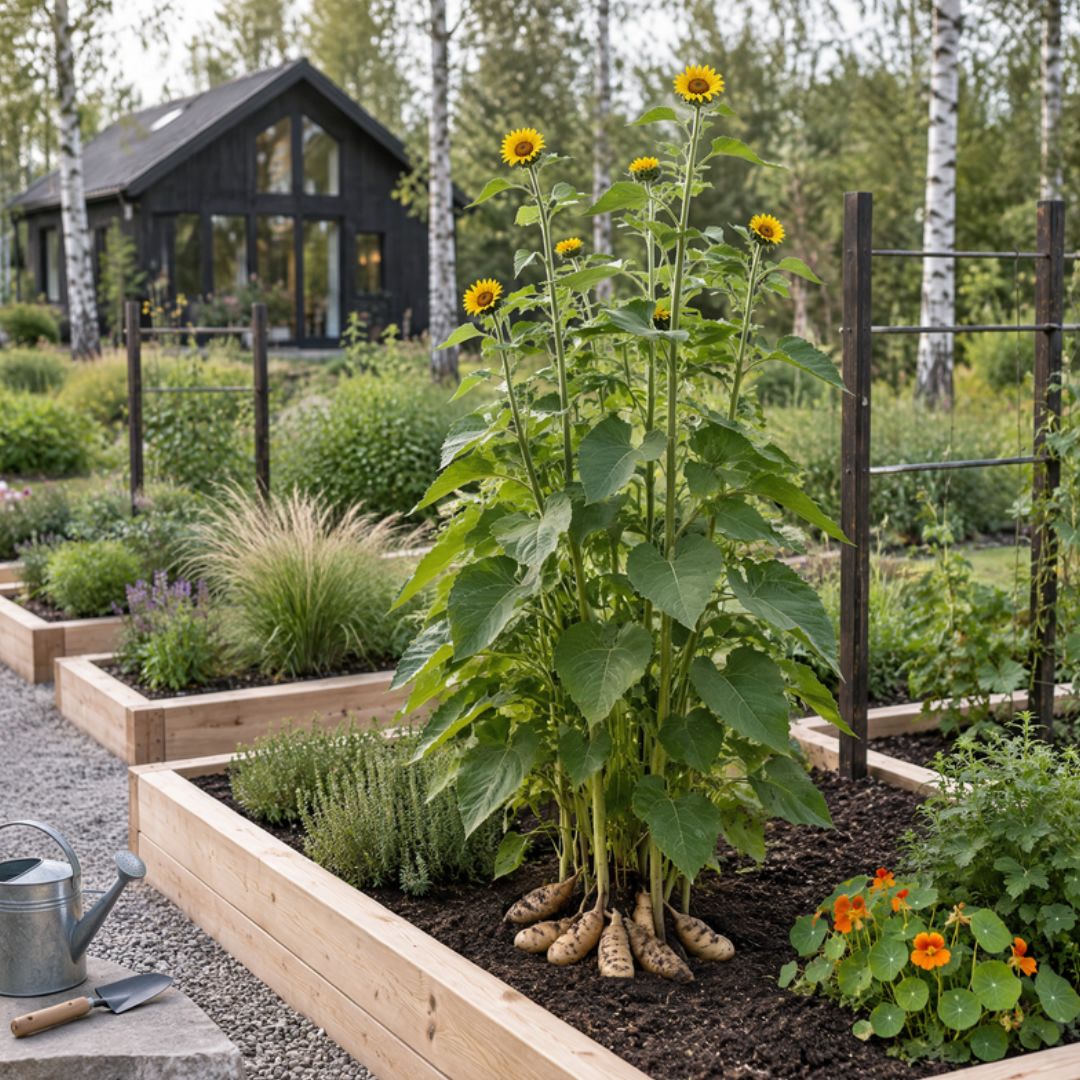
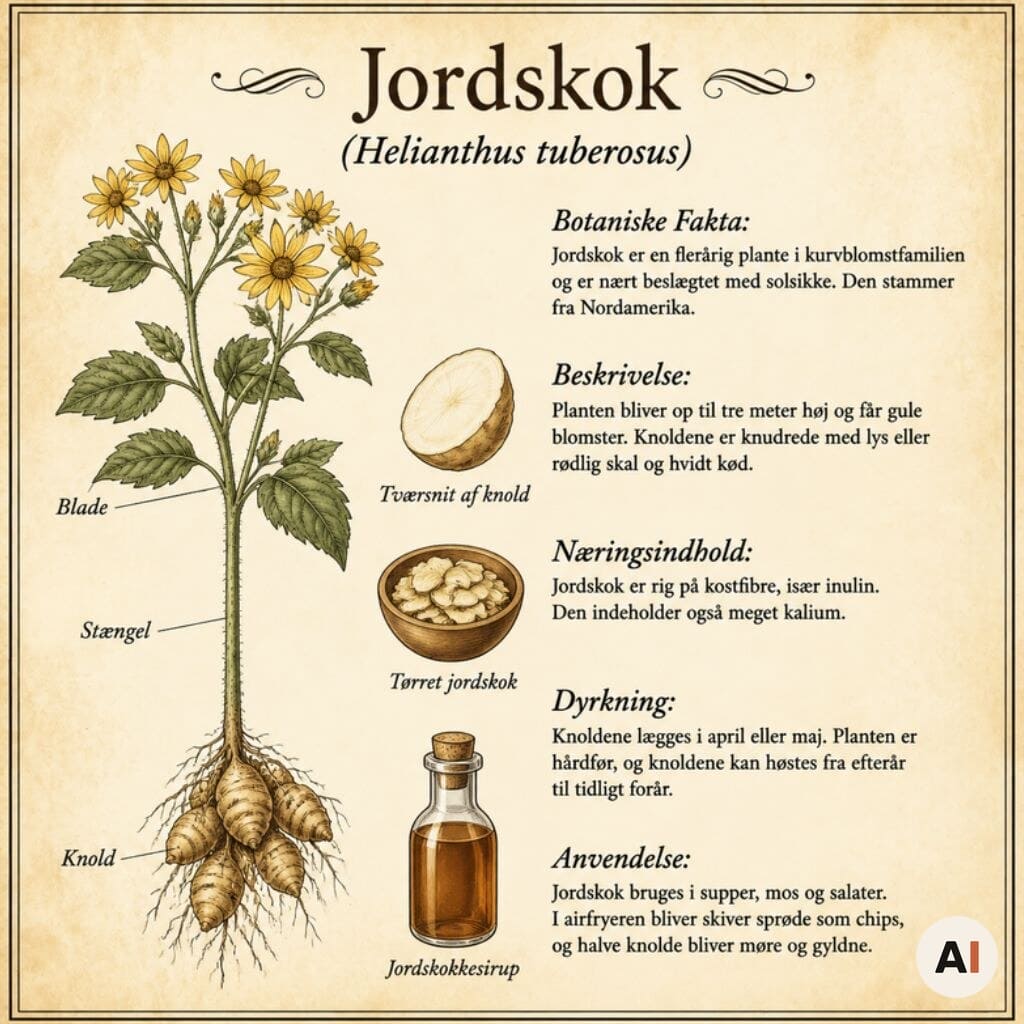
Jerusalem artichoke, Helianthus tuberosus, is a perennial plant in the daisy family and a close relative of the sunflower. Despite the name, it is not an artichoke. What we eat are the tubers, which grow underground and can be harvested from autumn, through the winter and all the way into early spring.
In this entry you get the history, the flavour and the nutritional content – plus my best tips for growing, storing and making crispy Jerusalem artichokes in the air fryer.
Estimated reading time: 6 minutes
History and origins
From North America to Europe
The Jerusalem artichoke comes from eastern North America, where it is native to a large area stretching from central and eastern Canada down to the south-eastern United States. Here the tubers were eaten and cultivated by the Indigenous peoples.
Europeans discovered the Jerusalem artichoke in Massachusetts in the early 1600s, and from there the tuber found its way across the Atlantic. Over the following centuries it appeared only sporadically in European cooking, and it did not become widely used until nouvelle cuisine broke through in the 1980s.
A misleading name
The name makes you think of the artichoke, and the flavour does have a faint hint of artichoke heart. But the Jerusalem artichoke is a tuber from the sunflower genus, while the artichoke is a flower bud from a different plant in the same large family. The artichoke, incidentally, has its own entry here in the Food Encyclopedia.
In French it is called topinambour – a name that, in slightly altered form, is also used in Germany and Italy. It is borrowed from the Tupinambá, a people in Brazil, even though the tuber comes from North America.
Flavour and aroma
Sweet and nutty
Raw Jerusalem artichoke is crisp and juicy with a mild, sweet flavour reminiscent of nuts. Cook it and it turns soft and creamy inside, while the sweetness comes through more clearly. At the same time, the dry heat of the air fryer gives a golden, lightly caramelised surface that pairs beautifully with the nutty centre.
Good flavour pairings
Jerusalem artichoke loves butter – ideally browned – as well as garlic, thyme and rosemary. It is also lovely with lemon, hazelnuts, Parmesan and crispy bacon, and in soup a pinch of nutmeg is never wrong. Because the flavour is mild, the tuber can carry both simple herbs and more pronounced spices.
Culinary uses
In the kitchen
Jerusalem artichoke has earned a firm place in the winter kitchen. Soup is the great classic, but the tuber is just as good oven-roasted, pan-fried or completely raw:
- Jerusalem artichoke soup: blended into a velvety soup, ideally with a splash of cream.
- Roasted or pan-fried Jerusalem artichokes: as a side for meat, fish and poultry.
- Sautéed Jerusalem artichokes: tossed in butter with fresh herbs.
- Raw Jerusalem artichoke: thinly sliced or grated into a salad, where it adds a fresh, nutty crunch.
- Jerusalem artichoke chips: thin slices, baked until completely crisp.
Around the world
In France, topinambour is used especially for velouté and purée. In Piedmont in northern Italy, raw topinambur is dipped into bagna cauda, the warm dip made with garlic and anchovies. And in Baden in south-western Germany, the tubers are even distilled into a spirit that also bears the name Topinambur.
In the air fryer
The air fryer is made for Jerusalem artichokes, and I mainly cook them in two ways: as crispy Jerusalem artichokes, halved or cut into wedges, and as thin Jerusalem artichoke chips. The circulating hot air gives a crisp crust, while the inside turns soft and creamy.
My best tips: Scrub the tubers thoroughly instead of peeling them, cut them into pieces of roughly the same size, and pat them dry before tossing them in a little oil and salt. Don’t overfill the basket, and shake it a couple of times along the way. Keep a close eye on the chips towards the end, because the thin slices go quickly from golden to too dark.
Health benefits
Nutritional content
Raw Jerusalem artichoke provides 66 kcal per 100 g and consists mostly of water. Among the minerals, it is above all potassium that the tuber contributes. Here are the key figures per 100 g of raw Jerusalem artichoke:
- Water: 82.1 g
- Carbohydrate: 14.1 g in total, of which 11.5 g available
- Dietary fibre: 2.6 g
- Protein: 2.1 g
- Fat: 0.6 g
- Potassium: 561 mg
- Phosphorus: 72.3 mg
- Calcium: 28 mg
- Magnesium: 16 mg
Inulin – the tuber’s special carbohydrate
What makes the Jerusalem artichoke special is its high content of inulin. Where the potato stores its energy as starch, the Jerusalem artichoke stores it as inulin. This is a carbohydrate that the body cannot break down itself, so instead it is metabolised by the bacteria in the large intestine.
That is also why Jerusalem artichokes can cause gas in some people – especially in larger amounts. If you are not used to them, start with a smaller portion. Incidentally, Jerusalem artichoke is not among the allergens that must be labelled under EU rules.
Growing
Growing conditions
Jerusalem artichoke is one of the easiest vegetables to grow in a home vegetable garden. The plant is perennial, tolerates cold winters without any problems and grows 2–3 metres tall. It is not fussy, but it does have a few preferences:
- Soil: Any kind of garden soil will do, but light or deeply worked soil is best.
- pH: Around 6.5.
- Nutrients: Compost in the soil increases the yield.
- Position: Somewhere the tall plants won’t shade your other crops – for example along a fence or at the northern end of the vegetable garden.
- Hardiness: Fully winter-hardy – the tubers can overwinter in the ground.
Watch out, it spreads
The Jerusalem artichoke spreads easily and is almost impossible to get rid of, because even small tubers left behind in the soil sprout again the following spring. So give it a permanent corner of the garden where it is welcome to stay for many years.
How to grow Jerusalem artichoke
Total time: 5-6 months
- Choose the spot
Choose a permanent spot in the garden where the tall plants won’t shade other crops.
- Prepare the soil
Loosen the soil well and mix in compost so the tubers get the best possible conditions.
- Plant the tubers
Plant the tubers 15 cm deep, about 40–45 cm apart. The best time is April–May.
- Look after the plants
Keep the bed free of weeds while the plants are small, and water during longer dry spells.
- Harvest as needed
Dig up the first tubers in September–November, and leave the rest in the ground so you can harvest as needed throughout the winter.
Storage
Best left in the ground
The best storage is actually none at all: leave the tubers in the ground throughout the winter and dig them up as you need them. That way they are always fresh. A layer of straw over the bed makes digging easier in frosty weather.
After harvest
Lifted Jerusalem artichokes have a thin skin and dry out faster than potatoes, so they need a little more care. Here is the best way to keep them:
- In the fridge: in a plastic bag in the vegetable drawer.
- In damp sand: in a box in a cool place, e.g. in a cellar.
- Dark and cool: in light-proof boxes in a cool, dry, frost-free place.
- Cut tubers: place them in cold water with a little lemon juice so they don’t turn brown.
- Cooked: Jerusalem artichoke soup can be frozen in portions.
Try this recipe
Jerusalem artichoke and rösti make a perfect pair: the grated tuber adds a nutty sweetness, and the dry heat of the air fryer turns the edges golden and crisp. Try our recipe for Rösti in the Air Fryer – crispy Swiss potato dish in 20 minutes. When Jerusalem artichokes are in season, I swap some of the potatoes for grated Jerusalem artichoke and squeeze the mixture well to remove the moisture. I always keep most of the potatoes, though, because it is the starch in the potato that holds the rösti together – and the Jerusalem artichoke has almost none.
Frequently asked questions
No. The Jerusalem artichoke is a tuber that grows underground on a close relative of the sunflower, while the artichoke is the unopened flower bud of a different plant. Both belong to the daisy family, but they are two different vegetables, each with its own uses.
No, it isn’t necessary. The skin is thin and edible, so a thorough scrub is enough. Only peel them if you want a completely pale soup or purée, and put cut pieces in cold water with a little lemon juice so they don’t turn brown.
Jerusalem artichokes contain a lot of inulin, a carbohydrate that the body cannot break down itself. Instead, it is metabolised by the bacteria in the large intestine, and that can cause gas in some people, especially in larger amounts. Start with a smaller portion if you are not used to Jerusalem artichokes.
Jerusalem artichokes are an autumn and winter vegetable. The harvest begins in September–November, depending on variety and planting time, and because the tubers can stay in the ground, they can be harvested fresh as needed throughout the winter.
Yes, and it is one of my favourite ways to cook them. Scrub the tubers, cut them into wedges or thin slices, toss them in a little oil and salt, and cook them until golden. The wedges turn crisp on the outside and creamy inside, while the thin slices become crunchy chips.
Facts about Jerusalem artichoke
| Field | Value |
|---|---|
| English name | Jerusalem artichoke |
| Latin name | Helianthus tuberosus |
| Family | Daisy family (Asteraceae); sunflower genus (Helianthus) |
| Plant type | Perennial plant with edible tubers |
| Origin | Eastern North America |
| Height | 2–3 m |
| Hardiness | Fully winter-hardy |
| Soil | Any kind of garden soil, preferably light or deeply worked; pH 6.5 |
| Planting | Tubers are planted 15 cm deep, best in April–May |
| Harvest | From September–November and throughout the winter as needed |
| Calories per 100 g | 66 kcal (raw) |
| Flavour | Sweet and nutty |
| Culinary use | Soup, purée, roasted, pan-fried, raw in salad and as chips in the air fryer |
| Storage | Best in the ground; lifted tubers in damp sand or in a plastic bag in the fridge |
