

Leeks are one of the vegetables I always keep in my kitchen from autumn to spring. They are related to onions and garlic, but the flavour is milder and rounder, and a leek can be both a quiet flavour base in a soup and the star of the plate. Botanically it is called Allium porrum, and it belongs to the allium family.
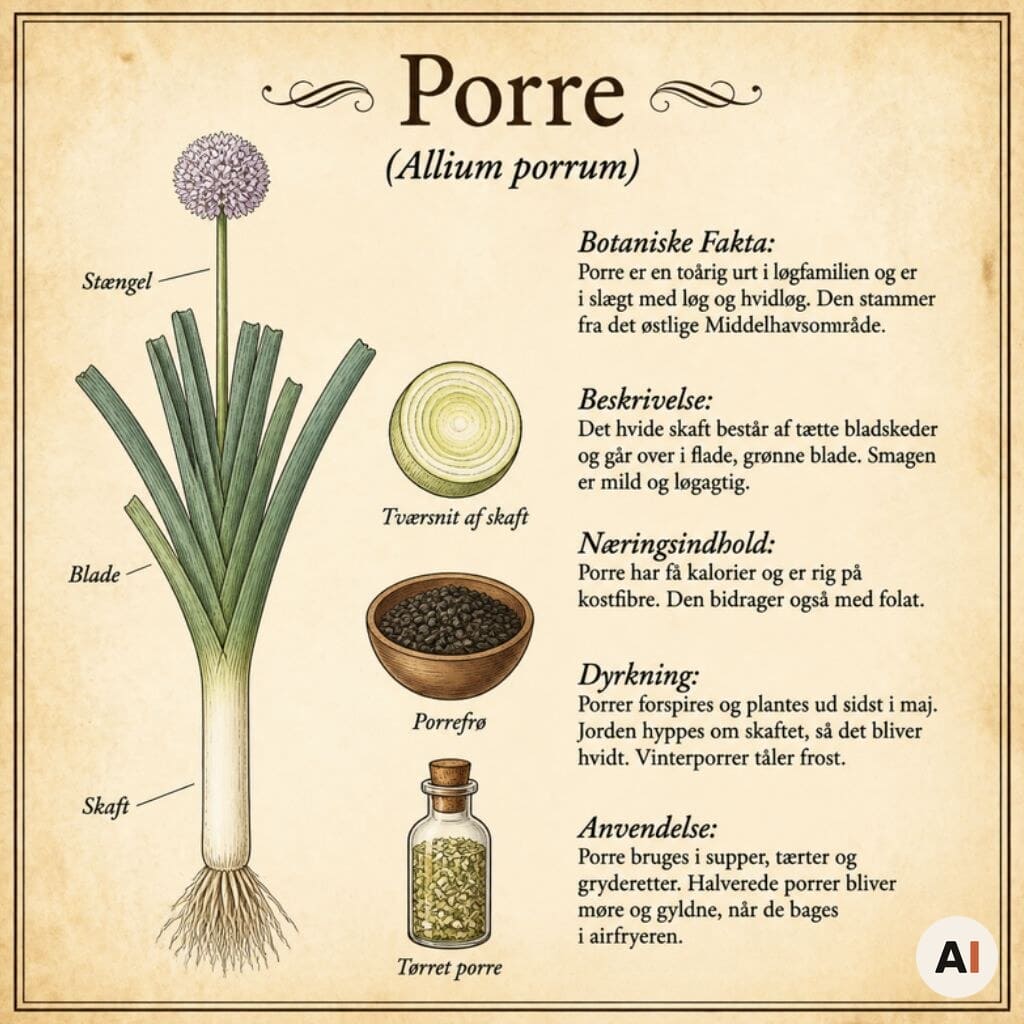
The long, white shaft is not a stem but tightly wrapped leaf sheaths. It turns white because soil is earthed up around the plant so that light cannot get in – and this is where the mildest and sweetest flavour sits.
Here you’ll find the history, flavour, health benefits and cultivation of the leek – and my best tips for cooking leeks in the air fryer. Winter leeks tolerate frost and are in season from October to March, and it’s exactly in the dark months that I use them the most.
Estimated reading time: 6 minutes
History and origin
From the Middle East to the Roman Empire
The leek has its roots in the eastern Mediterranean and the Middle East. In ancient Egypt it was part of the diet from at least the 2nd millennium BC – long before it reached Northern Europe.
Leeks were also eaten in ancient Rome, where they were Emperor Nero’s favourite vegetable. In more recent taxonomy, the leek is regarded as a cultivated form of Allium ampeloprasum, so the leeks we buy today are the result of many generations of cultivation and selection.
Leeks in Northern Europe
In Northern and Western Europe, leeks have been used since the 16th century, but for a long time only as a soup vegetable and flavouring. Stand-alone leek dishes, where the leek itself is the dish, did not appear until around 1900. Today it is a staple of everyday cooking across Northern Europe, and in Wales the leek is even a national symbol.
Flavour and aroma
Mild onion flavour with sweetness
Raw leek has a fresh, slightly sharp onion flavour, but it is far milder than a regular onion. When the leek is heated, the sharpness disappears and a soft, round sweetness takes over – which is why you can use plenty of it.
The white and light green part is the most tender and sweet. The dark green leaves are tougher and taste stronger and more grassy – I save those for soup stock.
The leek and its relatives
The leek belongs to the same genus as onions, garlic, spring onions, chives and wild garlic, which all have their own entries here in our Food Encyclopedia. Where garlic gives a warm, sharp flavour and chives a fresh, green one, the leek sits in the middle: mild, round and slightly sweet.
The texture changes with how it is cooked: raw and finely sliced, leek adds crunch to a salad; slowly sweated in butter, it turns silky soft; and roasted at high heat, it gets crisp, caramelised edges.
Culinary uses
In Danish cooking
In Denmark, leeks have been a classic soup vegetable for centuries, adding depth without taking over. Today they also take the lead role in several everyday dishes. Here are the Danish classics:
- Hønsekødssuppe (Danish chicken soup): the leek is simmered along with the rest and gives a mild, slightly sweet onion flavour.
- Gule ærter (Danish yellow pea soup): leek is one of the soup vegetables behind the dish’s deep flavour.
- Potato and leek soup: creamy and mild with the leek at the centre.
- Leek tart: leeks in a creamy egg custard on a crisp base.
Around the world
Outside Denmark, the leek is the star of several famous dishes:
- Vichyssoise: cold leek and potato soup that, despite its French name, originated in the USA.
- Cock-a-leekie: Scottish soup with chicken and leeks.
- Poireaux vinaigrette (leeks vinaigrette): whole cooked leeks served cold with vinaigrette. In France, the leek is nicknamed asperges du pauvre – the poor man’s asparagus.
In the air fryer
In the air fryer, I mostly make halved, baked leeks: I split the leek lengthwise, rinse it thoroughly, brush the cut side with oil and sprinkle with salt. The hot air gives crisp, golden edges and a soft, sweet inside – perfect as a side dish for fish or chicken.
Leek tart is the other favourite, because the air fryer gives a crisp base and a juicy filling. Leeks are also great in fish gratins, where they turn soft and sweet.
Health benefits
Nutritional content
Leek is a light vegetable at 29 kcal per 100 g, and it provides dietary fibre, folate and potassium. The figures apply to 100 g of raw leek and come from the Norwegian food composition database Matvaretabellen:
- Energy: 120 kJ (29 kcal)
- Dietary fibre: 4 g
- Carbohydrate: 3.8 g
- Protein: 1.5 g
- Fat: 0 g
- Folate: 74 µg
- Vitamin C: 8 mg
- Vitamin B6: 0.23 mg
- Beta-carotene: 239 µg
- Potassium: 295 mg
Good to know
Leeks contain fructans, which are part of the FODMAPs. Most people tolerate them fine, but if you have irritable bowel syndrome (IBS), leeks can cause stomach trouble, so ease in and see how you feel. Leek is not among the allergens that must be labelled under EU rules.
Remember your pets, too: like other alliums, leeks are toxic to dogs and cats, so never give them leftovers containing leek.
Growing
Sowing and planting out
Leek is a biennial plant that can grow up to 50 cm tall, but in the vegetable garden we harvest it in the first season. The seeds are started indoors from January to April, while direct sowing outdoors normally does not happen until the beginning of June. The plants are ready for planting out when they are pencil-thick.
Soil, light and care
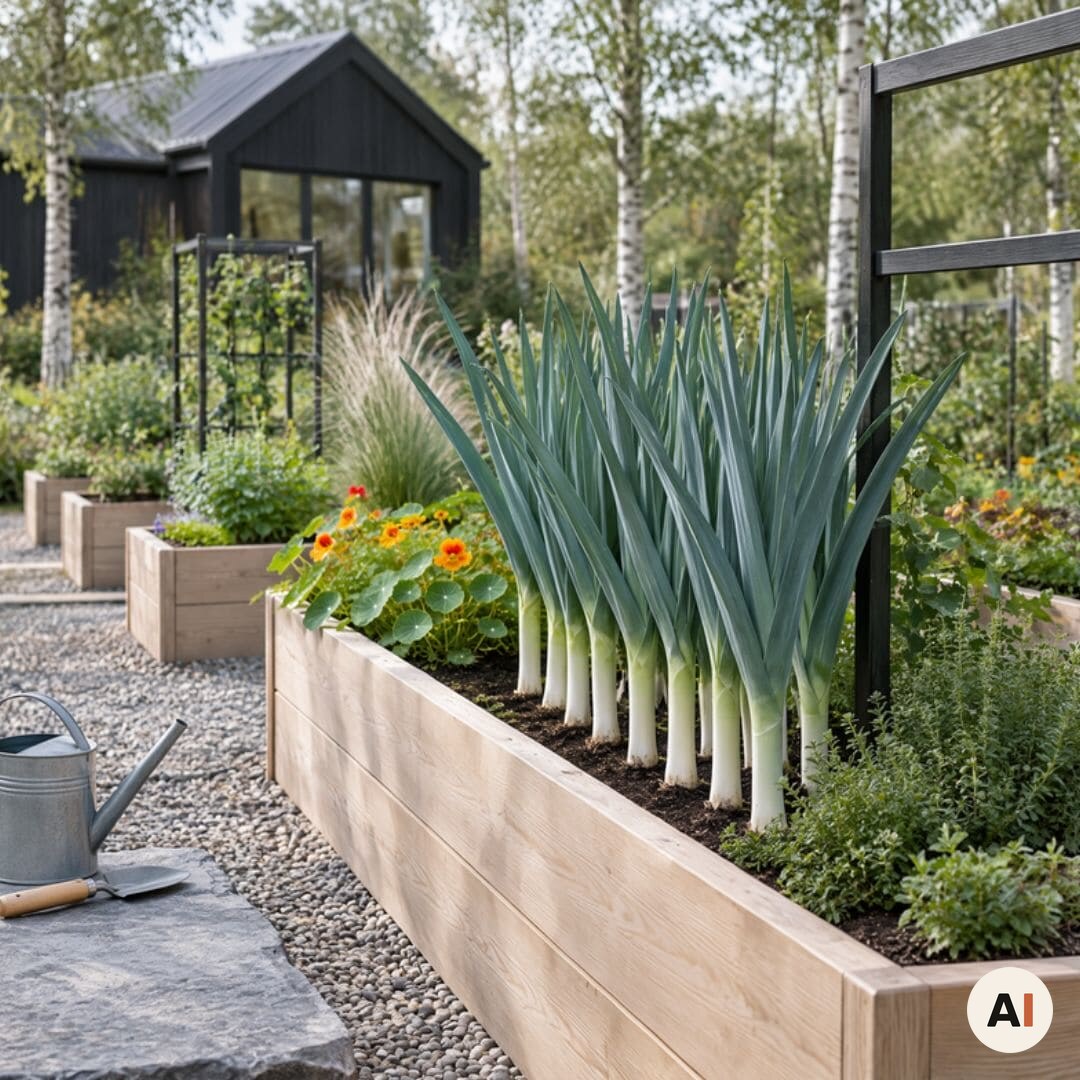
Leeks are heavy feeders and thrive in a sunny spot with loose, well-drained soil. Keep heaping soil up around the shaft as the leek grows – that is what gives the long, white shaft.
- Light: sunny spot.
- Soil: loose, well-drained and nutrient-rich.
- Fertiliser: compost or NPK fertiliser from June (early-planted) or July (late-planted).
- Hardiness: winter leeks tolerate frost, summer leeks do not.
- Height: up to 50 cm.
Varieties and harvest
Summer leeks are harvested from the end of August through September, while winter leeks are harvested from October all the way to March. Well-known varieties include King Richard, an early variety for summer and autumn harvest, and the winter variety Tadorna Blue with blue-green leaves.
Leeks are more cold-tolerant than the other cultivated onion species, and winter leeks can stay outdoors all winter. When you harvest, loosen the soil under the plant with a garden fork before lifting it – that way the shaft won’t snap.
How to grow leeks
Total time: 5-8 months
- Start the seeds indoors
Sow the seeds indoors from January to April, 0.5-1 cm deep in seed compost.
- Plant out
Plant the leeks out in a sunny spot in loose, well-drained soil once they are pencil-thick.
- Feed and earth up
Feed with compost or NPK fertiliser from June or July, and heap soil up around the shaft.
- Harvest
Harvest summer leeks from the end of August and winter leeks from October to March. Loosen the soil with a garden fork first.
Storage
In the fridge and freezer
Leeks are best stored cold, where they can stay fresh for several weeks. I leave them whole and unwashed in the vegetable drawer and wrap them up so the onion smell doesn’t spread.
Leeks can also be frozen. Rinse them, slice them into rings and freeze them in portions, so you can take them straight from the freezer to the pot. Frozen leeks turn soft when they thaw, so use them in soups, stews and tarts.
Cleaning and the garden bed as storage
There is often soil between the leaves, so rinse the leek thoroughly just before use. I slice it into rings and rinse the rings in a bowl of cold water, where the soil sinks to the bottom. If you grow your own winter leeks, the bed is the easiest storage: harvest the leeks as needed.
- Fridge: whole leeks stay fresh for several weeks.
- Freezer: rinse, slice into rings and freeze in portions.
- In the garden bed: winter leeks can stay outside and be harvested as needed.
- Cleaning: rinse between the leaves just before use.
Try this recipe
A leek’s mild sweetness really comes into its own when it is baked in a tart with something salty and smoky. Try our recipe for Leek Tart with Ham and Bacon in the Air Fryer – here the leek meets ham and bacon in a classic Danish tart. My own trick is to briefly sauté the leek rings in a pan first, so they release their moisture and the base stays crisp. When winter leeks are in season, I like to include a little of the light green part for the colour.
Frequently asked questions
You can eat the whole leek except for the root. The white and light green shaft is the most tender, while the dark green leaves are tougher and good for soups and stock.
In Northern Europe, from late August to March. Summer leeks are harvested from late August to September, and winter leeks from October all the way to March.
Slice the leek into rings or lengthwise, and rinse it in a bowl of cold water. The soil between the leaves sinks to the bottom, and you can lift the leek out.
Yes. Rinse the leek, slice it into rings and freeze it in portions. Frozen leeks turn soft when they thaw, so use them in soups, stews and tarts.
Yes. Halved leeks are brushed with oil and sprinkled with salt, and then the air fryer gives crisp edges and a soft inside. The air fryer is also great for leek tart.
Leek facts
| Fact | Detail |
|---|---|
| English name | Leek |
| Latin name | Allium porrum (cultivated form of Allium ampeloprasum) |
| Family | Allium family (Alliaceae, in more recent taxonomy part of Amaryllidaceae) |
| Plant type | Biennial plant |
| Height | Up to 50 cm |
| Hardiness | Winter leeks tolerate frost, summer leeks do not |
| Light | Sunny spot |
| Soil | Loose, well-drained and nutrient-rich |
| Sowing/planting | Started indoors January–April, direct sowing from the beginning of June |
| Harvest | Summer leeks: late August–September. Winter leeks: October–March |
| Calories per 100 g | 29 kcal (raw) |
| Flavour | Mild, slightly sweet onion flavour |
| Culinary use | Soup and flavouring vegetable, potato and leek soup, leek tart, baked leeks |
| Varieties | Summer leeks, winter leeks, King Richard, Tadorna Blue |
| Storage | Keeps in the fridge for several weeks, can be frozen, winter leeks can stay in the bed |
