

Lima beans are large, flat beans with a creamy, buttery texture and a mildly sweet flavor. They’re also known as butter beans, and are available both as fresh, green beans and dried, white beans. In Denmark, they are mostly used dried and are popular in dishes like succotash, stews, and salads. Their soft texture makes them versatile in everything from soups to spreads, and they’re a good source of plant protein and dietary fiber.

Advertisement: The page displays ads and contains advertising links (affiliate links). See our advertisers here.
Estimated reading time: 12 minutes
- Introduction to Lima Beans
- Culinary Uses
- Preparation and Cooking
- Nutrition and Health Aspects
- Traditional and Modern Uses
- Growing and Harvesting in Denmark
- Growing Conditions
- Harvest and Storage
- Flavor and Good Pairings
- Look-Alikes and Quality
- Sustainability and Biodiversity
- Try This Recipe
- Equipment and Products
- Frequently Asked Questions
- Conclusion
- Facts About Lima Beans
Introduction to Lima Beans
What Are Lima Beans?
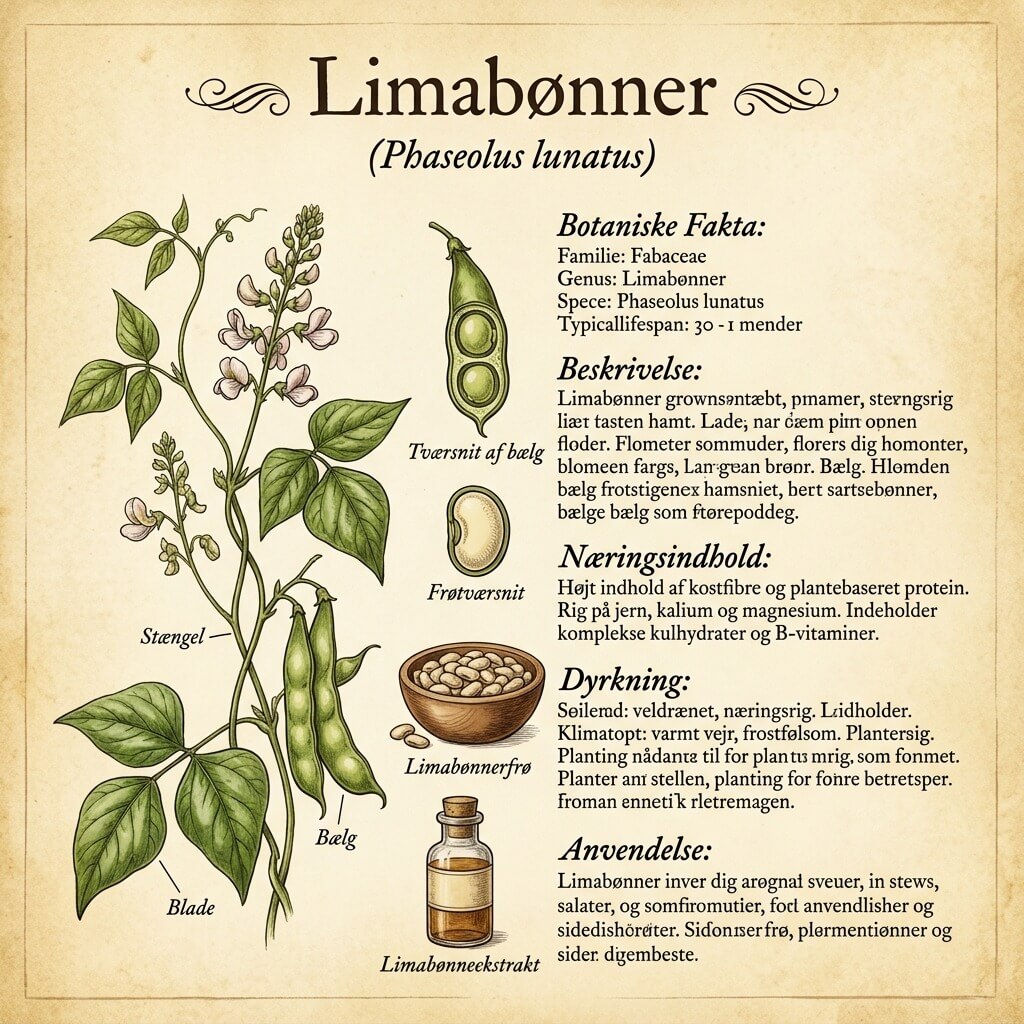
Lima beans are the seeds of the plant Phaseolus lunatus, which belongs to the legume family (Fabaceae). They come in two main varieties: small, green lima beans (often called baby limas), and large, white butter beans. The larger types originate from the Andean gene pool and have been cultivated in South America for thousands of years, while the smaller, Mesoamerican types developed in Mexico and Central America. The beans are flat and kidney-shaped, ranging in color from greenish to pure white.

History and Origin
The name “lima bean” comes from Peru’s capital, Lima, though in English the bean is pronounced “LYE-muh,” unlike the city itself. The history of the lima bean stretches back at least 7,000-8,000 years, when it was domesticated in the Andes Mountains. Research suggests there were several independent domestication events; the large lima beans were developed in Ecuador and Peru, while smaller varieties may have had separate origins in Mesoamerica. For the indigenous peoples of South America, lima beans held religious and social significance; they were used as symbols in the Moche culture and were grown alongside corn and squash in the classic “Three Sisters” system. Spaniards brought lima beans to Europe and onward to Africa and Asia, where they were quickly integrated into local cuisines. In North America, they became central to succotash – a dish of corn and beans – and to American Southern cuisine.
Flavor and Texture
Lima beans are known for their creamy, buttery texture. The large butter beans have a soft, mealy interior texture and a sweetish, nutty flavor, while the smaller lima beans have a slightly firmer texture. The beans hold their shape when simmered, but can also be easily mashed into purées. This makes them versatile in many dishes – from creamy soups to dips and bean patties.
Culinary Uses
Lima beans can be used fresh, frozen, dried, and canned. They absorb flavor well and pair with both mild and bold ingredients. Fresh green lima beans cook quickly and can be used as a green vegetable, while dried beans take a bit more time.
Ideas for Using Lima Beans
- Make classic succotash by sautéing cooked lima beans with corn, bell pepper, onion, and optionally bacon.
- Add them to minestrone or other vegetable soups for extra body and creaminess.
- Blend cooked beans with garlic, lemon, olive oil, and spices for a delicious bean spread.
- Fry them in butter with garlic and fresh herbs like rosemary or thyme for a warm side dish.
- Use them in curry or chili with tomatoes, coconut milk, and spices.
- Make a hearty salad by tossing cold, cooked lima beans with tomatoes, red onion, fresh oregano, and a vinaigrette.
- Bake them in the oven or air fryer with oil, spices, and other vegetables for a rustic oven dish.
Preparation and Cooking
Lima beans are sold dried, frozen, and canned. Dried beans require soaking and cooking to achieve the right texture and to remove natural antinutrients and cyanogenic linamarin. Frozen and canned beans are pre-cooked and can be used directly after rinsing. Follow this method for dried beans:
Total time: about 1 hour plus soaking
- Sort and rinse
Sort the beans, remove discolored seeds and small stones, and rinse them thoroughly under cold water.
- Soak
Cover the beans with plenty of cold water (at least 3 times the volume) and let them soak for 8-12 hours or overnight. For extra reduction of linamarin, they can be soaked for up to 24-48 hours with several water changes.
- Discard the soaking water
Drain the soaking water and rinse the beans again in cold water.
- Boil vigorously for at least 10 minutes
Place the beans in fresh water with at least 5 cm of water above them, bring to a boil, and let them boil vigorously for 10-15 minutes. The vigorous boiling breaks down the cyanogenic linamarin, which can otherwise release cyanide – never skip this step.
- Simmer until tender
Reduce to a simmer and continue cooking for 45-60 minutes, until the beans can easily be mashed with a fork. Add salt during the last 10-15 minutes. In a pressure cooker, it takes about 15-20 minutes.
Raw lima beans contain linamarin, a cyanogenic glycoside. Commercially grown beans usually have less than 200 mg cyanide/kg, but soaking and cooking are necessary to reduce the content. Boiling in water for more than 30 minutes can reduce around 80% of the cyanide. Boiling or steaming fresh, green lima beans for 5-10 minutes is sufficient to make them safe. Be aware that a very high-fiber meal can cause bloating – introduce beans gradually into your diet.
Nutrition and Health Aspects
Lima beans are rich in complex carbohydrates, dietary fiber, plant protein, and a range of vitamins and minerals. One cup of cooked lima beans (170 g) contains around 209 kcal, 12 g protein, 0.5 g fat, 40 g carbohydrates, and 9 g dietary fiber. They are particularly good sources of manganese (92% of the reference intake), copper (58%), magnesium (30%), iron (23%), potassium (21%), and thiamine (vitamin B1).
- Blood sugar control: The high fiber content and low glycemic index can help stabilize blood sugar and prevent rapid blood sugar spikes.
- Heart health: Soluble fiber and minerals like potassium and magnesium support healthy blood pressure and can help lower LDL cholesterol.
- Satiety and weight control: The combination of protein and fiber contributes to lasting fullness and can help regulate weight.
- Minerals and vitamins: Manganese, copper, and magnesium are important for energy metabolism and bone health, while iron is essential for the blood’s transport of oxygen.
Some people may experience allergic reactions or discomfort from lima beans, in which case intake should be limited or replaced with other legumes.
Traditional and Modern Uses
In South and Central America, lima beans were traditionally grown alongside corn and squash in the “Three Sisters” system. The dish succotash, made with corn and beans, is known from Native Americans and is still found in the US today. Larger butter beans are used in Southern dishes, often stewed with ham or bacon. In the Mediterranean region, lima beans are simmered with tomatoes, garlic, and herbs, while in India they feature in curries, and in the Middle East in spiced stews and dips. Modern kitchens use lima beans in everything from vegetarian bean patties and bowls to purées, baked goods, and salad fillings.
Growing and Harvesting in Denmark
Lima beans need warmth and thrive best in a sheltered, sunny spot in the vegetable garden. They are grown as annual summer beans and come in both bush and climbing types. In Danish climates, you should choose early varieties and give the plants shelter from wind.
- Prepare the growing site: Choose a sunny bed with well-drained, light to medium-heavy soil and a pH of at least 6.5. Add compost to improve the soil structure.
- Wait for warmth: Sow the seeds directly outdoors once the soil temperature is at least 18 °C (65 °F). In Denmark, this is typically from late May to early June. Avoid sowing if the soil is colder than 10-15 °C.
- Sowing: Place the seeds 3-4 cm deep. For bush types, sow with 8-10 cm between seeds and 40-50 cm between rows. For pole beans, plant 4-6 seeds around each pole or climbing frame. Inoculating the seeds with rhizobium is recommended to improve nitrogen fixation.
- Watering and care: Keep the soil evenly moist, especially during germination and flowering. Water at the soil surface to avoid wetting the leaves and reduce the risk of fungal diseases. Both overwatering and drought can cause flowers and pods to drop.
- Support: Pole beans need stakes or frames to climb. Bush types manage without support.
- Weeding and mulching: Keep the bed free of weeds. Mulching with straw or grass clippings can retain moisture and suppress weeds.
- Harvest: For fresh beans, pick the pods while they are still green and the seeds are plump. For dried lima beans, leave the pods on the plant until they are completely papery and start to rattle. Harvest the plants before heavy rain, and let them dry further in a dry place. In Denmark, the harvest is typically in August-September.
- Crop rotation: Rotate the beans every year to avoid disease and make better use of the soil’s nitrogen.
Growing Conditions
- Light: Full sun with at least 6-8 hours of direct sunlight daily.
- Soil: Well-drained soil with neutral to slightly alkaline pH (≥ 6.5).
- Temperature: Optimal 20-30 °C; cold soil inhibits germination, and frost is not tolerated.
- Height: Bush types reach 30-50 cm; pole types 1.5-2.5 m.
- Watering: Even moisture throughout the season, especially during flowering and pod formation.
- Nutrition: Too much nitrogen can promote leaf growth at the expense of pods; the beans fix their own nitrogen via root nodules.
Harvest and Storage
Fresh lima beans (green) are picked when the pods are plump and before the skin becomes tough; they are boiled or steamed for 5-10 minutes and can be eaten as green beans. For dried lima beans, leave the pods on the plant until they are completely dry. The seeds are removed and further dried in a dry, airy place for a week. Store dried beans in airtight containers in a cool, dark place – they will keep for at least a year. Cooked beans keep for 3-4 days in the fridge and can be frozen for up to three months.
Flavor and Good Pairings
The mild, buttery flavor of lima beans makes them a great match for many ingredients.
- Butter, olive oil, garlic, onion, and fresh herbs like sage, rosemary, and thyme.
- Sweet corn, butternut squash, tomatoes, and bell peppers.
- Spices like paprika, cumin, chili, and turmeric.
- Meat such as pork, chicken, lamb, and ham, as well as fish.
- Other legumes and grains like rice, quinoa, and barley.
- Lemon juice, vinegar, and good olive oil in salads and dressings.
Look-Alikes and Quality
Lima beans can be confused with other large, white beans like butter beans – which are actually the same species – as well as with frozen green beans. Small lima beans resemble the large ones but are smaller and often greener. Choose dried beans that are whole, smooth, and free of cracks or discoloration, and avoid beans with insect damage. Fresh pods should be green and crisp without black spots.
Sustainability and Biodiversity
Like other legumes, lima beans form a symbiosis with nitrogen-fixing rhizobium bacteria, which enriches the soil and reduces the need for artificial fertilizer. By growing lima beans and other bean varieties, you help preserve genetic diversity, which increases resilience against disease and climate change. Organic and diverse cultivation benefits both the environment and the vegetable garden.
Try This Recipe
Lima beans step into Mexican cuisine with their creamy richness and pair perfectly with spicy, juicy fish. Serve them as a side to our Mexican Salmon in the Air Fryer – Juicy and Spicy in 20 Minutes.
Equipment and Products
A good spice blend elevates bean stews, succotash, and oven-baked lima beans with depth and warmth. Try Krydderimesterens Blanding Vestjyske Delikatesser for your bean dishes.
Frequently Asked Questions
Yes. Raw or insufficiently cooked lima beans contain linamarin, which can release cyanide. Commercial beans have low levels, but it’s important to soak them and boil them vigorously for at least 10-15 minutes, then continue simmering.
Yes. Soaking for 8-12 hours (or up to 48 hours with several water changes) softens the beans, shortens the cooking time, and removes much of the linamarin and other antinutrients.
Absolutely. Frozen and canned beans are pre-cooked and ready to use. Rinse canned beans to remove excess brine and sodium.
Butter beans is another name for large, mature lima beans. Small lima beans (baby limas) belong to the same species but have smaller seeds and a firmer texture.
Yes. Lima beans are rich in plant protein, dietary fiber, manganese, copper, magnesium, and iron. The high fiber content supports blood sugar, satiety, and heart health as part of a varied diet.
Conclusion
Lima beans, also known as butter beans, are a nutritious and versatile legume with deep cultural roots in South and Central America. Their creamy, buttery texture and mild flavor make them ideal in everything from succotash to modern bowls and purées. With a high content of protein, fiber, and minerals, they support a healthy diet and contribute to satiety and stable energy. Proper soaking and cooking are necessary to ensure both safety and flavor. Although they require warmth and protection in Danish gardens, they can be grown successfully and contribute to both culinary diversity and soil fertility.
Facts About Lima Beans
| Field | Description |
|---|---|
| English name | Lima beans, butter beans |
| Latin name | Phaseolus lunatus |
| Family | Legume family (Fabaceae) |
| Plant type | Annual summer bean; grown as bush or pole type |
| Height | Bush types 30-50 cm; pole types 1.5-2.5 m |
| Hardiness | Very heat-loving; does not tolerate frost |
| Light | Full sun |
| Soil | Well-drained, light to medium-heavy, pH ≥ 6.5 |
| Sow/plant | Direct sowing once soil is at least 18 °C – typically late May to June |
| Flowering/Harvest | Flowering in summer; harvest of fresh beans July-August; dried beans August-September |
| Flavor | Creamy, buttery, mild, slightly sweet |
| Culinary use | Succotash, soups, purées, salads, curries, oven and air fryer dishes |
| Storage | Dried beans stored dry and dark; cooked beans refrigerated or frozen |
| Soaking time (legumes) | 8-12 hours (or longer for further reduction of linamarin) |
| Cooking time (legumes) | 10-15 min vigorous boiling, then 45-60 min simmering; fresh beans 5-10 min |
