

Pak choi is one of the vegetables I reach for most often when I need something green on the table in no time. It’s also called bok choy, and its Latin name is Brassica rapa subsp. chinensis. It’s closely related to napa cabbage, but it doesn’t form a firm head. Instead, the juicy stalks and the soft, green leaves grow together in a bunch at the base.
That very structure makes it perfect for the air fryer. I halve it lengthwise through the root, toss it in a little oil and let it roast until the leaves get crispy edges. The trick is that the stalks need more time than the leaves – I’ll come back to that further down.
Here in the Food Encyclopedia, you’ll get the story behind pak choi, its flavor, its nutritional content and my best tips for growing, storing and cooking it.
Estimated reading time: 6 minutes
History and origin
From the Yangtze delta to the rest of the world
Pak choi originates in China, and the vegetable’s history can be traced back to the delta of the Yangtze River. It has been cultivated there since the 5th century, so behind those juicy stalks lies a very long tradition in Chinese cooking.
Pak choi came to Europe in the middle of the 18th century. In North America it turned up in the 19th century, but another century passed before it truly became widespread. Today I can buy it in many supermarkets, both as large plants and as small baby pak choi.
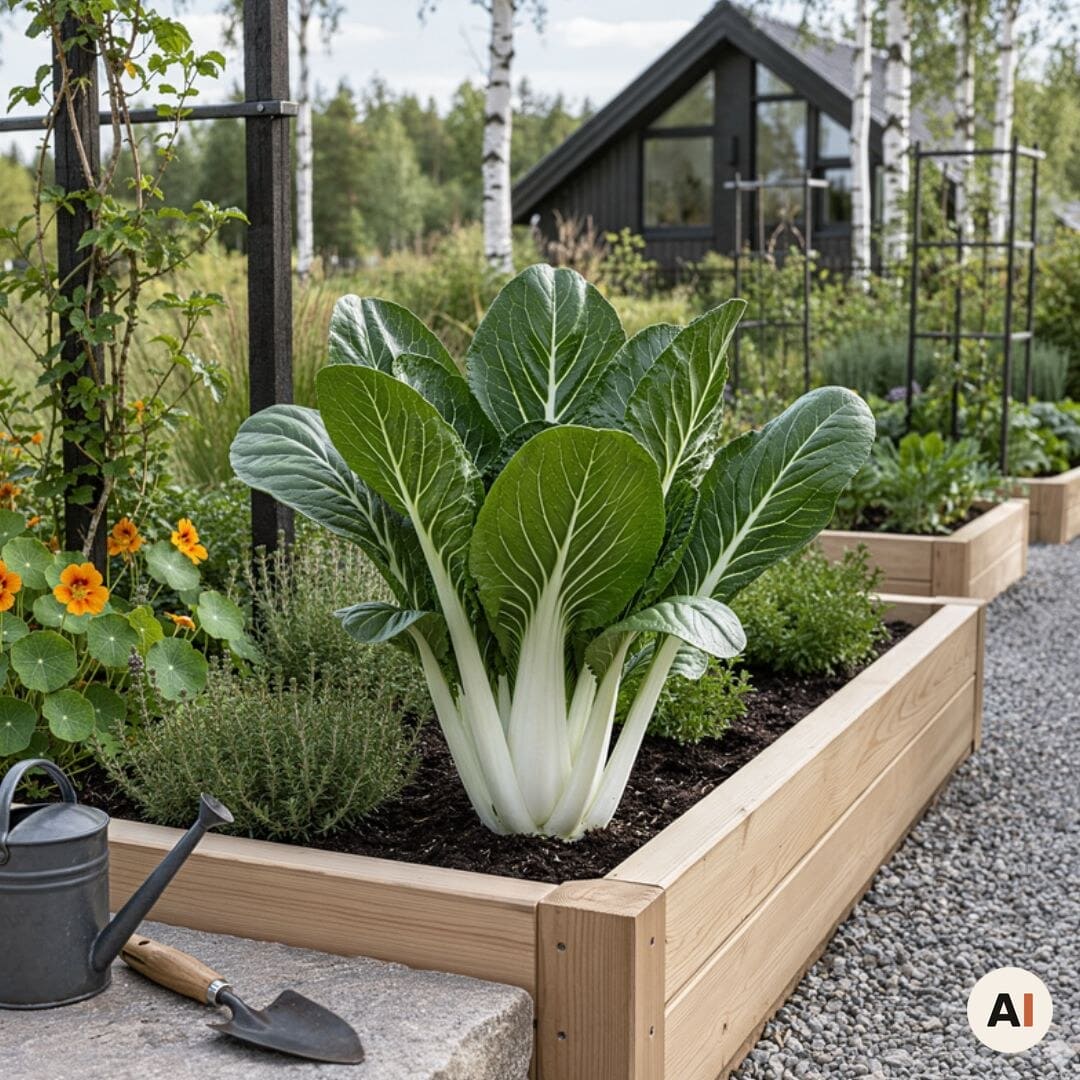
Why is it called bok choy?
The name bok choy comes from Cantonese baak choi, which means “white vegetable” – a reference to the white stalks of the classic type. Both names are used in English, but it’s the same vegetable. Botanically, it belongs to the cruciferous family, Brassicaceae, and it’s the same species as both napa cabbage and turnip.
Types and varieties
There are several types of pak choi. The best-known ones differ in the color of the stalks and leaves, while others are young plants or hybrids:
- White pak choi (baak choi): the classic type with white stalks and dark green leaves.
- Shanghai green: a green-stalked type with lighter green leaves.
- Baby pak choi: young plants, which can be of any variety.
- “Green Boy”: a cross between komatsuna and pak choi.
Flavor and aroma
Mild with a fresh sweetness
Pak choi tastes mild and fresh – far milder than most other types of cabbage. The stalks are juicy and have a slight sweetness, while the leaves resemble spinach in texture and have a faint, cabbage-like note. That’s why it goes with almost anything, from fish and chicken to noodles, rice and tofu.
Two textures in one vegetable
What makes pak choi special is the contrast between the crisp, juicy stalks and the thin, soft leaves. The leaves collapse quickly in the heat, while the stalks keep their bite much longer. That is the whole explanation for why the stalks need more time than the leaves – whether you use a wok, a pot or an air fryer.
When the flavor changes
Brief cooking preserves the fresh, green flavor. If you roast pak choi at high heat, the edges get a slightly nutty, caramelized flavor that I really love. Pickled pak choi gets a tangy note, while dried pak choi gets a saltier, more concentrated flavor.
Culinary uses
In the home kitchen
In many home kitchens, pak choi has become especially popular in stir-fries, where it only needs a very short time in the pan. The small, tender leaves can also be eaten raw in a salad, where they add a mild, crisp freshness. I often use it myself as a quick green side dish for salmon, chicken and tofu.
Around the world
In Chinese cooking, pak choi is often stir-fried, and it goes fast: it’s done in 2–3 minutes. It can also be steamed or simmered in water for 2–3 minutes, and a whole pak choi takes 8 minutes to steam. It’s also dried or pickled, so it can be used out of season.
Classic dishes where pak choi plays a leading role:
- Stir-fried pak choi: with garlic as a quick side dish for rice.
- Steamed pak choi: with oyster sauce or soy sauce.
- Noodle soups: where the pak choi goes in at the end and only simmers briefly.
- Asian salads: with tender, raw leaves and thin slices of the stalks.
- Pickled or dried pak choi: as a preserved vegetable.
In the air fryer
In the air fryer, pak choi is one of my favorite vegetables. I rinse it thoroughly, halve it lengthwise through the root and toss it in a little oil and salt. The root end holds each half together, so the stalks and leaves don’t fall apart in the basket.
The most important thing to remember is that the stalks need more time than the leaves. The leaves quickly turn crisp and can burn at the edges while the stalks are still firm. If the plants are large, I therefore cut the leaves free and put them in the basket at the end. Baby pak choi can easily be roasted halved, as long as you keep an eye on the leaves along the way.
When they’re done, I like to sprinkle toasted sesame seeds over them and add a splash of soy sauce.
Health benefits
Few calories and plenty of nutrients
Pak choi is a light vegetable, and 100 g of raw pak choi provides only 19 kcal. In return, you get a good serving of vitamins and minerals, especially vitamin C, beta-carotene, folate and calcium. That makes it an easy way to get more greens on your plate.
Nutritional content per 100 g
Here are the most important nutrients in 100 g of raw pak choi:
- Vitamin C: 45 mg
- Beta-carotene: 2,681 µg
- Vitamin A: 223 µg RAE
- Folate: 66 µg
- Calcium: 105 mg
- Potassium: 252 mg
- Magnesium: 19 mg
- Iron: 0.8 mg
- Vitamin B6: 0.19 mg
- Dietary fiber: 1.0 g
How to keep the most nutrients
Vitamin C and folate don’t tolerate long exposure to heat and water, so brief cooking is best if you want to retain as much as possible. Beta-carotene is fat-soluble, and the body can convert it into vitamin A on its own. It’s absorbed better together with a little fat, so a bit of oil in the air fryer or the wok is a good idea.
Growing
Growing conditions
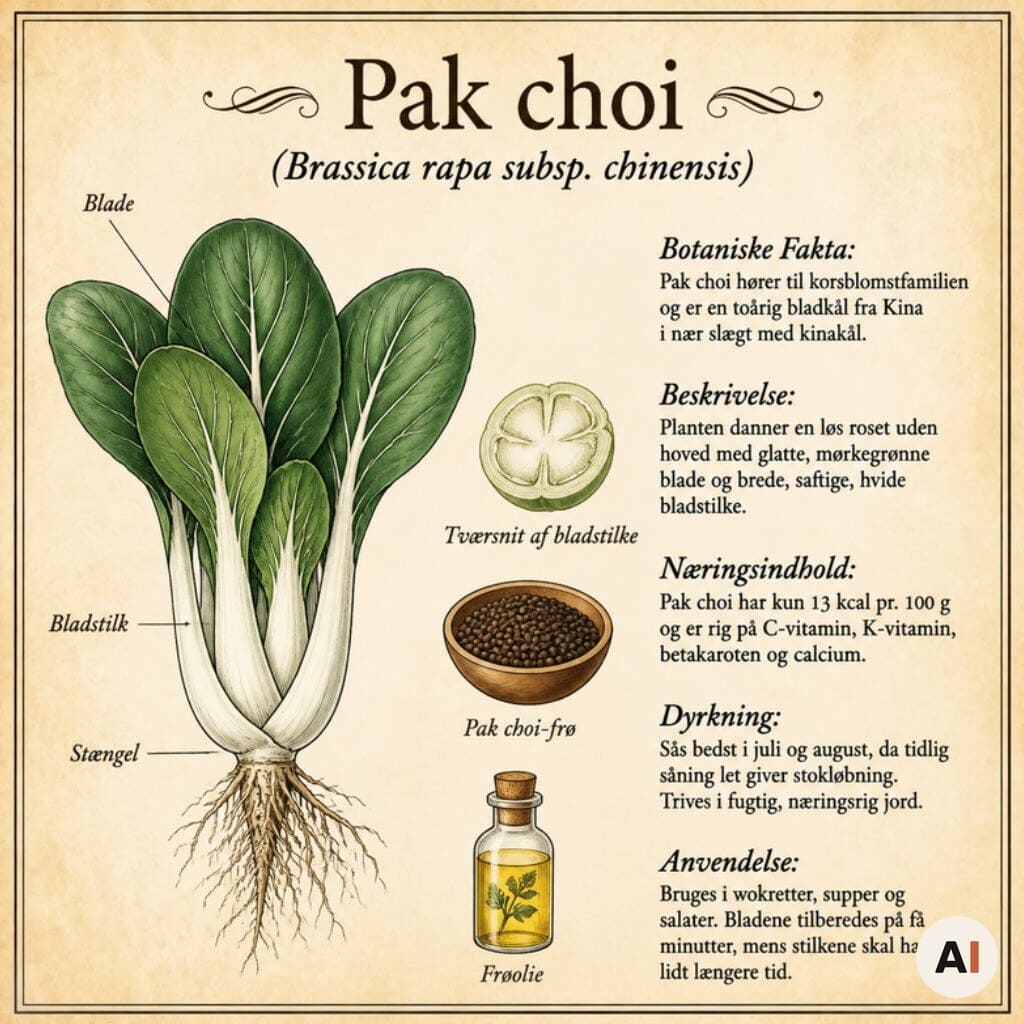
Pak choi is a rewarding vegetable in the kitchen garden if you get the timing right. It thrives best in cool weather, and drying out or temperatures above 21 °C can make it bolt – that is, send up a flower stalk instead of producing more leaves. That’s why I only sow it from mid-July and during August, so it grows up in the cool late-summer and autumn weather.
Like napa cabbage, pak choi has only a small root system, so it can’t fetch water and nutrients from deep down in the soil on its own. It therefore needs good access to both from sowing to harvest.
- Soil: fertile and well-drained with a high content of organic matter.
- pH: between 6.0 and 7.5.
- Temperature: cool weather – above 21 °C can trigger bolting.
- Water: even moisture all the way through, since drying out can also trigger bolting.
- Harvest: most varieties are ready after 30–60 days.
How to grow pak choi
Total time: 30-60 days
- Prepare the soil
Choose a bed with fertile, well-drained soil, and mix in compost so the soil gets a high content of organic matter. The soil pH should ideally be between 6.0 and 7.5.
- Sow the seeds
Sow the seeds from mid-July and during August. That way, the plants grow up in the cool late-summer and autumn weather.
- Water and care
Keep the soil evenly moist all the way through. Pak choi has only a small root system, and drying out can make the plant bolt.
- Harvest
Pak choi can be eaten at almost any stage, so you can harvest young plants as baby pak choi. Most varieties are fully developed after 30-60 days.
Storage
In the fridge
Fresh pak choi is a delicate vegetable, and the leaves wilt faster than the stalks. This is how I store it:
- Cold: Place it in the vegetable drawer of the fridge.
- Unwashed: Rinse it just before use – there’s often dirt hiding down between the stalks.
- In a loosely closed bag: It retains moisture without the pak choi getting clammy.
- Keep an eye on the leaves: Use the pak choi while the leaves are still fresh and firm.
Pickling, drying and freezing
If you want to keep pak choi for longer, it can be pickled, and pickled pak choi can stay edible for months. Drying is another classic way to preserve the vegetable, and the dried pak choi can be used in soups. You can also blanch it briefly and freeze it. It becomes soft after thawing and is therefore best suited for stews and stir-fries.
Try this recipe
Pak choi is perfect for Asian salads because the tender leaves are mild and the juicy stalks give a fresh crunch. Try our recipe for Air fryer tofu – crispy Asian salad with marinated tofu. I slice the stalks thinly myself and mix them into the salad together with the small, raw leaves. The contrast with the crispy tofu from the air fryer is hard to beat.
Frequently asked questions
There is no difference. Bok choy is another name for pak choi and comes from Cantonese baak choi, which means white vegetable. Both names are used in English.
Rinse the pak choi thoroughly, halve it lengthwise through the root and toss it in a little oil and salt. The stalks need more time than the leaves, so keep an eye on the leaves along the way, or cut the leaves free and put them in the basket at the end if the plants are large.
Yes. The small, tender leaves in particular are good raw in a salad, where they give a mild, fresh flavor. The stalks can be cut into thin slices and give the salad a crisp bite.
No, but they are closely related and belong to the same species, Brassica rapa. Napa cabbage forms a firm head, while pak choi grows as a bunch of stalks and leaves joined at the base.
Store pak choi unwashed in the vegetable drawer of the fridge, and rinse it just before use. If you want to keep it for longer, it can be pickled, and pickled pak choi can stay edible for months.
Facts about pak choi
| Fact | Value |
|---|---|
| English name | Pak choi (also called bok choy) |
| Latin name | Brassica rapa subsp. chinensis |
| Family | Cruciferous family (Brassicaceae) |
| Plant type | Leafy vegetable in the cabbage genus, does not form a head |
| Soil | Fertile, well-drained and rich in organic matter, pH 6.0–7.5 |
| Sow/plant | From mid-July and during August |
| Harvest | After 30–60 days, in late summer and autumn |
| Calories per 100 g | 19 kcal (raw) |
| Flavor | Mild and fresh with a slight sweetness in the stalks |
| Culinary use | Stir-fries, salad, steamed, simmered, roasted in the air fryer, pickled and dried |
| Storage | Unwashed in the vegetable drawer of the fridge; pickled, it keeps for months |
