

The tomato is one of the most beloved vegetables in the Danish kitchen – even though it’s botanically a fruit. Fresh tomatoes bring juiciness, sweetness, and acidity to everything from simple salads to slow-simmered sauces, and they come in a whole range of colors, sizes, and flavor nuances. Whether you grow a couple of plants on the balcony or fill up the greenhouse, the tomato is one of the most rewarding and inspiring kitchen plants to work with.

Advertisement: The page displays ads and contains advertising links (affiliate links). See our advertisers here.
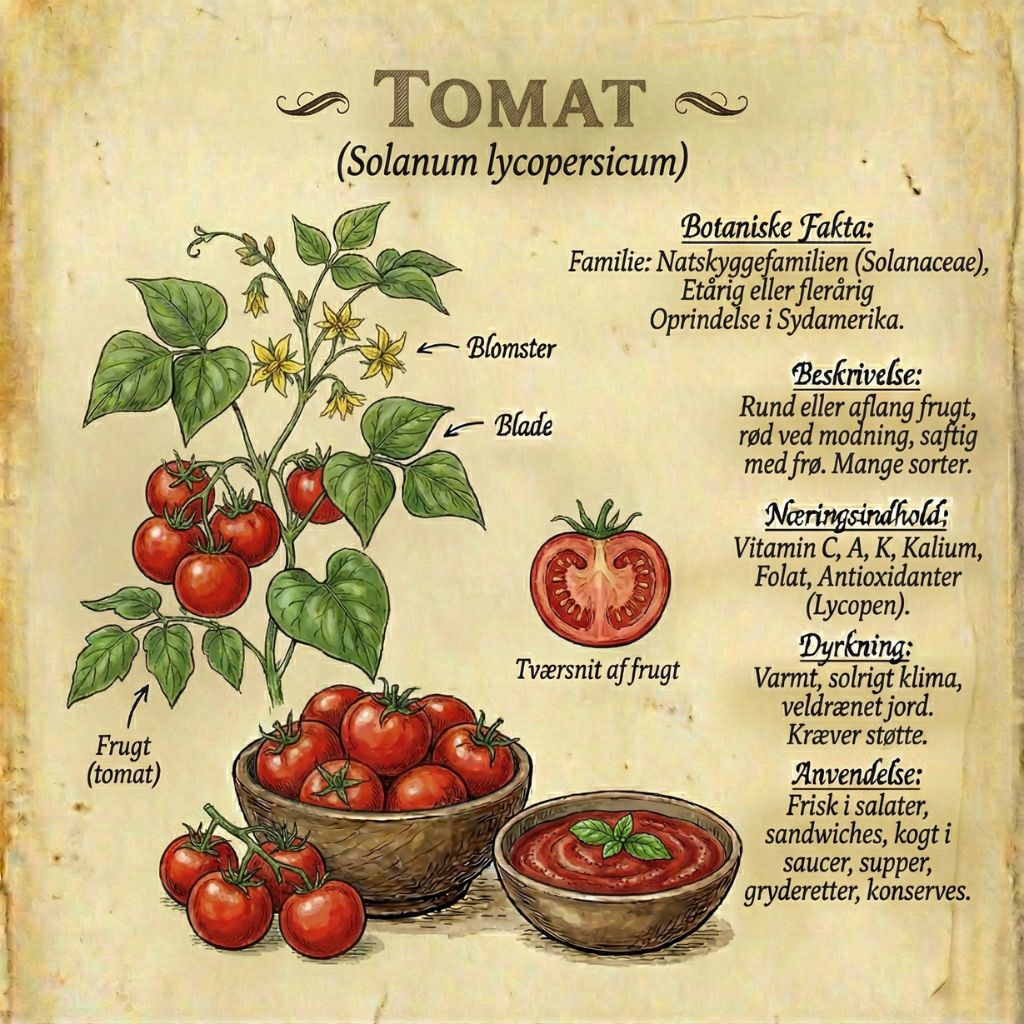
The tomato belongs to the nightshade family and the botanical species Solanum lycopersicum. The plant produces climbing or bushy shoots with yellow flowers, which after pollination develop into the characteristic fruits. Botanically, the tomato is therefore a berry, but in the kitchen we treat it as a vegetable because of its fresh, tangy flavor and its place in salads, sauces, and hot dishes rather than in desserts.
Estimated reading time: 7 minutes
History and Origin
From South America to Europe
The tomato originally comes from South and Central America, where wild ancestors grow in warm, sunny regions. It was cultivated and bred by indigenous cultures long before Europeans arrived on the continent. In the 1500s, the tomato came to Europe via Spain, but for many years it was mostly grown as an ornamental plant, because people were unsure whether it was poisonous. Only later did the tomato truly become part of the kitchen – especially in the Mediterranean countries, where it’s now completely indispensable.
The Tomato in Denmark
In Denmark, the tomato truly became widespread during the 1900s, when greenhouses and later industrial market gardening made it possible to grow tomatoes more reliably in the cool Nordic climate. Today, the tomato is a natural part of everyday food, and many hobby gardeners see the tomato as a must-have plant for the greenhouse.
Flavor and Aroma
Tomatoes combine sweetness, acidity, and umami in a way that makes them unusually versatile in the kitchen. A fully ripe tomato is juicy, slightly meaty, and aromatic. Less ripe tomatoes can be firmer and more tangy, while well-ripened tomatoes are often softer and sweeter. For hot dishes, tomatoes with a higher solids content and more intense flavor are often preferred, while the juiciest, thin-skinned tomatoes are great for salads and quick cooking, for example in the airfryer or in a pan.
Culinary Uses
The tomato is one of the most versatile ingredients there is. It can be used raw and crisp in salads or slowly simmered down into deep, umami-rich sauces, and it works as both a main ingredient and a flavor enhancer that ties dishes together.
In the Danish Kitchen
In modern Nordic cooking, tomatoes are often used in simpler dishes, where their natural flavor is allowed to stand out clearly. This can be as a side in salads, grilled tomatoes with meat and fish, or as pickled tomatoes that add acidity and sweetness to smørrebrød (open sandwiches) and platters.
- Use fresh tomatoes in salads together with cucumber, onion, herbs, and a simple vinaigrette.
- Make a classic tomato sauce for pasta by sautéing onion and garlic and slowly simmering down the tomatoes.
- Use tomatoes in soups, for example a creamy tomato soup or gazpacho served ice-cold on hot days.
- Concentrate the flavor in oven-dried or semi-dried tomatoes, which can be used in salads, pasta, or on bruschetta.
Internationally
The tomato plays a starring role in a long list of classic dishes: Italian pizza and pasta, French ratatouille, Spanish gazpacho, and shakshuka from the Middle East are just a few examples. In these cuisines, the tomato is seen both as a staple ingredient and as a flavor enhancer that gives dishes color, acidity, and depth.
Preparation Methods
The tomato is not a legume, so there’s no soaking or cooking time like with beans. Instead, preparation is mainly about choosing the right ripeness, cutting correctly, and adapting the preparation to the dish you’re making. If you want to avoid tomato skins in soups and sauces, you can blanch the tomatoes briefly in boiling water and then peel off the skin. In the airfryer, small tomatoes are perfect for quick cooking, where they take on an intense, almost confit-like flavor – oven-baked and semi-dried tomatoes are an obvious way to concentrate the sweetness.
- Raw: In salads, on smørrebrød (open sandwiches), in a sandwich, or as a simple snack with a little salt and oil.
- Sautéed or pan-fried: A short time in the pan or airfryer gives a light caramelization and a more intense flavor.
- Simmered: Slowly cooked in a pot gives a deep tomato sauce, ragù, or stews with plenty of umami.
- Baked: Whole or halved tomatoes in the oven or airfryer with oil, salt, and herbs concentrate the sweetness.
- Pickled or dried: Tomatoes can be preserved in jars with oil and spices, or dried for longer shelf life.
Health Benefits
Vitamins and Plant Compounds
The tomato consists mainly of water, but it also contains dietary fiber, vitamins, and minerals. It’s particularly known for its content of vitamin C and vitamin A (in the form of carotenoids), but also potassium and other micronutrients. The characteristic red color comes partly from the carotenoid lycopene, which is also found in other red fruits.
Absorption and Digestion
When tomatoes are cooked and combined with a little fat, such as olive oil, some of the fat-soluble compounds become easier for the body to absorb. That’s why both raw and cooked tomatoes are valuable in a varied diet. Tomatoes are generally easy to digest, but some people may experience discomfort if they have a sensitive stomach or react to acidic foods.
Growing
In Denmark, tomatoes are typically grown in a greenhouse or in very warm, sheltered outdoor spots, because the plant needs heat and is sensitive to frost. With the right varieties and good care, however, you can still get a rich harvest even in shorter summers.
Growing Conditions
Tomatoes thrive best in full sun and a sheltered spot. The soil should be well-drained, nutrient-rich, and preferably amended with compost before planting. Most tomato varieties prefer a soil pH around 6–7. Cold, heavy, and waterlogged soil produces weak plants and increases the risk of disease. Nighttime temperatures below 8–10 °C can inhibit growth and pollination, while very high temperatures above 30 °C over extended periods can also negatively affect flowering and fruit set. Good ventilation in the greenhouse and even watering are important to avoid stress and damage such as cracked fruit.
How to Grow Tomatoes
Total time: 4-6 months
- Pre-sprout the seeds
Sow seeds indoors in small pots or seed trays in February–April. Use seed compost, keep the soil lightly moist, and place the trays somewhere bright and warm (20–24 °C) until the seeds germinate.
- Prick out and harden off
Once the plants have a couple of true leaves, prick them out into larger pots with nutrient-rich potting soil. Make sure they get plenty of light to avoid long, leggy plants.
- Plant out
Plant the tomatoes in a greenhouse or a warm, sheltered corner of the garden once the risk of night frost has passed (typically after mid-May). Plant deep, so that part of the stem is covered, as this gives a stronger root system.
- Stake and maintain
Give the plants support with string or bamboo canes. Remove side shoots (suckers) on vining varieties, and ensure even watering and regular feeding.
- Harvest
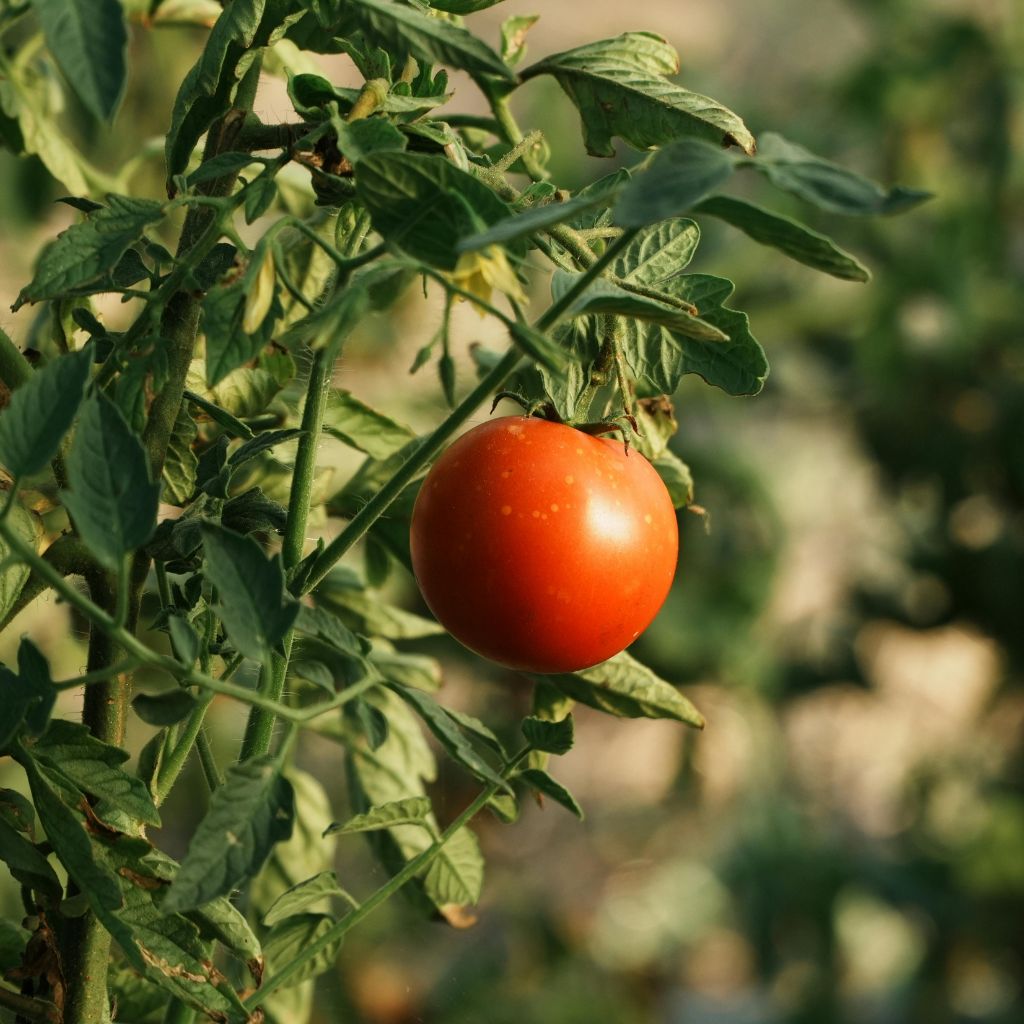
Pick the tomatoes once they’ve reached full color and give slightly under light pressure. A ripe tomato smells aromatic at the stem end.
Storage
Harvest and Temperature
Tomatoes are harvested continuously as they ripen. This allows the plant to set new fruit. Pick the tomatoes with the stalk attached if possible, as this can extend their shelf life slightly. Late in the season, you can harvest green tomatoes and let them ripen indoors, or use them in pickled products.
Refrigerator or Not
Tomatoes are best kept at a slightly cool room temperature around 12–18 °C. If you store them too cold, for example in the refrigerator, the flavor and texture can become flatter and mealy.
- Store tomatoes at 12–18 °C out of direct sunlight for the best flavor.
- Very ripe tomatoes can be kept briefly in the refrigerator to extend their shelf life by a few days.
- Take chilled tomatoes out well before serving so they have time to come to room temperature.
Great Pairings and Flavor Combinations
The tomato’s combination of sweetness, acidity, and umami makes it an excellent partner for many other ingredients. Fresh tomatoes pair well with herbs such as basil, oregano, thyme, and parsley. The tangy juice balances rich elements like cheese, olive oil, and meat, while the sweetness plays off nicely against salty and smoky flavors.

- Fresh basil, mozzarella, and olive oil.
- Garlic, onion, and chili in sauces, soups, and stews.
- Feta, olives, and cucumber in salads.
- Fish and shellfish, where tomato adds acidity and color.
- Grains such as pasta, rice, and bulgur in hot and cold dishes.
Look-Alikes and Quality
Tomatoes are rarely confused with other species in the kitchen, but in the garden or greenhouse, young tomato plants can resemble other nightshade plants. That’s why it’s a good idea to label pots and rows clearly. In the supermarket, quality is mainly about variety, growing method, and ripeness.
Choose tomatoes that feel firm but not hard, with an even color and no large green patches (unless it’s a green or striped variety). A good tomato has a clear aroma at the stem end. Avoid fruit with bruises or mold spots and heavily cracked skin, unless you’re going to prepare it right away.
Sustainability and Biodiversity
Tomatoes can be grown in many different varieties, from old open-pollinated types to modern hybrids. By choosing several different varieties – for example cherry tomatoes, beefsteak tomatoes, and plum tomatoes – you help preserve greater genetic diversity. Old varieties can be more delicate, but in return they often have very distinctive flavor.
If you grow tomatoes organically or according to principles focused on soil life and compost, you can reduce the need for synthetic fertilizer and chemical pesticides. Companion planting with flowers and herbs in and around the greenhouse can attract pollinators and beneficial insects that help keep pests down. Good water management – such as collecting rainwater – makes growing more resource-friendly.
Try This Recipe
The tomato’s fresh acidity and sweetness lift both fish and greens, and it caramelizes beautifully in the airfryer. That exact combination is used in our Cod Parcel with Green Pesto and Tomatoes in the Airfryer, where the tomatoes bake tender and juicy together with the cod, making an elegant starter in just 15 minutes.
Equipment and Products
If you don’t have time to oven-dry your own tomatoes, you can cheat with a ready-made version. Our Sun-Dried Tomato Bruschetta gives the same concentrated, umami-rich tomato flavor and is perfect on toasted bread, in pasta, or as a topping on airfryer-baked bruschetta.
Frequently Asked Questions
Botanically speaking, the tomato is a fruit – more specifically a berry – because it develops from the plant’s flower and contains seeds. In the kitchen, however, we treat it as a vegetable because of its fresh, tangy flavor and its place in salads, sauces, and hot dishes.
Yes, you can grow tomatoes outdoors if you choose robust varieties and a warm, sunny spot in the garden. Outdoor tomatoes often do best sheltered against a south-facing wall or a fence, where they’re protected from wind and driving rain. In cool, wet summers, however, a greenhouse gives a more reliable harvest.
Vining tomato varieties (cordon tomatoes) benefit from having their side shoots removed, so the plant’s energy is concentrated in the main stem and the fruit. Bush tomatoes usually don’t need to be pinched to the same extent. Regardless of variety, it’s a good idea to gradually remove the lowest leaves so more air circulates around the plants.
Cracked tomatoes often occur due to uneven watering – for example if a very dry plant suddenly gets a lot of water. Try to keep the soil evenly moist, and avoid long periods of drying out. A layer of compost or other mulch can help retain moisture.
Preferably not. Tomatoes taste best at room temperature. Very ripe tomatoes can be kept in the refrigerator briefly to extend their shelf life, but take them out well before serving so they have time to come back up to temperature.
Facts About Tomato
| Field | Value |
|---|---|
| English name | Tomato |
| Latin name | Solanum lycopersicum |
| Family | Nightshade family (Solanaceae) |
| Plant type | Grown as an annual vegetable; bush or vining plant |
| Height | Approx. 30–200 cm depending on variety and growing method |
| Hardiness | Not frost-hardy; cannot tolerate frost |
| Light | Full sun, sheltered from wind |
| Soil | Nutrient-rich, well-drained loam, pH approx. 6–7 |
| Sow/Plant | Typically pre-started February–April, planted out May–June |
| Flowering/Harvest | Flowers June–August; harvested July–October depending on variety and weather |
| Flavor | Sweet, slightly tangy, aromatic, and juicy |
| Culinary use | Salads, hot dishes, sauces, soups, pickling, oven and airfryer dishes |
| Storage | Best at 12–18 °C out of direct sun; brief refrigeration for very ripe tomatoes |
