

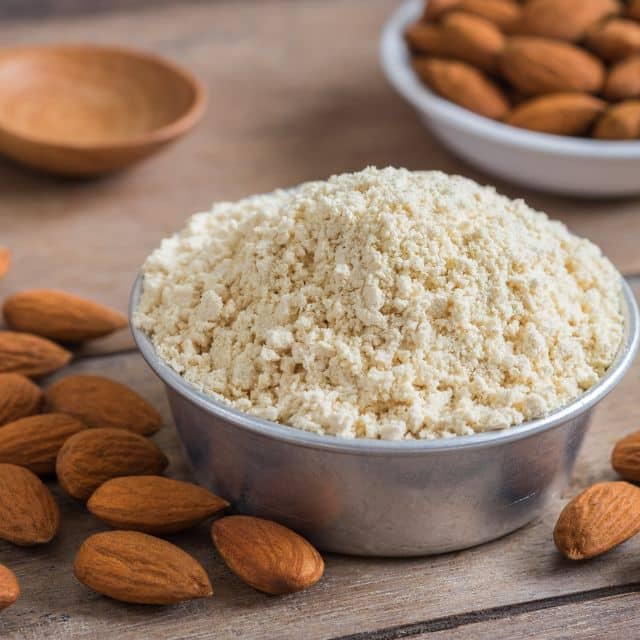
Almond flour is a popular ingredient choice in both gluten-free and low-carb diets, widely used in baking and cooking. It’s made from ground almonds, which gives it a naturally nutty flavor and a rich texture that many bakers value highly. But what sets this type apart from other types of flour, and how can you use it best in your cooking?

Advertisement: The page displays ads and contains advertising links (affiliate links). See our advertisers here.
Estimated reading time: 6 minutes
History and Origin
The almond (Prunus dulcis) originates from Central and Western Asia and is one of the oldest cultivated nut trees – it is already mentioned in ancient sources and spread along the trade routes throughout the Mediterranean region. The art of grinding almonds into flour and paste has deep roots in European confectionery: from medieval marzipan to French macarons and frangipane to Danish kransekage and macaroon cakes.
In more recent times, almond flour has taken on a different leading role – as a cornerstone of gluten-free, keto, and paleo baking, where it replaces grain-based flours.
About Almond Flour
Almond Flour vs. Almond Paste
Almond flour and almond paste are two similar products, but there are important differences that can affect your recipes. Almond flour is finer and made from blanched almonds (almonds without the skin), while almond paste is usually a bit coarser and includes the skin. Almond flour gives a lighter texture in baked goods, while almond paste can give a more rustic and denser texture.
How Almond Flour Is Made
Almond flour is made by grinding whole almonds into a fine powder. To make the most common type of almond flour, the almonds are first blanched to remove the skin, which results in a lighter and finer type of flour. The process involves first blanching the almonds in boiling water, after which the skin is removed and the almonds are dried and ground into flour. This makes almond flour ideal for baking, as it has a smooth texture reminiscent of wheat flour, but with a richer flavor.
Nutritional Value
Nutritional Benefits
Almond flour is not only delicious but also packed with nutrients. It’s an excellent source of healthy fats, protein, vitamin E, and magnesium. A serving of almond flour (about 28 grams) contains around 160 calories, 6 grams of protein, 14 grams of fat, and 3 grams of fiber. This makes it a nourishing alternative to traditional wheat flour, especially for those looking to increase their intake of healthy fat and protein.
Gluten-Free and Low-Carb
One of the biggest advantages of this type is that it’s naturally gluten-free and low in carbohydrates. This makes it an ideal choice for people with celiac disease, gluten intolerance, or those following a low-carb diet such as the keto diet. Almond flour also provides a rich, nutty flavor that many people prefer in their gluten-free baking.
Culinary Uses
Baking
Almond flour is a versatile ingredient in baking that can be used to make everything from bread and cakes to cookies and pies. When baking with this type of flour, you should be aware that it behaves differently than wheat flour. It’s heavier and more moist, so it often requires adjustments to the recipe, such as using fewer wet ingredients or adding extra leavening agents like baking powder or eggs. You may also need to adjust the baking time, as almond flour tends to brown faster than wheat flour.
Cooking Savory Dishes
Almond flour can also be used in savory dishes, such as for breading meat or vegetables, or as a gluten-free thickener in sauces and soups. When used for breading, almond flour gives a delightfully crispy crust with a nutty flavor that complements many different ingredients. You can also use it to make low-carb pizzas or to thicken sauces, without adding gluten or too many carbohydrates.
Almond Flour in Gluten-Free and Paleo Diets
Almond flour is a popular choice within gluten-free and paleo diets. Its naturally low carbohydrate content and absence of gluten make it ideal for these types of diets. For paleo dieters, almond flour is a go-to alternative to grain-based flours, since it’s made from a whole food, namely almonds. It can be used to make everything from paleo bread to desserts that fit within dietary restrictions.
Tips for Using Almond Flour
When working with almond flour, there are some tips that can help you achieve the best results. First and foremost, it’s important to store almond flour properly, as its high fat content can cause it to go rancid. Store it in an airtight container in the refrigerator or freezer to extend its shelf life.
When baking with this flour, you can also try combining it with other gluten-free flours such as coconut flour to achieve a lighter texture. Also keep in mind that almond flour absorbs more liquid than regular flour, so you may need to adjust the amount of liquid in your recipes.
Recipes with Almond Flour
Pancakes
Almond flour pancakes are a delicious and healthier alternative to traditional pancakes. They’re gluten-free and low in carbohydrates, making them perfect for a healthy breakfast. To make these pancakes, mix almond flour with eggs, milk (or a plant-based milk alternative), baking powder, and a bit of sweetener. The pancakes are cooked like regular pancakes, but remember to keep an eye on them, as they can brown faster.
Banana Bread
Almond flour banana bread is a moist and flavorful cake that’s perfect as a healthy snack or breakfast. To make it, combine ripe bananas with the flour, eggs, baking powder, and a bit of honey or maple syrup for sweetness. The banana bread is baked at a lower temperature than regular bread to prevent it from browning too much on the outside while still being raw on the inside.
Chicken Tenders
Almond flour chicken tenders are a healthy and crispy version of the classic dish. The chicken tenders are coated in a mixture of the flour and spices before being fried or baked until golden and crispy. The result is delicious, crispy chicken tenders that are gluten-free and low in carbohydrates, making them a perfect choice for those who want a healthier version of a favorite dish.
How to Make Your Own Almond Flour
If you have almonds on hand, you can easily make your own almond flour at home. All you need is raw, unsalted almonds and a powerful blender or food processor.
Total time: 30 minutes
- Blanch the almonds
Place the almonds in boiling water for a couple of minutes, so the skin loosens.
- Peel the almonds
Let the almonds cool, and rub off the skin – it slips off easily between your fingers.
- Dry the almonds
Let the peeled almonds dry completely – damp almonds will clump in the blender.
- Blend into flour
Blend the almonds in short bursts, until they reach a fine, floury consistency.
- Watch the oil
Stop in time – blend too long, and the almonds release oil and turn into almond butter.
Where Can You Buy Almond Flour?
Almond flour is available in most supermarkets such as Walmart, especially in the health food or gluten-free sections. It can also be bought online, where you can often find it in larger quantities at a better price. When buying almond flour, look for products made from 100% almonds without additives.
Storage
- Store almond flour in an airtight container – its high fat content makes it more prone to rancidity than grain flour
- Refrigerated, almond flour typically keeps for 3-6 months, and up to a year in the freezer
- Always smell the flour before use – rancid almond flour has a sharp, bitter odor
Conclusion
Almond flour is a versatile and nutrient-rich ingredient that can be used for both sweet and savory dishes. Its naturally low carbohydrate content and absence of gluten make it an ideal choice for many diets, including gluten-free and paleo. Whether you’re baking cakes, making pancakes, or preparing chicken tenders, almond flour is an excellent substitute for traditional flour that adds both flavor and nutrition to your dishes.
Try This Recipe
The almond flour’s light, nutty cake base is the star of our Strawberry Dream in the Airfryer – Light Almond Base with Creamy Strawberry Mousse.
Equipment and Products
Almond and vanilla are a classic duo in everything from macarons to almond cakes. Find it in the shop: Organic Vanilla Sugar 34 g Urtekram.
Frequently Asked Questions
Almond flour is finely ground flour made from blanched almonds (Prunus dulcis). It’s naturally gluten-free, low in carbohydrates, and has a rich, nutty flavor.
Yes, almond flour is naturally gluten-free and suitable for people with celiac disease as well as for keto and paleo diets.
Almond flour is fine and ground from blanched almonds without the skin, while almond paste is coarser and includes the skin. Almond flour gives lighter baked goods, almond paste a more rustic texture.
Not 1:1. Almond flour is heavier and more moist, absorbs more liquid, and browns faster – adjust liquid, leavening agents, and baking time, or combine with e.g. coconut flour.
Due to its high fat content, almond flour should be stored airtight in the refrigerator (3-6 months) or in the freezer (up to a year).
Facts About Almond Flour
| Field | Value |
|---|---|
| Raw Material | Blanched almonds (Prunus dulcis) |
| Calories | Approx. 570-590 kcal per 100 g |
| Protein | Approx. 21 g per 100 g |
| Fat | Approx. 50 g per 100 g (predominantly unsaturated) |
| Carbohydrates | Low – suitable for keto and low-carb diets |
| Gluten | No – naturally gluten-free |
| Typical Uses | Cakes, macarons, pancakes, breading, low-carb baking |
| Storage | Airtight in the refrigerator or freezer |
| Shelf Life | 3-6 months refrigerated, up to 1 year frozen |
