

Chinese cabbage is the pale, elongated cabbage with crinkled leaves and juicy white ribs that most of us know from the supermarket’s vegetable section. It has its roots in Asia, but it has long since become an everyday cabbage far beyond the continent – mild, versatile and easy to cook with, whether you want it raw in a salad or quickly stir-fried in a wok.
I love Chinese cabbage because it can do so much more than you would think. It is crisp and fresh when raw, sweet and soft when it gets some heat, and it is also the main ingredient in Korea’s most common kimchi. In the air fryer I roast it in wedges, so the edges turn golden while the core stays juicy.
Estimated reading time: 6 minutes
History and origin
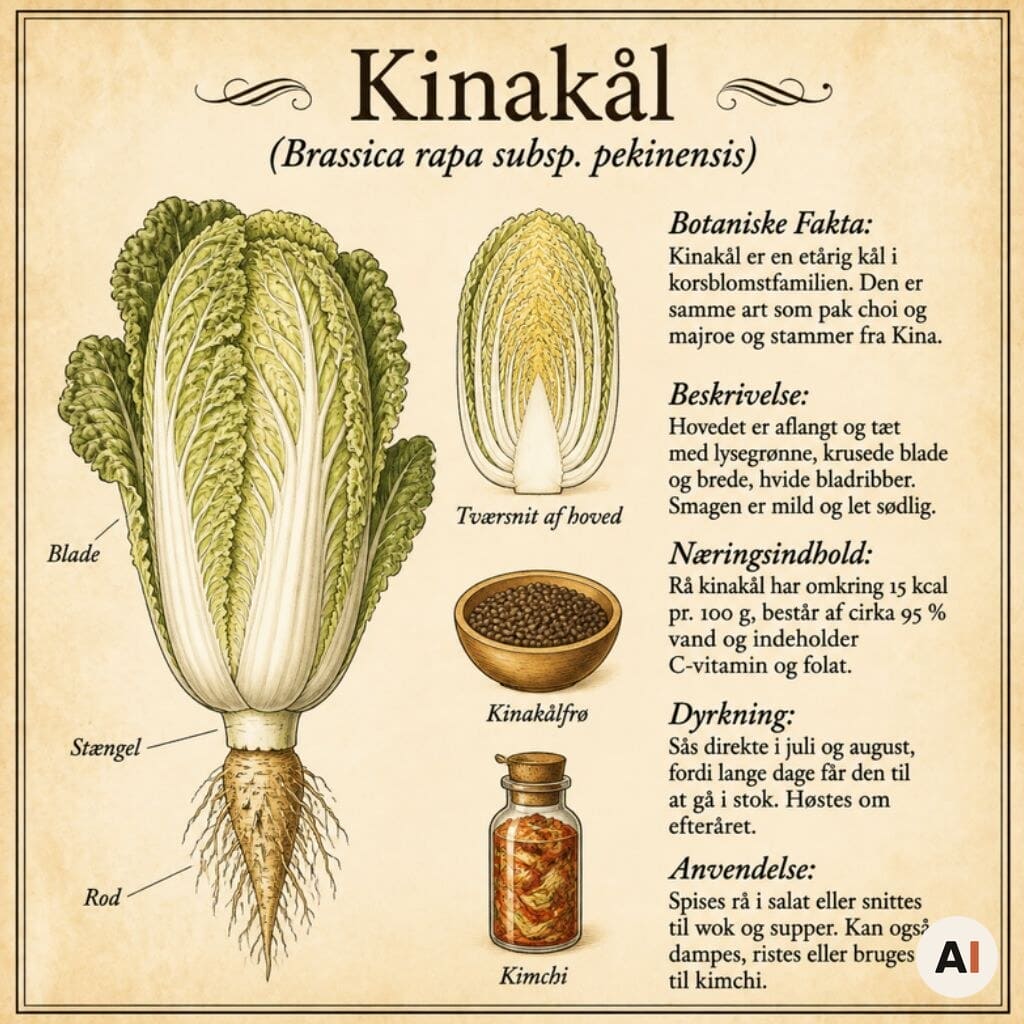
Chinese cabbage comes from China. The first records of its cultivation date from the 1400s, in the area around the Yangtze River. Botanically it is called Brassica rapa subsp. pekinensis, and it belongs to the same species as turnip and pak choi (bok choy).
It is believed that Chinese cabbage arose from a natural cross between those very two relatives, turnip and pak choi. From China it spread to Korea and Japan, where it became a staple of the cuisine.
From Asia to the world
In Korea, Chinese cabbage is indispensable in the kitchen today, and in Japan it is a classic in stews and one-pot dishes. From the 1800s the cabbage travelled with the Chinese diaspora on to the rest of Asia, Europe, America and Australia.
Today it is also grown in home vegetable gardens, and although it still carries China in its name, it feels just as much at home in a Western kitchen as white cabbage and pointed cabbage.
The names behind the cabbage
The Latin name pekinensis refers to Peking, present-day Beijing. The cabbage is also known as napa cabbage – in Britain it is often sold as Chinese leaf – and in nutrition tables it also appears as pe-tsai.
Flavour and aroma
Chinese cabbage is one of the mildest types of cabbage you can buy. The flavour is fresh and slightly sweet, with a very faint mustardy note, but without the strong cabbage taste that many people associate with white cabbage.
Raw Chinese cabbage
Raw, Chinese cabbage is crisp and juicy. The broad white ribs crunch almost like a lettuce stalk, while the pale green, crinkled leaf tips are thin and tender. The innermost leaves are the crispest, and they can take a dressing without wilting straight away.
Cooked Chinese cabbage
With heat, Chinese cabbage turns soft and sweeter, and the ribs become almost silky. With high, dry heat in a wok or air fryer, the edges caramelise and give a lightly toasted, nutty flavour, while boiled Chinese cabbage turns completely mild and absorbs flavour from the stock.
Chinese cabbage, pointed cabbage and pak choi
Compared with pointed cabbage, which is closely related to white cabbage, Chinese cabbage is juicier and has thinner leaves. Pak choi tastes similar to Chinese cabbage, but grows as a loose rosette with thick stalks instead of forming a closed head.
Culinary uses
Chinese cabbage can be eaten raw, quickly stir-fried, simmered in soups and fermented – which is why I almost always have a head in the fridge.
In the home kitchen
At home, we use Chinese cabbage mostly raw in salads and stir-fried in a wok. Finely shredded Chinese cabbage makes a quick everyday salad that can be tossed with anything from a light lemon dressing to a creamy one, and it gives more bite than ordinary lettuce.
In the wok, the cabbage needs only a short time, so the ribs keep a little crispness. I cut the ribs and leaves separately and add the ribs first, because they take the longest.
Around the world
Around the world, Chinese cabbage is best known from Korea, where it is the main ingredient in baechu-kimchi. The cabbage is salted, rubbed with a spicy paste and left to ferment. Here are some of the classic dishes:
- Baechu-kimchi (Korea): the most common kimchi of them all.
- Wraps (Korea): raw leaves as a wrap around pork or oysters with gochujang.
- Soup (Korea): the tough outer leaves go into soups.
- Suan cai (north-eastern China): fermented Chinese cabbage, a traditional food in the region.
- Dumplings and gyoza: finely chopped Chinese cabbage is a classic filling together with pork.
In the air fryer
My own favourite is roasted Chinese cabbage in the air fryer. I cut the cabbage lengthways into wedges through the root, so the leaves stay together, brush them with oil mixed with a little soy sauce or miso, and roast them at high heat until the edges are golden and crisp. The core turns sweet and juicy, and the leaf tips become almost like crisps.
Turn the wedges halfway through, and don’t place them too close together in the basket, otherwise they steam instead of roasting. Sprinkle with toasted sesame seeds and spring onion, and serve with chicken, fish or rice.
Health benefits
Chinese cabbage is a light vegetable: 100 g of raw Chinese cabbage provides 18 kcal and consists of 94.7 g of water. So you can eat a large portion without feeling weighed down, and at the same time you get both dietary fibre and vitamins.
Nutritional content per 100 g raw Chinese cabbage
- Energy: 18 kcal
- Protein: 1.3 g
- Fat: 0.2 g
- Carbohydrate: 3.3 g
- Dietary fibre: 1.2 g
- Water: 94.7 g
- Vitamin C: 26 mg
- Folate: 96.2 µg
- Beta-carotene: 720 µg
- Vitamin A: 60 µg RE
- Vitamin B6: 0.141 mg
Vitamins in Chinese cabbage
Chinese cabbage provides vitamin C and folate in particular. Folate is a B vitamin that the body uses, among other things, in cell division, and vitamin C contributes to the normal function of the immune system. The cabbage also contains beta-carotene, which the body can convert into vitamin A.
Raw, stir-fried or fermented
Vitamin C does not survive long boiling, so you keep the most by eating Chinese cabbage raw or cooking it quickly in a wok or air fryer. Kimchi is a flavoursome way to eat Chinese cabbage, but it is often quite salty, so enjoy it as a side.
Cultivation
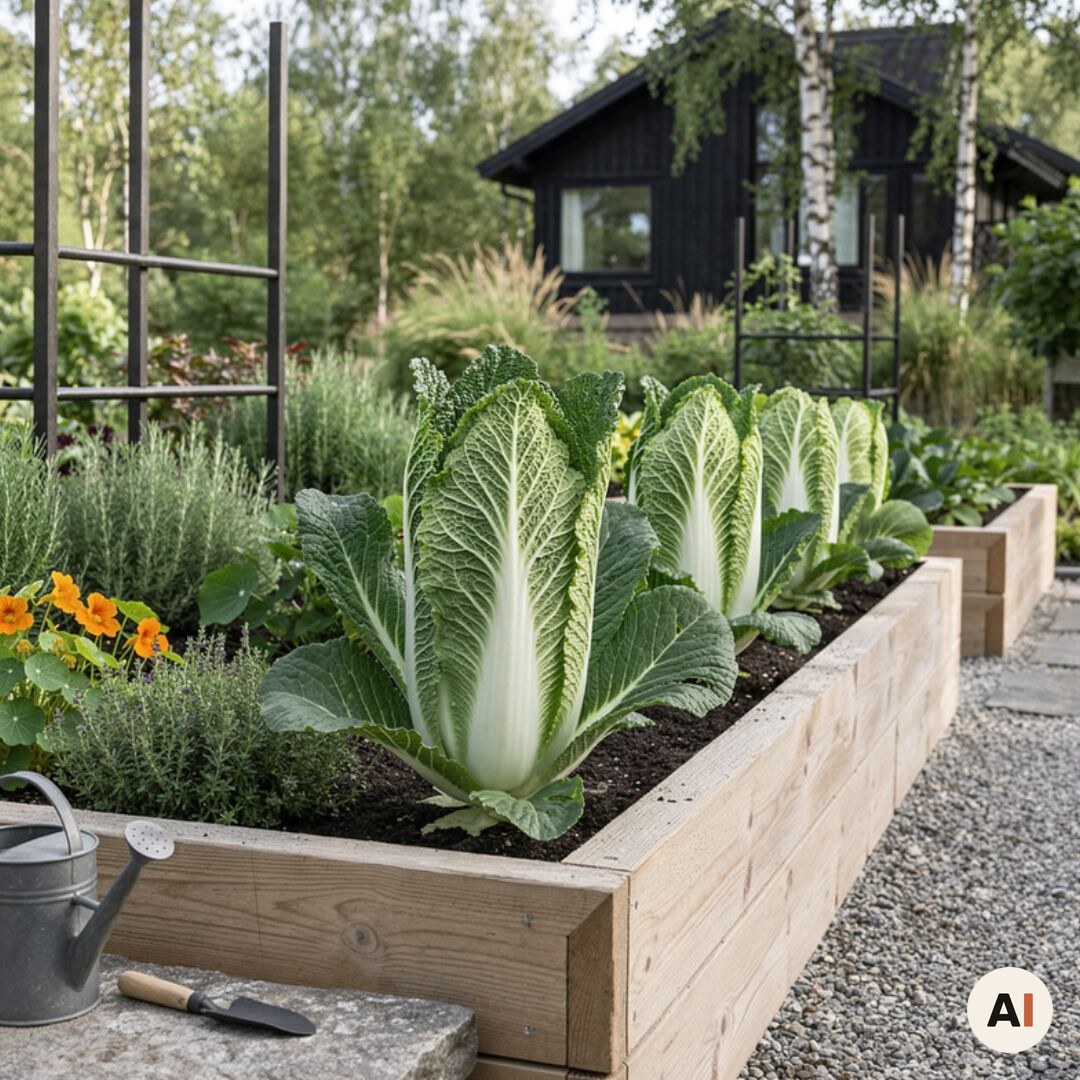
Chinese cabbage is a fast crop in the vegetable garden. It is ready to harvest 8–12 weeks after sowing, when a fully developed head weighs 1–3 kg, but it can be eaten at practically every stage of development – even as young plants, before the head has closed.
Growing conditions
The most important thing is timing. If you sow Chinese cabbage in spring, the plants bolt (run to flower), because cold and long days can trigger flowering. That is why, in northern Europe, it is sown outdoors from mid-July through August, so it grows on while the days get shorter and the harvest falls in autumn.
- Soil: deeply loosened, medium-textured soil – a particularly high yield on sandy clay loam. Very sandy or very clayey soil is unsuitable.
- pH and nutrients: pH 6.0–6.2 and a high content of organic matter.
- Temperature: thrives best at 13–21 °C, depending on the variety.
- Frost: tolerates temperatures below 0 °C briefly, but not sustained frost below −5 °C.
- Day length: long days give more and larger leaves, but can also trigger flowering.
- Spacing: 40–45 cm between the rows and 25–30 cm between plants in the row.
How to grow Chinese cabbage
Follow the steps below – and remember that Chinese cabbage is sown in summer, not in spring.
Total time: 8-12 weeks
- Prepare the soil
Loosen the soil deeply, and choose a bed with medium-textured soil, a high content of organic matter and a pH of 6.0–6.2.
- Sow the seeds
Sow from mid-July through August. Place the seeds 1–2 cm deep, with 40–45 cm between the rows and 25–30 cm between plants in the row.
- Water and care
Keep the soil evenly moist and the bed free of weeds, so the plants keep growing without a check. The cabbage tolerates a little frost for a short time, but not sustained frost below −5 °C.
- Harvest
Harvest 8–12 weeks after sowing, when the head feels firm. Cut the cabbage off at the root. Young plants can also be eaten if you want to harvest earlier.
Storage
Chinese cabbage keeps surprisingly well when it is kept cold and humid. In commercial cold stores it can be stored for 3–4 months at 0–1 °C and 85–90% relative humidity, so the autumn harvest can last well into winter.
In the fridge
The same principle applies at home. Put the whole head in the fridge’s vegetable drawer, preferably loosely wrapped in a bag so the leaves don’t dry out. My best tips:
- Use it from the outside: if you only need a little, take the leaves off from the outside instead of cutting the head through.
- Remove wilted outer leaves: the inner leaves are usually still crisp and fine.
- Wrap the cut surface: if you have cut into the cabbage, cover it up, and use the opened cabbage first.
- Save the outer leaves for soup: the tough outer leaves are good in soups, just as they are used in Korea.
- Keep it away from apples and pears: the fruit gives off ethylene, which can make the leaves turn yellow faster.
Freezing and fermenting
If the cabbage is to be eaten raw, it is not suitable for freezing, because it loses its crispness. For soups and stir-fries you can cut it into strips, blanch it briefly and freeze it. The classic way to preserve Chinese cabbage, however, is to ferment it – which is exactly what kimchi and suan cai are.
Try this recipe
Chinese cabbage and pork is one of the most classic combinations in the filling for Chinese dumplings, and the cabbage is also often used in Japanese gyoza. Try our recipe for Gyoza in the air fryer – crispy Japanese dumplings in 10 minutes. I use finely chopped Chinese cabbage, which I first sprinkle with a little salt and squeeze free of water before mixing it into the filling. That way the filling turns out juicy without being wet, and the bottom turns crisp in the air fryer.
Frequently asked questions
100 g of raw Chinese cabbage contains 18 kcal. The cabbage is almost entirely water, 94.7 g per 100 g, and also provides dietary fibre, vitamin C and folate.
No, but they are close relatives and both belong to the species Brassica rapa, like turnip. Chinese cabbage forms an elongated, closed head with crinkled leaves, while pak choi grows as a loose rosette with thick, juicy stalks.
Yes, Chinese cabbage is one of the best types of cabbage to eat raw, because the leaves are thin and the ribs are crisp and juicy. Shred it finely for salad, or use whole leaves as wraps around pork, as they do in Korea.
Cut the Chinese cabbage lengthways into wedges through the root, so the leaves stay together. Brush the wedges with oil and a little soy sauce, and roast them at high heat until the edges are golden and crisp. Turn them halfway through, and don’t place them too close together in the basket.
Store Chinese cabbage cold and humid in the fridge’s vegetable drawer, preferably loosely wrapped in a bag. Take leaves off from the outside as needed, remove wilted outer leaves, and cover the cut surface if you have cut into the cabbage.
Facts about Chinese cabbage
| Property | Value |
|---|---|
| English name | Chinese cabbage |
| Other names | Napa cabbage, Chinese leaf (UK), pe-tsai |
| Latin name | Brassica rapa subsp. pekinensis |
| Family | Mustard family (Brassicaceae) |
| Origin | China, the area around the Yangtze River |
| Plant type | Cabbage with an elongated, closed head |
| Head weight | 1–3 kg |
| Hardiness | Tolerates temperatures below 0 °C briefly, but not sustained frost below −5 °C |
| Thrives best at | 13–21 °C, depending on the variety |
| Soil | Deeply loosened, medium-textured soil, preferably sandy clay loam; pH 6.0–6.2 |
| Sow/plant | From mid-July through August, 1–2 cm deep |
| Harvest | 8–12 weeks after sowing |
| Calories per 100 g | 18 kcal (raw) |
| Flavour | Mild, fresh and slightly sweet, with crisp, juicy ribs |
| Culinary use | Raw in salad, wok, kimchi, soups, dumplings and roasted in the air fryer |
| Storage | Cold and humid in the fridge’s vegetable drawer |
