

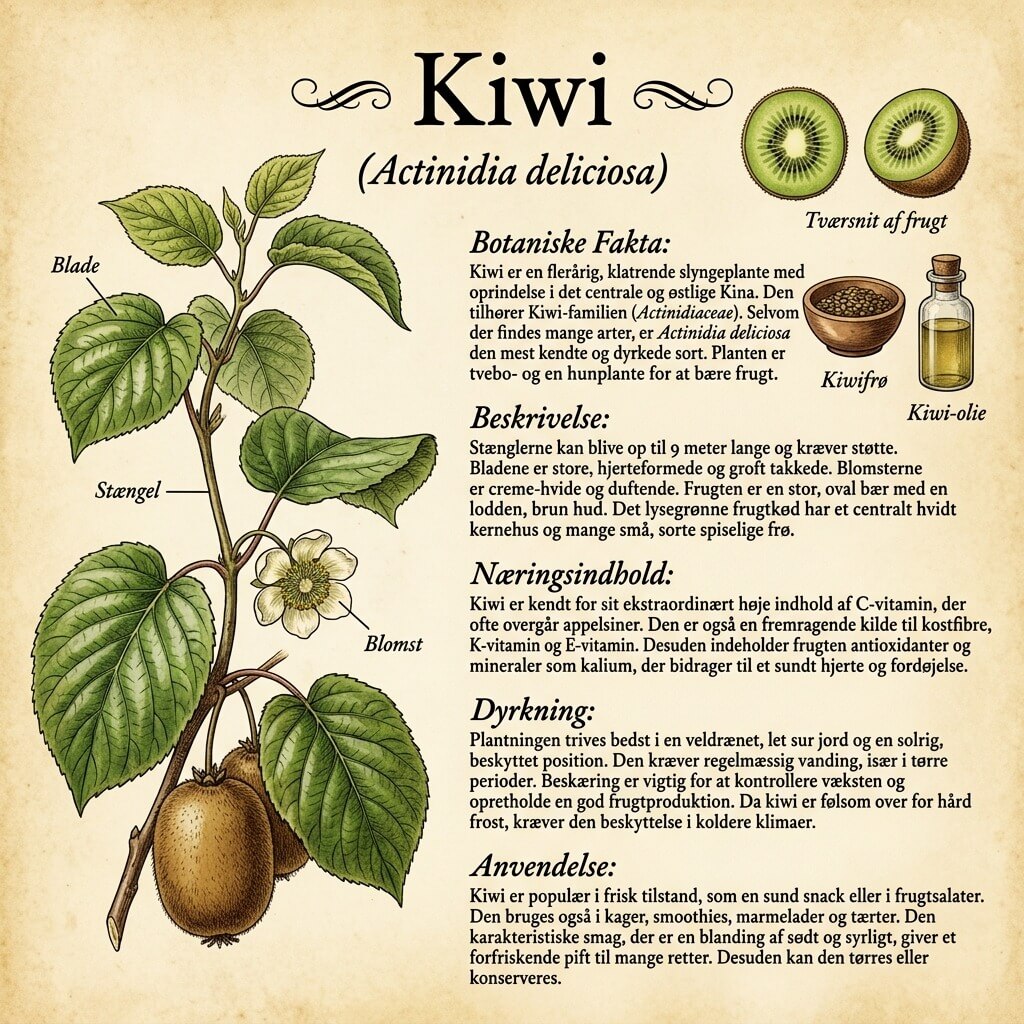
Kiwi is one of the most vitamin C-rich fruits you can find in the supermarket. The small, oval fruit with its fuzzy, brownish skin and light green flesh has won the hearts of Danes as a fresh and healthy snack. Actinidia deliciosa is the Latin name for the common green kiwi, which most of us know from the fruit bowl.

Advertisement: The page displays ads and contains advertising links (affiliate links). See our advertisers here.
I’ve always been fascinated by the kiwi’s unique appearance and intense flavor. The green flesh with its small, black seeds creates a beautiful contrast, and the taste balances perfectly between sweet and tart. The fruit is about the size of a large hen’s egg and typically weighs between 60 and 100 grams.
Kiwi belongs to the family Actinidiaceae and is botanically classified as a berry. In addition to the classic green variety, there are also yellow kiwis with smoother skin and a sweeter taste. Both types are excellent sources of essential nutrients and can be used in countless dishes.
Estimated reading time: 12 minutes
History and origin
The kiwi’s history begins in central and eastern China, where the fruit has grown wild for centuries. The earliest written descriptions of the plant date all the way back to the 12th century, during the Song dynasty. In China, the fruit was known as mihoutao, which translates to “monkey peach.”
It wasn’t until the early 20th century that the kiwi found its way out of China. In 1904, Isabel Fraser brought seeds to New Zealand, where the first commercial plantations were established. New Zealanders originally called the fruit “Chinese gooseberry” because of its similarity in taste.
The name change to “kiwi” happened in 1959, when the New Zealand export company Turners and Growers decided to give the fruit a more unique and marketable name. The fruit was named after New Zealand’s national bird, the kiwi, which it resembles with its brown, fuzzy skin. This strategic name change made it easier to market the fruit internationally.
Today, kiwi is grown in many countries with a temperate climate, including Italy, Chile, Greece and the USA. New Zealand and Italy are among the world’s largest producers, and the fruit is exported worldwide year-round thanks to production in both hemispheres.
Taste and aroma
The kiwi’s flavor is a unique combination of sweet and tart, reminiscent of a blend of strawberry, banana and pineapple. The fresh, tropical taste has a slight tang that makes the fruit refreshing and suitable for many different dishes.
The texture of a ripe kiwi is juicy and soft with a slightly creamy consistency. The small, black seeds add a subtle crunchy element that many find appealing. The skin is technically edible and actually contains extra dietary fiber and flavonoids, although most people prefer to peel the fruit because of its fuzzy texture.
The aroma is fresh and slightly floral with notes of citrus and tropical fruits. When the kiwi is cut open, a pleasant scent is released that signals the fruit’s ripeness. An unripe kiwi will be firmer and more tart, while an overripe fruit can become too soft and lose its characteristic freshness.
The yellow kiwi, also known as SunGold, has a sweeter and more aromatic flavor than the green variety. The yellow type also has smoother and thinner skin, making it more pleasant to eat without peeling.
Culinary use
Kiwi is an incredibly versatile fruit in the kitchen. Its fresh, tart flavor makes it suitable for both sweet and savory dishes. The fruit can be eaten raw as a snack, mixed into salads, or used as an ingredient in desserts and drinks.
In Danish cuisine
In Denmark, kiwi is most often used as fresh fruit for breakfast. It’s a popular addition to yogurt, muesli and porridge, where its fresh flavor and beautiful green color add both taste and visual appeal. Many Danish families include kiwi in their daily fruit intake.
For festive occasions, kiwi is often seen as decoration on layer cakes and fruit platters. The green color creates a beautiful contrast to red strawberries and orange melon. Fruit skewers with kiwi are also a hit at children’s birthday parties and summer parties.
Smoothies with kiwi have become popular in Denmark, often blended with spinach, banana and apple juice for a green and healthy drink. The kiwi’s natural sweetness reduces the need for added sugar, making the drink healthier.
Internationally
In New Zealand and Australia, kiwi is a source of national pride and is used in everything from jams to marinades. The fruit contains the enzyme actinidin, a natural meat tenderizer, and is therefore traditionally used to marinate meat before cooking.
Asian cuisines often use kiwi in sweet desserts and iced drinks. In Japan, kiwi sandwiches with whipped cream are a popular delicacy, and in China, the fruit is used in traditional tea-based drinks. Taiwanese bubble tea shops often offer kiwi flavor.
In South American countries like Chile, a Mayor kiwi producer, the fruit is used in ceviche and fresh salsas. Its tart flavor complements fish and seafood in the same way as lime or lemon.
Preparation methods
Kiwi is best eaten raw, when all nutrients remain intact. The classic method is to cut the fruit in half and scoop out the flesh with a spoon. Alternatively, you can peel the kiwi and cut it into slices or cubes.
When heated, kiwi can lose some of its fresh flavor and vitamin C content. If you want to bake with kiwi, it’s best to add it as a topping after baking rather than incorporating it into the batter. However, kiwi can be used in jams and preserves, where it’s cooked with sugar.
Be aware that the kiwi’s actinidin enzyme can prevent gelatin from setting. If you want to make a gelatin dessert with kiwi, the fruit must first be heated to deactivate the enzyme, or you can use agar-agar instead of gelatin.
Dried kiwi is a popular snack that can be made in an airfryer at low temperature. Kiwi fruit chips retain much of the flavor and are a healthy alternative to candy. The fruit can also be frozen for use in smoothies year-round.
Health benefits
Kiwi is a true nutritional powerhouse. With only about 61 calories per 100 grams, the fruit delivers impressive amounts of vitamins and minerals. The most remarkable aspect is its vitamin C content: 100 grams of kiwi contains approximately 93 mg of vitamin C, which corresponds to around 155% of the daily recommended intake.
Vitamin C is essential for immune system function and helps protect cells against oxidative stress. Regular intake of kiwi can help maintain optimal vitamin C levels in the body, which is especially important during the winter months.
Kiwi also contains significant amounts of vitamin K (40.3 µg per 100 g), which is important for blood clotting and bone health. Vitamin E (1.5 mg per 100 g) contributes to skin health and works together with vitamin C to stimulate collagen production.
The potassium content in kiwi (312 mg per 100 g) supports heart health and helps regulate blood pressure. The fruit also contains dietary fiber that promotes healthy digestion. The unique enzyme actinidin in kiwi helps break down proteins and can relieve discomfort after heavy meals.
Research has shown that regular intake of kiwi can have positive effects on sleep quality. The fruit’s content of serotonin and antioxidants is believed to contribute to better sleep. Studies also suggest that kiwi can have beneficial effects on constipation, thanks to its high fiber content and actinidin’s effect on gut motility.

Cultivation
The kiwi plant is a vigorous climbing vine that can grow up to 6-9 meters. The plant thrives best in temperate climates with mild winters and warm summers. In Denmark, kiwi can be grown outdoors in the mildest regions, but the plant requires protection against hard frost.
Kiwi plants are dioecious, meaning you need both male and female plants to get fruit. One male plant can pollinate up to seven female plants. Planting should take place in a sunny, sheltered spot with well-drained soil rich in organic matter.
From planting to first harvest typically takes 3-5 years, as kiwi plants mature slowly. However, once the plants begin bearing fruit, they can remain productive for many decades. The harvest takes place in early autumn, when the fruits have reached their full size but are still firm.
In Denmark, the hardier kiwi berry variety (Actinidia arguta) may be a better choice for cultivation. This species tolerates temperatures down to -18°C and produces smaller fruits with edible skin. Kiwi berries have become more popular among Danish hobby growers in recent years.
Watering is important, especially during the growing season, as kiwi plants have shallow roots and are sensitive to drought. Regular watering 3-4 times a week during the summer half of the year is recommended. Pruning is also necessary to control growth and promote fruit formation.
Storage
Unripe kiwis should be stored at room temperature, where they slowly ripen over a few days. To speed up the ripening process, you can place the kiwi together with apples or bananas, as these fruits release ethylene gas, which accelerates ripening.
When the kiwi is ripe and yields to light pressure, it should be moved to the refrigerator. Here, a ripe kiwi will stay fresh for up to two weeks. Be sure to store the fruit separately from other fruits in the refrigerator, as kiwi is sensitive to ethylene and can become overripe quickly.
Cut kiwi should be stored in an airtight container in the refrigerator and eaten within a few days. The flesh oxidizes quickly when exposed to air, resulting in discoloration and loss of texture.
Kiwi can be frozen for longer storage. Peel and cut the fruit into slices or cubes, and freeze them in a single layer on a baking sheet before transferring them to freezer bags. Frozen kiwis are perfect for smoothies and keep for up to 12 months.
Try this recipe
The kiwi’s tart freshness makes it a perfect ingredient in fruit-based desserts. Its fresh flavor balances the sweetness and adds a delightful textural contrast. Just like apples, kiwi can be used as a topping on warm desserts, where the fresh fruit meets the warm, crispy crumble topping. Try our recipe for Apple Crumble in the Airfryer and experiment with adding fresh kiwi as a topping after baking.
Equipment and products
Kiwi and honey are a classic combination that highlights the fruit’s natural sweetness. A drizzle of quality honey over fresh kiwi transforms a simple snack into a luxurious dessert. The deep, caramel-like flavor of palm honey complements the kiwi’s fresh acidity beautifully. Discover our selection of Palm Honey for your fruit-based dishes.
Frequently asked questions
Yes, kiwi skin is edible and actually contains extra dietary fiber and antioxidants like flavonoids. However, many people choose to peel the fruit because of its fuzzy texture. If you want to eat the skin, you should wash the fruit thoroughly first. The yellow kiwi has smoother skin and is easier to eat whole.
100 grams of kiwi contains approximately 93 mg of vitamin C, which corresponds to around 155% of the daily recommended intake. A single kiwi can therefore cover your daily vitamin C needs. Kiwi actually contains more vitamin C than oranges of the same weight.
A ripe kiwi yields to light pressure, just like a ripe avocado. If the fruit is hard, it’s unripe and can be ripened at room temperature for a few days. Place it together with bananas or apples to speed up the process. An overripe kiwi will feel soft and may have wrinkled skin.
Kiwi contains the enzyme actinidin, which breaks down proteins – including gelatin. If you add raw kiwi to a gelatin dessert, it won’t set. You can either heat the kiwi first to deactivate the enzyme, or use agar-agar as a plant-based alternative to gelatin.
Ripe kiwis keep for up to two weeks in the refrigerator. Unripe kiwis should first be ripened at room temperature and then moved to the refrigerator. Cut kiwi should be eaten within a few days and stored in an airtight container.
Facts about kiwi
| Field | Value |
|---|---|
| English name | Kiwi, kiwifruit |
| Latin name | Actinidia deliciosa |
| Family | Actinidiaceae |
| Origin | Central and eastern China |
| Other names | Chinese gooseberry |
| Calories per 100 g | 61 kcal |
| Vitamin C per 100 g | 93 mg (155% of recommended daily intake) |
| Potassium per 100 g | 312 mg |
| Vitamin K per 100 g | 40.3 µg |
| Vitamin E per 100 g | 1.5 mg |
| Season | Year-round (imported) |
| Harvest season (Danish-grown) | September-October |
| Storage | Refrigerator: up to 2 weeks (ripe) |
| Taste | Sweet-tart, fresh, tropical |
| Texture | Juicy, soft, with small seeds |
