

Parsnip is one of the root vegetables I look forward to most when autumn sets in. The pale, cone-shaped root with the Latin name Pastinaca sativa has a sweetness and a nutty depth that no other winter vegetable can really match — and it only gets better once the frost has been over the field.

Advertisement: The page displays ads and contains advertising links (affiliate links). See our advertisers here.
For many years, parsnip stood a little in the shadow of carrots and potatoes in Danish kitchens, but thankfully it has made a strong comeback. It’s cheap, long-lasting, easy to grow and almost impossible to get bored with in an airfryer, where the dry heat caramelizes the sugar in the root along the edges.
In this entry, you’ll get the history behind the parsnip, how it tastes, what it can do in the kitchen, how to grow and store it — and answers to the questions I get asked most often about winter’s sweetest root vegetable.
Estimated reading time: 11 minutes
History and Origin
From Wild Plant to Cultivated Root Vegetable
Parsnip grows wild in Central and Southern Europe, and it has been cultivated for several thousand years. It’s not a trendy vegetable that just popped up recently: through large parts of European history, parsnip has been an important part of the everyday diet, precisely because it’s filling, long-lasting and can be pulled from the ground when the rest of the garden has long since gone dormant for winter.
The varieties we buy today aren’t quite the same as the wild plant. Cultivated parsnips have been bred toward a larger, more fleshy root — and toward a less harsh plant sap than their wild relative. That’s worth remembering if you come across wild parsnip in nature: it needs to be handled with more care than the one you pick from your vegetable garden.
Parsnip in Denmark
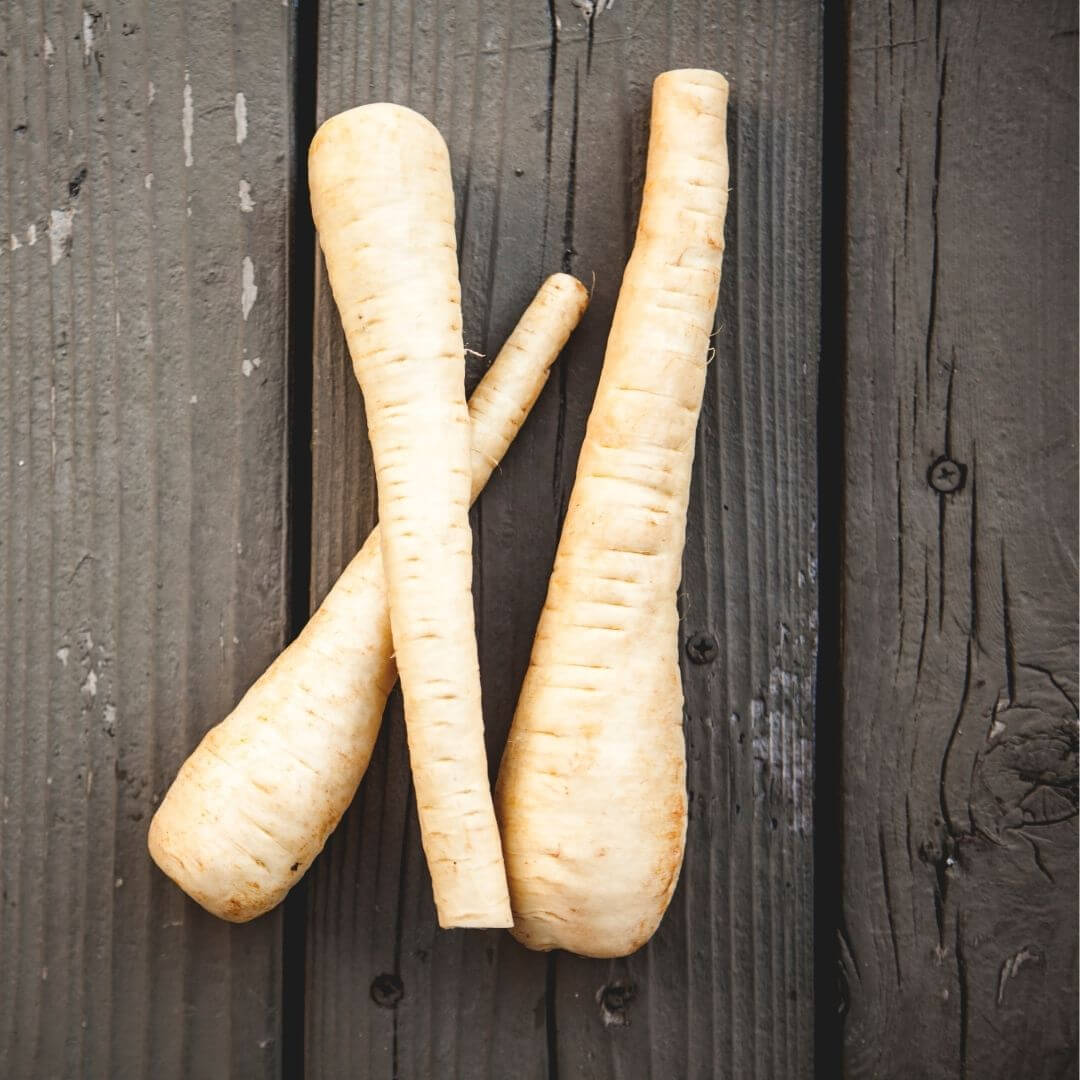
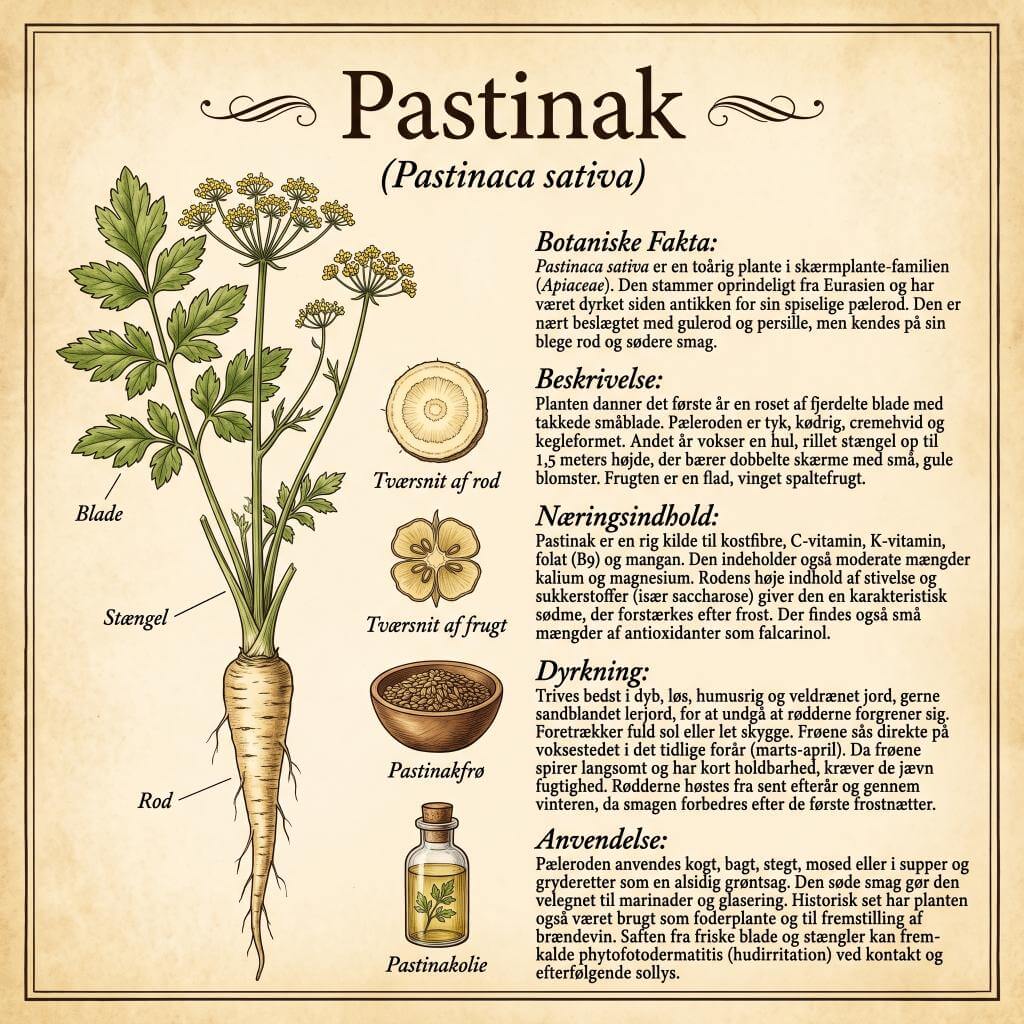
In Denmark, parsnip has been known since the Middle Ages, but it didn’t enter the kitchen as a vegetable. It was originally used as a medicinal herb, and only later found its way into the pots and onto the baking trays. Botanically, it belongs to the carrot family (Apiaceae) along with, among others, carrot, celery and parsley — a family you quickly learn to recognize by its large, flat umbels of flowers.
I’m noticing that parsnip is having a renaissance in Danish kitchens. It fits perfectly into the way we cook now: simple ingredients, high heat and a sweetness that doesn’t come from the sugar bowl.
Flavor and Aroma
Sweetness That Comes With the Frost
The most important thing to know about parsnip’s flavor is that it changes over the season. When the cold sets in, the plant converts some of its starch into sugar, and the root becomes noticeably sweeter. A parsnip that has stayed in the ground after the first frost simply doesn’t taste like one that was harvested early.
That’s why it’s no coincidence that parsnip is a winter ingredient. The sweetness is a direct reward for letting the root stay where it is — and it’s also why I always save my best parsnip dishes for December and January.
Aroma and Texture
In terms of flavor, parsnip sits somewhere between carrot and parsley root, but with its own distinctly nutty and lightly spiced note. Raw, the flesh is firm and crisp, almost like a firm pear in texture. Under heat, it collapses into something soft and creamy, while the edges turn dark and caramel-like.
It’s precisely the contrast between the soft core and the caramelized surface that makes parsnip so rewarding in an airfryer. The dry, circulating heat is made for the job.
Culinary Uses
In the Danish Kitchen
Parsnip is one of the most flexible root vegetables we have. It can be baked, boiled, stewed, mashed and eaten raw, and it works both as a main ingredient and as the one that adds depth to a mix of other root vegetables. Here are the classics I keep coming back to:
- Oven-baked parsnip: alone or in a mix of root vegetables — the simplest and best way to get to know the ingredient.
- Parsnip soup: creamy and sweet without cream in the starring role.
- Stewed parsnip and gratins: winter’s answer to comfort food.
- Grated raw in salad: crisp, sweet and a fresh counterpoint to heavy winter dishes.
Internationally
Outside Denmark, parsnip is especially associated with British cuisine, where honey-glazed parsnips are a regular side dish for the Sunday roast and Christmas dinner. You’ll also find it as a mash or purée, where the sweetness gets to take center stage, and as thinly sliced parsnip chips.
In the Airfryer
Cut the roots into even pieces so they finish cooking at the same time — parsnip is thickest at the top and tapers to a point at the bottom, so it helps to split the wide end lengthwise. Toss the pieces in a little oil, give them room in the basket instead of stacking them, and shake the basket during cooking.
Salt only at the end, when they come out hot. That way the salt doesn’t draw out moisture along the way, and the sweetness stands out more sharply. If you have both parsnip and carrot in the basket, remember that parsnip typically becomes tender a little faster.
Health Benefits
Nutritional Content per 100 g
Parsnip contains about 63 kcal per 100 g. That’s more than many other vegetables, but less than potatoes — and in return, you get a decent fiber content along with it:
- Fiber: approx. 4.5 g per 100 g
- Carbohydrate: approx. 10.2 g per 100 g
- Protein: approx. 2.1 g per 100 g
- Fat: approx. 0.5 g per 100 g
- Vitamin C: approx. 6 mg per 100 g
- Folate: approx. 67 µg per 100 g
- Potassium: high content
- Also contains: vitamin B2, vitamin E and niacin
Fiber and Satiety
In my opinion, the fiber content is parsnip’s greatest strength in an everyday diet. It’s a vegetable that actually fills you up, and can therefore carry a plate without you needing to fill half of it with potatoes or rice.
Good to Know
Parsnip is related to celery and carrot, and people who react allergically to them can, in rare cases, also react to parsnip. If you’re allergic to umbellifers, be aware of this.
Growing
Growing Conditions
Parsnip is one of the most patient plants in the vegetable garden. It needs time, but it doesn’t require much care along the way — and it tolerates cold better than almost anything else you can sow outdoors.
- Soil: sandy to clay soil, preferably loamy and deep, loose-textured — and dug deep, since the root typically grows 12-20 cm long.
- Light: full sun to light partial shade.
- Hardiness: very frost-tolerant and can overwinter in the ground.
- Climate: thrives in cool climates — an ideal plant for Nordic conditions.
From Seed to Harvest
Parsnip is sown directly outdoors in April-May and harvested from September. So a whole season passes before you can pull up the first root — but in return, the harvest can stretch all the way into the following spring.
Total time: 4-5 months
- Loosen the soil deeply
Dig the bed deeply loose in loamy, deep soil. Parsnip’s root typically grows 12-20 cm long and needs to be able to stretch straight down without stones in the way.
- Sow directly outdoors
Sow the seeds directly outdoors in April-May in a spot with full sun to light partial shade. Parsnip is sown where it will grow and isn’t transplanted.
- Water and keep weed-free
Keep the soil evenly moist while the seeds germinate, and weed carefully until the foliage covers the ground on its own. Wear gloves when working close to the leaves.
- Harvest after frost
Harvest from September through to spring. If you let the roots stay in the ground over winter, starch converts to sugar and the parsnip becomes sweeter.
Watch Out for the Plant Sap
There’s one thing you need to take seriously with parsnip: the whole plant contains a sap that can cause burns and skin reactions on contact. Wild parsnip is more potent than the cultivated varieties, but the principle is the same. Wear gloves when handling the foliage, and don’t strip the leaves off with bare hands on a sunny day. The root itself, which you eat, isn’t the problem.
Storage
Leave It in the Ground
The best place to store parsnip is right where it’s growing. The root can stay in the ground all winter and be pulled up as needed, and as mentioned, it only gets sweeter for it. If you have your own garden, it’s both the easiest and the tastiest solution.
After Harvesting
Once the roots have been pulled up, they need to be stored cool and moist. Stored cool and moist, parsnip keeps for several weeks.
- Cool and moist: parsnip dries out easily and goes limp in dry air.
- Cut off the tops: the leaves draw moisture out of the root.
- Wash only right before use: the soil on the skin protects it during storage.
- Check the firmness: a soft, rubbery root has lost too much water.
Try This Recipe
Parsnip’s sweetness is intensified by the airfryer’s dry heat, and it needs fat and herbs as a counterbalance so it doesn’t become too sweet. That exact balance is hit by Hasselback root vegetables in the airfryer – crispy fans with butter, garlic and fresh herbs, where the thin slices create lots of crispy edges per root. I like to swap out some of the root vegetables for parsnip once it’s in season after the frost.
Equipment and Products
Sweetness needs salt as a counterpart, and a good salt is the simplest tool for bringing out parsnip’s caramel-like notes. I sprinkle Kartoffelsalt Vestjyske Delikatesser over the roots right when they come hot out of the basket — it’s designed for root vegetables, and it suits parsnip just as well as potatoes. Otherwise, the equipment list is short: a sharp peeler, a sturdy cutting board and a pair of garden gloves if you harvest your own.
Frequently Asked Questions
When the cold sets in, the plant converts some of its starch into sugar. That’s why a parsnip that has stayed in the ground after the first frost tastes noticeably sweeter than one harvested early in the season.
Harvest begins in September, and the root can stay in the ground all winter and be dug up right through to spring. The main season runs from September to March, and the flavor is best after frost.
I always peel large, coarse roots, while young, fine roots can simply be scrubbed clean. It’s more a matter of taste than a rule.
Yes. Grated raw into a salad, parsnip is crisp and sweet and a good counterpoint to heavy winter dishes. It’s the plant’s foliage and sap you need to be careful with, not the root itself.
Parsnip is the sturdier root with broad shoulders and a sweet, nutty flavor. Parsley root is slimmer and has a distinct parsley taste. They belong to the same plant family and are often mixed up in the produce section.
Facts About Parsnip
| Field | Value |
|---|---|
| English name | Parsnip |
| Latin name | Pastinaca sativa |
| Family | Carrot family (Apiaceae) |
| Plant type | Root vegetable with a sturdy taproot, 12-20 cm |
| Height | Foliage 30-50 cm; flower stalk up to approx. 1.5 m in the second year |
| Hardiness | Very frost-tolerant; can overwinter in the ground |
| Light | Full sun to light partial shade |
| Soil | Sandy to clay soil; preferably loamy, deep and loosened well |
| Sow/plant | Direct sowing outdoors April-May |
| Flowering/Harvest | Harvest from September through to spring; best after frost |
| Calories per 100 g | 63 kcal |
| Flavor | Sweet, nutty and lightly spiced; sweeter after frost |
| Culinary use | Oven-baked and airfried, soup, stews and gratins, grated raw in salad |
| Storage | Can stay in the ground all winter; cool and moist after harvesting |
