

When the vegetable aisle fills up with pumpkins of every shape and colour in the autumn, I know the season is under way. Pumpkin is the everyday name for members of the genus Cucurbita in the gourd family (Cucurbitaceae), and the cultivated pumpkins belong mainly to three species: pepo squash, maxima squash and moschata squash.
Here in Denmark, Hokkaido (red kuri squash) is the most commonly used eating pumpkin, and it is also my favourite. The flesh is dense, sweet and nutty, the skin turns tender when baked, and in the air fryer the pumpkin wedges get crisp, caramelised edges. I roast the seeds afterwards so nothing goes to waste.
Zucchini (courgette) has its own entry in the Food Encyclopedia, and butternut squash gets one of its own too. Here the subject is pumpkin in the broad sense: history, flavour, use in the kitchen, nutrition, growing and the impressive shelf life.
Estimated reading time: 6 minutes
History and origin
From the Americas to Europe
The genus Cucurbita comprises about 13 species and originates in the tropical and subtropical Americas. Pepo squash (Cucurbita pepo) was domesticated in Mexico, among other places, and is one of the oldest cultivated plants of the Americas.
Pumpkin only reached Europe after Columbus’s voyages to the Americas. Since then it has found its way into kitchens all over the world – from Italian tortelli to Japanese simmered dishes – and today it is a regular fixture on the autumn table.
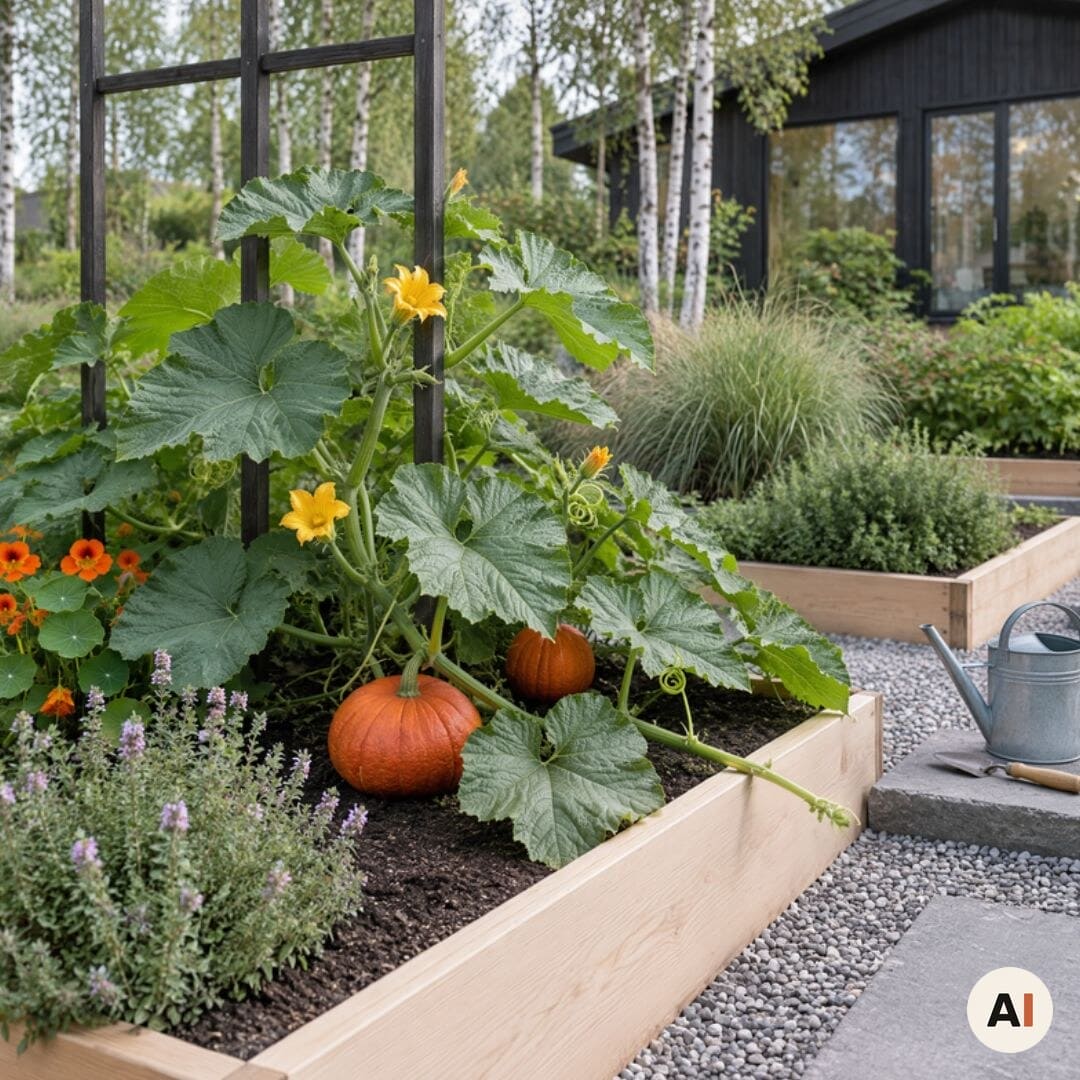
Three species in the kitchen
Pepo squash includes the small varieties Delicata, Sweet Dumpling and Jack Be Little, among others. Maxima squash (Cucurbita maxima) is the species behind Hokkaido ‘Uchiki Kuri’, Blue Hubbard and the Italian Marina di Chioggia, while moschata squash (Cucurbita moschata) includes Butternut Waltham and the deeply ribbed Musquée de Provence.
The variety name ‘Uchiki Kuri’ reveals Hokkaido’s Japanese roots – a good example of how the American species have been bred into new varieties around the world. Carved Halloween pumpkins, on the other hand, are a custom that has spread from the USA.
Flavour and aroma
Sweet, nutty and creamy
A good culinary pumpkin tastes mildly sweet and nutty, and the flesh turns creamy when baked or boiled. Hokkaido is my reference: the flesh is dense and floury, and the flavour is reminiscent of chestnut – ‘kuri’ in the variety name means, fittingly, chestnut in Japanese.
Moschata squash such as butternut has a smoother, juicier flesh, while the big orange Halloween pumpkins are grown for carving. Their flesh is more watery and mild, so I prefer to use them for soup rather than for baked wedges.
Dry heat intensifies the sweetness
In the air fryer, water evaporates from the surface, the edges caramelise and the sweetness becomes more concentrated. If you boil the pumpkin in water, the flavour becomes milder – that is why I almost always bake it first, even when it is going to be blended into soup. The seeds need dry heat too: only when they are roasted do they become nutty and crisp.
Culinary uses
In Danish cooking
Pickled pumpkin in a vinegar-and-sugar brine is a classic Danish side dish for meat, and pumpkin soup is a regular autumn dish in many homes. We sprinkle the seeds over salads, use them in baking or eat them as a snack.
Around the world
In the USA, pumpkin pie is a Thanksgiving tradition. Italians fill tortelli di zucca with pumpkin and stir it into risotto, and in Japan kabocha is simmered in dashi and soy sauce as nimono or deep-fried as tempura. What the dishes have in common is that the sweetness of the pumpkin is balanced with something salty, tart or spicy.
In the air fryer
The air fryer is made for pumpkin. I cut Hokkaido into wedges with the skin on, toss them in a little oil, salt and thyme and bake them until the edges are golden and the flesh is tender all the way through. I rinse the seeds free of stringy fibres, pat them dry and roast them until golden. Don’t overfill the basket – the wedges need air around them, otherwise they steam instead of turning crisp.
Classic pumpkin dishes
- Pickled pumpkin: in a vinegar-and-sugar brine as a side dish for meat.
- Pumpkin soup: preferably made with baked pumpkin for a deeper flavour.
- Pumpkin pie: the classic American pie for Thanksgiving.
- Tortelli di zucca and risotto: Italian classics with pumpkin.
- Nimono and tempura: Japanese kabocha simmered in dashi and soy sauce or deep-fried.
- Baked pumpkin wedges: Hokkaido with the skin on, baked in the air fryer.
- Roasted pumpkin seeds: for baking, salads or as a snack.
Health benefits
Nutritional content
Raw pumpkin is a light vegetable with 40 kcal per 100 g, and it consists mostly of water. Here is the nutritional content per 100 g of raw pumpkin:
- Energy: 40 kcal (169 kJ)
- Carbohydrate: 7.3 g, of which sugars 4.1 g
- Dietary fibre: 3 g
- Protein: 1 g
- Fat: 0.2 g
- Water: 89 g
- Beta-carotene: 1190 µg
- Vitamin A: 198 RE
- Potassium: 337 mg
Beta-carotene and potassium
The orange colour of the flesh is due in part to beta-carotene, which the body converts into vitamin A. Vitamin A contributes to the maintenance of normal vision and normal skin. Pumpkin also contains potassium, which contributes to normal muscle function and the maintenance of normal blood pressure, and dietary fibre, which makes the meal more filling.
Beware of bitter pumpkins
Pumpkins can contain the bitter compound cucurbitacin, which is toxic in high concentrations. The bitterness does, however, make such a pumpkin all but impossible to eat, and the rule is simple: if a pumpkin tastes bitter, don’t eat it. Pumpkin is not one of the allergens that must be declared under EU rules.
Growing
Warmth, sun and nutrients
Pumpkins are not hardy and cannot tolerate frost, so in the Nordic countries growing them is all about giving the plants enough warmth. If the temperature drops below 5–8 °C, they can stop growing altogether.
The plants are heavy feeders, and I water with dissolved chicken manure where they are going to stand before planting out. The longer the fruits can ripen outdoors in the sunshine, the better – sun-ripened pumpkins usually keep very well.
- Light: a sunny spot.
- Soil: compost, potting soil or ordinary garden soil with plenty of nutrients.
- Germination: average soil temperature above 20 °C, best at 25–30 °C.
- Planting out: from mid-May, when the seedlings are 15–25 cm.
- Cold: does not tolerate frost; cover with horticultural fleece below 5 °C.
- Feeding: liquid feed made from comfrey or nettles during the season.
Harvest and ripeness
Hokkaido is the earliest and can be harvested from mid-August. Next come Butternut Waltham, Delicata and Blue Hubbard, among others, while the big winter pumpkins are harvested in September and October. The pumpkin is ripe when the rind has changed from green to the variety’s final colour.
How to grow pumpkin
Total time: 4-6 months
- Start seeds in a greenhouse
Sow the seeds in pots in a greenhouse in April, about 6 weeks before planting out. They only germinate once the soil averages above 20 °C, and best at 25–30 °C.
- Prepare the planting spot
Pumpkins are heavy feeders. Water with dissolved chicken manure where the plant is going to stand before you plant out.
- Plant out
Plant out from mid-May, when the seedlings are 15–25 cm. Cover them with horticultural fleece if the temperature drops below 5 °C.
- Feed and let the sun work
Give liquid feed made from comfrey or nettles, and let the fruits ripen outdoors in the sunshine for as long as possible.
- Harvest before frost
Harvest Hokkaido from mid-August and the big winter pumpkins in September and October – always before frost.
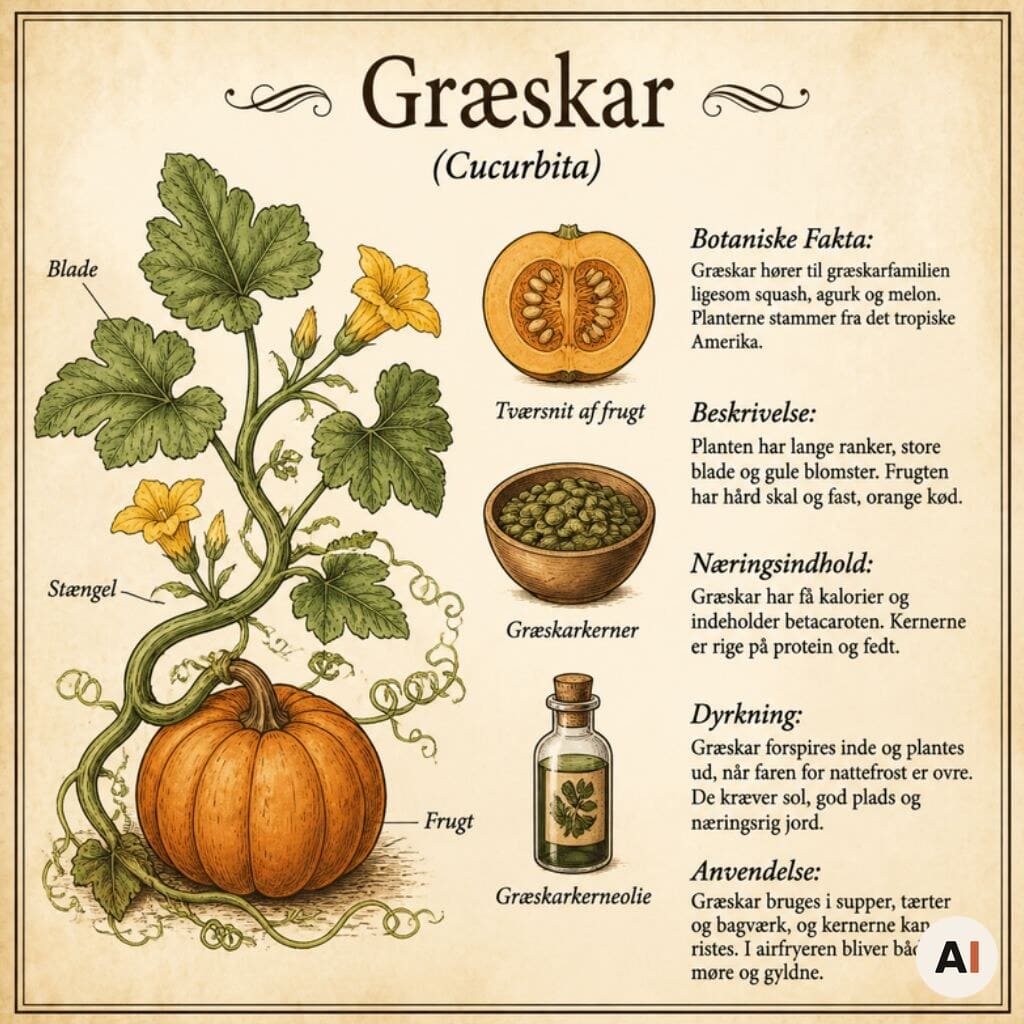
Storage
Ripe pumpkins keep the longest
Shelf life is decided at harvest: unripe pumpkins never achieve good keeping quality. Ripe pumpkins are left to ripen further at 25–30 °C and are then stored at 15–18 °C, where many varieties keep for up to a year without losing eating quality.
Avoid the cold
A whole pumpkin should not go in the fridge. Storage below 10 °C reduces shelf life dramatically, so an unheated shed in winter is not a good place either. I keep my pumpkins in a cool room in the house, where I can keep an eye on them.
My storage tips
- Sun-ripened pumpkins: usually keep very well, so let them ripen in the sun for as long as possible.
- Check regularly: use the pumpkins that develop soft spots first.
- Cut pumpkin: wrap it up, put it in the fridge and use it quickly.
- Freezer: bake the pumpkin and freeze it as cubes or purée for soup and baking.
Try this recipe
Hokkaido is the pumpkin I most often have in my kitchen, and the dry heat of the air fryer gives it crisp edges and a tender, sweet inside. Try our recipe for Hokkaido fries in the air fryer – crisp pumpkin sticks in 33 minutes. I leave the skin on the sticks so they hold their shape, and I save the seeds to roast afterwards. That way you get both a side dish and a snack out of one pumpkin.
Frequently asked questions
Pumpkins grown in the Nordic countries are harvested from mid-August, when Hokkaido is the earliest, to September and October, when the big winter pumpkins are brought in – always before frost. After that, pumpkin is a storage vegetable, and many varieties keep for up to a year.
Yes. The skin of Hokkaido becomes tender when the pumpkin is baked or boiled, so you can easily eat it. On pumpkins with a thick, hard rind, such as Blue Hubbard, I peel it off.
Only store ripe pumpkins, and keep them at 15–18 °C, where many varieties keep for up to a year without losing eating quality. Avoid the fridge and other places below 10 °C, because the cold reduces shelf life dramatically.
A bitter pumpkin can contain the bitter compound cucurbitacin, which is toxic in high concentrations. The bitterness makes it all but impossible to eat, so the rule is simple: if the pumpkin tastes bitter, don’t eat it.
Both belong to the genus Cucurbita in the gourd family, and zucchini is even the same species as pepo squash, Cucurbita pepo. The zucchini we know from the vegetable aisle is harvested unripe with a soft skin, while pumpkins are harvested ripe with a hard rind and can be stored for a long time.
Facts about pumpkin
| Field | Value |
|---|---|
| English name | Pumpkin |
| Latin name | Cucurbita (genus) – especially Cucurbita pepo, Cucurbita maxima and Cucurbita moschata |
| Family | Gourd family (Cucurbitaceae) |
| Origin | The tropical and subtropical Americas |
| Plant type | Annual cultivated plant |
| Hardiness | Not hardy – does not tolerate frost |
| Light | Sun |
| Soil | Compost, potting soil or ordinary garden soil – the plant is a heavy feeder |
| Sowing/planting | Started in a greenhouse in April, planted out from mid-May |
| Harvest | From mid-August (Hokkaido) to September/October, before frost |
| Calories per 100 g | 40 kcal (169 kJ), raw |
| Flavour | Mildly sweet and nutty – in Hokkaido with a note of chestnut |
| Culinary use | Soup, pickled pumpkin, pie, risotto, tortelli, baked wedges and roasted seeds |
| Storage | Ripe pumpkins at 15–18 °C – many varieties keep for up to a year |
| Well-known varieties | Hokkaido ‘Uchiki Kuri’, Butternut Waltham, Blue Hubbard, Musquée de Provence, Marina di Chioggia, Delicata, Sweet Dumpling, Jack Be Little |
