

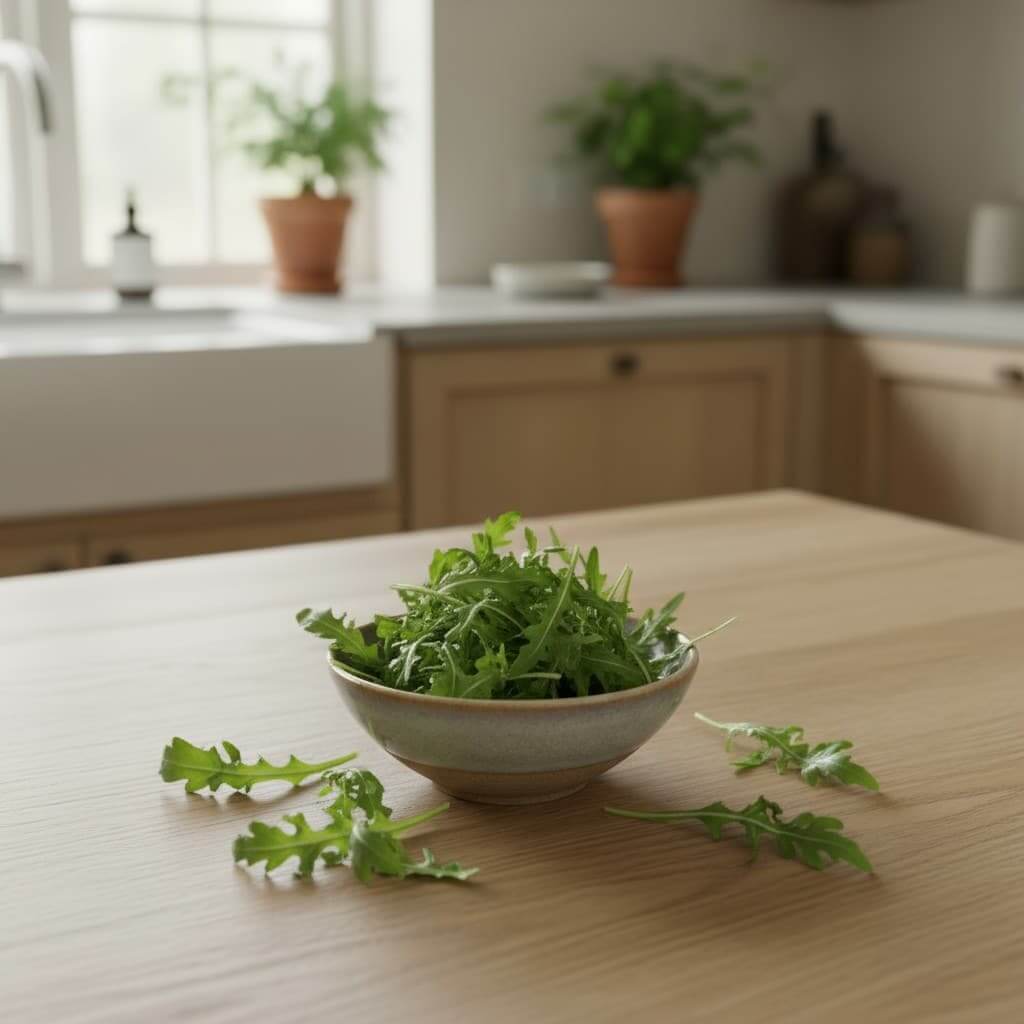
Arugula, also known as rocket, salad rocket or rucola, has evolved from a Mediterranean kitchen herb into an everyday staple in Danish cooking. The leaves are peppery, nutty and slightly bitter, with a characteristic mustard note that comes from the plant’s mustard oils.

Advertisement: The page displays ads and contains advertising links (affiliate links). See our advertisers here.
In the garden, arugula is easy to grow, and it happily resprouts after harvest. Its Latin name is Eruca sativa (cultivated arugula), while the more peppery wild arugula is usually Diplotaxis tenuifolia. This guide gives a complete overview of the plant’s properties, history and uses in Denmark.
Estimated reading time: 7 minutes
History and Origin
From the Mediterranean to Ancient Kitchens
Arugula originates from the Mediterranean region, North Africa and the Middle East, but is now naturalized across much of the world. It has been cultivated as an herb since antiquity, when Roman writers such as Virgil and Ovid described the plant as an aphrodisiac. In medieval Italy and the Middle East, it was used both as a salad green and as medicine; the seeds were pressed for oil, and the leaves were mixed into soups.
A Renaissance in the Modern Kitchen
In modern times, arugula experienced a renaissance in 1980s America and in Denmark in the 1990s, where it quickly became popular in restaurants and at home. Today, arugula is a key ingredient in salad mixes, sandwiches and on pizza – and it’s often used in Nordic cooking to add contrast to sweet or rich components.
Flavor and Aroma
Arugula has a complex flavor with notes of nuttiness, pepper and radish. The sharp, peppery character comes from the same mustard oils (glucosinolates) found in cabbage, mustard and radishes – arugula belongs to the cabbage/mustard family, after all. An important kitchen rule is that heat mellows the sharpness: if you boil or fry arugula for long, the aromatic oils disappear and the flavor turns flat. So add the leaves just before serving.
Arugula pairs especially well with:
- Tangy fruits like pear, apple and citrus.
- Rich ingredients like parmesan, goat cheese, bacon or pancetta.
- Nuts and seeds – walnuts, pine nuts and pumpkin seeds add a nice contrast.
- Grilled vegetables like squash, eggplant and beetroot.
- Pasta, risotto and pizza – added only after cooking.
Culinary Uses
Fresh arugula leaves can be used raw or very lightly cooked. Its versatility makes the herb a regular guest in salads, pesto and hot dishes.
In Danish Cuisine
- Salads – Mix arugula with other salad greens for a sharp contrast; try it with pear, walnut and parmesan.
- Pesto – Blend arugula with garlic, olive oil, parmesan and nuts as an alternative to basil pesto.
- Topping – Scatter fresh leaves over pizza or bruschetta just before serving for a fresh, peppery finish.
- Herb Butter and Dips – Finely chop the leaves and stir them into butter, crème fraîche or yogurt for a flavorful dip.
Internationally
In Italy, arugula is essential on pizza and bruschetta and in classic salads with parmesan and balsamic vinegar. Historically, the seeds were pressed for oil in the Middle East, and in North African kitchens the leaves were cooked like spinach. Many Arabic cuisines add the seeds as a spice in pickles and preserved vegetables.
Preparation
Arugula is best raw or heated very briefly. Add it to pasta dishes, risotto or pizza right before serving, so the residual heat just barely wilts the leaves. Arugula can also be grown as a microgreen, where the small sprouts add a powerful peppery kick to finished dishes.
Health Benefits
Vitamins and Minerals
Like other cruciferous plants, arugula is rich in nutrients while still being low in calories, with around 25 kcal per 100 g. It contributes:
- Vitamin C and beta-carotene (a precursor to vitamin A), which act as antioxidants.
- Vitamin K and folate.
- Dietary fiber, which supports healthy digestion.
- Relatively high iodine content, which is important for thyroid function.
Glucosinolates and Precautions
The glucosinolates in arugula have been studied for antiviral and antibacterial properties. The information here is for guidance only: arugula can be part of a healthy and varied diet, but it does not replace medical advice. People with thyroid issues should be mindful of its relatively high iodine content.
Growing
Arugula is one of the easiest herbs to grow – it germinates quickly, thrives in cool climates and often self-seeds. It grows in full sun to light shade and prefers humus-rich, well-drained soil, but also copes with somewhat poor conditions. Too much nitrogen produces large but bland-tasting leaves, so keep fertilizing moderate.
How to Grow Arugula
Total time: 7-14 days to germination
- Sow the seeds
Sow directly where the plants are to grow, from early spring to late summer. Place the seeds about 1 cm deep in loose, moist soil. They germinate at temperatures down to 5°C, optimally 15-25°C, and germination takes 7-14 days.
- Thin out
Once the plants have a couple of leaves, thin them to 10-15 cm apart so the rosette has room to grow. Keep about 25 cm between rows.
- Water and tend
Water regularly, especially during dry periods, but avoid waterlogged roots. Arugula prefers even moisture and moderate feeding.
- Sow successively
Sow new seeds every 3-4 weeks to have fresh leaves all season. In warm periods the plants bolt quickly, so frequent sowings ensure a steady supply.
- Harvest
Pick the outer leaves when they’re 5-10 cm long, or cut the whole rosette and leave at least 2 cm standing so the plant regrows. Harvest before flowering for the mildest flavor.
Let a few plants go to seed; they’ll self-sow and produce fresh rosettes early the following spring. Plants sown in autumn can survive mild winters, and in a greenhouse arugula can be grown right through winter, as long as the temperature doesn’t drop below freezing.
Species and Look-Alikes
Cultivated Arugula and Wild Arugula
Two main types are found on the Danish market. Common, cultivated arugula (Eruca sativa, also called salad rocket) has broad, lyre- or feather-shaped leaves and a milder flavor. Wild arugula (usually Diplotaxis tenuifolia) has narrower, deeply lobed leaves and a stronger, more peppery flavor. Both are edible, but the wild version is perennial and can become an aggressive self-seeder in the garden.
Buying and Quality
Buy arugula with fresh, dark green leaves and no yellow spots. The leaves should be crisp and fragrant – avoid dry or limp bunches. Organic arugula often has a stronger flavor. Arugula should not be confused with weeds such as shepherd’s purse (Capsella bursa-pastoris), which has a completely different leaf shape and flavor.
Storage
Arugula tastes best when the leaves are young and fresh. Harvest continuously, and ideally use the leaves the same day for the most intense aroma.
- Rinse the leaves, pat them dry, and store them in a closed bag with a damp paper towel in the fridge for up to 2-3 days.
- Arugula can be frozen as pesto in small portions for later use.
- The leaves can also be lightly blanched and frozen, but will lose a little of their fresh sharpness.
Try This Recipe
The classic way to use arugula is as a fresh topping on a crispy pizza. Scatter a handful of leaves on right after baking, while the crust is still hot – that way you get the peppery contrast without the heat dulling the flavor. Try it on a Pepperoni Pizza in the Airfryer – Crispy, Melted and Ready in 12 Minutes.
Equipment and Products
An arugula salad gets extra life from a slightly sweet, tangy vinegar that balances the leaves’ sharp mustard note. Drizzle a little over the salad along with good olive oil and a few parmesan shavings – and a simple salad is ready. Check out Strawberry Vinegar 100 ml in the shop.
Frequently Asked Questions
Common arugula is an annual and dies after flowering, but it self-sows easily. Plants sown in autumn can survive mild winters and produce early leaves, and wild arugula is perennial.
Yes, arugula can be grown in pots at least 15 cm deep. Remember even watering and ideally some light shade during the warmest summer period, so it doesn’t bolt too quickly.
Yes. Both the flowers and seeds are edible and have a mild mustard flavor, but the leaves become more bitter. Harvest before flowering for the mildest taste.
Cultivated arugula (Eruca sativa) has broad leaves and a mild flavor, while wild arugula (Diplotaxis tenuifolia) has narrow, deeply lobed leaves and a stronger, more peppery flavor. Both are edible.
Arugula’s sharpness comes from volatile mustard oils, which break down with heat. That’s why arugula is best added raw or just before serving, so it keeps its peppery character.
Facts About Arugula
| Field | Value |
|---|---|
| English name | Arugula (rocket, salad rocket, rucola) |
| Latin name | Eruca sativa (wild: Diplotaxis tenuifolia) |
| Family | Mustard family (Brassicaceae) |
| Plant type | Annual (wild arugula is perennial) |
| Height | 20–100 cm |
| Hardiness | Tolerates light frost; fast-growing |
| Light | Full sun to partial shade |
| Soil | Humus-rich, well-drained, moderately fertile |
| Sow/plant | Seeds sown 1 cm deep from spring to late summer; repeat every 3–4 weeks |
| Flowering | May–August (depending on sowing time) |
| Harvest | From 5 cm leaf length; ongoing from spring to autumn |
| Calories per 100 g | About 25 kcal |
| Flavor | Peppery, nutty, mustardy |
| Culinary use | Salads, pesto, pizza topping, herb butter |
| Storage | Fridge for 2–3 days; freezes as pesto |
