

Pointed cabbage is one of my favourite cabbages. It is an early, mild head cabbage with a cone-shaped head and loose, crisp leaves, and it is so tender that it is just as good raw in a salad as steamed, sautéed or baked. Where white cabbage can be hearty and firm, pointed cabbage is light, fresh and slightly sweet.
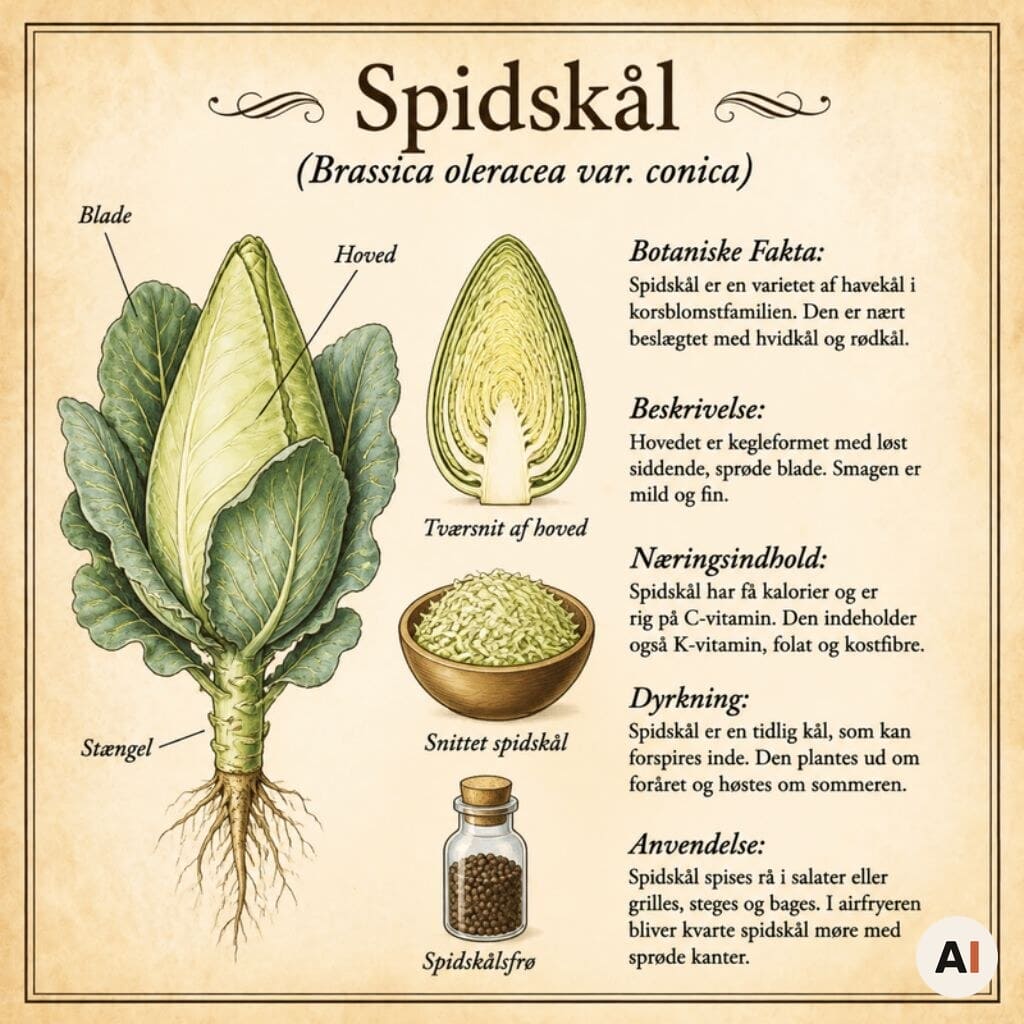
Botanically, pointed cabbage is Brassica oleracea var. capitata, and it is closely related to white cabbage and red cabbage, which both have their own entry here in the Food Encyclopedia. All three belong to the cruciferous family. Besides the classic light green pointed cabbage, there is also red pointed cabbage, which adds lovely colour to both salads and baked dishes.
In the air fryer, pointed cabbage is an obvious choice. Cut into quarters, the leaves get crisp, golden edges while the centre turns tender and juicy. In this entry you will find everything from origin and taste to growing and storage.
Estimated reading time: 6 minutes
History and origin
One of four head cabbages
Pointed cabbage is one of four types of head cabbage, all of them developed from garden cabbage (Brassica oleracea): white cabbage, red cabbage, Savoy cabbage and pointed cabbage. What sets pointed cabbage apart from the others is its shape. Where white, red and Savoy cabbage form a round head, the leaves of pointed cabbage gather in a pointed cone, where they sit more loosely around each other.
Garden cabbage descends from wild cabbage, which grows on coastal cliffs in Western and Southern Europe. Through long-term selective breeding, the same species has become a whole family of vegetables – from head cabbage to cauliflower, broccoli, kale, Brussels sprouts and kohlrabi. That is why they are so similar in taste and aroma.
Green and red pointed cabbage
The most common pointed cabbage is light green, but red pointed cabbage has the same pointed shape and a deep purple colour. Varieties include, for example, ‘Erstling’. In the kitchen, the two types are used in the same way, and the red one is an obvious choice when you want colour in a raw salad.
Taste and aroma
Mild and lightly sweet
Pointed cabbage tastes mild and fresh, with a light sweetness and only a faint cabbage flavour. The leaves are thin and crisp, so raw pointed cabbage feels juicy and crunchy.
When the cabbage is heated
Heat makes pointed cabbage more tender and sweeter. Steamed or tossed in butter, it turns soft and rounded in flavour, while dry, high heat – on the grill, in the oven or in the air fryer – gives toasty, nutty notes in the browned edges.
Never cook it for too long. Pointed cabbage turns tender quickly, and long cooking brings out the sulphurous smell that many people associate with overcooked cabbage.
Culinary uses
In the home kitchen
We use pointed cabbage both raw and cooked. These are the dishes I make most often:
- Raw pointed cabbage salad: finely sliced cabbage with, for example, apple or citrus and a fresh dressing.
- Butter-steamed pointed cabbage: a quick side dish for meatballs, chicken and fish.
- Creamed pointed cabbage (stuvet spidskål): a creamy Danish classic served with meatballs (frikadeller) – milder and quicker to make than creamed white cabbage.
- Grilled or baked pointed cabbage: quarters or wedges with crisp edges from the grill, oven or air fryer.
Around the world
In Germany, Rahmspitzkohl – pointed cabbage in a cream sauce – is a classic way to serve the cabbage. In Britain, where pointed cabbage is often sold as hispi cabbage, charred or grilled wedges with butter have become a modern restaurant dish, and in Asian cooking the cabbage goes into the wok with garlic, ginger and soy sauce. The thin leaves only need a short, hot toss so that they keep a little bite.
In the air fryer
This is where pointed cabbage really shows what it can do. I cut the head lengthwise into quarters and leave the core in place so that the leaves hold together. The cut sides are brushed with oil or melted butter and sprinkled with salt and pepper, and then the quarters go into the basket with plenty of space between them.
Air-fry them at high heat until the edges are brown and crisp and the centre is tender when you push a knife in next to the core. Turn them halfway through if you like. I serve them with a squeeze of lemon, grated Parmesan or a cold yoghurt dressing – and suddenly the pointed cabbage is the star of the plate.
Health benefits
Nutritional content
Pointed cabbage is a light vegetable with 27 kcal per 100 g and a high water content, and at the same time it is rich in vitamin C and vitamin K. The figures below apply to 100 g of raw pointed cabbage:
- Energy: 27 kcal
- Water: 91.9 g
- Protein: 2.1 g
- Fat: 0.3 g
- Carbohydrate, total: 4.9 g (of which available 3 g)
- Dietary fibre: 1.9 g
- Vitamin C: 66 mg
- Vitamin K: 170 µg
- Folate: 73 µg
- Vitamin B6: 0.15 mg
Keeping the vitamin C
With 66 mg of vitamin C per 100 g, raw pointed cabbage makes a good contribution to your daily intake. Vitamin C does not stand up to long cooking, however, so if you want to preserve as much as possible, a raw salad or a short cooking time is the best choice. The dietary fibre also adds bulk and a feeling of fullness to the meal.
Good to know
Pointed cabbage is not among the allergens that must be labelled in the EU. If you are on blood-thinning treatment with vitamin K antagonists such as warfarin (Marevan), it is worth knowing that the cabbage contains 170 µg of vitamin K per 100 g. Keep your intake reasonably steady, and talk to your doctor if you want to change your diet significantly. Like other cabbages, pointed cabbage can also cause gas.
Growing
Growing conditions
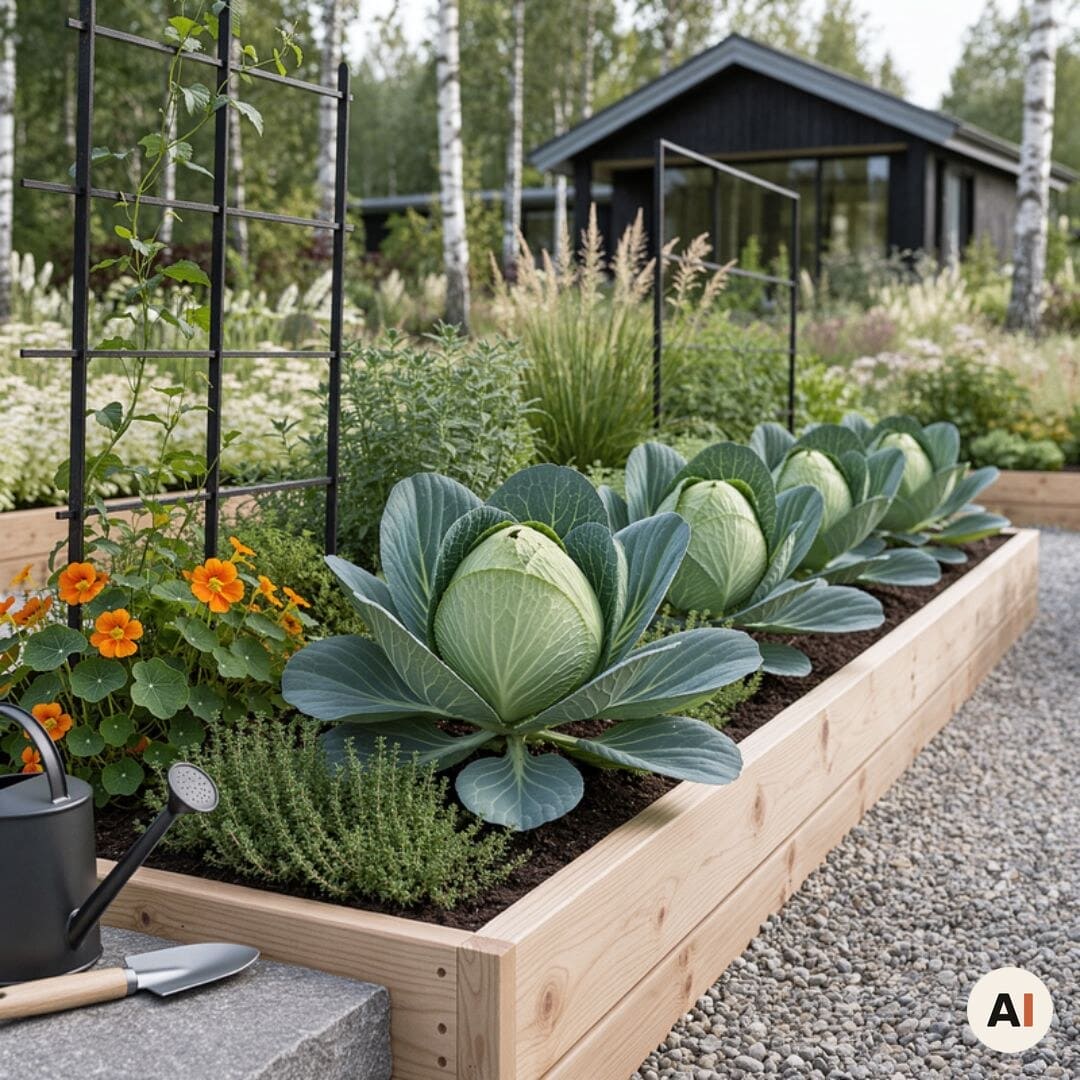
Pointed cabbage is an early head cabbage and a rewarding plant in the vegetable garden. It thrives best under these conditions:
- Light: a sunny, open position.
- Soil: good clay-loam soil with a pH of 6.5–7.5.
- Fertiliser: well-rotted compost and a handful of dolomite lime in the planting hole.
- Water: even watering, especially in July, when the head forms.
- Crop rotation: leave 4–6 years before growing cabbage in the same spot again, to avoid clubroot.
Sow and plant
Pointed cabbage can be started under cover or sown directly outdoors. Here is how to get from seed to finished head (timings are for a Nordic climate):
Total time: 3-4 months
- Prepare the soil
Choose a sunny bed with good clay-loam soil, and mix well-rotted compost and a handful of dolomite lime into the planting hole.
- Sow the seeds
Start the seeds under cover in a greenhouse or on a bench from late March to early April, or sow directly outdoors from mid-April, with 3-4 seeds for each plant you intend to keep.
- Plant out
Plant the pre-grown plants out when they have 3-4 true leaves. When sowing directly, leave only the strongest plant standing.
- Water and care
Water evenly, especially in July when the head forms, and cover the bed with horticultural fleece if you like, which keeps cabbage caterpillars away.
- Harvest
Cut the head off at the base when it has developed its pointed shape and feels firm.
Overwintering
In a Nordic climate, pointed cabbage can also be sown in August and overwinter as young plants. You can then harvest around 1 May in a greenhouse and 1 June outdoors. Expect to lose around 30% of the plants over the winter, and lay horticultural fleece over them from March – it gives a milder climate and protects against cabbage caterpillars.
Storage
In the fridge
Pointed cabbage keeps best cool in the fridge. Because the leaves sit more loosely than on white cabbage, it keeps for a shorter time, so use it while it is fresh and crisp. My best tips:
- Whole heads: in a bag in the vegetable drawer of the fridge, so the leaves do not dry out.
- Half heads: wrap the cut surface tightly and use the rest quickly.
- Sliced cabbage: slice the cabbage just before use so that it keeps its crispness.
- Limp outer leaves: peel them off – the leaves underneath are often still crisp.
How to choose a good pointed cabbage
Choose a head that feels heavy for its size, with fresh, glossy leaves without brown spots. The cut surface at the core should look pale and fresh – if it is dry and brown, the cabbage has been sitting around for a long time.
Try this recipe
The filling in spring rolls is classically based on finely sliced cabbage, and pointed cabbage is my preferred choice here: the thin leaves wilt quickly and become juicy without turning watery. Try our recipe for Homemade spring rolls in the air fryer – I slice the pointed cabbage very finely and let it just soften in the pan before it goes into the rolls. That makes the filling mild and slightly sweet, while the air fryer takes care of the crisp shell.
Frequently asked questions
Both are head cabbages of the same species, but pointed cabbage has a cone-shaped head with looser, thinner leaves. It is milder and more tender than white cabbage, so it works well raw and only needs a short cooking time.
Yes. Pointed cabbage is mild and crisp and perfect raw in a salad. Slice it finely and toss it with, for example, apple or citrus and a fresh dressing.
Cut the head into quarters lengthwise and leave the core in place so that the leaves hold together. Brush with oil or butter, season with salt and pepper, and air-fry at high heat until the edges are brown and crisp and the centre is tender.
Store pointed cabbage cool in the fridge, preferably in a bag. It keeps for a shorter time than white cabbage because the leaves sit more loosely, so use it while it is fresh and crisp.
Raw pointed cabbage contains 27 kcal per 100 g. The cabbage is mostly water and is also rich in vitamin C and vitamin K.
Facts about pointed cabbage
| Fact | Value |
|---|---|
| English name | Pointed cabbage (also called hispi or sweetheart cabbage) |
| Latin name | Brassica oleracea var. capitata |
| Family | Brassicaceae (cruciferous family) |
| Plant type | Head cabbage – one of the four types of head cabbage developed from garden cabbage |
| Types | Green and red pointed cabbage; varieties include ‘Erstling’ |
| Hardiness | Young plants can overwinter; horticultural fleece from March gives a milder climate |
| Light | Sunny, open position |
| Soil | Good clay-loam soil with a pH of 6.5–7.5 |
| Sowing/planting | Starting under cover from late March to early April; direct sowing outdoors from mid-April |
| Harvest | The head forms in July; overwintered plants around 1 May in a greenhouse and 1 June outdoors |
| Calories per 100 g | 27 kcal (raw) |
| Taste | Mild, fresh and lightly sweet |
| Culinary use | Raw salad, butter-steamed or creamed, grilled or baked in wedges, stir-fries |
| Storage | Cool in the fridge in a bag; keeps for a shorter time than white cabbage |
