

Sweet cicely, also known as sweet chervil or garden myrrh, is a distinctive perennial herb with a seductive scent of licorice. It bursts into growth each spring with a lush rosette of light green, fern-like leaves, and by June its tall, white double umbels light up the bed. The entire plant — from root to seed — is edible and packed with aromatic anethole, which gives it its characteristic anise flavor.

Advertisement: The page displays ads and contains advertising links (affiliate links). See our advertisers here.
Sweet cicely has its roots in Southern Europe, but was brought to the Nordic countries in the Middle Ages by monks, who grew it in monastery gardens as a culinary and medicinal herb. Today it is nearly forgotten in Danish kitchen gardens, even though its mild sweetness and early harvest make it a natural companion to rhubarb, gooseberries, and other tart fruits.
Estimated reading time: 11 minutes
What Is Sweet Cicely?
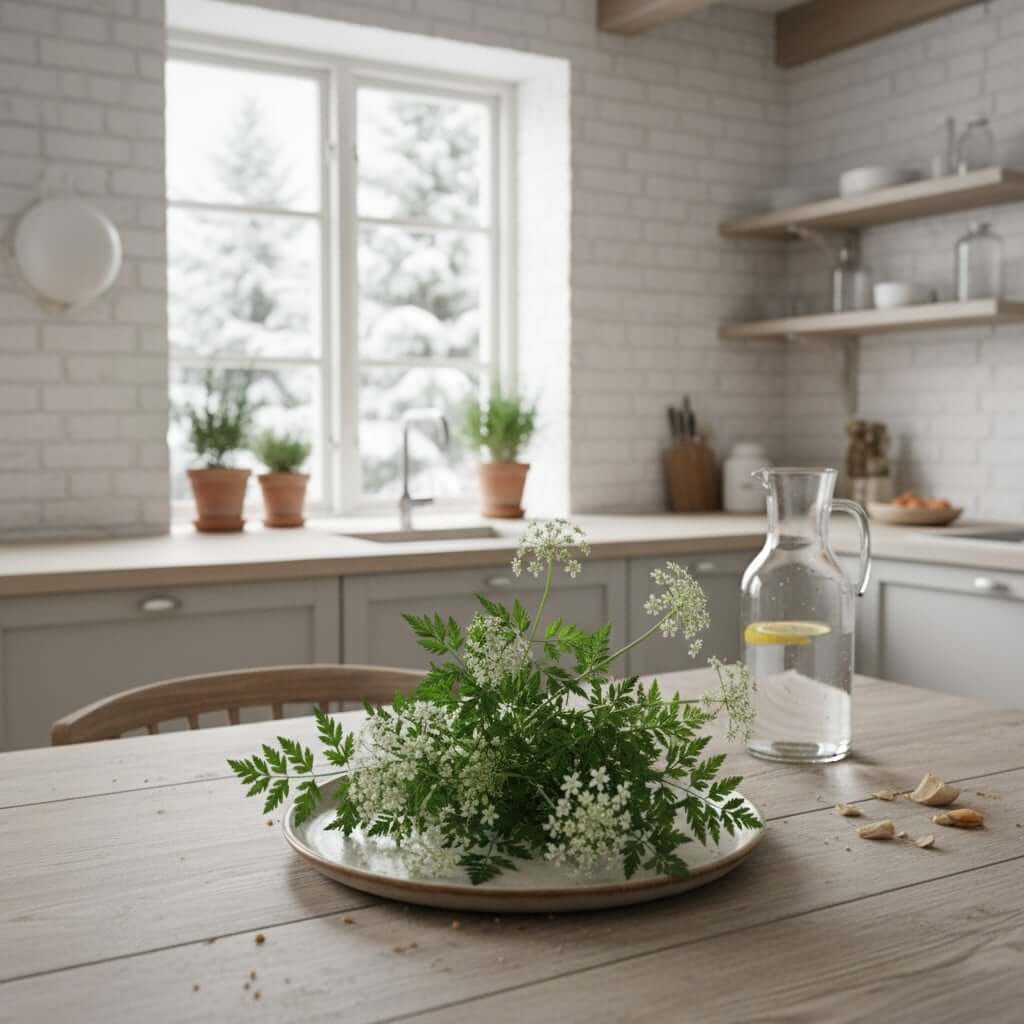
Sweet cicely (Myrrhis odorata) is a robust, perennial herb in the carrot family (Apiaceae). It resembles wild chervil in appearance but is distinguished by its strong anise-like scent, released when the leaves or seeds are crushed. Early in spring the plant forms a large rosette of soft, light green leaves; they are 2-3 times pinnately divided and fern-like, with small, serrated leaflets. Each leaf stalk has a swollen sheath at its base — a feature that makes sweet cicely easy to identify. The stem is hollow, slightly ridged and hairy, and the plant can reach a height of 80–150 cm with a spread of 50–100 cm.
From May to July, sweet cicely flowers with large, white double umbels made up of numerous small flowers. Each individual flower has five petals and is about 5 mm wide, and the umbels have small, drooping bracts. After flowering, elongated, deeply ridged fruits (schizocarps) develop; these are 15–25 mm long and turn dark brown to black at maturity. The seeds have a strong scent and taste of anise. The root system consists of a sturdy taproot that anchors the plant deep in the soil and contributes to its high hardiness.
Botanically, sweet cicely belongs to the same family as parsnip and carrot, but in the kitchen it works as a sweet alternative to chervil or anise. Its flavor comes from anethole, a volatile compound with sweetness and licorice notes. The entire plant is edible: the young leaves have a mild, sweet, licorice-like taste; the seeds are stronger and are used as a spice or sweet; the roots can be eaten raw or lightly cooked. Because the leaves contain natural sugars, sweet cicely can reduce the need for added sugar in compotes and desserts.
History and Origin
Sweet cicely originates from mountainous regions of Southern Europe but was introduced to Northern Europe early on. Monks brought it to monasteries in the Nordic countries as far back as the Middle Ages, where it was grown as a culinary and medicinal plant. In the Faroe Islands and other North Atlantic areas, it still survives as a relic of the monastery gardens, particularly at Tinganes in Tórshavn. In Denmark, it was historically used as a remedy for measles, chickenpox, and asthma: the roots were boiled and consumed, while the leaves were smoked like tobacco to relieve coughing.
Sweet cicely has also had a place in Nordic gastronomy. In the monastery gardens of the Middle Ages, it was used to soften the taste of bitter medicine. Unripe seeds contain an anise oil that was used to make the Danish sweets known as “King of Denmark.” The herb was also used in fruit compotes and stewed fruit, because it reduces acidity and saves on sugar. Among Vikings and monastery folk, sweet cicely was regarded as a protective remedy against melancholy and exhaustion.
Flavor and Aroma
Sweet cicely has a soft, sweet taste with a clear anise and licorice note, without the bitter aftertaste that many other licorice-flavored herbs have. Its flavor profile spans sweetness, anise, and fresh herbal tones. The delicate flavor comes from anethole, which is volatile and fades with long cooking — so add the leaves toward the end or use them raw.
Sweet cicely pairs especially well with:
- Tart fruits: rhubarb, gooseberries, blackcurrants, rowanberries, and tart apples
- Fish and shellfish: salmon, trout, cod – its light sweetness provides contrast to fatty fish
- Meat and poultry: lamb, pork, chicken; chopped leaves or seeds in marinades add aroma
- Vegetables: new potatoes, carrots, beetroot, and root vegetables
- Desserts: custards, panna cotta, ice cream, and baked goods
Combining it with acidic ingredients reduces the need for sugar, which is useful in preserving and desserts.
Culinary Uses
Sweet cicely is a versatile kitchen herb that can be used as a spice, a vegetable, and a natural sweetener. The whole plant is edible: the young leaves, flower stalks, seeds, and roots. Because the leaves contain anethole and natural sweetening compounds, they can lightly sweeten desserts without adding many calories.
In Danish and Nordic Cuisine
- Sweet herb butter and pesto: Finely chop the leaves and mix into butter, oil, or cream cheese for a mild herb butter. Blend leaves with roasted nuts and oil into a green pesto.
- Fruit dishes: Use fresh leaves and green seeds as a natural sweetener in stewed rhubarb, gooseberry compote, or applesauce – they reduce the need for sugar.
- Meat and fish: Toss chopped leaves into marinades for lamb, pork, or salmon; the anise-like flavor adds a subtle sweetness.
- Salads and dips: Add raw leaves to green salads, tzatziki, or yogurt-based dips for a sweet, aromatic note.
- Baking and desserts: Add seeds or leaves to cakes, scones, or cookies for a licorice-toned bake; use the leaves to sweeten pancakes and waffles.
International and Modern Uses
In French cuisine, sweet cicely is part of the herb blend “fines herbes” together with parsley, chives, and tarragon. It is also used in liqueurs such as Chartreuse and in Scandinavian aquavit. Today, sweet cicely is used especially by enthusiasts of New Nordic cuisine, where it appears in desserts, herb butters, preserves, and flavored spirits.
The green seeds are considered a delicacy and have an intense sweetness; children enjoy eating them like candy. The seeds can also be pickled like tangy capers, and the roots can be fermented or used in kimchi for a licorice-like note.
Health Benefits
Sweet cicely has been used in traditional herbal medicine for centuries. Modern research is limited, but many of its active compounds have been identified. The leaves and seeds contain anethole, an aromatic compound with antimicrobial and antioxidant properties. They are also rich in vitamins A and C, as well as the minerals calcium, iron, and potassium.
Potential Health Aspects
- Digestive support: Sweet cicely acts as a mild carminative; tea made from the seeds is traditionally used to relieve bloating, cramps, and flatulence.
- Respiratory support: The seeds are used in tonics for coughs and asthma, where their mildly expectorant effect helps loosen mucus.
- Blood-cleansing and diuretic: In herbal medicine, sweet cicely is used as a mild detoxifying remedy that stimulates kidney function.
- Antiseptic: Anethole and other essential oils are believed to have antiseptic effects, and fresh leaves were traditionally placed on wounds to prevent infection.
It’s important to stress that these effects are based primarily on traditional use; scientific documentation is sparse. Sweet cicely is generally considered safe in culinary amounts, but pregnant women should exercise caution due to possible hormonal effects, and people allergic to plants in the carrot family should test small amounts first.
Traditional Use
In the Middle Ages, sweet cicely was grown in monastery gardens as a medicinal plant. The roots were used in decoctions against measles and chickenpox, and the leaves were smoked like tobacco for asthma. In folk medicine, the roots were boiled in wine or water as a fortifying tonic. Sweet cicely was also known as “King of Denmark,” because the oil from its unripe seeds was used in the famous licorice sweets of the same name. Monks used the herb to make bitter herbs and medicines more palatable.
Growing
Sweet cicely is hardy (H7) and can live for 10–15 years if cared for properly. It’s easy to grow in both a garden and a balcony planter, and it rewards you with an early harvest year after year.
Growing Conditions
Sweet cicely thrives best in moist, nutrient-rich loamy soil but tolerates most soil types, as long as the soil doesn’t dry out completely. It handles both full sun and partial shade; in Denmark, a spot in light shade beneath fruit trees or shrubs gives the best flavor and a longer harvest season. The soil pH can be slightly acidic to neutral (pH 6–7). With its sturdy taproot, the plant loosens the soil and draws nutrients from deeper layers, so it also works well as a soil improver.
How to Grow Sweet Cicely
Total time: 2-3 years to full establishment
- Sow or stratify seed
Sweet cicely seed needs cold to germinate and sprouts best when sown fresh in autumn, 1 cm deep. Alternatively, stratify the seeds in moist sand in the refrigerator for 4-6 weeks before spring sowing.
- Divide established plants
The plant can also be propagated by dividing root clumps in early spring or autumn. Divide the root into sections with at least one growth bud and plant 60-90 cm apart.
- Choose a location
Choose a spot with moist, humus-rich soil and partial shade. In sunny gardens, keep the soil consistently moist so the leaves don’t yellow.
- Water and fertilize
Water regularly, especially during dry periods, and add a layer of organic mulch around the roots to retain moisture. Apply compost in spring.
- Manage flowering
Remove some flower heads before flowering to extend leaf growth, but leave a few standing if you want to harvest seed or attract pollinators.
Sweet cicely is very hardy and doesn’t need extra winter protection. In winter, the above-ground parts die back; new shoots appear in March-April. In pots, the plants should be placed somewhere frost-free and watered sparingly.
Storage
You can harvest leaves as early as the plant’s first year. They are best harvested from April to June, before flowering, for the most intense licorice scent. Cut the outer leaves with clean scissors; leave the center of the rosette intact so the plant can keep growing. The seeds are ready in August, when they change from green to dark brown; pick them carefully before they fall off. The roots can be dug up in autumn; scrub them clean and use them raw or lightly cooked.
How to Store Sweet Cicely
- Fresh leaves are best used right after harvest; they’ll keep for a couple of days in an airtight bag in the fridge with damp paper towel
- The leaves can be chopped and frozen in olive oil in ice cube trays
- Seeds and leaves can be dried in a ventilated, shaded room and keep their flavor for 6–12 months in airtight jars
- The roots are stored in sand in a cool place
Look-Alikes and Quality
Sweet cicely can be confused with other umbellifers that are either unappetizing or poisonous. The most common look-alikes include:
- Cow parsley (Anthriscus sylvestris): Resembles sweet cicely in growth habit but lacks the swollen leaf sheath at the base and has no anise scent. Its leaves are finer, and the plant is typically shorter.
- Poison hemlock (Conium maculatum): Has smooth, purple-spotted stems and an unpleasant smell instead of anise. This species is deadly poisonous and should be avoided.
- Hemlock water dropwort (Oenanthe crocata): Has glossy, dark green leaves and grows in wetlands; it gives off a carrot-like smell but is highly poisonous.
Safe identification relies on the strong anise scent, the large swollen leaf sheath, and the long, ridged seeds. When buying plants or seeds, choose organic, disease-free specimens from reliable suppliers. Quality leaves are fresh, light green, and free of discoloration; seeds should be plump and fragrant.
Sustainability and Biodiversity
Sweet cicely is a valuable plant in organic and regenerative systems. It’s perennial and produces a large amount of biomass, which contributes to carbon sequestration and soil structure. Its deep roots draw nutrients from the subsoil and improve soil fertility. The plant flowers early and is rich in nectar and pollen, supporting bees, hoverflies, and parasitic wasps. It also acts as a dynamic accumulator; its leaves can be used as green manure.
In the garden, however, sweet cicely can spread by self-seeding. To prevent unwanted spreading, you can cut off the flower heads before they set seed or harvest the seeds systematically. Since the plant can live for 10–15 years, it forms a stable part of perennial bed systems. Its hardiness means you can reduce your purchases of imported anise seed or spices, which lowers your climate footprint.
Try This Recipe
Sweet cicely’s greatest strength in the kitchen is its ability to sweeten tart fruit without added sugar. A few finely chopped leaves tossed with rhubarb before cooking add natural sweetness and a subtle anise note. Try sprinkling them over Baked rhubarb in the air fryer – tangy-sweet and ready in 22 minutes, where sweet cicely’s licorice tone lifts the rhubarb’s fresh tartness.
Equipment and Products
If you don’t have sweet cicely in the garden, you can achieve a similar herbal depth with a good spice blend. A mix of dried herbs and spices brings out the same sweet, aromatic notes in meat and vegetables. We recommend Ild og urter Vestjyske Delikatesser as a versatile everyday kitchen alternative.
Sources and Further Reading
- Regenerativt Landbrug: a detailed growing profile for sweet cicely covering appearance, cultivation, yield, pests, and companion planting.
- HaveABC: a historical and botanical description of sweet cicely, its southern origins, and its use in medieval monastery gardens.
- Havenyt: an article on garden chervil with a section on sweet cicely as the “Spanish cousin” and its use as a flavoring and sweetener.
- NatureGate (LuontoPortti): botanical information on Myrrhis odorata – height, leaves, flowers, fruit, and habitat.
- Herb Society UK: a blog post on sweet cicely covering identification, uses, and growing tips.
- Neantog Farm: an article on the culinary and medicinal uses of sweet cicely, including its vitamin and mineral content, the properties of anethole, and traditional uses.
- Historical sources: “The Faroe Islands’ Oldest Cultivated Plants” describes how sweet cicely was introduced to the Nordic countries in the Middle Ages and still survives as a relic in monastery gardens.
Frequently Asked Questions
Yes. The plant is very hardy (H7) and easily withstands Danish winters. It dies back in winter but sprouts again in spring.
Sweet cicely thrives in partial shade to full sun. It prefers moist, nutrient-rich soil, so a spot beneath lightly shading trees provides good conditions.
Sweet cicely is generally safe in normal food amounts and contains nutrients such as vitamins A and C as well as anethole. However, people allergic to plants in the carrot family should be cautious, and pregnant women should limit their intake, as anethole may have hormonal effects.
Cut off the flower heads before they set seed, or harvest the seeds as they ripen. You can also grow sweet cicely in a large pot to prevent self-seeding.
Unripe, green seeds are eaten as a sweet snack or used to sweeten fruit dishes; ripe seeds are dried and used as a spice in bread, cakes, or spirits.
Sweet Cicely Facts
| Field | Value |
|---|---|
| English name | Sweet cicely (sweet chervil, garden myrrh) |
| Latin name | Myrrhis odorata |
| Family | Carrot family (Apiaceae) |
| Plant type | Perennial herb |
| Height | 80–150 cm (up to 200 cm under ideal conditions) |
| Width | 50–100 cm |
| Hardiness | H7 – very hardy in Denmark |
| Light | Full sun to partial shade |
| Soil | Moist, nutrient-rich loamy soil – tolerant of most soil types |
| Sow/plant | Seed sown fresh in autumn or stratified; root division in spring/autumn |
| Flowering | May–July; white double umbels |
| Harvest | Leaves: April–June; seeds: August; roots: autumn |
| Flavor | Sweet, anise and licorice toned, lightly herbal |
| Culinary use | Sweetener for fruit, salads, pesto, marinades, baking, and liqueurs |
| Storage | Fresh leaves are best used quickly; can be frozen in oil; seeds and leaves can be dried; roots are stored in sand |
