

Chamomile is one of the oldest medicinal herbs known to humankind. It has been used for thousands of years across cultures — from ancient Egypt, Greece and Rome to the monastery gardens of Denmark, where the herb has a long history in folk medicine dating all the way back to the Middle Ages, when it was valued for its calming properties.

Advertisement: The page displays ads and contains advertising links (affiliate links). See our advertisers here.
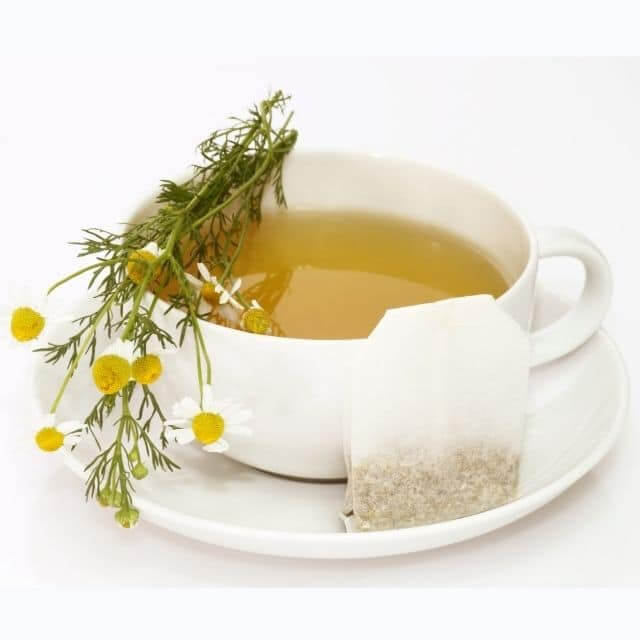
Today, chamomile is best known as a mild, caffeine-free tea, but the small flower with the white petals and yellow center is far more versatile than that. In this entry, we take a closer look at chamomile’s history, flavor, culinary uses and growing conditions in Denmark — and not least the difference between German and Roman chamomile.
Estimated reading time: 7 minutes
History and Origin
Chamomile has accompanied humankind for thousands of years. The name comes from the Greek chamaimelon, meaning “earth apple” — a nod to the flower’s characteristic apple scent. In ancient Egypt, the plant was associated with the sun god, and both the Greeks and Romans used it extensively in their herbal medicine.
From Monastery Gardens to Danish Homes
In the Middle Ages, chamomile was grown in monastery gardens across Europe, including Denmark, where monks and nuns used it for medicinal purposes. In Denmark, the herb found its way into folk medicine and the household medicine cabinet, where it was used for everything from digestive problems to skin irritation in the form of teas, tinctures and ointments. The chamomile flower also became a symbol of sun and summer and is still a common sight in Danish gardens and fields.
German and Roman Chamomile
There are several varieties, but the two most important are German chamomile (Matricaria chamomilla, also called Matricaria recutita) and Roman chamomile (Chamaemelum nobile). German chamomile is the classic tea herb and the most widespread in Denmark. It is recognized by its small white flowers with a yellow, domed center. Roman chamomile is a perennial with a more intense, slightly bitter aroma and is more often used in aromatherapy and cosmetics. There is also wild chamomile, found growing in nature, which has a milder effect.
- German chamomile: most used in tea and cooking
- Roman chamomile: often used in aromatherapy and cosmetics
- Wild chamomile: found in nature, milder in flavor and effect
Flavor and Aroma
Chamomile has a soft, sweetish flavor with distinct notes of apple, honey and wildflowers. It is precisely this apple scent that is the herb’s signature and gave it its Greek name. Behind the aroma lie the flower’s essential oils, including bisabolol and chamazulene, which give German chamomile oil its characteristic bluish color.
German chamomile is the mildest and most honey-sweet of the varieties, while Roman chamomile tastes stronger and more bitter. The aromatic compounds are volatile and easily lost through hard boiling, which is why chamomile is always left to steep rather than boiled — both for tea and in cooking.
Culinary Use
Chamomile is best known as tea, but the flower’s blossom-sweet aroma can elevate far more than a cup of hot water. Its delicate flavor is especially suited to sweet dishes, where it adds a touch of meadow and summer.
In the Danish Kitchen
In Denmark, chamomile tea is the classic use — a caffeine-free drink especially enjoyed on cold winter evenings. But chamomile can also be infused into baked goods, syrup and cream for a subtle floral flavor, and whole dried flowers are both beautiful and aromatic as a garnish on cakes and desserts.
Sprinkle on desserts: Decorate cakes, cupcakes or desserts with whole dried chamomile flowers for both flavor and a decorative look.
Tips and tricks from the author: Morten Jensen
Internationally
In Southern Europe and Latin America, chamomile (Spanish manzanilla, “little apple”) is drunk as an everyday herbal tea after meals to aid digestion. The flower also features in honey-based drinks and in baked goods, where its sweet note pairs beautifully with citrus and vanilla.
How to Use Chamomile in the Kitchen
Always let chamomile steep rather than boil, so the volatile aromatic compounds are preserved — 5 minutes in near-boiling water is plenty for a tea. Chamomile can also be infused into oils or vinegars for dressings, or infused into cream and syrup for desserts.
- Chamomile infusions in baked goods for a subtle floral flavor
- Chamomile oil and chamomile vinegar for dressings and marinades
- Chamomile syrup for desserts, drinks and lemonade
- Whole dried flowers as edible garnish on cakes
Health Benefits
Beyond its culinary value, chamomile has traditionally been used for its calming properties. The following is general knowledge about the herb’s traditional use and not health advice.
Calming Effects and Sleep
Chamomile tea is caffeine-free and has traditionally been used to promote relaxation and a good night’s sleep. The flower contains the flavonoid apigenin, which is often linked to the herb’s calming reputation. A cup of warm chamomile tea is therefore a familiar part of many evening routines.
Digestion
Chamomile has also traditionally been used to soothe the digestive tract. The mild herb is often drunk after meals to relieve bloating and an upset stomach, and it features in many digestive tea blends alongside fennel and peppermint.
Safety and Precautions
- People with allergies to plants in the daisy family (such as mugwort, chrysanthemum and marguerites) may react to chamomile
- In rare cases, chamomile may affect the action of certain medications
- Pregnant or breastfeeding individuals and those on regular medication should talk to a healthcare professional before regular use
Growing
Chamomile is easy to grow in a Danish garden. It is an annual in Denmark and rarely survives a hard winter, but it readily self-seeds if some flowers are left to go to seed. The plant thrives in full sun and light, well-drained soil.
Growing Conditions
- Light: at least 6 hours of sun daily for the most flowers; tolerates light partial shade
- Soil: light, well-drained and neutral to slightly alkaline; avoid heavy, waterlogged soil
- Watering: even but sparse — let the surface dry out between waterings
- Pots: use containers with drainage and expanded clay pellets, and protect from strong wind
How to Grow Chamomile
Total time: 4-6 weeks
- Starting Indoors
Start indoors in March–April at 15–20 °C. The seeds need light to germinate, so cover them only lightly. Keep the soil evenly moist. Germination takes 7–14 days.
- Pricking Out
Once the seedlings have 2–3 leaves, prick them out into small pots with light, well-drained soil. Ensure good air circulation.
- Hardening Off
Place the plants in a sheltered spot for 3–5 days to acclimate them to sun and wind.
- Planting Out
Plant out after the last night frost (typically mid-to-late May). Space about 20 cm apart. Full sun or light partial shade and well-drained soil.
- Watering and Fertilizing
Water evenly but sparingly, and let the surface dry out between waterings. A light organic fertilizer at the start of the growing season is sufficient.
- Pinching and Harvesting
Pinch off the top shoots for dense, bushy growth, and remove faded flowers to prolong flowering. Harvest flower heads before they are fully open.
Storage
Harvest the flower heads just before full bloom, while the petals are still standing horizontally. Cut the flowers in the morning once the dew has dried, leaving a bit of stem attached.
Drying
Dry the flowers in thin layers on a clean cloth, or in small bundles hung up in a dry, dark place with good air circulation. Turn them regularly. Once the flowers are completely dry, store them in airtight jars or tins away from light.
Shelf Life and Freezing
- Properly dried flowers keep for 6–12 months in an airtight jar
- Fresh flowers can be frozen in small portions
- The flowers can also be infused into oil or vinegar for longer shelf life
Try This Recipe
Chamomile’s soft, apple-like and lightly honey-sweet notes work beautifully in desserts, where it can be steeped into syrup or cream. Try letting a couple of dried chamomile flowers steep in the juice for our Baked Rhubarb in the Airfryer – Tangy-Sweet and Ready in 22 Minutes, where the flowers’ floral-sweet scent balances the rhubarb’s fresh tartness.
Equipment and Products
Chamomile and honey are a classic pairing — the honey’s sweetness rounds off the herb’s light bitterness, both in an evening tea and in desserts. Our Bornholmer Honningsyp 32% – 35 cl is a natural companion if you want to play with chamomile’s blossom-sweet side in a warm drink or a dessert sauce.
Frequently Asked Questions
German chamomile (Matricaria chamomilla) is the annual plant with the classic, sweet tea-herb flavor and is mostly used for tea and cooking. Roman chamomile (Chamaemelum nobile) is a perennial with a more bitter, intense aroma and is more often used in aromatherapy and cosmetics.
German chamomile is an annual and normally doesn’t survive a hard winter outdoors. However, it self-seeds easily and often reappears. Pots can be overwintered frost-free at 5–10 °C with sparse watering.
Light partial shade is fine, but flowering and aroma will be weaker. For the most flowers, full sun with at least 6 hours of light daily is needed.
Tea and culinary amounts are typically well tolerated. People with allergies to daisy-family plants such as mugwort, chrysanthemum and marguerites may be more sensitive, and pregnant or breastfeeding individuals and those on medication should talk to a healthcare professional before regular use.
Grow the plant in full sun and lean, well-drained soil. Harvest the flowers just before they fully open and dry them gently. Add the chamomile flowers late in tea or infusions to preserve the volatile aromatic compounds.
Facts About Chamomile
| Field | Value |
|---|---|
| English name | Chamomile |
| Latin name | Matricaria chamomilla (syn. M. recutita) |
| Family | Daisy family (Asteraceae) |
| Plant type | Annual herb |
| Height | 10–40 cm |
| Hardiness | Not frost-tolerant; self-seeds readily in mild weather |
| Light | Full sun to light partial shade |
| Soil | Light to sandy, well-drained and neutral |
| Sow/plant | March–May (pre-sown indoors) or April–June (direct sowing) |
| Flowering | June–October |
| Harvest | June–October; pick flowers just before they fully open |
| Flavor | Sweet, apple-like with honey and floral notes |
| Culinary use | Tea, infusions, syrup, butter, vinegar, dessert garnish |
| Storage | Dried flowers in an airtight jar; can be frozen or infused into oil |
