

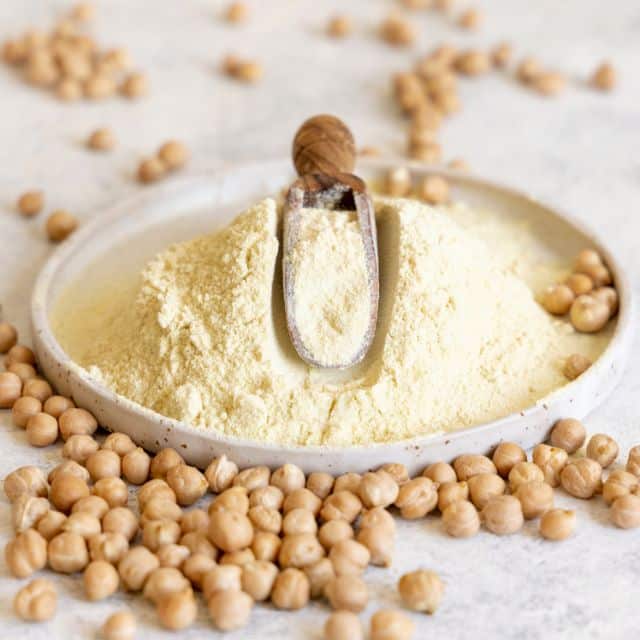
Chickpea flour, also known as gram flour, garbanzo bean flour or besan flour, is a versatile and nutrient-rich flour made from dried chickpeas. It’s used in many cultures around the world and has gained popularity as a gluten-free alternative to wheat flour. Besan has a light, nutty flavor and a fine texture, making it ideal for a wide range of culinary uses.

Advertisement: The page displays ads and contains advertising links (affiliate links). See our advertisers here.
This flour has become a staple in many households, especially among those following a gluten-free diet. It’s not only known for its ability to replace wheat flour in many recipes, but also for its health benefits. It’s rich in protein, fiber, and a range of essential vitamins and minerals, making it a healthy choice if you’re looking to improve your diet.
Although chickpea flour has its roots in Middle Eastern, Indian, and Mediterranean cuisines, it can be used for everything from baking bread and cakes to making delicious pancakes and crispy fritters.
Estimated reading time: 7 minutes
History and Origin
The chickpea (Cicer arietinum) is one of the world’s oldest cultivated legumes and was domesticated in the Fertile Crescent around 9,000-10,000 years ago. The tradition of grinding dried chickpeas into flour arose early in India and the Middle East, where besan has been the backbone of everything from pakoras to sweet ladoo balls for centuries.
Along the Mediterranean, the flour took on a life of its own: in Nice, it became socca; in Liguria, farinata – thin, golden flatbreads baked in blazing-hot ovens. Today, chickpea flour is experiencing a renaissance around the world as a gluten-free, protein-rich alternative to wheat flour.
Nutritional Value
Protein and Fiber Content
Chickpea flour is an excellent source of both protein and fiber. With a protein content of about 22 grams per 100 grams of flour, it’s a fantastic plant-based protein source, making it especially attractive to vegetarians and vegans. The protein in chickpea flour helps build and repair the body’s tissues and supports muscle growth.
In addition, chickpea flour is rich in fiber, which helps promote healthy digestion and can help stabilize blood sugar levels. The fiber content also makes chickpea flour filling, which can be beneficial for those looking to manage their weight.
Vitamins and Minerals
Chickpea flour is a good source of several important vitamins and minerals, including folate, iron, magnesium, and zinc. Folate is important for DNA synthesis and cell growth, making it especially important for pregnant women. The iron content helps prevent iron-deficiency anemia, particularly in women of childbearing age.
Magnesium plays a role in more than 300 enzymatic reactions in the body, including those involved in energy production and protein synthesis. Zinc is essential for immune system function and wound healing.
Health Benefits
Gluten-Free and Low Glycemic Index
One of the biggest benefits of chickpea flour is that it’s naturally gluten-free, making it an ideal choice for people with celiac disease or gluten intolerance. In addition, chickpea flour has a low glycemic index (GI), meaning it has less impact on blood sugar levels compared to refined flour types. This makes it a good choice for people with diabetes or those wanting to maintain stable blood sugar levels.
Rich in Plant-Based Protein
Chickpea flour is a valuable source of plant-based protein, making it an excellent ingredient for vegetarians and vegans, as well as anyone looking to increase their protein intake. The high protein content helps keep you full longer and supports muscle repair and growth. This is especially important for those who are physically active or trying to build muscle.
Culinary Uses
Substitute in Baking and Cooking
Chickpea flour can easily be used as a substitute for wheat flour in many recipes. For baking, it can replace up to 25% of the regular flour to add a nutty flavor and a healthier nutritional profile. When it comes to thickening sauces or stews, chickpea flour can be used as a gluten-free thickener.
You can also use it to make gluten-free baked goods, such as bread, cakes, and cookies. However, since chickpea flour doesn’t contain gluten, the baked goods may have a slightly different texture than traditional baked goods. It’s therefore recommended to combine it with other gluten-free flour types or add a binder like xanthan gum to achieve the desired consistency.
Traditional Dishes and International Cuisines
Chickpea flour is used in many traditional dishes across different cultures. In India, it’s a key ingredient in many dishes, such as besan chilla, a type of chickpea pancake, and besan ladoo, a sweet treat made from roasted chickpeas. In Middle Eastern and Mediterranean cuisines, chickpea flour is used to make socca, a flatbread-like dish often served as an appetizer or snack.
It’s also used in Italian cuisine, where it’s known as farina di ceci and used to make farinata, a type of chickpea pancake served as a starter or snack.
Chickpea Flour Recipes
Savory Recipes
Chickpea Flatbread (Socca)
Socca is a popular flatbread from Nice in France, made from chickpea flour, water, olive oil, and salt. It has a crispy exterior and a soft interior. Socca is often served hot, straight from the oven, and can be enjoyed on its own or with various toppings like herbs, onions, or cheese.
Chickpea Flour Pancakes (Besan Chilla)
Besan chilla is an Indian version of a pancake, made with the flour and seasoned with herbs and spices like turmeric, coriander, and chili. These pancakes are not only gluten-free but also very nourishing, making them an excellent breakfast or snack.
Sweet Recipes
Chocolate Cake
A chickpea flour chocolate cake is a gluten-free dessert that doesn’t compromise on flavor. Chickpea flour adds a light nutty taste that complements the chocolate nicely. This cake is moist, rich, and perfect for chocolate lovers wanting a healthier version of the classic chocolate cake.
Cookies
Chickpea flour can also be used to make delicious, gluten-free cookies. These cookies have a light nutty flavor and a lovely chewy texture. They can be made with chocolate chips, nuts, or dried fruit to add extra flavor and texture.
Gluten-Free Baking with Chickpea Flour
When baking gluten-free with this flour, it’s important to remember that it can have a slightly different consistency than traditional wheat flour. It’s therefore often necessary to combine it with other gluten-free flour types like rice flour or almond flour to achieve the desired texture in your baked goods. Chickpea flour works well in both sweet and savory baking and can be used to make everything from bread and cakes to cookies and pies.
Chickpea Flour in Indian Cuisine
Besan Ladoo (Chickpea Flour Sweet Balls)
Besan ladoo is a popular Indian sweet made from roasted chickpea flour, ghee, sugar, and cardamom. These small balls are rich, sweet, and have a deep flavor derived from the roasted chickpeas and ghee. They’re often made for special occasions and festivals.
Onion Pakoras (Fritters)
Onion pakoras are a classic Indian snack made from slices of onion dipped in a chickpea flour batter and then deep-fried until golden and crispy. These fritters are often served with chutney and are a popular street food in India.
How to Make Socca with Chickpea Flour
Total time: 45 minutes
- Whisk the batter
Whisk 150 g chickpea flour with 250 ml water, 2 tbsp olive oil, and a good pinch of salt into a smooth, thin batter.
- Let the batter rest
Let the batter rest for 30 minutes at room temperature, so the flour absorbs the liquid and the flavor develops.
- Pour the batter into the pan
Pour the batter into a greased pan or onto baking paper in the air fryer basket in a thin layer, about half a centimeter.
- Bake your socca
Bake at 200 degrees for 8-12 minutes, until the surface is golden and the edges are crispy.
- Top and serve
Sprinkle with freshly ground pepper and rosemary, cut into pieces, and serve hot.
Where Can You Buy Chickpea Flour?
Chickpea flour can be found in most supermarkets, especially in the gluten-free or health food sections. It can also be purchased at specialty stores that sell Middle Eastern, Indian, or Mediterranean products. For those who prefer to shop online, chickpea flour is also available on many online marketplaces.
The price of chickpea flour can vary depending on the brand and quality. Organic can be a bit more expensive, but many find it worth investing in, especially if they use it regularly in their cooking. When shopping, it’s a good idea to check the ingredient list to make sure it contains only chickpeas and no additives.
Storage
- Store chickpea flour in an airtight container in a cool, dry place to extend its shelf life
- Properly stored, the flour typically keeps for 6-12 months – even longer in the fridge or freezer
- Chickpea flour easily absorbs odors, so keep it away from strong-smelling items like spices and coffee
Conclusion
Chickpea flour is a versatile and nutrient-rich ingredient that can be used in a wide range of recipes, from baking to cooking traditional dishes from different cultures. Its health benefits, including high protein and fiber content, as well as its naturally gluten-free status, make it an excellent choice for those looking to improve their diet.
Whether you’re an experienced cook or new to the kitchen, chickpea flour can be a fantastic addition to your cooking. With so many uses and recipes to choose from, the possibilities are almost endless. By experimenting with this flour, you can discover new flavors and improve your favorite dishes in a healthy way.
Try This Recipe
Chickpea flour is excellent for crispy, gluten-free breading – try swapping the wheat flour for chickpea flour in the batter for our Tempura Shrimp in the Air Fryer for a nutty, golden crust.
Equipment and Products
Pakoras, socca, and other chickpea flour fritters love a sweet, spicy dip. Find it in the shop: Yeo’s Sweet Chili Sauce 365 g.
Frequently Asked Questions
Chickpea flour is flour ground from dried chickpeas (Cicer arietinum). It’s also called besan, gram flour, or garbanzo flour, and has a light, nutty flavor.
Yes, chickpea flour is naturally gluten-free and suitable for people with celiac disease – however, always check the package for cross-contamination warnings.
About 22 grams of protein per 100 grams – significantly more than wheat flour, which makes it popular among vegetarians and vegans.
Partially. In baking, it can replace up to about 25% of the wheat flour, and as a thickener and breading it works on its own. For purely gluten-free baked goods, it’s best combined with other gluten-free flour types.
Besan is the Indian name for chickpea flour, traditionally ground from split chana dal. It’s used in classics like pakoras, besan chilla, and besan ladoo.
Facts About Chickpea Flour
| Field | Value |
|---|---|
| Raw ingredient | Chickpeas (Cicer arietinum) |
| Other names | Besan, gram flour, garbanzo flour, farina di ceci |
| Calories | Approx. 380 kcal per 100 g |
| Protein | Approx. 22 g per 100 g |
| Fiber | Approx. 10 g per 100 g |
| Gluten | No – naturally gluten-free |
| Glycemic index | Low |
| Typical uses | Socca, pakoras, besan chilla, breading, thickening, gluten-free baking |
| Storage | Airtight, cool, and dry – keeps 6-12 months |
