

Kohlrabi is one of those vegetables I’m always happy to spot in the produce section in summer. It looks like a round bulb with leaves sticking out to the sides, but what you eat isn’t a root. It’s the plant’s swollen stem, which grows above the ground.
You may also know it as German turnip or turnip cabbage. Botanically, kohlrabi is a cultivated form of Brassica oleracea (the Gongylodes Group) in the mustard family – the same species as white cabbage, cauliflower and broccoli. The flesh is crisp, juicy and mild, and that makes kohlrabi one of the most versatile types of cabbage in the kitchen.
Here you’ll get the story behind the name, the difference between kohlrabi and rutabaga (swede), the nutritional content and my best tips – from raw slaw to crispy fries in the air fryer.
Estimated reading time: 6 minutes
History and origin
A cultivated form of cabbage
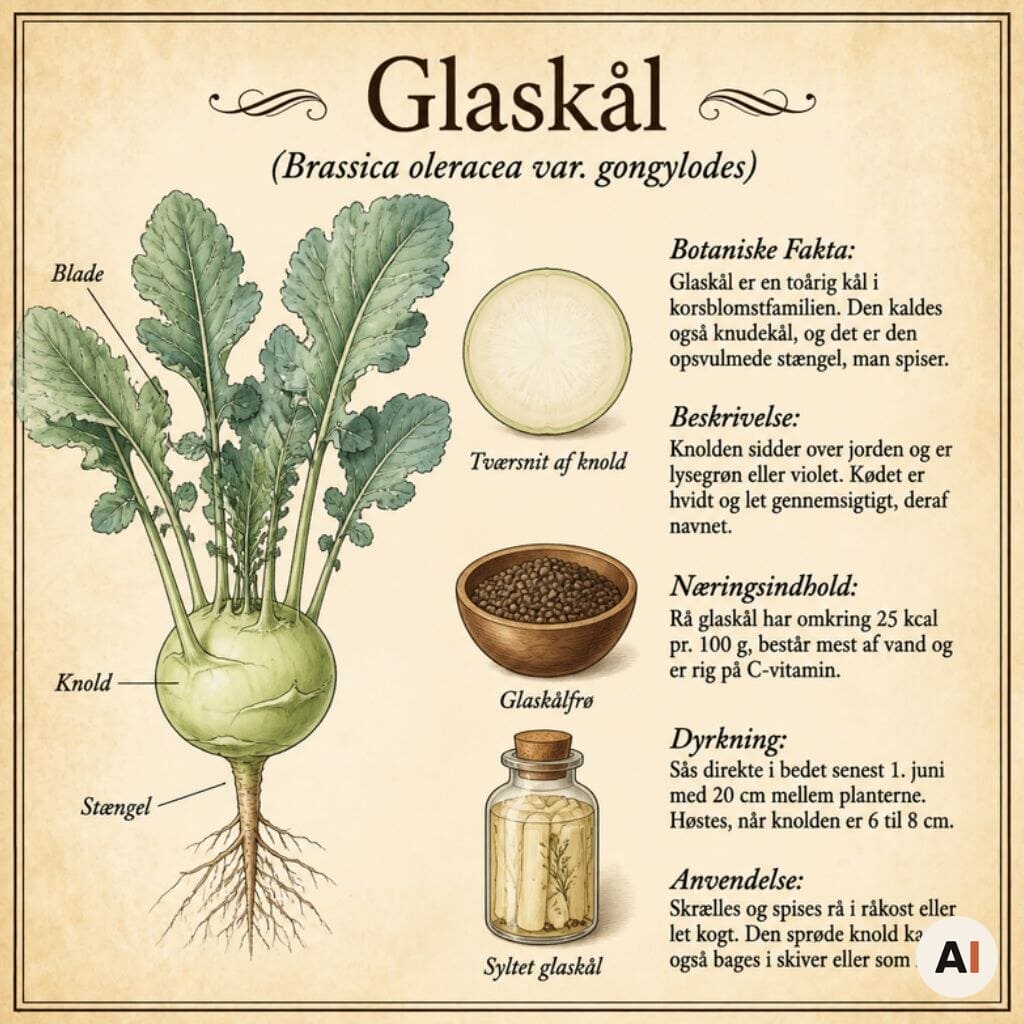
Kohlrabi doesn’t exist as a wild plant. It has been bred from the same species that has also given us Brussels sprouts, red cabbage and kale. In botanical texts it also appears as Brassica oleracea var. gongylodes – it’s the same plant.
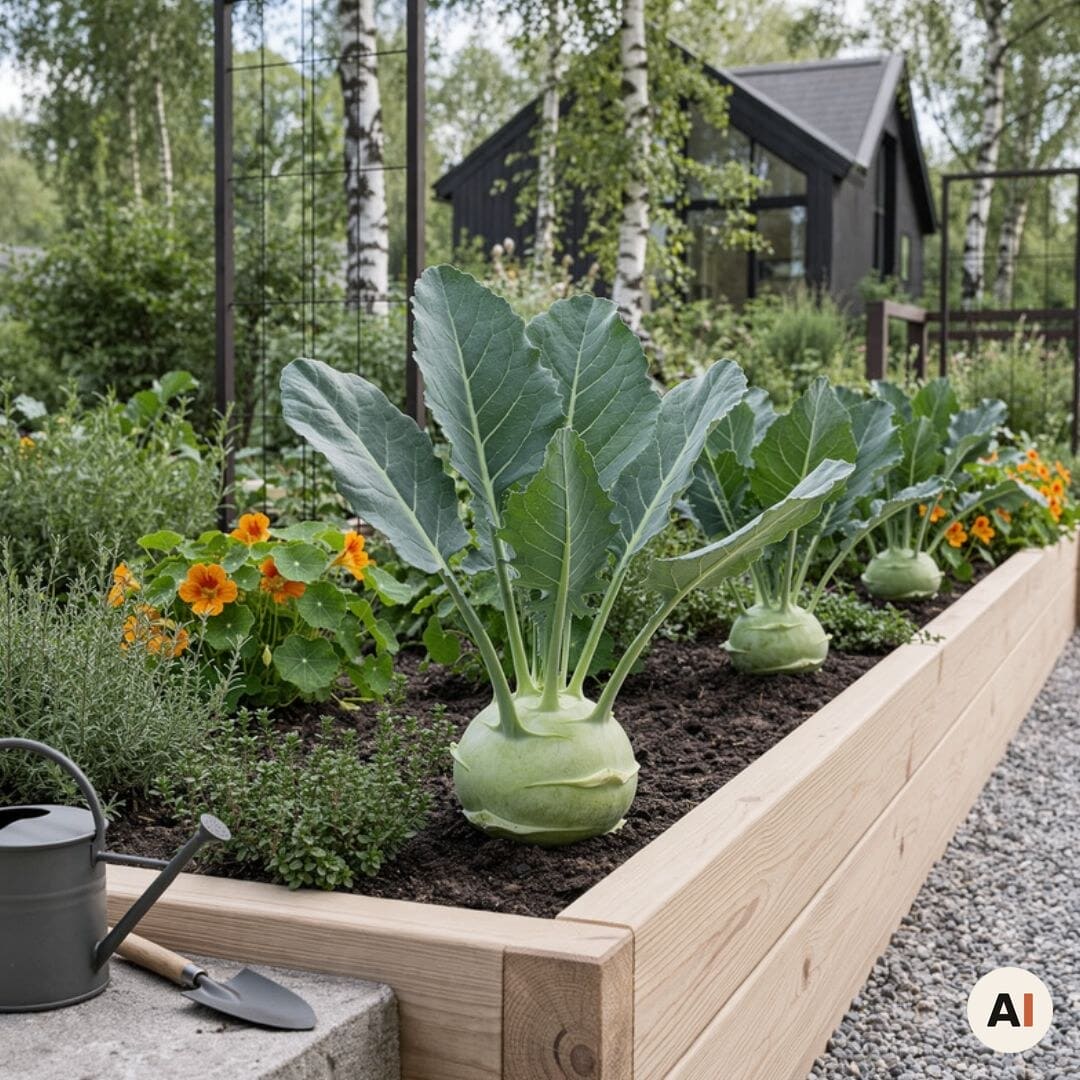
What’s special about this particular form of cabbage is that the stem just above the ground swells into a round bulb – and that’s the part we eat. The leaves sit on long stalks directly on the bulb, which gives kohlrabi its characteristic look.
From the 1500s to the Nordic countries
In Europe, kohlrabi can be traced in written sources back to the mid-1500s. In Sweden it has been grown since the 1700s, and the Danish word knudekål is known from 1786. The name really says it all: a cabbage with a knot on its stem.
Why is it called glaskål in Danish?
The Danish name glaskål (literally ‘glass cabbage’) comes from the white, slightly translucent flesh. Cut a fresh bulb into thin slices and you can see where the name comes from.
The names have, by the way, caused confusion for a long time. Kohlrabi is not the same as rutabaga, but the two were mixed up as far back as the 1800s. Rutabaga is a root vegetable, whereas kohlrabi is the stem above the ground.
Flavor and aroma
Mild cabbage with a sweet note
Raw kohlrabi tastes mild and fresh, with a touch of sweetness and a subtle cabbage note. Personally, I think it’s reminiscent of the innermost, sweet part of a broccoli stalk, only juicier. It’s milder than white cabbage, which makes it a good place to start if you’re not otherwise a big fan of cabbage.
The cabbage note comes from the sulfur-containing plant compounds that are typical of the mustard family. In kohlrabi they are so subtle that they rarely take over a dish.
Crisp raw, tender and sweet when cooked
Raw, kohlrabi is crisp and juicy, almost like an apple when you bite into it. Heated through, it turns tender and the sweetness comes through more clearly. In the air fryer, the edges also pick up a lightly caramelized, nutty flavor.
Pale green or purple?
You can buy kohlrabi in both pale green and purple varieties. The color is in the skin, and inside, the flesh is pale in both, so once the kohlrabi is peeled you can’t tell the difference. I use them interchangeably.
Culinary uses
In everyday cooking
In home kitchens, kohlrabi is often used raw in salads and slaws. I slice it finely and toss it in a dressing of rygeost (a Danish smoked fresh cheese) or crème fraîche – simple and fresh. But kohlrabi can also go into soup, be baked in a gratin, or be boiled and mashed, and it works nicely in stews and casseroles.
Around the world
In Germany and Austria, Rahmkohlrabi is a classic: kohlrabi in a light cream sauce, served as a side dish. In Vietnam, people make su hào xào – kohlrabi in thin strips that are stir-fried quickly so it keeps its bite.
Classic dishes with kohlrabi – at home and around the world:
- Slaw: grated or finely sliced kohlrabi with rygeost or crème fraîche.
- Soup: boiled kohlrabi, preferably blended into a creamy soup.
- Gratin: slices of kohlrabi baked with cream and cheese.
- Purée: boiled and mashed kohlrabi as a side dish.
- Rahmkohlrabi: kohlrabi in a light cream sauce.
- Su hào xào: Vietnamese stir-fry with kohlrabi.
- Fries and baked slices: crispy sticks and slices from the air fryer.
In the air fryer
This is where kohlrabi really surprised me. Peel the bulb, cut it into evenly sized sticks or slices, and toss them in a little oil, salt and spices. Arrange them in a single layer and shake the basket along the way – that gives you golden edges and a soft, slightly sweet center. Smoked paprika, garlic or grated Parmesan complement the mild flavor nicely.
Health benefits
Few calories and lots of water
Kohlrabi is a light vegetable: 100 g of raw kohlrabi contains 93 g of water and provides only 23 kcal. That’s why it’s so juicy and fresh to bite into.
Rich in vitamin C
The most notable thing is the vitamin C content: 65 mg per 100 g. Vitamin C doesn’t tolerate heat well, so if you want to get as much as possible, raw kohlrabi in a slaw is a good choice.
Kohlrabi is of course no miracle cure, but it’s an easy way to get more greens, fiber and vitamin C – and it tastes good too.
Nutritional content per 100 g of raw kohlrabi:
- Energy: 98 kJ (23 kcal)
- Water: 93 g
- Protein: 1.7 g
- Fat: 0.1 g
- Carbohydrate: 3 g, of which sugars 2.9 g
- Dietary fiber: 2 g
- Vitamin C: 65 mg
- Folate: 50 µg
- Vitamin B6: 0.15 mg
Cultivation
Soil and space
Kohlrabi is a rewarding cabbage to grow because it grows fast and doesn’t take up much space. The plants reach up to 30 cm in height, and the bulbs grow to about 5-10 cm in diameter.
Growing conditions for kohlrabi:
- Soil: clay loam, deep, humus-rich and nutrient-rich.
- Lime: a little dolomite lime in the planting hole, as for other cabbages.
- Spacing: about 20 cm between plants and 50 cm between rows.
- Sowing time: no later than June 1.
- Crop rotation: grow cabbage in the same spot no more than once every 5-6 years.
- Watering: even moisture, so the bulbs grow steadily.
How to grow kohlrabi
Harvest kohlrabi while the bulb is young – then the flesh is crisp and juicy all the way through. Here’s how to do it, step by step:
Total time: 2-3 months
- Prepare the soil
Choose a bed with clay loam soil that is deep, humus-rich and nutrient-rich, where no cabbage has grown in the last 5-6 years. Add a little dolomite lime to the planting hole.
- Start indoors or sow
As with other cabbages, you can start the seeds indoors around March 1, or in a greenhouse around April 1. Kohlrabi is sown no later than June 1.
- Give the plants room
Plant out or thin out so there are about 20 cm between plants and 50 cm between rows.
- Water and weed
Keep the soil evenly moist and the bed free of weeds so the bulbs grow steadily.
- Harvest young bulbs
Harvest the kohlrabi before the bulb grows larger than about 8 cm in diameter. Cut it off at the ground, just below the bulb.
Storage
In the refrigerator
Kohlrabi keeps best in the refrigerator. Cut off the leaves before you put the bulb in the crisper drawer – otherwise the leaves pull moisture out of the bulb, and it goes soft more quickly.
My storage tips:
- Whole bulb: without leaves in the crisper drawer.
- Peeled or cut: wrap it tightly and use it quickly.
- Freezing: cut into cubes and blanch them briefly first – frozen kohlrabi is best in soups and stews.
Use the leaves
The leaves are edible, by the way. I use the young leaves like spinach – chopped into a stew or tossed in a pan with a little garlic. Use them quickly, because they don’t keep as long as the bulb.
How to choose a good kohlrabi
Choose a firm, heavy bulb with smooth skin without cracks and with fresh leaves. Smaller bulbs are usually the most tender, while very large bulbs can be woody.
Try this recipe
Kohlrabi is mostly water, so kohlrabi sticks don’t get quite as crispy as potatoes when they’re baked without any coating at all. The solution is a spiced crust, exactly as in our recipe for Coated French fries in the air fryer – crispy, spiced crust without a deep fryer. I cut the kohlrabi into sticks instead of potatoes and give them the same crust – that way they’re crispy on the outside and juicy inside. Remember to peel the kohlrabi thoroughly first.
Frequently asked questions
The name comes from the white, slightly translucent flesh, which has an almost glassy sheen. In Danish the vegetable is also called knudekål, glaskålrabi and kålrabi.
No. Kohlrabi is the swollen stem of a cultivated form of Brassica oleracea, and it grows above the ground. Rutabaga is an entirely different vegetable, a root vegetable. The two have been confused with each other as far back as the 1800s.
Yes. The skin is tough and fibrous, especially at the bottom of the bulb, so peel it thoroughly with a knife or a peeler. The flesh inside is crisp and mild.
Yes, raw kohlrabi is crisp and juicy and perfect for slaws and salads. Try it grated or in thin slices with a dressing of rygeost (a Danish smoked fresh cheese) or crème fraîche.
Peel the kohlrabi, cut it into evenly thick sticks or slices, and toss them in a little oil, salt and spices. Cook them in a single layer in the basket, and shake the basket along the way until the edges are golden and the flesh is tender.
Kohlrabi facts
| Fact | Value |
|---|---|
| English name | Kohlrabi |
| Other names | German turnip, turnip cabbage; Danish names: glaskål, knudekål, glaskålrabi, kålrabi |
| Latin name | Brassica oleracea, Gongylodes Group (B. oleracea var. gongylodes) |
| Family | Mustard family (Brassicaceae) |
| Plant type | Cabbage vegetable; the swollen stem is eaten |
| Varieties | Pale green and purple |
| Height | Up to 30 cm |
| Soil | Clay loam, deep, humus-rich and nutrient-rich |
| Sow/plant | No later than June 1; about 20 cm between plants, 50 cm between rows |
| Harvest | Before the bulb grows larger than about 8 cm in diameter |
| Season in the Nordic countries | Summer and fall |
| Calories per 100 g | 23 kcal (98 kJ), raw |
| Flavor | Mild and slightly sweet with a subtle cabbage note |
| Culinary use | Slaw, soup, gratin, purée, baked slices and fries |
| Storage | In the refrigerator with the leaves cut off |
