

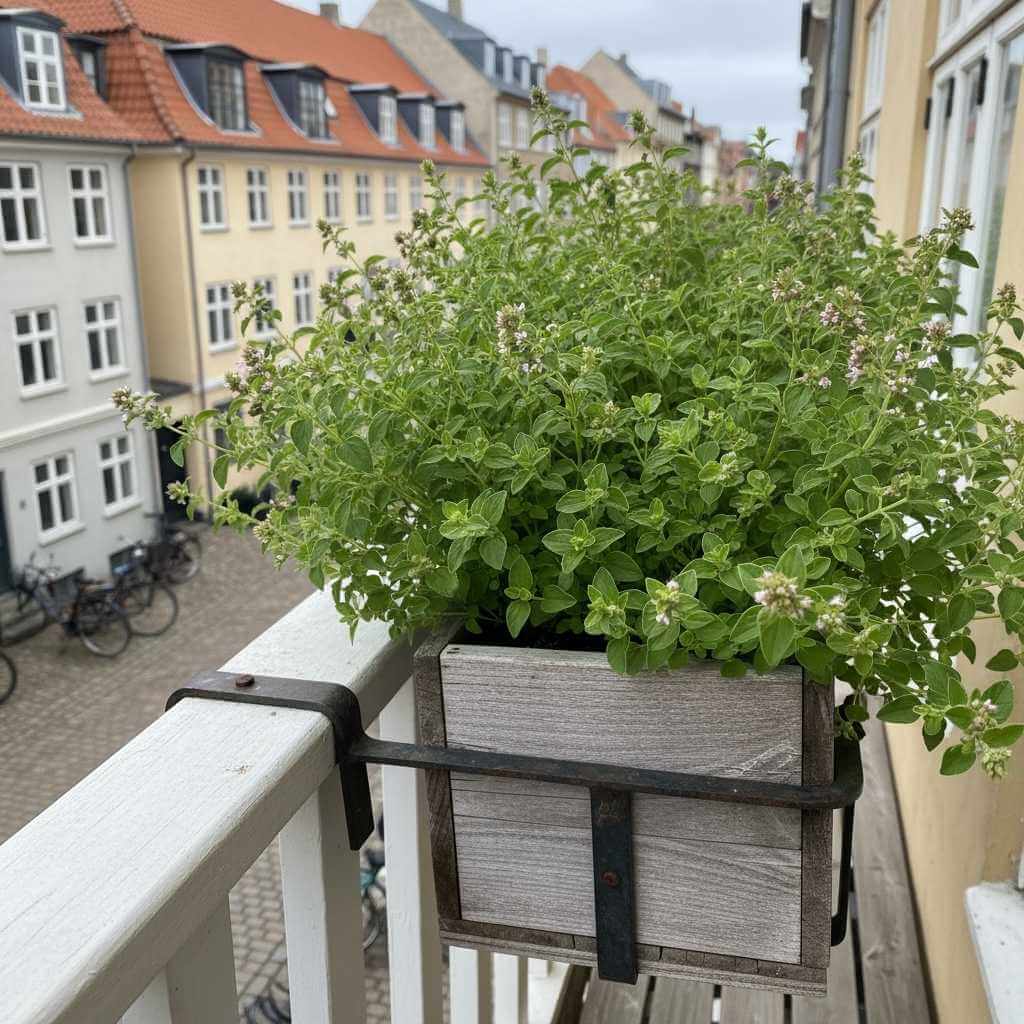
Marjoram smells warm and sweet. It resembles oregano, but is softer and rounder in flavor. In Denmark, it’s usually grown as an annual, thriving in pots on balconies and in a warm, dry bed. With its mild, herby character, it’s an elegant addition to meat, vegetables, and mushrooms.

Advertisement: The page displays ads and contains advertising links (affiliate links). See our advertisers here.
Estimated reading time: 7 minutes
What is marjoram?
Marjoram is a herb in the mint family (Lamiaceae). Its Latin name is Origanum majorana. It’s also known as sweet marjoram. The flavor is mild, herbaceous, and slightly balsamic with notes of pine and citrus. Many people know it from sausages, pizza, and Mediterranean cuisine.
The plant is low and compact, 20-40 cm tall. The leaves are small, oval, and soft with a grayish-green color, and the whole plant is lightly downy. The stems are thin and branch from the base. In summer it produces small white to slightly pink flowers that sit in dense clusters and attract bees and hoverflies.
Marjoram is closely related to oregano (Origanum vulgare). In everyday Danish, the names are often confused, and “wild marjoram” is technically oregano. Marjoram rarely tolerates hard frost and therefore works best as an annual in Denmark. It’s well suited to pots, raised beds, and a warm corner by a south-facing wall.
History and origin
Antiquity and the Middle Ages
Marjoram has its roots in the eastern Mediterranean and was known in antiquity. The Greeks used it in wreaths and as a fragrant plant, while the Romans used it in the kitchen. In the Middle Ages it came to Northern Europe through monastery gardens, where it was grown as a medicinal and culinary herb.
Marjoram in Denmark
In Denmark, marjoram has been mentioned in herbals since the 1500s and had a place in old kitchen gardens and manor gardens, where it was grown for its scent and flavor. Today it’s found in kitchen gardens, greenhouses, and on balconies, fitting well with the renewed interest in home-grown herbs. Many Danish garden centers offer it as small potted plants from April to June, while in supermarkets it’s most often found as a dried spice year-round.
Flavor and aroma
The flavor is sweet, warm, and herbaceous, less sharp than oregano. Marjoram rounds out tomato, cabbage, and onion, and adds depth to mushrooms and grilled vegetables. It suits pork, meatballs, veal, and chicken, and can lift fish soups in small amounts.
The flavor unfolds best in fat, so it works well in butter, oil, and cream. Avoid overdosing, as the flavor can otherwise turn flat and dusty. Add the herb late in cooking, and let it meet fat to open up the aroma.
Good pairings
- Potatoes, carrot, and celery
- Tomato, bell pepper, and eggplant
- Onion, garlic, and leek
- Mushrooms, barley, and spelt
- Lemon, mild vinegar, butter, and cream
Culinary uses
Marjoram gives warm, round notes that lift meat, mushrooms, and vegetables. Because the flavor is gentle, it’s good in dishes that call for finesse. Use it in ground meat mixtures, meatballs, sausages, and stews, where it especially suits pork, veal, and chicken. It’s also lovely with potatoes, root vegetables, and white cabbage.
Marjoram tolerates heat better than basil but shouldn’t cook for long. Add it toward the end of cooking. The dried leaves are concentrated, so use a smaller amount than with fresh marjoram.
In Danish and Nordic cuisine
In Nordic cuisine, marjoram pairs well with mushrooms, new potatoes, and butter sauces. It adds depth to grilled vegetables and to grain salads with barley or spelt. Here are a few simple ideas (not full recipes):
- Stir finely chopped marjoram into butter and drizzle over new potatoes.
- Season ground meat with marjoram, garlic, and pepper.
- Add marjoram to tomato sauce shortly before serving.
- Toss roasted mushrooms with marjoram and lemon.
- Make an oil with marjoram for a chicken marinade.
Internationally
Marjoram is widely used in charcuterie, especially in sausage seasoning blends. It’s included in pizza and pasta seasoning mixes as a softer counterpart to oregano and thyme. In Mediterranean cuisine, it’s a classic flavoring for tomato dishes and lamb, where its sweet, round character balances out the bold flavors.
Growing and harvesting in Denmark
Marjoram loves sun and warmth. Choose a spot with full sun, at least 6-8 hours daily. The soil should be light and well-drained; sandy garden soil works well, and the pH should be neutral to slightly alkaline. Avoid heavy clay soil with standing water, as wet soil causes rot. Scent and flavor become stronger in lean soil, so don’t over-fertilize.
How to grow marjoram
Total time: 12-16 weeks
- Starting seeds indoors
Start indoors in March-April at 18-22°C. The seeds need light to germinate, so cover them only very lightly or not at all. Germination takes 10-20 days.
- Pricking out
When the seedlings have 2-3 leaves, prick them out into small pots with airy soil and good drainage.
- Hardening off and planting out
Harden off the plants by placing them in a sheltered spot during the day for 5-7 days, gradually increasing the time. Plant out after the last night frost, typically mid to late May, spacing them 20-25 cm apart.
- Care and harvest
Water evenly but sparingly, and let the surface dry between waterings. Pinch off shoot tips for bushier growth, and cut for harvest before full bloom.
Overwintering in pots
Marjoram isn’t reliably winter-hardy in Denmark. Think of it as an annual, or as a potted plant that’s brought indoors. It can survive a mild winter with dry mulch, but pots are best moved to a frost-free room at 5-10°C with light. Avoid overwatering in winter. Use pots with a drainage hole and a layer of expanded clay pebbles, and place the pot in a warm spot by a south-facing wall, where shelter provides higher temperatures and stronger flavor.
Storage
Harvest just before flowering for the most aroma, and cut in the morning once the leaves are dry and full of oil after the dew has gone. Use sharp scissors and take shoot tips, which encourages branching. Always leave some greenery on the plant.
Drying and freezing
- For fresh use, rinse the leaves lightly and pat them dry.
- Tie small bunches and hang them in a dry, dark, and airy spot, or dry in a dehydrator on low heat.
- Store dried marjoram in airtight jars away from light and heat; it keeps for 6-12 months.
- Freeze chopped leaves in small portions in ice cube trays with a little oil or water.
- Make herb oil by letting clean, dry marjoram steep in neutral oil for 2-3 weeks, strain, and store in a cool place.
Mix-ups and quality
Possible mix-ups
Marjoram is often confused with oregano, which is also called “wild marjoram”. Oregano has a stronger and sharper flavor, and its leaves are often greener and more leathery. Marjoram has softer, grayish-green leaves that are more oval and finely downy, and its scent is sweeter and rounder.
Another mix-up happens with anise hyssop (Agastache foeniculum), which smells of anise and licorice and has larger, serrated leaves. Marjoram doesn’t smell of anise. Check the scent – it’s the most reliable method.
Buying and quality
Fresh marjoram is seen in season at Danish garden centers and markets. Look for compact plants with lots of shoot tips and firm, unblemished leaves. Avoid plants that are already in full bloom if you mainly want leaves. Dried marjoram is found in most supermarkets – choose small batches with a harvest and packing date, and always store in a dark, cool place.
Health and tradition
Marjoram is rich in aromatic oils, including carvacrol and terpenes. In tradition, it’s mentioned as digestion-supporting and thought to ease bloating and stomach cramps, and it’s also used in warm drinks for cold symptoms. Modern research is cautious in its conclusions, however, as most studies are small and show trends rather than definitive proof.
For most people, culinary amounts are safe. Use ordinary common sense, and avoid large amounts of essential oil. Pregnant and breastfeeding women should be cautious with supplements based on marjoram, and people with known allergies to the mint family should test carefully. Seek professional medical advice if you’re ill. This is not medical advice.
Traditional use
In folk medicine, marjoram has been used as a mild tea for stomach troubles, colds, and mild restlessness. In monastery gardens it was included as a fragrant plant in sachets, and dried bundles were hung in the kitchen both for the scent and to keep insects away. Danish sources from the 1700s and 1800s highlight its gentle character, and it was seen as a “friendly” herb. Today the tradition lives on as a mild herbal tea, often blended with thyme or sage.
Try this recipe
Marjoram is a classic pizza herb that offers a softer counterpart to oregano. Sprinkled over a fresh pizza close to serving, its sweet, herby aroma unfolds beautifully in the warmth. Try it on our Chicken pesto pizza in the air fryer, where marjoram rounds out pesto and chicken on a crispy base.
Equipment and products
Marjoram and tomato are a classic pairing. If you have a good tomato base on hand, half of your pizza or pasta sauce is already done. Tomate Frito Solís is a Spanish, lightly caramelized tomato sauce that becomes even rounder with a touch of marjoram added shortly before serving.
Frequently asked questions
Not reliably outdoors. Pots can be overwintered in a frost-free, bright spot at 5-10°C with sparse watering. Otherwise, marjoram is best grown as an annual in Denmark.
Light partial shade can work, but the flavor will be weaker. For the best aroma, full sun for at least 6-8 hours daily is needed.
Marjoram has a sweeter, milder, and rounder flavor with soft, grayish-green leaves. Oregano is stronger and sharper with greener, more leathery leaves. They’re closely related, and oregano is also called wild marjoram.
Give it full sun, lean, well-drained soil, and moderate watering, and harvest before full bloom. Add the herb late in cooking so the aroma is preserved.
Culinary amounts are typically fine. Avoid large doses of essential oil, and seek professional medical advice in case of illness or pregnancy.
See also: Oregano (Origanum vulgare), Thyme (Thymus vulgaris), Sage (Salvia officinalis).
Facts about marjoram
| Field | Value |
|---|---|
| English name | Marjoram |
| Latin name | Origanum majorana |
| Family | Mint family (Lamiaceae) |
| Plant type | Annual in Denmark / half-hardy perennial |
| Height | 20-40 cm |
| Hardiness | Not reliably hardy outdoors in Denmark; best kept frost-free |
| Light | Full sun |
| Soil | Light, well-drained, neutral to slightly alkaline |
| Sow/plant | Start indoors March-April; plant out after frost |
| Flowering | June-September |
| Harvest | June-September; before full bloom |
| Flavor | Sweet, warm, mild oregano note |
| Culinary use | Ground meat, sausages, stews, mushrooms, potatoes |
| Storage | Dried in airtight jars; freeze in small portions |
