

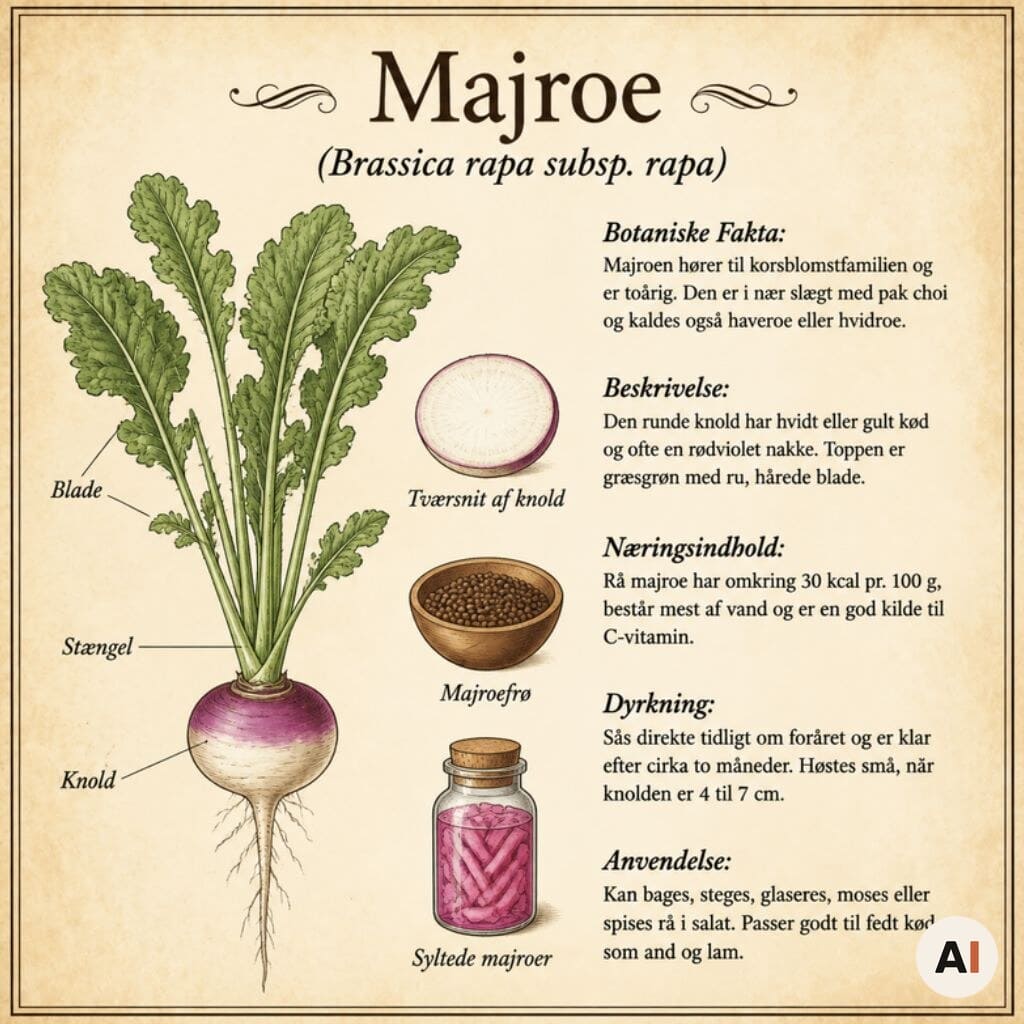
The turnip is one of the most underrated root vegetables in Nordic cooking. This small, round root – Brassica rapa subsp. rapa in Latin – is crisp and juicy raw and turns sweet, mild and tender when it’s heated. You may also know it as the garden turnip or white turnip, and it’s often mistaken for the swede, even though they are two different plants.
I love turnips because they’re so easy. They grow fast, are harvested small and get golden edges in the air fryer without any fuss. Glazed turnips with butter and honey are one of my regular sides for duck and lamb, and raw turnips in thin slices add freshness and crunch to any salad.
Estimated reading time: 7 minutes
History and origin
From Central Asia to the rest of the world
The turnip is an ancient cultivated plant. It was domesticated in Central Asia several thousand years ago, and that’s still where you find the most genetically diverse varieties – a sign that this is where it all began.
From there the turnip spread both west to Europe and east to East Asia. In the Hellenistic and Roman world it became an important food, and by AD 700 at the latest it had reached all the way to Japan.
Turnip is not the same as swede
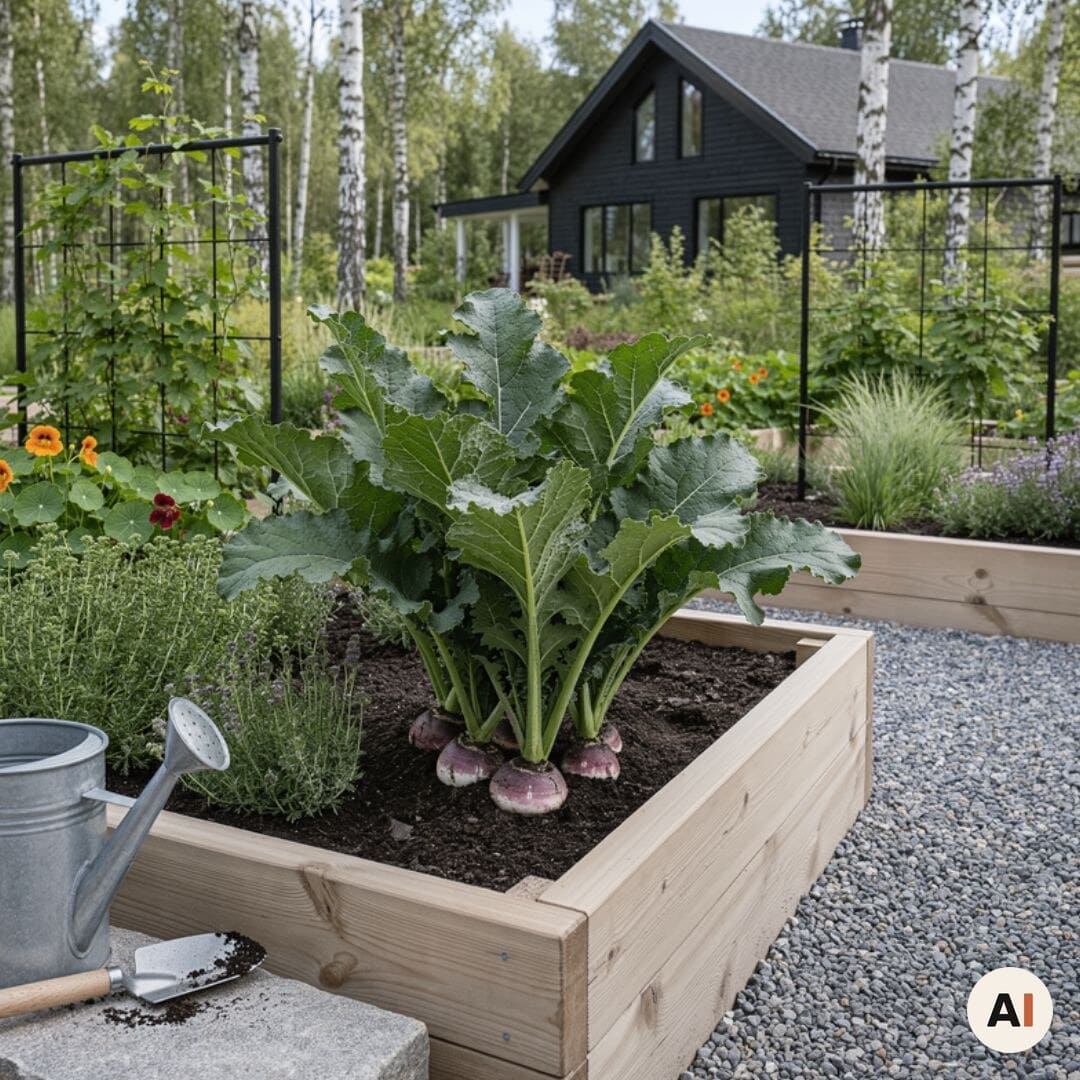
Turnips and swedes are often mixed up, but they are two different species. The turnip belongs to Brassica rapa, while the swede is Brassica napus – a species that arose from a cross between cabbage and turnip. Swede is the British name; in North America the same vegetable is called rutabaga.
In the kitchen you notice the difference: the turnip is smaller, milder and juicier and usually has white flesh, while the swede is large and firm and typically has yellow flesh. Chinese cabbage and pak choi, by the way, belong to the same species as the turnip.
Flavour and aroma
Mild, slightly sweet and a little sharp
A fresh turnip tastes mild and slightly sweet, with a faint, peppery edge that’s a bit like a radish – just much gentler. The sharp note comes from the sulfur compounds typical of the cruciferous family, which also give mustard and horseradish their bite.
When a turnip is heated, it changes character. The sharpness fades and the sweetness comes forward. Roasted in the air fryer, it gets caramelised edges and a soft, nutty flavour, while steamed turnips turn mild and almost buttery.
Small turnips taste best
Small, young turnips are crisp, juicy and sweet, while large ones get stronger in flavour and can turn woody. That’s why spring turnips are harvested very small, at 5–6 cm in diameter, while autumn turnips can grow up to 10 cm if they’re going into hot dishes.
Well-known varieties include the white ‘Snowball’ and ‘Tokyo Cross’, the classic ‘Purple Top White Globe’ with a purple top and white bottom, and ‘Goldball’, which has yellow flesh.
Culinary uses
In everyday cooking
Small turnips are usually eaten raw in salads, ideally when they’re 5–7 cm in size. Steamed turnips make a fine garnish, and the slightly larger ones are perfect in stews and other hot dishes.
Personally, I most often make them glazed. I roast or boil the turnips until tender, toss them in butter with a little honey and a little salt, and let the glaze turn glossy. They go especially well with duck and lamb, where the mild sweetness plays beautifully against the rich meat.
Around the world
In France, glazed turnips, navets glacés, are a classic garnish, and the dish canard aux navets – duck with turnips – shows how well the two go together. In Japan the small white turnips are popular, also pickled, and in the Middle East turnips are pickled together with a little beetroot so they turn pink.
In the southeastern United States, turnip leaves, known as turnip greens, are a common side dish, especially in late autumn and winter – and even before the Civil War they were boiled in the South with a piece of salt pork.
In the air fryer
The air fryer is made for turnips. The dry, circulating heat gives them lightly caramelised edges while the inside turns tender. Halve the small spring turnips and cut the larger autumn ones into even wedges. Toss them in a little oil and salt, and shake the basket during cooking. They’re done when a knife slides in easily and the edges are golden.
Classic turnip dishes
- Glazed turnips: glossy, sweet and a classic side for duck.
- Canard aux navets: French duck with turnips.
- Roasted turnips: with thyme and garlic, straight from the air fryer.
- Pickled turnips: pink with beetroot, as in the Middle East.
- Turnip greens: boiled turnip leaves with salt pork from the American South.
Health benefits
A light root vegetable with plenty of water
The turnip is a light root vegetable. Cooked, it contains 22 kcal per 100 g, and by far most of its weight is water.
It also provides dietary fibre, vitamin C, potassium and calcium. The turnip is no miracle cure, but it’s an easy way to get more greens on your plate – for example in place of some of the potatoes.
Nutritional content per 100 g cooked turnip
- Energy: 22 kcal
- Water: 93.6 g
- Carbohydrate: 5.1 g, of which sugars 3.0 g
- Dietary fibre: 2.0 g
- Protein: 0.7 g
- Fat: 0.1 g
- Vitamin C: 11.6 mg
- Potassium: 177 mg
- Calcium: 33 mg
Growing
Two seasons a year
The turnip gives you two seasons in the vegetable garden: a spring crop, where the turnips are harvested very small, and an autumn crop, where they’re allowed to grow a bit larger. The turnips are ready to harvest 70–80 days after sowing.
If you want fresh turnips for longer, you can sow in several batches. Sow the first batch as soon as the soil is workable in late March or early April, and the second batch 2–3 weeks later, around mid-April. In summer, sow a batch around 20 July and another 10–14 days later.
Growing conditions
- Climate: turnips prefer cool weather – that’s why they’re sown in spring and again in midsummer.
- Water: plenty of moisture all season – dry soil gives woody, sharp-tasting turnips.
- Frost: turnips don’t tolerate frost, so the autumn turnips need to be lifted in good time.
- Space: thin them out so each turnip has room to grow round.
How to grow turnips
Total time: 70-80 days
- Prepare the bed
Loosen the soil well and choose a spot where you can easily keep it moist. Turnips need plenty of moisture.
- Sow the seeds
Sow the spring batch as soon as the soil is workable in late March or early April, and the autumn batch around 20 July. Sow thinly in rows.
- Water and thin out
Keep the soil evenly moist and thin the seedlings so the turnips have room. Feel free to sow another batch a little later so you can harvest continuously.
- Harvest
Harvest 70–80 days after sowing, while the turnips are young and 4–10 cm. Spring turnips are picked very small, and autumn turnips need to be lifted before the frost arrives.
Storage
In the fridge
The most important thing once you’ve harvested or bought turnips is to cut the tops off. The leaves keep drawing moisture out of the root, and then it quickly goes soft. Then put the turnips in a bag in the vegetable drawer, and use the delicate spring turnips first.
In sand and in the freezer
If you’ve grown your own turnips, you can do as they did in the old days and store them in a box of sand for later use – cool and frost-free. If you want to freeze them, cut them into cubes and blanch them briefly first. They turn soft after thawing and are best in soups and stews.
My best storage tips
- Choose firm turnips: a fresh turnip is firm and heavy with smooth skin.
- Store the leaves separately: they keep for a shorter time than the root and can be sautéed like spinach.
- Rinse them just before use: moisture during storage makes the turnips rot faster.
Try this recipe
When turnips are in season, they always go into my batch of roasted root vegetables. Try our recipe for Root Vegetables in the Air Fryer – I swap some of the root vegetables for turnips, because their mild sweetness really comes out in the air fryer’s dry heat. I cut the turnips to the same size as the other root vegetables and toss everything in a knob of butter and a little honey at the end. It makes the perfect side dish for duck or lamb.
Frequently asked questions
The turnip, Brassica rapa, is small, mild and juicy and usually has white flesh. The swede is a different species, Brassica napus, which arose from a cross between cabbage and turnip. It grows larger and firmer and typically has yellow flesh.
The turnip has two seasons. The spring crop is sown from late March to mid-April and harvested very small, while the autumn crop is sown from around 20 July. The turnips are ready to harvest 70–80 days after sowing.
Yes. Small, young turnips are crisp, juicy and mild and are lovely raw in salads, ideally when they’re 5–7 cm in size. Cut them into thin slices or grate them coarsely.
Small, young turnips don’t need peeling – just scrub them clean. Larger autumn turnips have a thicker skin, so I peel those before they go into the pot or the air fryer.
Halve the small turnips and cut the large ones into wedges. Toss them in a little oil and salt and air fry them until the edges are golden and a knife slides in easily. Shake the basket during cooking.
Turnip facts
| Field | Value |
|---|---|
| English name | Turnip (also called garden turnip or white turnip) |
| Latin name | Brassica rapa subsp. rapa |
| Family | Cruciferous family (Brassicaceae) |
| Plant type | Biennial plant grown as an annual root vegetable |
| Hardiness | Does not tolerate frost; prefers a cool climate |
| Soil | Must be kept moist – turnips need plenty of moisture |
| Sow/plant | Spring: late March to mid-April. Autumn: from approx. 20 July |
| Flowering/Harvest | Harvest 70–80 days after sowing, at 4–10 cm |
| Calories per 100 g | 22 kcal (cooked) |
| Flavour | Mild and slightly sweet with a faint, peppery edge |
| Culinary use | Raw in salads, steamed, glazed, roasted in the air fryer and in stews |
| Storage | Without the tops in the vegetable drawer; autumn turnips can be stored in sand |
