

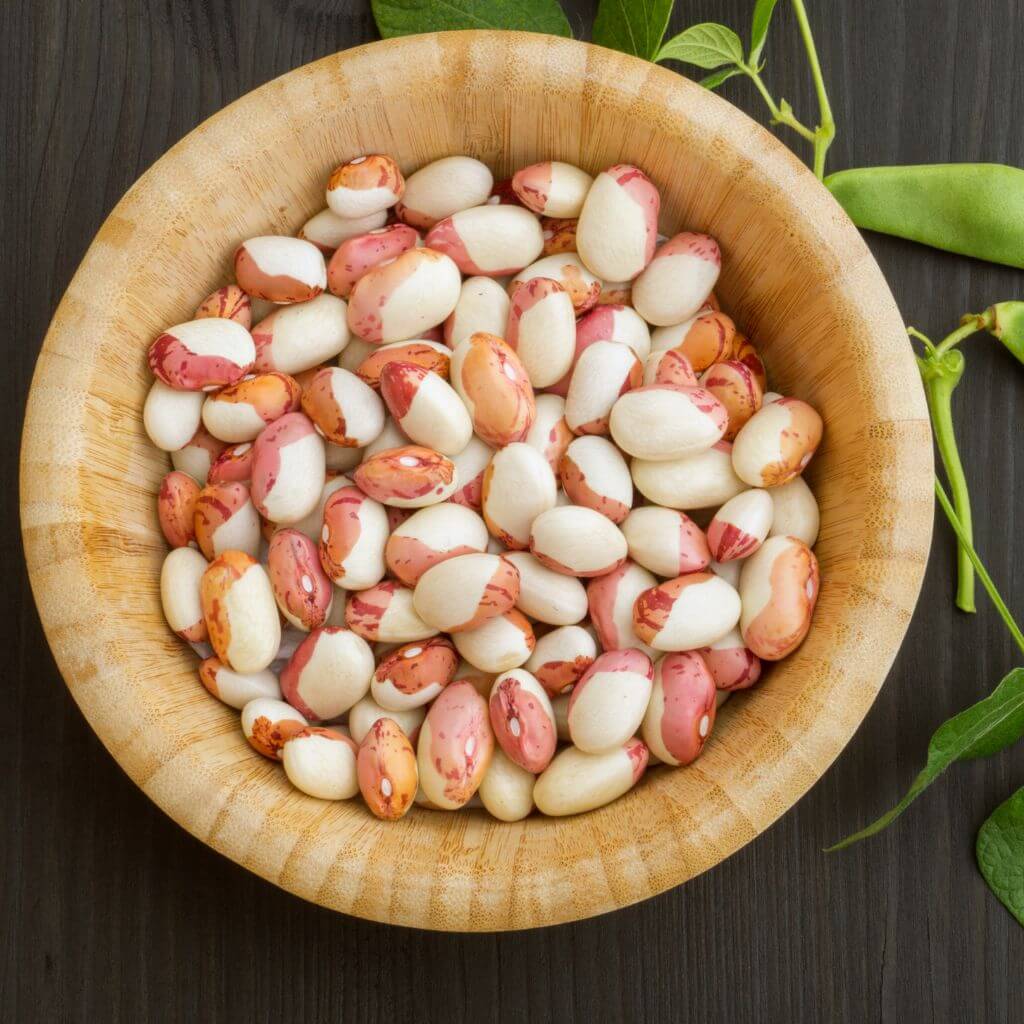
Anasazi beans are small white and red beans with a beautiful marbled pattern. They belong to the large family of common beans (Phaseolus vulgaris) and have been cultivated for thousands of years in North America. The beans have a sweet, almost nutty flavor and a mealy texture that adds body to dishes without feeling heavy.

Advertisement: The page displays ads and contains advertising links (affiliate links). See our advertisers here.
They’re characterized by a thin skin and a low content of oligosaccharides, which makes them easier to digest and quicker to cook than many other dried beans. As one of the oldest cultivated beans in the USA, they represent an important part of the country’s culinary heritage and are now experiencing a renaissance in Danish kitchens.
Estimated reading time: 10 minutes
History and Origin
Early History in the Southwest
The common bean has its roots on the American continent; it was domesticated in both Mesoamerica and the Andes region around 8,000 years ago. Anasazi beans are a specific heirloom type with particular significance in the American Southwest. According to historical sources, the Ancestral Puebloans (often called the Anasazi) grew beans with a white and dark red pattern in the desert regions of what is now New Mexico, Arizona, Colorado, and Utah. Archaeologists found remains of these beans in ruins around the Four Corners region; the plants were still growing wild around the ruins in the early 1900s. The name “Anasazi” comes from the Navajo word for “the ancient ones” or “enemy ancestors,” and the name has stuck, even though descendants of the Puebloans prefer the term Ancestral Puebloans.
The Three Sisters System and Its Rediscovery
For centuries, the beans were grown as part of the Three Sisters system, in which corn, squash, and beans are planted together. The beans were allowed to climb the corn stalks and returned nitrogen to the soil, while the squash covered the ground and suppressed weeds. After colonization, many native varieties were displaced by commercial hybrids, and the anasazi bean was nearly forgotten. In the 1970s, farmer Ernie Waller rediscovered a cache of seeds in a rock cave and began growing and marketing them again. Today they’re grown commercially in the Four Corners area and have become available in specialty stores around the world.
Flavor and Aroma
Anasazi beans have a mild, sweet, slightly nutty flavor with a creamy texture. The raw beans have a characteristic marbled color with white and wine-red spots, but this fades during cooking, when the beans turn light pink or mauve. Their unique flavor pairs well with smoky chili, tomato, garlic, onion, and spices like cumin and coriander. They can be used in place of pinto or kidney beans in most recipes and lend a more delicate flavor.
Good Pairings
- Tomato, bell pepper, corn, and squash
- Smoked bacon or smoky-flavored vegetarian alternatives
- Fresh herbs: cilantro, oregano, thyme
- Spices: cumin, paprika, chipotle, and cinnamon
- Acids: lime, lemon juice, or apple cider vinegar to bring out the sweetness
Nutritional Content
Like other legumes, anasazi beans are a nutrient-dense food. They mainly consist of complex carbohydrates and plant protein. A half cup of dried anasazi beans contains around 280 calories, 52 grams of carbohydrates, 14 grams of protein, 12 grams of dietary fiber, 500 mg of calcium, 5.4 mg of iron, and 680 mg of potassium. Like other legumes, they’re cholesterol-free, low in fat, and rich in B vitamins, folate, magnesium, and antioxidants.
Protein, Fiber, and Minerals per 100 g
- Protein: approximately 21-22 g per 100 g dried beans
- Dietary fiber: approximately 15-18 g per 100 g
- Calcium: approximately 200 mg per 100 g
- Iron: approximately 4-5 mg per 100 g
- Potassium: approximately 1300 mg per 100 g
Digestion and Health
A serving of cooked beans (about 150 g) contains around 7-8 grams of protein, 20-25 grams of carbohydrates, almost no fat, and only about 120 kcal. They provide both soluble and insoluble dietary fiber; a cup of cooked beans covers up to a third of the daily fiber requirement. The fiber contributes to stable blood sugar, satiety, and healthy gut flora. Calcium strengthens bones and teeth, iron supports oxygen transport, magnesium and potassium are important for muscle and nerve function, and folate is essential for cell division. Anasazi beans contain fewer oligosaccharides than many other beans, which can mean less gas.
Culinary Uses
Anasazi beans are popular in Southwestern American cuisine, where they’re used in chili, stews, baked beans, refried beans, and as a filling in tortillas. Because they cook faster and hold their shape, they’re ideal for dishes where the beans need to retain their structure. The beans soak up spices and sauces, and the colored cooking liquid can be used as a nourishing base for sauces or soup.
In the Danish Kitchen
In Danish kitchens, anasazi beans are an exciting alternative to the more familiar kidney and white beans. Their mild sweetness works well in a vegetarian chili, in bean salads with crisp vegetables, or blended into a creamy dip. Their mealy texture makes them well-suited for bean patties and vegetarian meatballs, which can be made crispy in the air fryer.
Internationally
Internationally, the beans are closely associated with Southwestern American and Mexican cooking. They appear in chili con carne, refried beans, burritos, and tacos. Because they’re sweet and mealy, they’re also used in purées and to add a creamy texture to dips. Dried beans can even be ground into flour and used in gluten-free baking mixes.
Preparation Ideas
- Toss cooked beans with lime juice, corn, cilantro, and smoky chili as a filling for tacos.
- Blend the beans with garlic, cumin, and lemon juice into a creamy bean purée.
- Add beans to chili con carne or vegetarian chili for sweetness and body.
- Mix beans with roasted vegetables and quinoa for a warm salad.
- Bake the beans in a sweet sauce with molasses and tomato for homemade baked beans.
Soaking and Cooking
As with other dried beans, anasazi beans require a bit of preparation to become tender and safe to eat. Their thin skin and lower oligosaccharide content mean they cook faster than, for example, pinto or kidney beans. Be aware that raw beans of the species Phaseolus vulgaris contain phytohaemagglutinin (a lectin), which can cause nausea and stomach upset if the beans aren’t cooked sufficiently. Vigorous boiling breaks down the compound, so anasazi beans should always be cooked through at a full simmer.
Total time: 45-60 minutes
- Clean the beans
Spread the beans on a tray, remove any small stones and damaged beans, and rinse them in cold water.
- Soak
Soak the beans in plenty of cold water for 4-8 hours. Soaking isn’t strictly necessary for this variety, but it helps them cook more evenly. Discard the soaking water.
- Boil vigorously
Put the beans in a pot with fresh water (about three times as much water as beans). Bring to a boil, reduce the heat, and let simmer, covered. Avoid salting at the start, as salt can toughen the skin.
- Season to taste
Soaked beans are tender after about 45-60 minutes; unsoaked beans take 75-90 minutes. Season with salt, spices, and acid at the end.
A pressure cooker or Instant Pot significantly reduces cooking time (about 20-25 minutes for soaked beans). The beans’ cooking liquid takes on a beautiful pink color and a sweet flavor and can be used as a soup base or for sauces.
Growing in Denmark
Although anasazi beans originate from dry areas of the American Southwest, they can be grown in Denmark under the right conditions. They give a good yield in a warm summer or in a greenhouse.
Growing Conditions
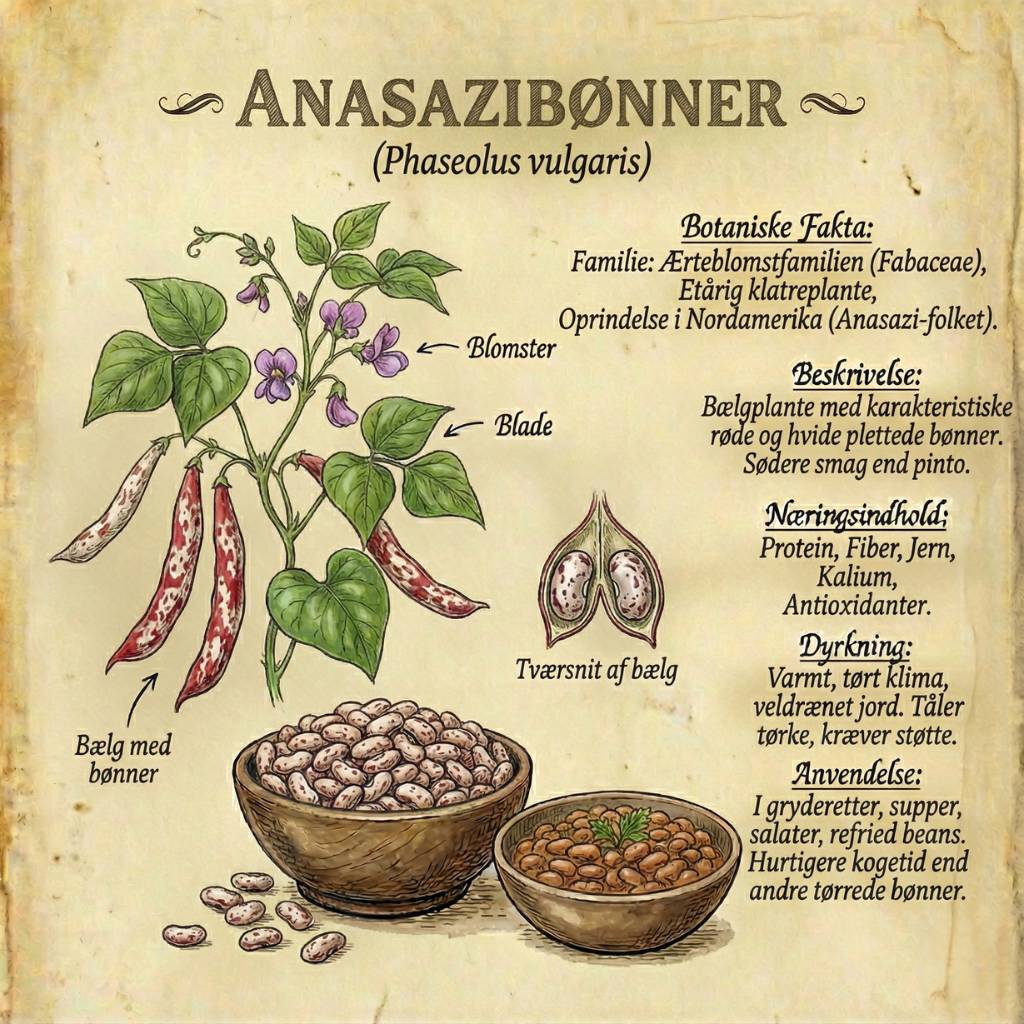
The beans love full sun (at least 6-8 hours daily) and warm temperatures. The ideal daytime temperature is between 20 and 30 °C; the seeds germinate once the soil reaches at least 12 °C. The soil should be well-drained; heavy clay soil should be improved with sand and compost. Beans prefer soil with a neutral to slightly acidic pH (6-7.5). As nitrogen-fixing plants, they thrive best with minimal nitrogen fertilization, but a top dressing of compost can help in nutrient-poor soils. Anasazi beans are bush beans; they grow compactly and don’t require staking, which makes them well-suited to raised beds, gardens, and larger containers.
How to Grow Anasazi Beans
Total time: 4-5 months
- Pre-sprout
Start the seeds indoors in pots from mid-April, especially in colder regions. Sow them 2-3 cm deep in moist, well-drained seed-starting soil at 18-22 °C. Germination takes 3-7 days.
- Harden off
After 2-3 weeks, once the plants are 8-10 cm tall, gradually acclimate them to outdoor conditions by placing them outside for a few hours a day for about a week.
- Plant out
Plant out after the last frost (typically late May). Choose a sunny, sheltered spot with light soil, and plant 30-45 cm apart in rows 50-60 cm apart.
- Water and weed
Water regularly during dry periods, but avoid waterlogged soil. Keep weeds away for the first few weeks, as beans compete poorly with weeds.
- Harvest
Let the pods dry completely on the plant until they rattle and turn beige. Harvest on a dry day, break open the pods, and remove the seeds. Dry the beans further for long-term storage.
Storage
Dried Beans
Dried anasazi beans are best stored in an airtight container in a cool, dark, and dry place; avoid heat and sunlight. Under ideal conditions, they keep for 1-2 years. Older beans take longer to cook, so it’s an advantage to use fresher batches.
Cooked Beans and Freezing
- Cooked beans keep for 3-5 days in the refrigerator in their cooking liquid.
- Freeze cooked beans in portions along with some of the cooking liquid to preserve texture and flavor.
- Frozen beans keep for up to eight months; thaw in the refrigerator overnight.
Look-Alikes and Quality
Because of their color, anasazi beans can be confused with pinto or borlotti beans. Pintos have more uniform beige and brown speckles, while borlotti (cranberry beans) have red- and white-speckled pods and seeds. Anasazi beans have a more red-and-white pattern and are smaller in size. Their flavor is sweeter and milder than pinto beans. When buying dried beans, they should be whole and free of cracks, have clear colors, and be free of dust and small stones. For older beans, you can add a bit of baking powder (about a quarter teaspoon per 500 g of beans) to the cooking water to soften them.
Sustainability and Biodiversity
As a legume, anasazi beans are a sustainable crop. They fix nitrogen from the air via root nodules, which improves soil fertility and reduces the need for artificial fertilizer. Beans require relatively little water compared to animal protein and can be grown using drought-tolerant practices. Growing heirloom varieties like anasazi beans helps preserve genetic diversity and cultural heritage, and growing them in Danish gardens can help reduce the climate footprint of imported legumes.
Try This Recipe
Anasazi beans add body and sweetness to classic stews, where they soak up flavor and hold their shape during long simmering. Their creamy texture makes them a perfect match for a hearty meat stew. Try stirring a portion of cooked beans into our Pork Tenderloin Stew in the Air Fryer – Easy and Delicious Everyday Food for an extra protein-rich, hearty dish.
Equipment and Products
A good, heavy-bottomed pot is indispensable when dried beans need to simmer slowly to the perfect texture. An airtight container also keeps your dried beans fresh for months, so you always have legumes ready for the pot.
Frequently Asked Questions
No. Although they belong to the same species (Phaseolus vulgaris), anasazi beans are a distinct cultivar with a red-and-white pattern, a sweeter flavor, and a thinner skin. Pinto and kidney beans have a stronger flavor and require longer cooking.
Soaking isn’t strictly necessary, but it reduces the cooking time from about 1.5 hours to 45-60 minutes and can make the beans more digestible. A short soak of 4-6 hours is often enough for this variety.
Yes, they contain fewer oligosaccharides than many other beans, which can mean less gas. Their high amount of soluble fiber promotes healthy gut flora and regulates digestion.
Yes, with the right conditions. They need warmth, sun, and well-drained soil. In cooler areas, they can be started indoors and grown in a greenhouse or a sheltered bed. They’re bush beans, so they don’t need trellises.
Store cooked beans in their cooking liquid in an airtight container in the refrigerator for 3-5 days. They can also be frozen for up to eight months.
Facts About Anasazi Beans
| Field | Value |
|---|---|
| English name | Anasazi Beans |
| Latin name | Phaseolus vulgaris cv. Anasazi |
| Family | Legume family (Fabaceae) |
| Plant type | Bush bean |
| Height | 30-90 cm |
| Hardiness | Frost-sensitive; requires a warm summer growing season |
| Light | Full sun |
| Soil | Well-drained, lightly sandy, pH 6-7.5 |
| Sow/plant | Pre-sprouted indoors in April, transplanted after the last frost |
| Flowering/harvest | Flowers in June-July; dried beans in August-September |
| Calories per 100g | About 335 kcal (dried) |
| Key nutrients | Protein, fiber, calcium, iron, potassium, folate |
| Flavor | Mild, sweet, nutty |
| Culinary use | Baked beans, chili, refried beans, salads, purée |
| Soaking time | 4-8 hours (optional) |
| Cooking time | 45-60 minutes (soaked); 75-90 minutes (unsoaked) |
| Storage | Dried beans in an airtight container; cooked beans refrigerated/frozen |
