

I’ve always had a special relationship with almonds. The crunchy, lightly sweet kernels are, to me, the epitome of both everyday snacking and festive occasions. Almonds (Prunus dulcis) are one of the world’s oldest cultivated crops and an indispensable ingredient in everything from marzipan to salads.

Advertisement: The page displays ads and contains advertising links (affiliate links). See our advertisers here.
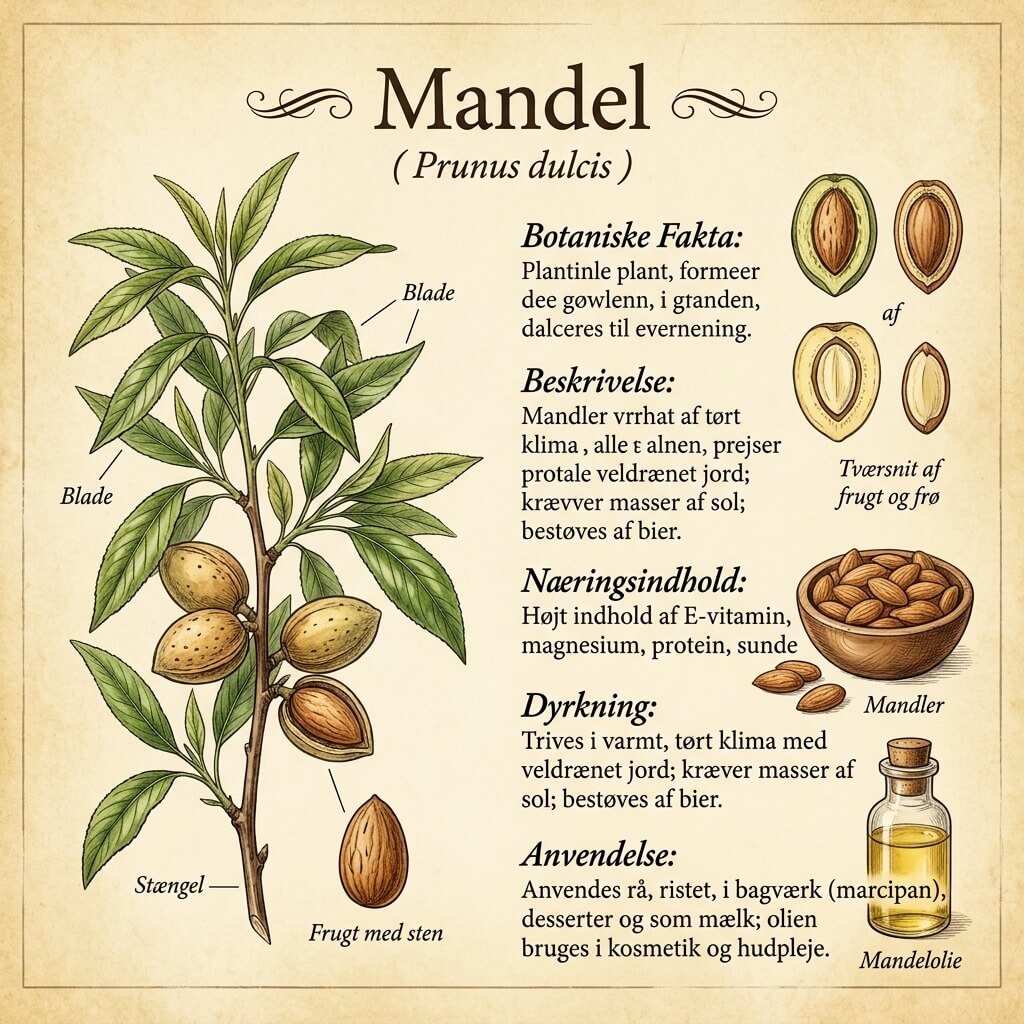
Although we call almonds nuts, they’re botanically drupes – the seed inside a fruit that resembles a small, unripe peach. This makes them close relatives of peaches, plums and cherries in the rose family.
Estimated reading time: 4 minutes

History and Origin
Early History
The almond tree is thought to originate from Central Asia and the Middle East. It was cultivated in Jordan around 5,000 years ago and is even mentioned in the Bible as a delicacy.
Spread
Greeks and Phoenicians spread the almond tree around the Mediterranean, and later Spanish Franciscan monks brought the tree to California, which today is the world’s largest producer. Spain and Italy account for the majority of Europe’s supply.
Flavour and Aroma
Sweet almonds have a mild, lightly sweet, nutty flavour with a creamy finish. Fresh almonds taste almost milky. Roasting brings out their deep, caramelised aroma. Bitter almonds contain amygdalin and shouldn’t be eaten raw.
Culinary Uses
Almonds are incredibly versatile in the kitchen.
In the Danish Kitchen
Marzipan, ris a la mande (a Danish rice pudding with almonds), almond gifts, kransekage (a Danish marzipan ring cake) and Christmas confectionery are classics. Chopped almonds are sprinkled over cakes, and blanched almonds are used in Danish pastries.
Internationally
Almonds are the cornerstone of Italian amaretti, Spanish turrón, Moroccan tagine and Indian biryani. Almond flour is popular in gluten-free baking around the world.
Cooking Methods
Roasting in the air fryer at 160°C for 6-8 minutes gives crunchy, aromatic almonds perfect for salads, granola or as a snack. Stir halfway through for even colouring.
Health Benefits
Almonds are a nutritional powerhouse packed with healthy fats, protein and fibre.
Vitamins and Minerals
- Vitamin E: 25 mg per 100g – one of the best plant sources
- Magnesium: 270 mg per 100g
- Protein: 21 g per 100g
- Fibre: 12 g per 100g
- Calories: 579 kcal per 100g
Heart and Blood Sugar
The monounsaturated fatty acids can help lower LDL cholesterol, and the high fibre and fat content provides a stable blood sugar response.
Cultivation
The almond tree is at its northern limit in Denmark, but hardy varieties such as Palatina and Robijn can thrive in a sheltered, sunny spot.
How to Grow Almonds
Total time: 4-6 years to first harvest
- Choose a location
Choose a south-facing, sheltered spot, ideally against a wall.
- Plant the tree
Plant a hardy variety such as Palatina or Robijn in well-drained, chalky soil.
- Care
Water during dry periods and feed in spring with a balanced fertiliser.
- Harvest
Harvest in September-October when the hulls split, and dry the almonds thoroughly.
Storage
Almonds keep for a long time if stored correctly.
- In an airtight container at room temperature: up to 6 months
- In the fridge: up to 12 months
- In the freezer: up to 2 years
- Whole almonds keep longer than chopped
Try This Recipe
Almonds add a lovely crunch and a nutty depth to baked goods, and a fluffy almond base is the foundation beneath one of our finest air fryer desserts. Try our Strawberry Dream in the Air Fryer – fluffy almond base with creamy strawberry mousse.
Equipment and Products
Almond notes pair wonderfully with fruit-based drinks. The round sweetness of almond beautifully balances the tartness of apple. Try our Ditte Julies Special Edition 2 – Æble, Vanilje & Mandel 25% – 50 cl.
Frequently Asked Questions
No, almonds are botanically drupes – the seed in a fruit related to the peach.
A handful (about 25-30 g) is a good daily amount for adults.
Yes, hardy varieties such as Palatina thrive in a warm, south-facing spot.
Blanching loosens the skin, so the almonds become white and mild – ideal for marzipan.
Only in very small amounts and after heating, as they contain toxic amygdalin.
Facts About Almonds
| Field | Value |
|---|---|
| Latin name | Prunus dulcis |
| Family | Rosaceae (Rose family) |
| Origin | Central Asia/Middle East |
| Harvest | September-October |
| Calories per 100g | 579 kcal |
| Key nutrients | Vitamin E, magnesium, protein, fibre |
| Storage | Dry, sealed container, preferably refrigerated |
