

Bay leaves are an indispensable element in many kitchens and have for centuries been an integral part of both Mediterranean and Danish cooking. They are known for their distinctive, aromatic scent and for their versatile use as a herb in both fresh and dried form.

Advertisement: The page displays ads and contains advertising links (affiliate links). See our advertisers here.
The bay leaf comes from the plant Laurus nobilis, also known as true laurel. In this entry, we look at where the leaf comes from, what it tastes like, how you use it in cooking, how to grow and dry it yourself, and not least why the leaves are always removed before serving.
Estimated reading time: 6 minutes
What Are Bay Leaves?
Bay leaves come from the evergreen bay laurel tree (Laurus nobilis), which belongs to the laurel family (Lauraceae). The leaves are leathery, dark green, and oblong, and they release a warm, spicy aroma when used in cooking. It’s important to distinguish true bay laurel from cherry laurel (Prunus laurocerasus), which is poisonous and must not be used in food.
Fresh or Dried
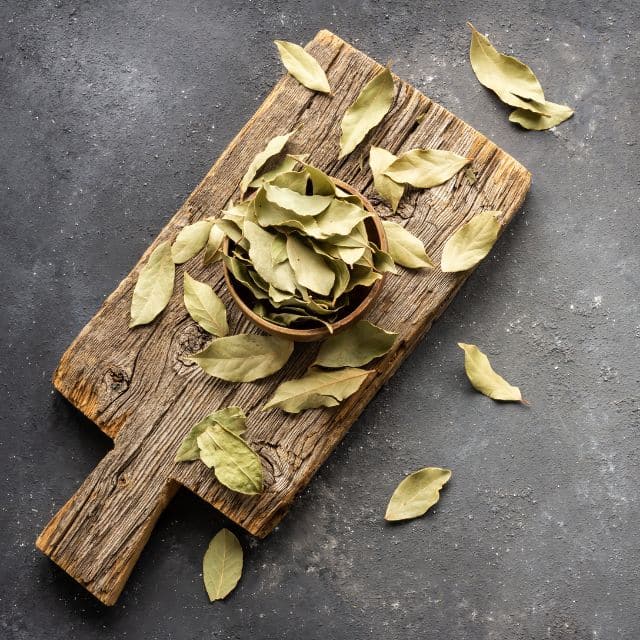
Bay leaves are used both fresh and dried. Dried leaves have a more rounded, concentrated flavor and are the ones most people know from the spice shelf. Fresh leaves are stronger and slightly more bitter, so they should be dosed with care. Both types release their flavor slowly during cooking.
History and Origin
Antiquity
Bay laurel originates from the Mediterranean region and has a rich cultural history. In ancient Greece and Rome, the laurel wreath was a symbol of victory and honor, and winners of sports and poetry were crowned with branches of laurel. The word “laureate” comes directly from this. Alongside its symbolic meaning, the leaves were valued early on as a spice and medicinal plant.
Spread to Danish Cooking
Through trade, the bay leaf spread across Europe and became a fixed part of the Danish spice cabinet. In Danish cooking, it’s especially known from brown sauces, pickling vinegar, marinades, and long-simmered stews, where it lends a subtle, aromatic depth. Today, dried bay leaves are found in almost every Danish kitchen year-round.
Flavor and Aroma
Bay leaves have a warm, slightly balsamic aroma with notes of eucalyptus, clove, and a faint bitterness. The flavor isn’t dominant, but it builds depth and rounds out the other flavors in a dish. The aroma is released slowly, which makes the leaves ideal for dishes with a long cooking time, such as soups, stews, and stocks.
Because the leaves remain hard and leathery even after long cooking, they are never eaten whole. They add flavor along the way and are always removed before the dish is served.
Culinary Uses
Bay leaves are a versatile herb used in many different cuisines. The leaves release their flavor slowly, which makes them perfect for dishes that require a longer cooking time.
Important: Bay leaves should always be removed before serving. They don’t soften during cooking and remain hard with sharp edges, so they shouldn’t be eaten whole. Consider counting the leaves as you add them to the pot, so you’re sure to fish them all out again.
In Danish Cuisine
- Soups and Stews: Add 1-2 bay leaves at the start of cooking, and remove them before serving.
- Brown Sauces: A single leaf adds depth to classic Danish sauces along with peppercorns and onion.
- Meatballs and Meat Dishes: Often used together with peppercorns when preparing meat dishes such as meatballs and simmered meat and vegetables.
- Pickling: A classic ingredient in pickling vinegar, where it adds depth to the brine around beets and cucumbers.
Internationally
Bay leaf is an essential part of the French bouquet garni, the small bundle of herbs that flavors stocks and sauces. In Mediterranean cuisine, the leaf is used in tomato sauces, rice dishes, and marinades, and in Indian cooking a related type of bay leaf (tej patta) is used in spiced stews. In all cases, the leaf is always cooked along with the dish and fished out again before serving.
In the Air Fryer
Bay leaf can also be used in the air fryer. Place a couple of dried leaves between the crackling on a pork roast, or place a leaf under a piece of meat so the aroma infuses the dish during cooking. The same rule applies here: remove the leaves before serving.
Try placing dried bay leaves between the crackling on the pork roast before putting it in the air fryer. The leaves add a subtle, aromatic flavor that perfectly complements the crispy crackling and juicy meat. Remember to remove the leaves before serving.
Tips and tricks from the author: Morten Jensen
Growing
Even though it’s easy to buy dried bay leaves, growing your own bay tree is a rewarding experience. The plant is well suited to pots, so it can be brought indoors during winter in the Danish climate, where it is not reliably winter-hardy outdoors.
How to Grow Bay Laurel
Total time: 1-2 seasons
- Choose a location
Choose a sunny spot with at least 6 hours of sunlight daily. Plant in a pot so the tree can be brought indoors during winter.
- Plant in good soil
Use well-drained, preferably slightly sandy soil, so the roots don’t sit in water. A pot with a drainage hole is ideal.
- Water and feed
Water regularly, especially while the tree is young, but avoid overwatering. Apply light fertilizer during the growing season.
- Prune and overwinter
Prune regularly for a bushy plant with lots of leaves, and bring the tree indoors to a frost-free room during winter.
Harvest and Storage
Harvest
Bay leaves can be harvested year-round, but the best leaves come from fully mature shoots. Young leaves don’t have the same strong flavor as older ones, so let the leaves grow out before harvesting. Cut mature leaves off with sharp scissors so you don’t damage the plant.
Drying and Storage
- Drying: Spread the leaves out in a well-ventilated room, or tie them into small bundles and hang them in a dry, dark room for a couple of weeks.
- Storage: Store the dry leaves in an airtight container away from direct sunlight to preserve the aroma and flavor as long as possible.
- Shelf Life: Dried bay leaves retain their flavor best for up to a year, after which the aroma gradually fades.
Medicinal Uses
Beyond culinary use, bay leaves have a long history in folk medicine. They have traditionally been used for their digestive properties, among other things as a mild tea believed to relieve bloating. The aroma has also been used in steam inhalation for colds. Modern documentation is limited, however, and the leaves should primarily be viewed as a spice.
Always use food as your starting point, and seek professional medical advice if you’re ill. This is not medical advice.
Try This Recipe
Bay leaves work well in marinades, where they slowly release their aromatic depth into the meat. One or two leaves in the marinade lift the overall flavor without overpowering it. Try the principle in our Balsamic-Marinated Chicken in the Air Fryer, and remember to fish out any bay leaves again before serving.
Equipment and Products
If you want to save time mixing your own marinades with bay leaf and other spices, a good-quality ready-made marinade is a great starting point. Shawarma Marinade from Ottolenghi provides an aromatic base for meat in the air fryer, which you can easily build on with a couple of bay leaves for extra depth.
Frequently Asked Questions
Yes. Bay leaves don’t soften during cooking and remain hard with sharp edges. They release flavor along the way, but are always fished out and removed before the dish is served. They should not be eaten whole.
Yes, but fresh leaves have a stronger and slightly more bitter flavor than dried ones. Use slightly fewer fresh leaves, or let them steep for a shorter time.
For a regular pot or soup, 1-2 leaves are usually enough. The flavor is strong and released slowly, so more leaves can quickly become overpowering.
Store dried bay leaves in an airtight container away from light and heat. This preserves the aroma best, typically for up to a year.
No. Only true bay laurel (Laurus nobilis) is used in food. Cherry laurel (Prunus laurocerasus), which is often used as a hedge plant, is poisonous and must never be used in cooking.
Facts About Bay Leaves
| Field | Value |
|---|---|
| English Name | Bay Leaves |
| Latin Name | Laurus nobilis |
| Family | Laurel family (Lauraceae) |
| Plant Type | Evergreen tree/shrub |
| Origin | Mediterranean region |
| Light | Full sun |
| Soil | Well-drained, slightly sandy |
| Hardiness | Not reliably hardy outdoors in Denmark; best in a pot |
| Harvest | Year-round; mature leaves |
| Flavor | Warm, balsamic, slightly bitter |
| Culinary Use | Soups, sauces, marinades, pickling |
| Important | Always removed before serving |
| Storage | Dried in an airtight jar away from light |
