

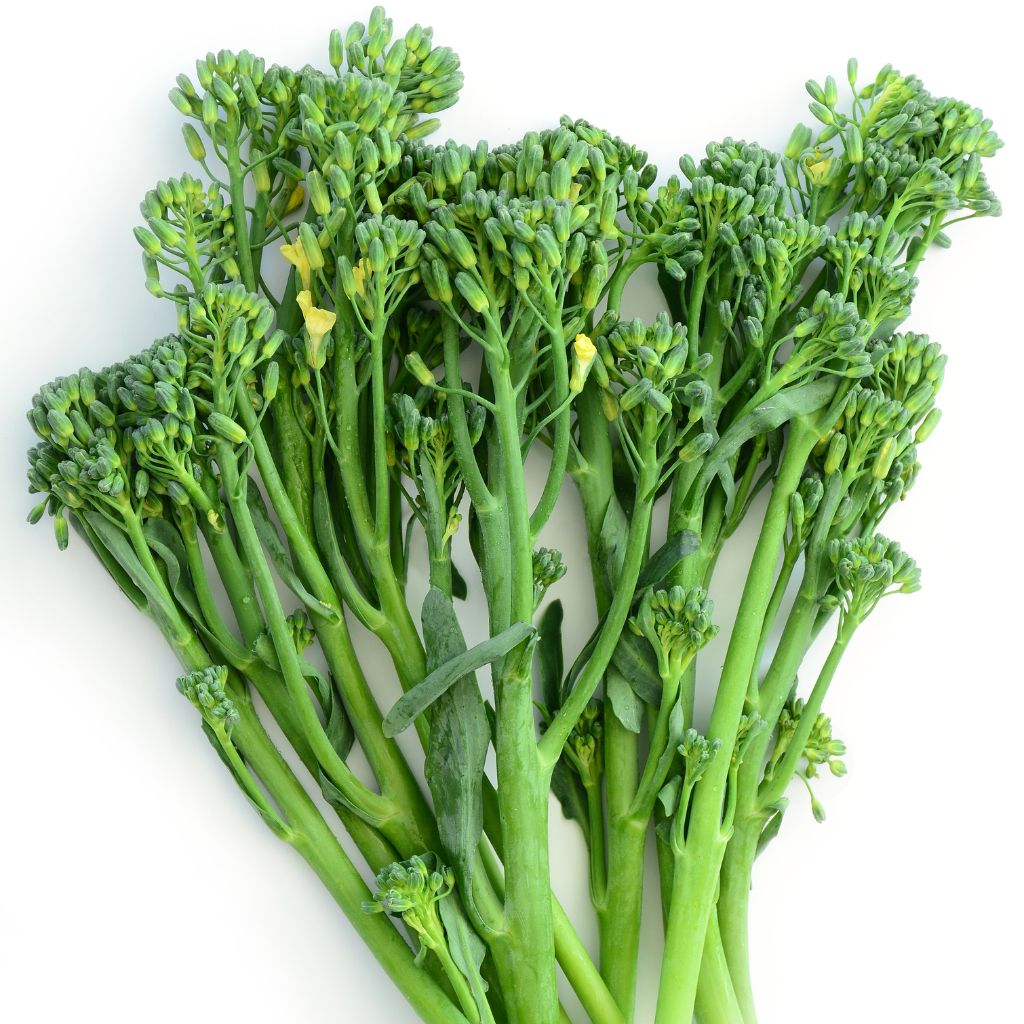
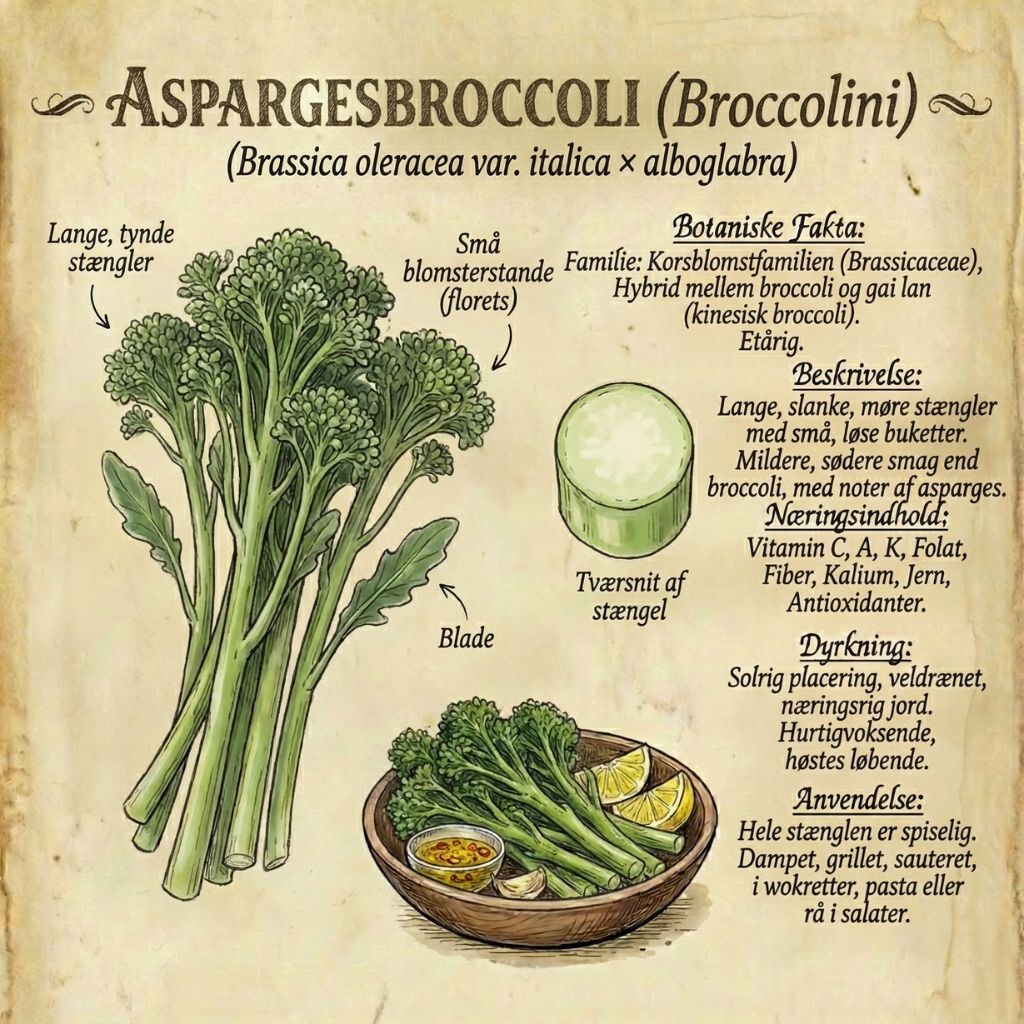
Broccolini, often marketed under names like asparagus broccoli, tenderstem, baby broccoli or sprouting broccoli, is a relatively new vegetable in the kitchen garden. It looks like a miniature version of broccoli, with thin, green stems, small florets and soft leaves, but it’s actually a cross between traditional broccoli and Chinese kale (kai-lan).

Advertisement: The page displays ads and contains advertising links (affiliate links). See our advertisers here.
This hybrid was developed in the 1990s to combine broccoli’s florets with the kale’s tender shoots, creating a more delicate, sweet and mild flavor reminiscent of asparagus. The whole plant — stems, leaves and small florets — is edible, and the thin stems require no peeling.
Estimated reading time: 9 minutes
History and Origin
What Is Broccolini?
Broccolini belongs to the cabbage family and is genetically related to broccoli, cabbage, cauliflower and Brussels sprouts. Unlike regular broccoli, which develops thick stalks and dense heads, broccolini has slender stems and loose florets that resemble small leaves. It was created in the 1990s as a cross between broccoli and Chinese kale (kai-lan) to produce a tastier, more delicate Brassica vegetable.
From Aspabroc to Broccolini
The first commercial production took place in Mexico in 1994, and in 1998 the vegetable was rebranded as broccolini following an agreement between the Japanese seed company Sakata and the American packer Mann Packing Company. The name aspabroc was originally used because the thin stems resemble asparagus. It quickly became popular in the USA, Europe and Australia, where it’s sold as broccolini or tenderstem. Other names include broccoletti, broccolette and sprouting broccoli, and commercial seeds are often protected by trademarks.
Flavor and Aroma
Broccolini has a mild, sweet and slightly peppery flavor, often described as a cross between broccoli and asparagus. The stems are thinner and juicier than broccoli stalks and don’t need trimming or peeling. The small, loose flower buds and the dark green leaves are equally tender and edible.
The delicate texture means broccolini cooks faster than regular broccoli and develops a pleasant crunch when cooked only briefly. At high heat, it also develops a nutty flavor that suits grilling and oven-roasting well.
Culinary Uses
This versatile vegetable can be used in many ways in the kitchen, and the whole plant is edible. Here are some of the best ideas:
- Roasted or Grilled: Toss whole stems in a little olive oil, salt and pepper and grill them briefly, or bake them in the oven at 200°C for 8 to 10 minutes, until tender and lightly caramelized.
- Sautéed: Fry broccolini in a hot pan with garlic, chili and sesame oil for an Asian-inspired side dish.
- Steamed and Blanched: Steam or blanch the stems for 2 to 4 minutes, until bright green, then dip them in ice water to preserve the color.
- Stir-Fries and Wok Dishes: Add broccolini along with other vegetables and noodles; the stems stay firm while the florets soak up the sauce.
- Raw or Marinated: Slice the stems thinly and toss them in a lemon and oil dressing. The raw pieces are crisp and mild.
- Pasta and Gratin: Toss blanched pieces into pasta with tomatoes, pesto or cream sauce, or bake them in a gratin with cheese.
In Danish Cuisine
In Danish kitchens, broccolini is used as a quick and elegant side dish that only takes a few minutes in the pan, oven or air fryer. It’s often served alongside fish like cod and salmon, tossed with butter, lemon zest and toasted nuts, or baked with cheese in a tart.
Internationally
Broccolini has become popular in everything from Asian stir-fries to Italian pasta dishes. In England and Australia, it’s known as tenderstem broccoli, and in gourmet cooking it’s often paired with butter, lemon zest, toasted nuts, parmesan or hollandaise. It’s used as a healthy alternative to broccoli or asparagus, both as a main ingredient and as a garnish.
Great Pairings
The mild, sweet flavor works with a wide range of ingredients, making it easy to build a dish around.
- Acid and Fat: Lemon juice and zest, olive oil, butter, brown butter, balsamic vinegar and tahini dressing.
- Aromatics: Toasted garlic, chili, sesame oil, soy sauce and ginger.
- Cheese: Parmesan, pecorino and feta.
- Crunch: Toasted almonds and pine nuts, plus bacon or pancetta.
- Protein and Carbs: Salmon and white fish, pasta and risotto.
Preparation and Cooking
Broccolini is easy to prep. Rinse off any sand and trim off the bottom centimeter if the ends are dry. You generally don’t need to peel the stems, since they’re thin and tender.
Boiling and Blanching
Bring a pot of lightly salted water to a boil. Add the broccolini and boil for 2 to 4 minutes, depending on thickness. The stems should still have some bite. For blanching before freezing or for salads, boil for about 3 minutes and transfer immediately to ice water to stop the cooking.
Grill, Oven and Air Fryer
Light the grill or preheat the oven to 200°C. Toss the stems in oil, salt and any spices you like. Grill for 5 to 7 minutes or bake for 8 to 10 minutes, until tender. In the air fryer, a few minutes at high heat gives the same nutty, browned surface using only a little oil.
Sautéing, Stir-Frying and Raw
Heat a little oil in a pan and sauté broccolini for 3 to 5 minutes over high heat with garlic, lemon zest, chili or ginger; this method preserves the crunch. To use it raw, slice the stems lengthwise into thin strips and toss them in a lemon dressing with olive oil and fresh herbs for a fresh, sweet salad.
Nutrition and Health
Broccolini is nutrient-dense and low in calories. 100 g of raw broccolini contains about 35 calories, 6 g of carbohydrates, 3.5 g of protein, 5 g of dietary fiber and almost no fat. It’s rich in vitamins A, C, E and K, and also provides minerals like calcium, iron and potassium.
Vitamins, Minerals and Antioxidants
- Vitamins: High in vitamin C and K, as well as vitamins A and E.
- Minerals: Calcium, iron and potassium.
- Dietary Fiber: About 5 g per 100 g, which keeps you feeling full longer.
- Sulfur Compounds: Sulforaphane and similar compounds that act as antioxidants.
Health Aspects and Precautions
Like other cruciferous vegetables, broccolini contains sulfur compounds such as sulforaphane, which act as antioxidants and anti-inflammatory agents. A high intake of cruciferous vegetables is linked to a lower risk of certain cancers and cardiovascular disease, while the fiber promotes satiety and helps stabilize blood sugar.
The vegetable contains vitamin K, which can interact with blood-thinning medication like warfarin if you suddenly change your intake, so keeping the amount consistent is important. It also contains raffinose and other fibers, which can cause gas in sensitive individuals; this can be reduced by gradually increasing intake and by cooking the vegetable. There are no known toxins, and the whole plant is edible.
Growing
Broccolini can be grown in Denmark, although it’s slightly less hardy than regular broccoli. It’s well suited to cooler climates and tolerates light frost, but thrives best at a moderate temperature between 15 and 24°C.
Growing Conditions
- Light: Full sun with at least 6 to 8 hours of direct light. In warmer regions, afternoon shade can help prevent the plant from bolting.
- Soil: Nutrient-rich, well-drained soil with a pH of 6.0 to 7.0. Add compost or well-rotted manure before sowing.
- Watering: Keep the soil evenly moist, about 1 to 2 cm of water per week, more during dry spells. Water at the base of the plant.
- Temperature: Ideally 15 to 24°C. Tolerates light frost, but extreme heat can cause the plant to bolt prematurely.
- Fertilizing: Balanced or organic fertilizer at planting and again every 3 to 4 weeks.
How to Grow Broccolini Step by Step
Total time: 3-4 months
- Prepare the Soil
Choose a sunny spot with well-drained, nutrient-rich soil and a pH between 6.0 and 7.0. Work 2 to 4 cm of compost or well-rotted manure into the soil before planting.
- Start Seeds Indoors
Sow seeds indoors 6 to 8 weeks before the last frost, about 0.5 cm deep in a light, airy seed-starting mix. The seeds germinate in 7 to 10 days. Give the seedlings 14 to 16 hours of light daily.
- Harden Off and Transplant
Harden off the seedlings gradually outdoors over a week once they have 6 to 8 true leaves, then transplant them 30 to 45 cm apart in rows spaced 60 to 75 cm apart.
- Care
Water evenly, mulch to suppress weeds, and fertilize every 3 to 4 weeks. Watch for aphids, cabbage worms and slugs, and use insect netting or biological controls if needed.
- Harvest
60 to 90 days after transplanting, the plant forms its main head. Cut it while the buds are still tight; the plant will then produce new side shoots, which can be harvested several times throughout the season.
Storage
Harvest the main head when the stems are about 10 to 15 cm long and the flower buds are still closed. Cut about 2 cm below the head to avoid damaging the side shoots, and continue harvesting side shoots as they develop.
- Refrigerated: Store broccolini in a plastic bag in the refrigerator for 3 to 5 days.
- Freezing: Blanch the pieces for about 3 minutes, cool them in ice water, and freeze for up to six months.
- Signs of Freshness: Fresh stems snap easily and have a moist cut end.
Look-Alikes and Quality
Although names like baby broccoli and tenderstem are often used, broccolini isn’t simply young broccoli plants. It’s a hybrid with slenderer stems and small, leaf-like florets. When choosing broccolini, the stems should be firm and dark green, without wilted leaves or yellow flowers. Avoid limp or woody stems. Since the name broccolini is trademarked, you can also find similar products sold as sprouting broccoli, tenderstem or baby broccoli.
Sustainability and Biodiversity
Broccolini is a fast-growing crop that can produce multiple harvests per plant, reducing the need for large field areas. As a member of the cabbage family, it enriches the soil with organic matter as it breaks down, and its flowers attract pollinating insects when the plants are allowed to bloom. Growing different Brassica hybrids helps preserve genetic diversity and gives the garden more nutrient-rich alternatives to traditional vegetables.
Try This Recipe
Broccolini’s mild sweetness and tender stems pair beautifully with a creamy cheese filling. Toss blanched pieces into the filling for our Broccoli Tart in the Air Fryer, where the gratinated cheese and crisp florets make a light, satisfying dish in half an hour. If you can’t find broccolini, regular broccoli can be used in the same tart.
Equipment and Products
Broccolini rarely needs much seasoning, but in pasta and stir-fry dishes, a good spice blend elevates the mild vegetable. Our Pasta & Pizza Seasoning 60g pairs well with sautéed stems in a pasta dish. Want a shortcut to nutritious vegetables? You’ll also find a selection in our Vegetables in Jars and Cans category.
Frequently Asked Questions
No. Although names like baby broccoli are common, broccolini is a cross between broccoli and Chinese kale. It has slenderer stems and a sweeter flavor than regular broccoli.
No. The stems are thin and tender, so they just need to be rinsed and possibly trimmed a little. No peeling is necessary.
A short cooking time is best. Boil or steam the stems for 2 to 4 minutes so they stay crisp and keep their color. For blanching before freezing, cook for about 3 minutes and transfer immediately to ice water.
Yes. Raw broccolini can be sliced into thin strips and used in salads or as a snack. It has a mild, sweet flavor, but some prefer to cook it lightly for a softer texture.
Yes. It thrives in cool climates and tolerates light frost. Start seeds indoors early in spring and transplant them once the soil has warmed. Make sure the soil is well-drained and nutrient-rich, and water regularly for a good yield.
Facts About Broccolini
| Field | Value |
|---|---|
| English Name | Broccolini (asparagus broccoli, tenderstem broccoli) |
| Latin Name | Brassica oleracea (hybrid of broccoli, var. italica, and Chinese kale, var. alboglabra) |
| Family | Cabbage family (Brassicaceae) |
| Plant Type | Annual or biennial depending on climate; grown as an annual vegetable |
| Height | 30 to 60 cm |
| Hardiness | Tolerates light frost; grown as a cool-season crop |
| Light | Full sun (6 to 8 hours daily) |
| Soil | Nutrient-rich, well-drained, pH 6.0 to 7.0 |
| Sow/Plant | Sow seeds indoors 6 to 8 weeks before last frost; transplant 2 to 4 weeks before last frost; spacing 30 to 45 cm |
| Flowering/Harvest | Harvest main head and later side shoots 60 to 90 days after transplanting |
| Calories per 100 g | About 35 kcal (raw) |
| Key Nutrients | Vitamins A, C, E and K, dietary fiber, calcium, iron and potassium |
| Flavor | Mild, sweet and slightly peppery; reminiscent of broccoli and asparagus |
| Culinary Uses | Roasted, grilled, steamed, sautéed, in stir-fries, pasta, salads or raw |
| Cooking Time | 2 to 4 minutes (steam/boil); about 8 to 10 minutes in the oven |
| Storage | Refrigerated 3 to 5 days; blanched and frozen up to six months |
