

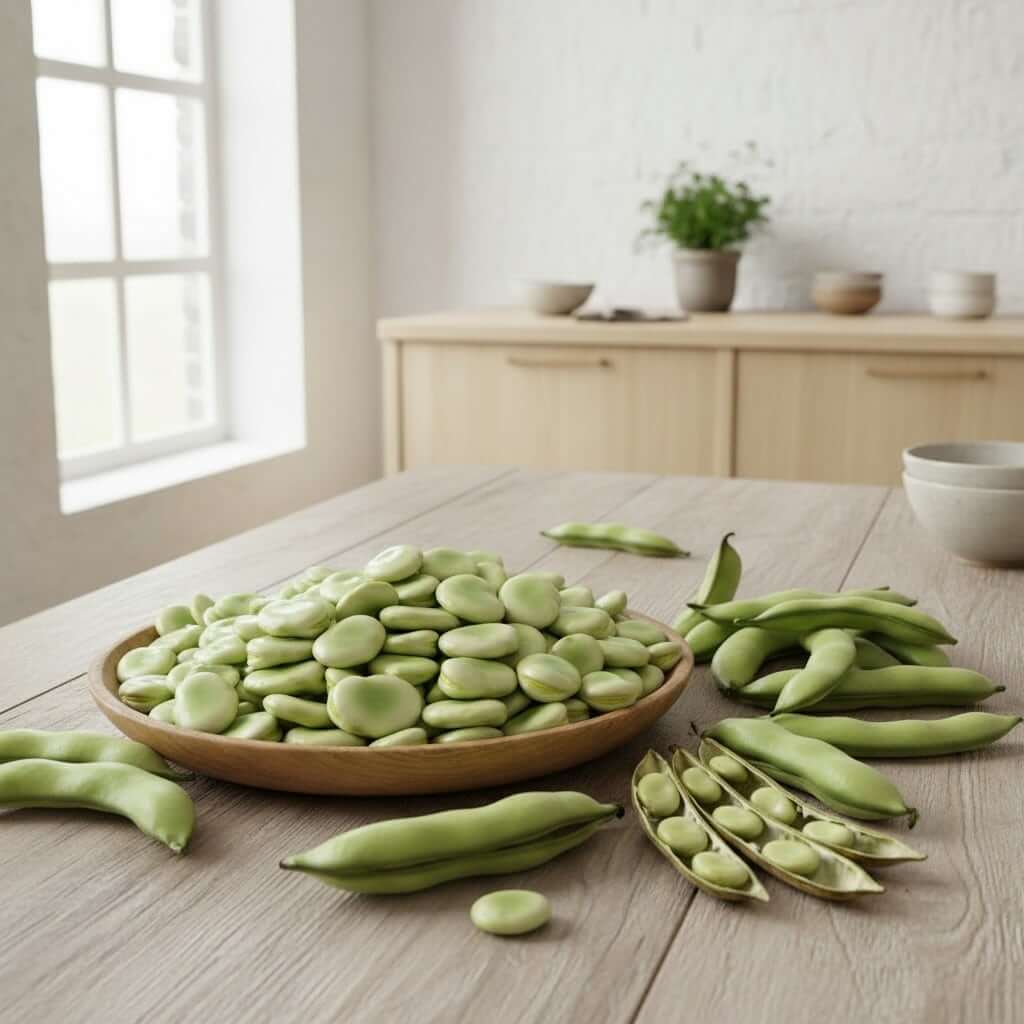
Fava beans – also known as broad beans or horse beans – are the large, flat, pale green seeds of the plant Vicia faba. They are among the oldest cultivated legumes in the world and have been a cornerstone of diet and culture across the Mediterranean, the Middle East, Africa and Asia for thousands of years. Fresh fava beans appear briefly in spring and early summer before disappearing again just as quickly, which makes them a sought-after seasonal ingredient.

Advertisement: The page displays ads and contains advertising links (affiliate links). See our advertisers here.
The beans have a creamy, nutty flavor with a slightly bitter edge and are used both as a fresh vegetable and as dried beans. As a member of the pea family (Fabaceae), the plant is hardy, cool-loving and an important nitrogen-fixing crop in sustainable growing systems. In this entry in our Food Encyclopedia, we dive into the fava bean’s history, flavor, nutrition, preparation and cultivation in Denmark.
Estimated reading time: 8 minutes
History and Origin
Fava or horse beans are among the earliest domesticated crops in the world. Botanically, the fava bean is the seed of the annual herb Vicia faba, which forms sturdy, upright stems and long, fleshy pods containing 3-8 large, flat seeds.
Early History
Fava beans have been cultivated in the Middle East and the Mediterranean for at least 5,000 years and are mentioned in Chinese, Egyptian and Greek sources. Archaeological finds show that Egyptian priests considered the beans unclean, and both the Egyptians and the Romans associated them with the world of the dead; fava beans were therefore often eaten as part of death rituals. In ancient Greece, they were even used as ballots. The Danish word for this, hestebønne (horse bean), refers to the larger subspecies Vicia faba var. equina, which was traditionally grown for fodder.
From the Middle Ages to the Modern Kitchen
As an important source of protein, fava beans played a central role in the cuisine of the ancient Mediterranean. They were grown in monastery gardens and kitchen gardens in medieval Europe and were one of the few proteins available during meat-free fasting periods. In ancient Egypt, dried beans became a filling staple food for the working class and were part of burial rituals, while in Greece they symbolized the soul. In modern Italy, cakes called Fave dei Morti (beans of the dead) are baked for All Saints’ Eve, and in Egypt, ful medames – a porridge of cooked dried fava beans with lemon, garlic and spices – is still a national dish. In Denmark, the horse bean was previously a common feed for horses and pigs, but with growing interest in legumes and home-grown protein, it is now making a comeback in kitchen gardens.
Flavor and Aroma
The flavor of fava beans is often described as a cross between green peas, nuts and artichoke. They have a slight bitterness and a creamy, almost buttery texture once cooked. Fresh, young beans are sweeter and milder, while larger, mature beans develop a more pronounced, earthy character. The bitterness sits mainly in the tough outer skin, which is why many people remove it after cooking for a cleaner, softer flavor.
Fava beans pair well with acidity and freshness: a squeeze of lemon, good olive oil and freshly ground pepper lift their natural sweetness. They go particularly well with herbs like mint and basil, as well as aromatic vegetables like garlic, onion and chili. Combined with other spring vegetables such as asparagus, peas and mushrooms, they make a harmonious dish, and they pair nicely with salty cured meats like pancetta, serrano, chorizo and prosciutto.
Culinary Uses
Fava beans are versatile and used in everything from light spring salads to hearty stews. Fresh beans are often blanched and tossed into salads, pasta or risotto, while dried beans are simmered until tender and used in dips, soups and traditional dishes.
In the Danish Kitchen
In Denmark, the horse bean has seen renewed interest among home gardeners and chefs, who make the most of the short spring season. Fresh fava beans are blanched and tossed into salads with new potatoes, radishes and fresh herbs, or mashed into a green dip with lemon and olive oil. As a source of protein, they feature in vegetarian dishes, and home-grown fava bean sprouts add crunch and nutrition to salads and sandwiches.
Internationally
Internationally, the fava bean is central to Mediterranean and Middle Eastern cuisine. In Italy, fresh beans are traditionally served with a salted sheep’s milk cheese like pecorino, in Egypt ful medames is a beloved breakfast dish, and in Greece koukofava is made from dried beans with lemon and parsley. In North Africa and the Middle East, fava beans also feature in falafel and fermented condiments.
Preparation
Fava beans require a bit more preparation than many other beans. First clean the pods: snap off the ends and remove the silvery-gray string before opening the pods and removing the beans. Young, tender beans can be eaten whole, but larger seeds have a tough, pale skin that should be removed after cooking or a brief blanch – freezing also makes the skin easier to slip off.
- Blend cooked fava beans with lemon, tahini and garlic into a creamy dip or hummus.
- Make a spring risotto with fava beans, asparagus and parmesan.
- Sauté fresh beans in olive oil with garlic, chili and pancetta and toss them through pasta.
- Simmer dried beans until tender and use them in North African ful medames or Greek koukofava.
Nutrition and Health
Fava beans are among the most nutrient-dense legumes and a solid source of plant protein, dietary fiber and a range of minerals.
Protein, Fiber and Minerals
Cooked fava beans are a filling, protein-rich legume with a low fat content. Their slow-releasing carbohydrates help stabilize blood sugar, and the beans provide B vitamins such as thiamine, riboflavin and niacin. Approximate content per 100 g cooked beans:
- Protein: approx. 7.6 g per 100 g
- Dietary fiber: approx. 5.4 g per 100 g
- Calories: approx. 110 kcal per 100 g
- Minerals: folate, manganese, iron, magnesium and potassium
The high protein and fiber content makes fava beans a great addition to a plant-based diet. The beans also contain L-dopa, a precursor to the neurotransmitter dopamine, as well as antioxidant phytonutrients. Antinutrients such as tannins and lectins are reduced through proper soaking and cooking, making the beans easier to digest.
Favism and G6PD Deficiency
People with the inherited enzyme disorder G6PD deficiency (glucose-6-phosphate dehydrogenase) can develop favism – a form of hemolytic anemia – from eating fava beans or being exposed to the plant’s pollen. These individuals should avoid fava beans. This section is not medical advice; if in doubt, talk to your doctor.
Soaking and Cooking
Dried fava beans need to be soaked and cooked before they can be eaten, while fresh beans just need a brief blanch. Below is a simple method for dried beans.
Total time: about 13 hours
- Sort and Rinse
Sort the dried beans to remove stones and damaged seeds, and rinse them thoroughly in cold water.
- Soak
Soak the beans in plenty of cold water for 8-12 hours, ideally overnight. Soaking shortens the cooking time and makes the beans easier to digest.
- Simmer Until Tender
Rinse the beans again and cook them in fresh water (about three parts water to one part beans) covered for 45-60 minutes, until tender but not mushy. Salt only toward the end, as early salting can toughen the skins.
- Peel
If you like, press the tough outer skin off the cooked beans for a softer, creamier texture. If you want to keep some bite and extra fiber, you can leave the skins on.
In a pressure cooker, the cooking time is reduced to about 20-30 minutes after soaking. For a crispy, protein-rich snack, soaked beans can be marinated in oil and spices and baked at 200 °C for about 20-25 minutes – including in the air fryer.
Growing in Denmark
Fava beans thrive best in cool, moist climates and can tolerate frost down to around −10 °C. Sow them early, before summer’s heat sets in, and give them consistent moisture – and you’ll get a robust, nitrogen-fixing crop.
Fava beans are a rewarding crop in the Danish vegetable garden, as they tolerate cold and can be sown very early. They prefer cool, moist weather and fare poorly in heat and drought.
Growing Conditions
The plants thrive best at temperatures between 15 and 18 °C and tolerate frost down to −10 °C. The soil should be a medium clay or sandy loam with good drainage and a pH between 6.5 and 8 for optimal nitrogen fixation. Fava beans have a deep root system with a strong taproot and benefit from loose soil free of compaction. Since the plant fixes its own nitrogen, it rarely needs extra nitrogen fertilizer.
How to Grow Fava Beans
Total time: 80-120 days
- Sowing
Sow seeds directly outdoors from March to April, 6-8 cm deep, with 15-20 cm between seeds and 45-60 cm between rows.
- Thinning and Staking
When the plants are 10-15 cm tall, thin to about 30 plants per m². Support tall plants with bamboo stakes and twine against strong wind.
- Watering and Feeding
Water evenly, especially during flowering and pod-filling, but avoid waterlogging. The plant fixes its own nitrogen and rarely needs extra fertilizer.
- Weeding and Pests
Keep the bed free of weeds and watch out for black bean aphids. Plants that attract hoverflies and other beneficial insects help keep populations down.
- Flowering and Pollination
The plants flower in May-June with white, dark-spotted blossoms pollinated by bumblebees. The pods ripen after 80-120 days.
- Harvesting Fresh Beans
Harvest for fresh beans when the pods are pale green and plump, but before they toughen. Small beans can be eaten with the skin on; larger ones should be blanched and skinned.
- Harvesting for Drying
Leave the pods on the plant until they turn dark brown, then harvest the whole plant and hang it to dry in an airy spot. The pods are then threshed, and the dried beans are stored airtight, cool and dark.
Storage
How best to store fava beans depends on whether they are fresh, dried or cooked.
Fresh Beans
Freshly harvested fava beans taste best right away. If you need to store them, place them in a paper or open plastic bag in the fridge, where they’ll keep for 3-4 days. Overripe pods become tough, so harvest and use them regularly.
Freezing and Dried Beans
- Fresh beans: blanch, peel and freeze for 6-12 months.
- Cooked beans: store in the fridge for 3-5 days or freeze.
- Dried beans: store dry, dark and airtight – they’ll keep for several years.
Try This Recipe
Fava beans and good bread are a classic Mediterranean pairing – think of the Italian fave e pecorino, where mashed beans, cheese and olive oil are enjoyed on crusty country bread. Bake a rustic loaf to go with your fava beans using our recipe for Pane Pugliese in the Air Fryer – Crispy Italian Country Bread with a Tangy Crumb. The tangy crumb and crisp crust are perfect for scooping up the creamy bean mash.
Equipment and Products
Fava beans fit naturally into Italian pasta and risotto dishes, where they’re tossed with olive oil, garlic and fresh herbs. To bring out the Italian character, season with Pasta & Pizza Seasoning 60g, which brings fava beans, pasta and parmesan together in a simple spring dish.
Frequently Asked Questions
Yes. Fava beans are cold-tolerant and can be sown early in spring. They need a sunny spot, neutral to slightly alkaline soil and even moisture. They tolerate frost but not heat, making them well suited to the Danish spring and early summer.
On young, small beans, the thin skin can be eaten. On larger beans, the skin becomes tough and should be removed after blanching or cooking. The choice depends on the texture you want: without the skin, the beans become creamier.
Fava beans are rich in protein, fiber, folate, manganese, iron, magnesium and potassium. They contain L-dopa and other bioactive compounds that may be beneficial. However, people with G6PD deficiency can develop favism and should avoid the beans.
Fresh pods can be stored in the fridge in a paper bag for up to 3-4 days. Blanched and peeled beans can be frozen for up to a year. Dried fava beans should be stored dry, dark and airtight, and can keep for several years.
Fava beans (Vicia faba) are large, flat and pale green, with a thick, leathery pod and a slightly bitter, nutty flavor. Edamame are immature soybeans (Glycine max) – smaller, rounder and with a sweeter, milder flavor. The two belong to different genera and can’t simply be substituted for one another.
Facts About Fava Beans
| Field | Value |
|---|---|
| Danish name | Favabønner / hestebønner |
| Latin name | Vicia faba |
| Family | Pea family (Fabaceae) |
| Plant type | Annual, upright herb |
| Height | 30-200 cm |
| Hardiness | Tolerates frost down to approx. −10 °C |
| Light | Full sun |
| Soil | Medium clay or sandy loam; pH 6.5-8 |
| Sow/plant | March-April, direct outdoors |
| Flowering | May-June |
| Harvest | June-August (fresh); September-October (dried) |
| Calories per 100 g | approx. 110 kcal (cooked) |
| Protein per 100 g | approx. 7.6 g (cooked) |
| Dietary fiber per 100 g | approx. 5.4 g (cooked) |
| Flavor | Creamy, nutty with a slightly bitter note |
| Culinary use | Salads, pasta, risotto, dips, ful medames, falafel |
| Soaking time | 8-12 hours |
| Cooking time | 45-60 minutes |
| Storage | Fresh: 3-4 days refrigerated; dried: airtight; cooked: freeze |
