
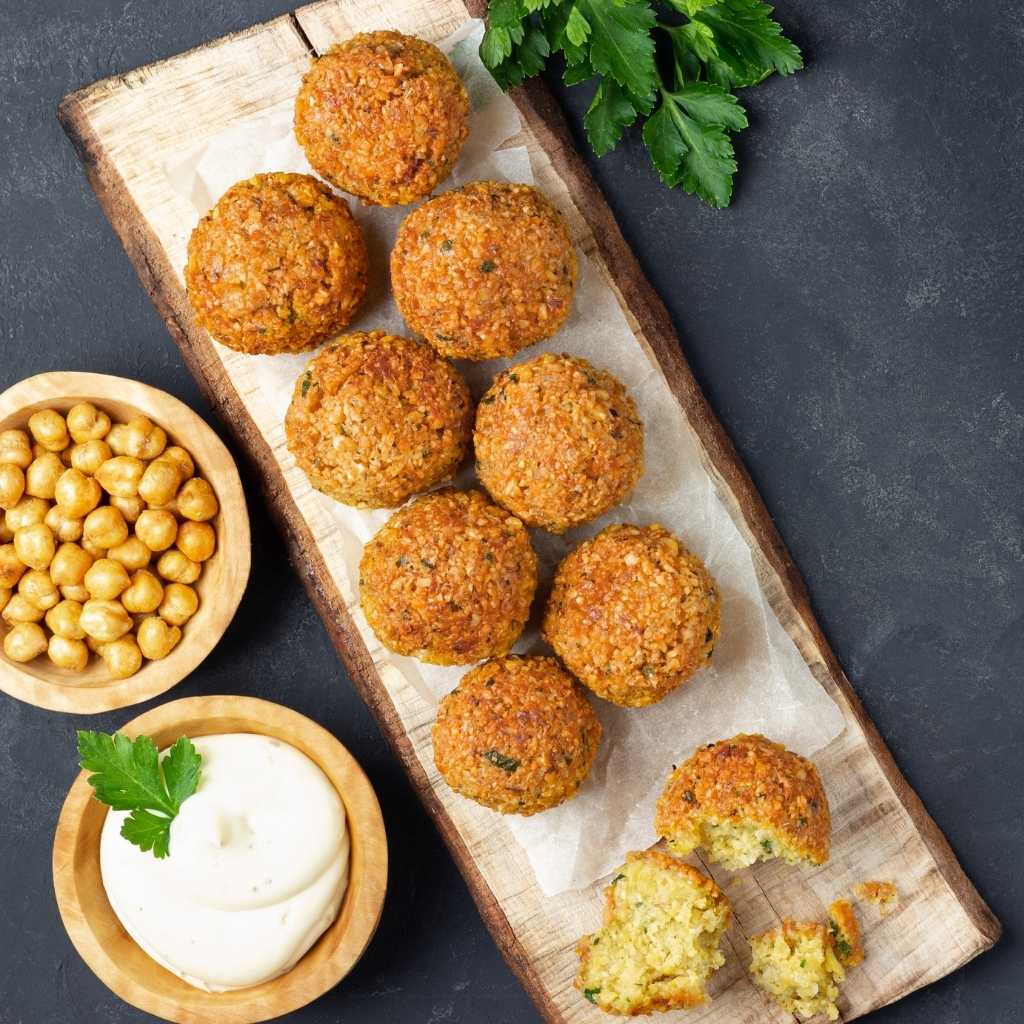
Falafel in the airfryer takes just 10-12 minutes at 180 degrees – giving you crispy, golden falafel with a juicy centre. Always use dried chickpeas that have been soaked overnight. Canned chickpeas crumble and make the falafel soft. Spray lightly with olive oil and turn once halfway through. Serve them in naan bread from the airfryer with hummus and fresh vegetables.

Advertisement: The page displays ads and contains advertising links (affiliate links). See our advertisers here.
Estimated reading time: 8 minutes
Table of Contents:
- The origin and history of falafel
- I recommend this fresh lemonade with our falafel
- The cultural significance of falafel in the airfryer
- Preparation and ingredients for falafel in the airfryer
- Falafel around the world
- Health benefits and nutritional value
- The best ways to serve falafel from the airfryer
- Conclusion on falafel in the airfryer
- Frequently asked questions
The origin and history of falafel
The history of falafel is as rich and varied as its flavour. The origin of this popular dish is shrouded in mystery, but many historians believe it comes from Egypt around the 4th century. There it was made from fava beans and known as “ta’amiya”. Over time, the recipe spread to the rest of the Middle East, where chickpeas became the preferred ingredient.
It is fascinating to think about how a simple dish could travel so far and become so beloved. Falafel in the airfryer quickly became part of everyday life in many Middle Eastern countries, not only as an inexpensive and nourishing food, but also as a symbol of cultural identity. It was often served during religious holidays and on special occasions, underlining its importance in society.
I recommend this fresh lemonade with our falafel
A batch of crispy falafel deserves something fresh to wash it down with. This lemonade is both tart and sweet in just the right way. I can warmly recommend the Citron og Lime lemonade by Tuxen Brewing Co – enjoy.
The cultural significance of falafel in the airfryer
In the Middle East, falafel in the airfryer is more than just food; it is part of the social fabric. Sharing a falafel wrap with friends and family is a way to show hospitality and love. This tradition has also found its way to Denmark, where we value hygge and togetherness. There is something special about gathering around a table full of delicious dishes and enjoying each other’s company.
Falafel’s popularity has also grown alongside the rising interest in vegetarian and vegan dishes. As a delicious and filling option without meat, it fits perfectly into modern eating habits. It therefore has not only cultural but also nutritional significance in today’s society.
Preparation and ingredients for falafel in the airfryer
Traditional ingredients
The heart of a good falafel lies in fresh and simple ingredients. The main ingredient is chickpeas, which are rich in protein and fibre. They are combined with fresh herbs such as parsley and coriander, which give a fresh flavour and a beautiful green colour inside. Spices such as cumin, coriander seeds and garlic add depth and warmth to the flavour.
Here in Denmark, we can easily find all these ingredients in local supermarkets or even at markets where Danish produce is the focus. Choosing organic and local products not only supports our farmers but also gives a better taste experience.
Different cooking methods
Traditionally, falafel is deep-fried to achieve that crispy exterior and soft interior. But if you want a healthier version, the falafel can also be baked in the oven or made in an airfryer. I have experimented myself with making falafel in the airfryer, and the result is surprisingly good! It is a fantastic way to reduce oil intake without compromising on flavour.
Making falafel can be a cosy activity, especially if you involve family or friends. It is a lovely way to spend time together in the kitchen while you explore new recipes and techniques.
Regional variations of falafel
Falafel varies from country to country in the Middle East. In Egypt, fava beans are often used, while chickpeas are more common in countries such as Lebanon and Israel. Some recipes add sesame seeds or chilli for extra flavour. These regional variations make falafel an exciting dish to explore, as each version brings something unique to the table.
By trying different recipes, you can find your own favourite and perhaps even create your very own version with Danish produce. It is a fantastic way to make the falafel personal and adapt it to your taste buds.
Falafel around the world
Popular serving styles
One of the most popular ways to enjoy falafel is in a pita or flatbread, filled with fresh vegetables such as tomato, cucumber and lettuce. Topped with a creamy tahini dressing or hummus, it becomes a delicious falafel wrap that is perfect for both lunch and dinner.
In Denmark, we also see falafel as part of modern café culture, where it is served in salads or as a snack with various dips. This flexibility makes falafel a favourite among many, as it can be adapted to any taste and occasion.
International adaptations
Falafel’s popularity has led to many creative adaptations around the world. In some countries, beetroot or sweet potato is added to the mixture to give it a new flavour and colour. Elsewhere, people experiment with different spices or serving methods.
These international variations show how versatile falafel is, and how it can be integrated into different culinary traditions. It is inspiring to see how a traditional dish can evolve and still preserve its essence.
Health benefits and nutritional value
Falafel is not only tasty but also healthy. Chickpeas are an excellent source of protein, which makes falafel a good choice for vegetarians and vegans. It also contains fibre that promotes healthy digestion, as well as important vitamins and minerals such as iron and magnesium.
By making the falafel in the oven or the airfryer, you can reduce your fat intake, which makes it even healthier. Combined with fresh vegetables and wholegrain bread, it becomes a nourishing and balanced meal that gives energy and well-being.
The best ways to serve falafel from the airfryer
There are countless ways to enjoy falafel, and it is all about finding the one that suits you best. Personally, I love serving falafel as part of a mezze platter, where it is shared with other small dishes such as hummus, baba ganoush and tabbouleh. It creates a cosy and social atmosphere where you can taste a little of everything.
Another favourite is making a falafel salad with crisp lettuce leaves, cherry tomatoes, cucumber and a fresh lemon dressing. It is a light and refreshing dish that is perfect for summer days or as a light lunch.
If you are feeling extra creative, you can try making falafel burgers. Shape larger falafel patties and serve them in a burger bun with your favourite toppings. It is a fun and different way to introduce falafel to those who may not have tried it before.
Try adding a little baking soda to the water when you soak the chickpeas overnight – it helps break down the chickpeas’ skins. Not only does it make them easier to blend, but it also gives a lighter and crispier falafel.
Tips and tricks from the author: Morten Jensen
Conclusion on falafel in the airfryer
Falafel in the airfryer is a dish that brings people together and builds bridges between cultures. Its rich history, flavourful variations and health benefits make it a fantastic addition to any diet. By experimenting with ingredients and cooking methods, you can make the falafel your own and enjoy it in countless ways.
I hope this guide has inspired you to explore the world of falafel in the airfryer. Perhaps it will be the start of a new favourite dish in your home, bringing warmth, hygge and plenty of flavour to the table.
Frequently asked questions
Falafel typically need 10-12 minutes at 180 degrees. Brush them with a little oil and turn them once halfway through for the crispiest result.

Recipe
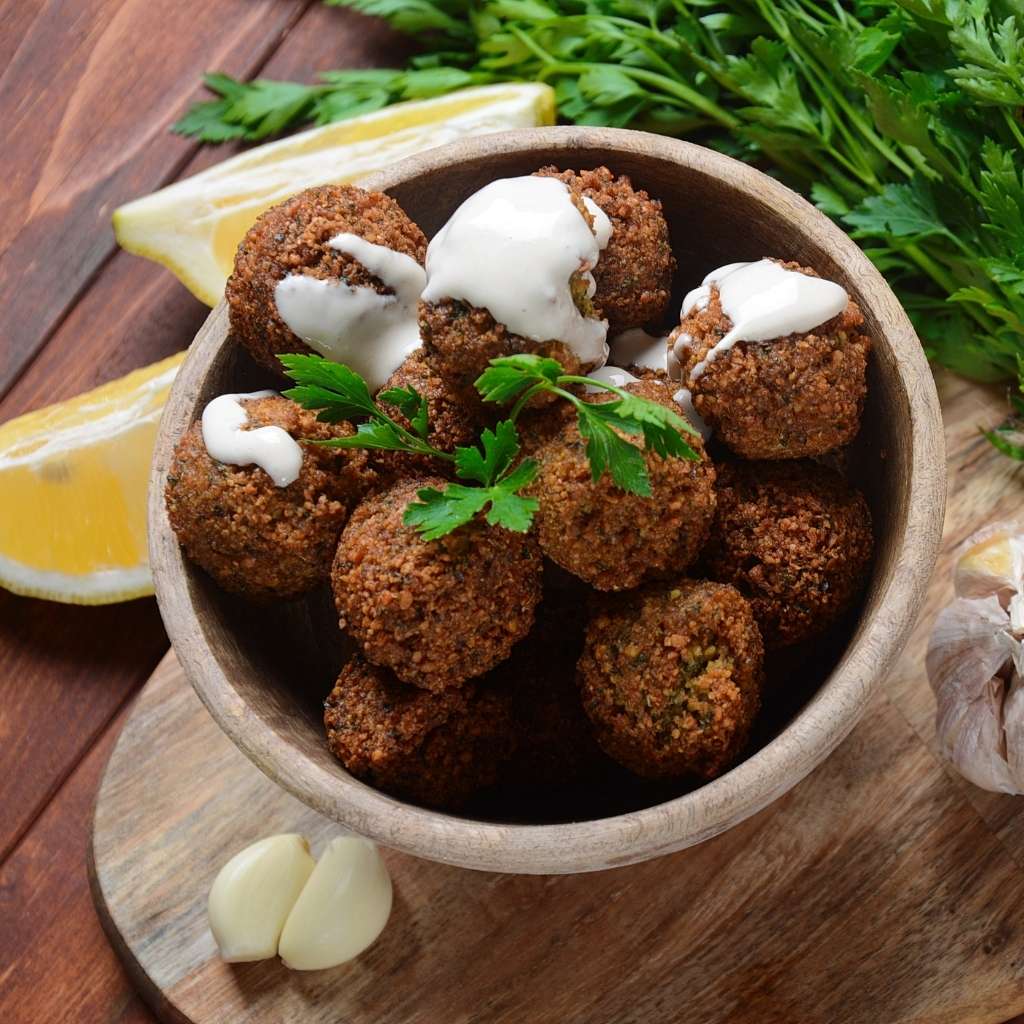
Falafel in the Airfryer
Cooking Guide
Keep the screen on and follow the recipe step by step while you cook.
Step 1:
Avoid the screen turning off while you cook.
Step 2:
Start the guide and follow the recipe one step at a time.
Cost of the dish
Prices may vary depending on where you shop.
Our estimate is based on average food prices for the current year 2026.
Estimated price for the whole dish:
Airfryer size
All our recipes are tested in a Philips Airfryer 2000 Series NA230/00 – 6.2 L
Does the recipe fit my Airfryer?
If you’re unsure, you can always reduce by one serving in the recipe, or click the 0.5x button.
You can also Ask the AI Chef
It’s easy! Just press the Ask the AI Chef button you see at the bottom.
Shopping list
Ingredients
How to make it
- Add 1 tsp cumin, 0,5 tsp cayenne pepper, 1 tsp baking powder, 2 tsp Salt and pepper and 2 tbsp wheat flour.
- Mix well.
- Shape the mixture into 8 equal-sized falafel.
- Preheat the airfryer to 180°C. (Use a preset, or let it run for a couple of minutes before cooking)
- Brush the falafel with 1 tbsp olive oil.
- Place the falafel in the airfryer in a single layer.
- Cook for 10-12 minutes, turning halfway, until golden and crispy.Start the online kitchen timer here
Your notes for the recipe
Nutrition per serving (Guideline)
Important about shelf life and nutrition
Nutrition per serving (guideline): Calculations are based on data from the United States Department of Agriculture (USDA). Shelf life (guideline): Shelf life data is provided, as far as possible, by public institutions, including national food authorities. Our information is therefore only indicative, and it is your responsibility to obtain and calculate accurate information about shelf life and nutrition for all recipes on airfryerkogebogen.dk
Easily share the recipe with others:
Via email or on Facebook
Open the recipe on your phone
Scan the QR code with your phone and get the recipe directly on your mobile while you cook.

Author
Airfryerkogebogen.dk