

To me, rhubarb is the ultimate sign that spring is finally on its way. When the first red and green stalks appear in the vegetable garden or at the market, I know it’s time for fresh compotes, sweet pies, and that uniquely tart flavor only Rheum rhabarbarum can deliver. Even though we treat rhubarb as a fruit in the kitchen, it’s actually a vegetable belonging to the knotweed family.

Advertisement: The page displays ads and contains advertising links (affiliate links). See our advertisers here.
Rhubarb holds a truly unique place in Danish cuisine. Its characteristic balance of tartness and sweetness makes it perfect for everything from classic rhubarb compote to more modern dishes. The plant is incredibly easy to grow and can stay in the same spot in the garden for up to 25 years with minimal care. Let me take you on a journey through the fascinating world of rhubarb, from its origins in ancient China to your own vegetable garden.
Estimated reading time: 11 minutes
History and origin
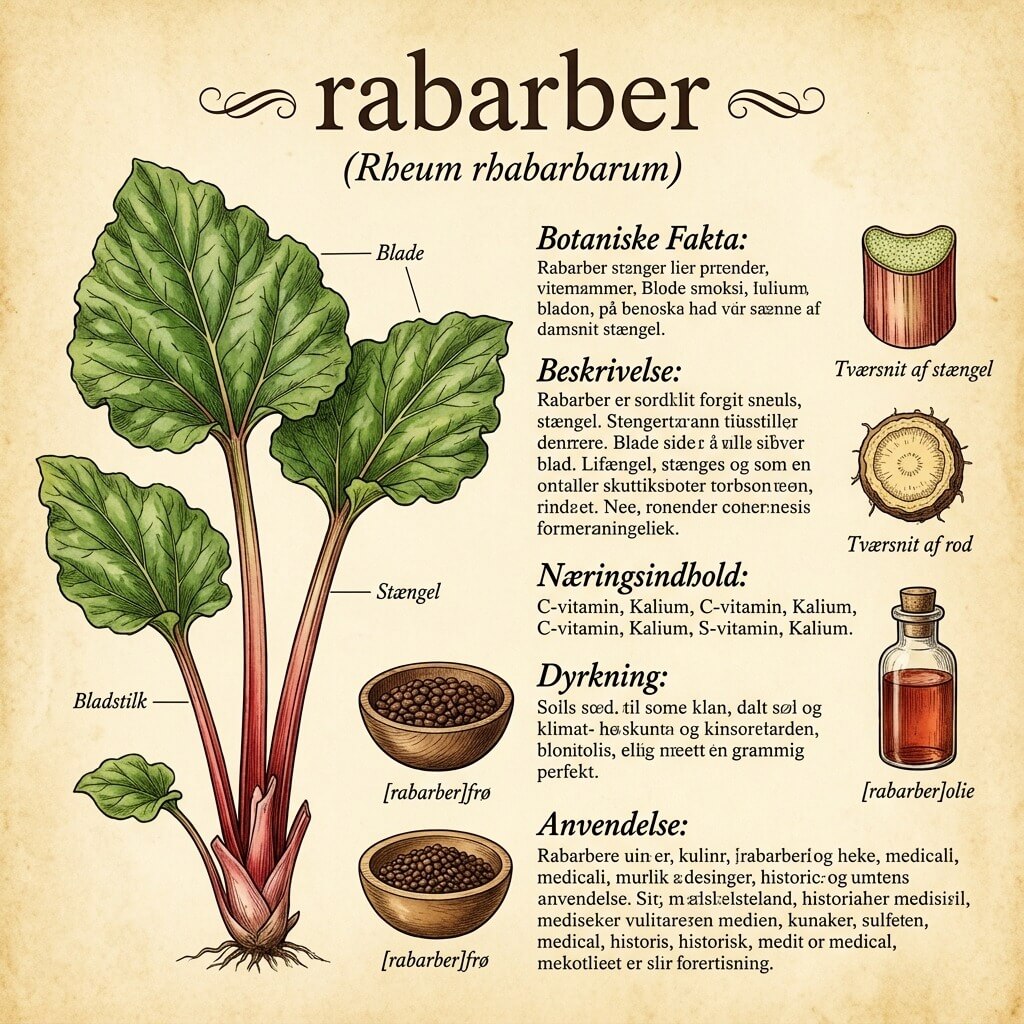
Rhubarb has a long and fascinating history that stretches back more than 5,000 years. The plant originally came from Central Asia and China, where it was primarily grown for its medicinal properties rather than as a food.
From medicine to cooking
In ancient China, rhubarb root was used as a powerful laxative and to treat stomach ailments. The name rhubarb itself comes from the Latin “rha barbarum,” where “rha” refers to the Volga River, along whose banks the plant was cultivated, and “barbarum” means foreign or barbarian. In Greek, there were two words for the plant: rheon, from the Persian rewend, and rha, after the river.
Rhubarb comes to Europe
Rhubarb was brought to Denmark in the 1600s via two routes: partly through Siberia and partly along the Silk Road. But it wasn’t until the 1800s that the plant truly found its way into Danish cuisine as an edible ingredient. Before that, it was primarily the root that was used for medicinal purposes. The cultivated rhubarb we know today is believed to stem from a cross between wild rhubarb (Rheum rhaponticum) and Chinese rhubarb (Rheum rhabarbarum).
Flavor and aroma
Rhubarb’s characteristic flavor is the result of a delicate interplay between different acids in the plant. It’s the balance between malic acid and oxalic acid that determines the final taste experience.
The importance of the acids
Rhubarb contains both malic acid and oxalic acid, and the optimal malic acid content lies between 18 and 22 percent for the best flavor. Too little malic acid relative to oxalic acid gives a sharp, unpleasant taste. Different varieties vary significantly in their acid content, which makes some varieties better suited to particular purposes than others.
Color and flavor
The beautiful red color in rhubarb stalks comes from anthocyanins, polyphenols with antioxidant properties. Interestingly, these color pigments don’t affect the flavor itself. Varieties with deep red stalks are often more popular, but green varieties can be just as tasty. The flavor is generally tart with a light sweetness, and the texture is firm but juicy when raw, and soft and almost melting after cooking.
Culinary use
Rhubarb is incredibly versatile in the kitchen, even though it’s most often associated with sweet dishes. Its characteristic tartness makes it the perfect counterpart to sweetness and richness in many different contexts.
In Danish cuisine
In Denmark, rhubarb is closely associated with spring and early summer. Classics like rhubarb compote with cream or vanilla ice cream rank high among Danish favorites. Rhubarb porridge, rhubarb cake, and rhubarb pie are other traditional dishes enjoyed during the warm months. Jam and juice made from rhubarb are also popular ways to extend the season and preserve summer’s flavor for later.
- Rhubarb compote with whipped cream or vanilla ice cream
- Rhubarb porridge served cold or lukewarm
- Rhubarb pie with a crisp shortcrust base
- Rhubarb jam and marmalade
- Homemade rhubarb juice and syrup
Internationally
In England, rhubarb crumble is a classic, combining rhubarb with a crisp crumble topping of flour, butter, and sugar. In America, strawberry-rhubarb pie is a longstanding tradition, where the sweetness and tartness of strawberries and rhubarb complement each other perfectly. In modern Nordic cuisine, rhubarb is also used in salads, with fish, and in innovative desserts. Rhubarb vinegar and rhubarb pickles have become popular additions to the modern pantry.
Preparation methods
Rhubarb can be prepared in many ways. Cooked rhubarb compote is the classic method, where the stalks are simmered with sugar until tender. Baked rhubarb retains more of its structure and gets a lightly caramelized flavor. Raw rhubarb can be used in thin slices in salads or pickled in sugar for a quick pickle. When cooking, be aware that rhubarb can fall apart quickly, so keep an eye on the cooking time. I personally prefer to bake rhubarb in the oven or the air fryer, as it gives the finest texture.
Health benefits
Rhubarb is a surprisingly nutrient-rich vegetable with a low calorie content and a range of health benefits. With only around 21 calories per 100 grams, it’s a great choice for those keeping an eye on their calorie intake.
Vitamins and minerals
Fortunately, the nutrients in rhubarb are concentrated in the stalks, which are the part we eat. Even after cooking, most of the vitamin K and calcium is retained. The red color comes from beta-carotene and anthocyanins, both of which act as antioxidants in the body.
- Vitamin A: Important for vision and immune function
- Vitamin C: Strengthens the immune system and collagen production
- Vitamin K: Essential for blood clotting and bone health
- Calcium: Important for strong bones and teeth
- Potassium: Regulates fluid balance and blood pressure
- Manganese: Supports bones and metabolism
- Magnesium: Important for muscle function and the nervous system
Digestion and fiber
Rhubarb contains a good amount of dietary fiber, which is beneficial for digestion. In traditional Chinese medicine, dried rhubarb root has been used as a laxative that stimulates bile production and intestinal peristalsis. Although we primarily eat the stalks and not the root, the fiber still contributes to healthy gut function.
Important information about oxalic acid
Rhubarb contains oxalic acid, which in large amounts can bind calcium and potentially affect the absorption of this mineral. People prone to kidney stones or osteoporosis should therefore be mindful of their intake. However, it’s important to stress that normal consumption of rhubarb as part of a varied diet rarely poses a problem for most people. The leaves contain far higher concentrations of oxalic acid and are toxic, so they should never be eaten.
Growing
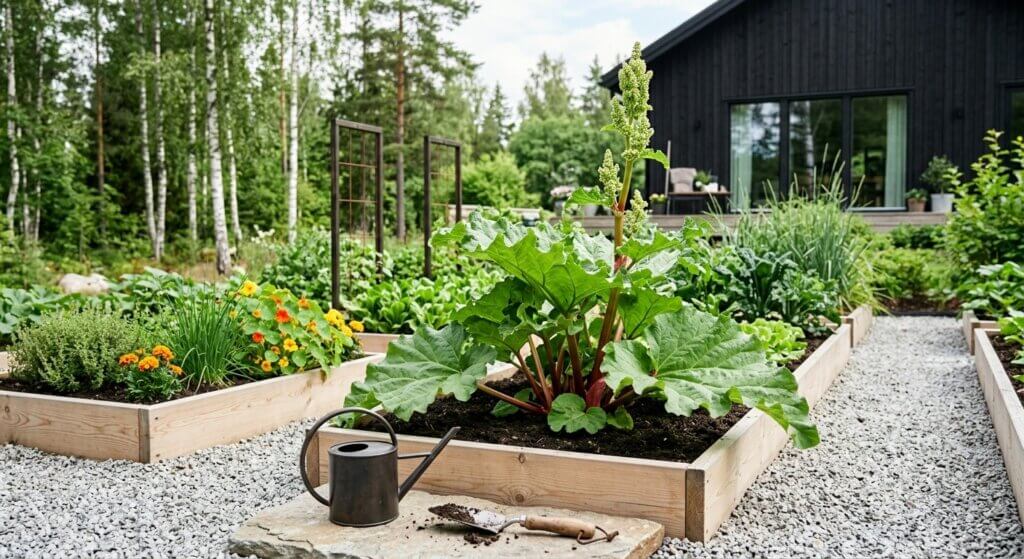
Rhubarb is one of the most rewarding plants in the vegetable garden. It requires minimal care and can yield harvests for many years once established. With the right conditions, a rhubarb plant can stay in the same spot for up to 25 years.
Growing conditions
Rhubarb thrives best in full sun to light shade and prefers deep, nutrient-rich, well-drained soil. The plant has a strong root system, so the soil should be dug to a depth of at least 30-40 cm before planting. Add plenty of compost or well-rotted manure to provide the best growing conditions. Rhubarb tolerates cold winters well, which makes it ideal for Danish gardens.
How to grow rhubarb
Total time: 12-18 months to first harvest
- Prepare the soil
Dig thoroughly through the soil to a depth of at least 30-40 cm. Remove perennial weeds such as ground elder and couch grass. Mix in plenty of compost or well-rotted manure.
- Plant the rhubarb
Place the plant in the hole so the growth point (the crown) sits level with the soil surface. Don’t plant too deep, as this can lead to rot. Keep a minimum of 90 cm between multiple plants.
- Water and feed
Water regularly during dry periods, but avoid waterlogging the soil. Apply compost or manure in early spring and again after the first harvest in June.
- Harvest carefully
Wait until the second year after planting to harvest. Pull the stalks off with a gentle twisting motion. Harvest only a third of the stalks at a time to preserve the plant’s strength.
Popular varieties
There are many rhubarb varieties with different characteristics. Elmsfeuer is known for its fresh flavor and medium-high oxalic acid content, well suited for jam and juice. Spangsbjerg has a sweeter flavor and gives a stable yield. Barbro is a Swedish-bred variety with vigorous growth and mild tartness, ideal for compote and baking. Vinrabarber is a late variety with a good balance between malic acid and oxalic acid.
Storage
Proper storage is essential for preserving the freshness and flavor of rhubarb. Fortunately, there are several good methods for keeping your rhubarb fresh or saving it for later use.
Refrigeration
Fresh rhubarb stalks keep best in the refrigerator. Wrap them loosely in a damp paper towel and place them in a plastic bag that isn’t fully sealed. This way, they can stay fresh for up to two weeks. Avoid washing the stalks before storing them, as moisture speeds up spoilage.
Freezing
Rhubarb freezes excellently and is one of the best vegetables for freezing. This makes it possible to enjoy rhubarb’s flavor year-round, even when the season is over.
- Wash and dry the stalks thoroughly
- Cut them into suitable pieces of about 2-3 cm
- Freeze them in a single layer on a baking tray first
- Transfer to freezer bags once frozen
- Label the bags with the date
- Keeps for up to 12 months in the freezer
Preserving
In addition to freezing, rhubarb can also be preserved as jam, compote, or syrup. These methods extend its shelf life significantly and let you enjoy rhubarb’s characteristic flavor all year round. Rhubarb juice can also be made and stored in bottles.
Try this recipe
Rhubarb’s refreshing tartness and complex flavor make it a fantastic ingredient in baked goods. The natural acidity balances perfectly with the sweetness in cakes and buns, creating a flavor experience beyond the ordinary. The combination of rhubarb and white chocolate is especially successful, as the chocolate’s creaminess tempers the tartness, while the rhubarb keeps it from becoming too sweet. Try our recipe for Fastelavnsbolle (Danish shrovetide bun) with rhubarb and white chocolate in the air fryer – my favorite luxury version, which shows how rhubarb can elevate a classic Danish baked treat to new heights.
Equipment and products
Want to explore rhubarb’s many possibilities beyond the classic desserts? Rhubarb vinegar is a fantastic product that captures rhubarb’s characteristic tartness in a versatile form that can be used for dressings, marinades, and as a flavor enhancer in many dishes. Its mild tartness is perfect for salads, fish, and light summer dishes. Try our Rhubarb Vinegar 100ml, made from quality rhubarb and adding an elegant, lightly tart note to your dishes.
Frequently asked questions
No, rhubarb leaves are toxic and should never be eaten. They contain high concentrations of oxalic acid, which can be harmful to the body. Only the stalks are edible.
Rhubarb is in season from around mid-April to August. The best quality is typically found in May and June, when the stalks are most tender and juicy.
It’s generally not necessary to peel rhubarb. Thin stalks can be used as they are after a thorough wash. Thicker, more fibrous stalks can benefit from having the strings removed by pulling them off from the end.
Rhubarb falls apart quickly during cooking. To retain more structure, you can bake the rhubarb in the oven or air fryer instead, or add the sugar and let it sit before heating.
Yes, rhubarb is low in calories and contains vitamins such as A, C, and K, as well as minerals like calcium and potassium. It also contains fiber and antioxidants. However, people with kidney stones should be mindful of its oxalic acid content.
Facts about rhubarb
| Field | Value |
|---|---|
| English name | Rhubarb / Garden rhubarb |
| Latin name | Rheum rhabarbarum |
| Family | Polygonaceae (knotweed family) |
| Plant type | Perennial herb |
| Origin | Central Asia and China |
| Height | 70-120 cm (up to 200 cm) |
| Season in Denmark | Mid-April – August |
| Calories per 100g | Approx. 21 kcal |
| Key nutrients | Vitamin K, vitamin C, calcium, potassium, fiber |
| Flavor | Tart with a light sweetness |
| Culinary use | Compote, pies, cakes, jam, juice |
| Light conditions | Full sun to light shade |
| Soil type | Deep, nutrient-rich, well-drained |
| Storage | Refrigerator 2 weeks, freezer 12 months |
| Note | The leaves are toxic – eat only the stalks |
