

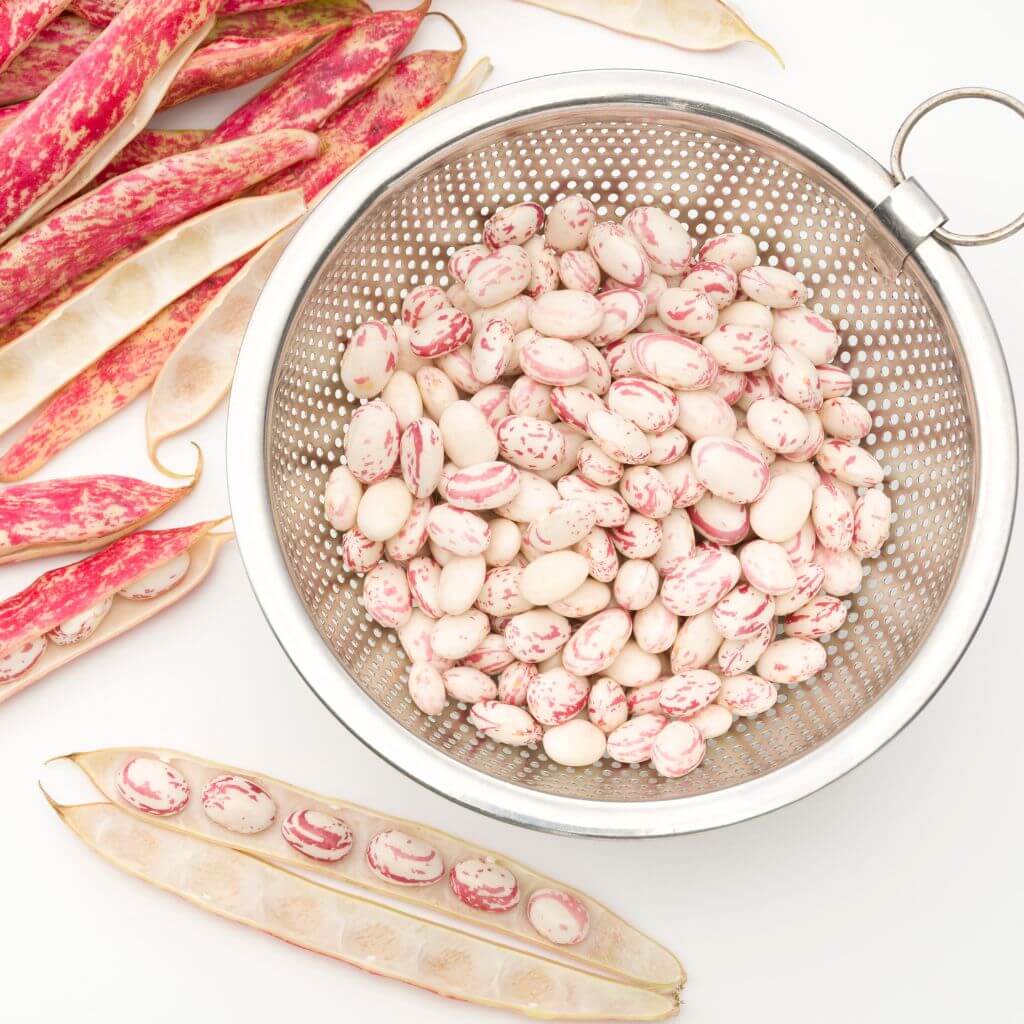
Borlotti beans are easy to recognize by their pale background speckled with beautiful red, pink, or magenta spots. In Denmark, they are not yet as common as their white relatives, but in South America and around the Mediterranean they are a staple of everyday cooking.

Advertisement: The page displays ads and contains advertising links (affiliate links). See our advertisers here.
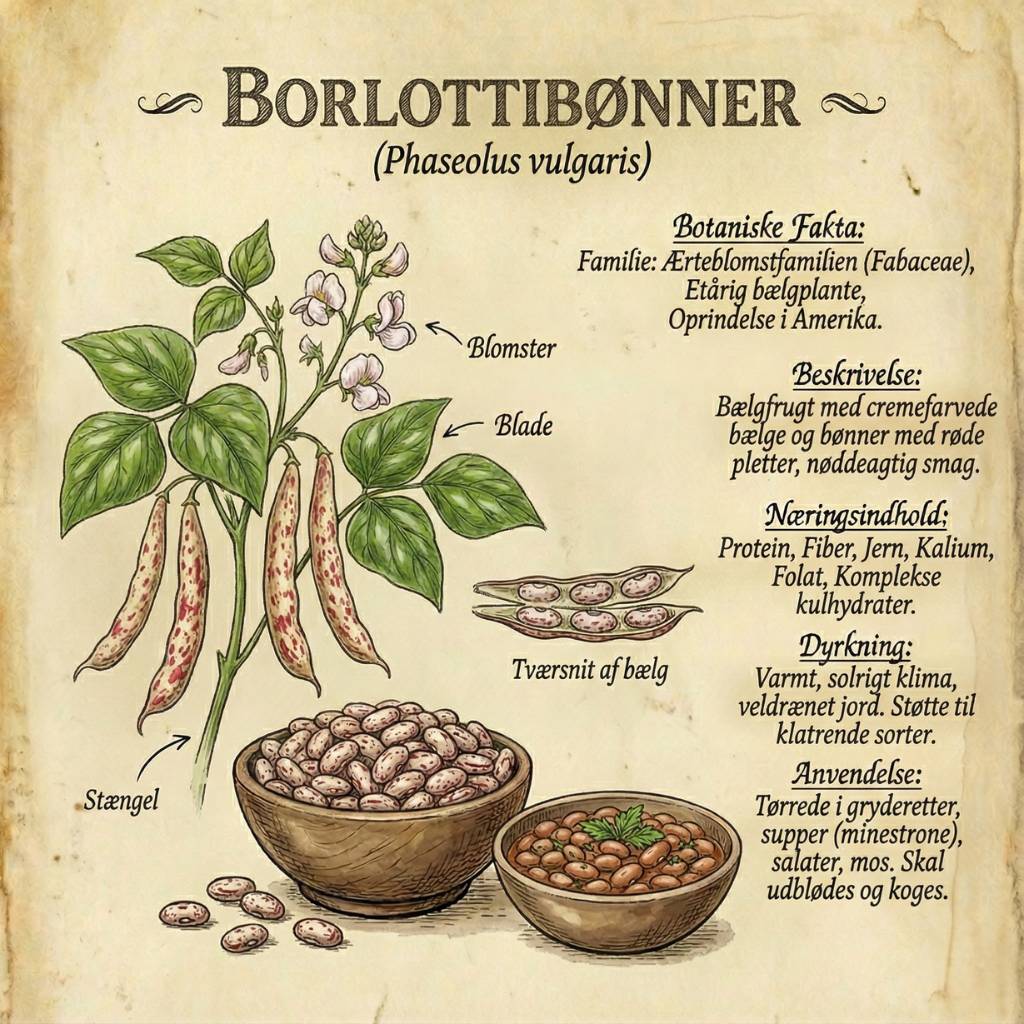
Borlotti beans are a variety of the common bean (Phaseolus vulgaris) and are also known as cranberry beans, Roman beans, or rosecoco beans. This guide covers everything from origin and cultural history to preparation, cultivation, and nutritional content, so you can make the most of this creamy bean in both the kitchen and the garden.
Estimated reading time: 10 minutes
History and origin
From Colombia to the Mediterranean
Borlotti beans originate from the South American highlands and were first cultivated in Colombia, where the local name is “cargamanto”. With Spanish colonization, the beans spread to Europe, where Italian farmers began growing them from the 1500s onward. In northern Italy, a variant with a thicker skin was bred and named borlotto; it is this type that is widely used in Italian, Portuguese, Turkish, and Greek cuisine.
Classic dishes
For centuries, the beans have been part of dishes such as pasta e fagioli, minestrone, and Portuguese stews. In northern Italy, the regional Saluggia bean became popular from the early 1900s. Today, borlotti beans are grown all over the world, but especially in the Mediterranean countries, where they have long been prized for their color, flavor, and nutritional properties.
Taste and aroma
Borlotti beans have a creamy, rich texture with a nutty, mildly sweet flavor. The raw beans are medium to large, tan or hazelnut-colored with large maroon or magenta spots. The beans’ colorful pattern disappears during cooking, but the creamy texture remains. They pair well with tomato, garlic, onion, rosemary, sage, and lemon, and have a particular ability to soak up flavor from stock and sauces, which makes them ideal in stews.
Good pairings
- Tomato, bell pepper, onion, and garlic
- Olive oil, rosemary, and sage
- Lemon, parsley, and feta cheese
- Vegetable stock, pasta, and parmesan
- Chili, smoked paprika, and thyme
Nutritional content
Borlotti beans are a nutritional powerhouse. They are very low in fat and rich in protein, dietary fiber, and minerals such as iron and calcium, as well as vitamins such as folate and B vitamins. The high fiber and protein content provides lasting satiety and helps stabilize blood sugar.
Protein, fiber, and minerals per 100 g
- Energy: approximately 335-350 kcal per 100 g dried beans
- Protein: approximately 23 g per 100 g dried (about 7 g per 100 g cooked)
- Dietary fiber: up to 24-25 g per 100 g dried
- Fat: only about 1 g per 100 g
- Minerals: iron, calcium, potassium, as well as folate and B vitamins
Digestion and anti-nutrients
The slowly absorbed carbohydrates provide a steady energy supply, while the fiber content promotes a healthy gut flora. Like all legumes of the species Phaseolus vulgaris, raw borlotti beans contain phytohaemagglutinin (a lectin) as well as phytates, which can cause discomfort if the beans are eaten raw or insufficiently cooked. Proper soaking and vigorous boiling break down these substances and make the beans safe to eat.
Culinary uses
Borlotti beans are popular in Italian and Portuguese cuisine, where they are used in salads, pasta, soups, and stews. Their sweet profile makes them ideal in dishes with tomato, garlic, and olive oil.
In the Danish kitchen
In Denmark, borlotti beans can add variation to the better-known white beans like kidney and cannellini beans. Their creamy texture makes them perfect in bowls, as a protein source in vegetarian dishes, or blended into a dip. The combination of nuttiness and light sweetness also works well in stuffed vegetables.
Internationally
In Colombia, cargamanto beans are used in stews with corn and chili. In Italy, they are a staple of pasta e fagioli and minestrone; in Portugal, they are used with paprika, tomato, and sausage; and in Turkey, in the dish barbunya pilaki, where the beans simmer in olive oil with vegetables and spices. In Greece, they are often mixed with lemon, fresh herbs, and feta cheese for a fresh salad.
Preparation ideas
- Use cooked borlotti beans in a tomato-based pasta sauce with garlic and rosemary.
- Toss beans with olive oil, lemon, and fresh herbs for a simple salad.
- Add beans to an Italian minestrone or stew to give it body.
- Blend cooked beans with garlic and olive oil into a creamy bean purée.
- Mix beans with roasted vegetables like fennel and zucchini for a rustic side dish.
Soaking and cooking
Dried borlotti beans are best soaked before cooking. Soaking shortens the cooking time and makes the beans more digestible. Freshly harvested beans, on the other hand, do not need soaking. Remember that raw beans must always be boiled vigorously to break down phytohaemagglutinin.
Total time: 60-90 minutes
- Clean the beans
Sort the beans for stones and damaged seeds, and rinse them thoroughly in cold water.
- Soak
Cover the dried beans with plenty of cold water and let them stand for 8-12 hours or overnight. Discard the soaking water and rinse the beans. Fresh beans skip this step.
- Boil vigorously
Place the beans in a pot with fresh water (about three times as much water as beans). Bring to a boil, reduce the heat, and let simmer partially covered for 1 to 1.5 hours, until tender. Boil gently so the skins don’t split.
- Salt at the end
Add salt during the last 10 minutes so the skin doesn’t toughen. The cooking water becomes a nutrient-rich broth that can be used in soups or sauces.
In a pressure cooker, soaked beans cook in 20-25 minutes, while unsoaked dried beans take 30-35 minutes. Let the pressure release naturally and add salt at the end.
Growing in Denmark
Borlotti beans love warmth and sun, but with the right soil and care, they can produce a good yield even in cooler Danish summers.
Growing conditions
The beans should be placed in full sun (at least 6-8 hours a day). The soil should be light and well-drained; sandy loam with plenty of organic matter is ideal, and the pH should be between 6.0 and 7.5. The beans don’t like wet, cold soil, so wait to sow until the soil is at least 10 °C. Since they fix nitrogen via root nodule bacteria, they only need moderate fertilizing and can even improve soil fertility. In Denmark, growing in raised beds or a greenhouse can extend the season.
How to grow borlotti beans
Total time: 3-4 months
- Pre-sprout or sow
Borlotti beans can be sown directly in the ground, but for an earlier start you can pre-sprout them indoors 2-3 weeks before the last frost in small pots at 18-22 °C. Sow the seeds 3 cm deep.
- Transplant
Once the risk of night frost has passed (typically from mid-May), transplant pre-sprouted plants outside or sow directly in a sunny, sheltered spot. Plant in rows 30-45 cm apart with 10-15 cm between plants.
- Water and weed
Water regularly, especially during dry periods, but avoid overwatering. Add compost or low-nitrogen legume fertilizer at planting. Weed regularly during the first few weeks.
- Harvest
Harvest fresh beans when the pods are plump and green with red streaks (about 60-75 days after sowing). For dried beans, let the pods ripen on the plant until they are dry and rattle.
Storage
Dried and fresh beans
Dried borlotti beans are best stored in airtight containers in a dark, cool place, where under ideal conditions they can keep for 1-2 years. Fresh, unshelled beans should be eaten within a week of harvest.
Cooked beans and freezing
- Cooked beans keep for 3-5 days in the fridge in their cooking liquid.
- Freeze cooked beans in portions, so they’re easy to add to dishes later.
- Frozen beans keep for up to six months.
Look-alikes and quality
Common mix-ups
Borlotti beans resemble pinto and kidney beans, but there are clear differences. They are larger than pinto beans and have more distinct magenta or maroon spots. After cooking, borlotti beans lose their spots, whereas pinto beans retain some of their streaks. They can also be confused with cannellini beans, but cannellini beans are solid white and have a softer, more mealy texture.
Shopping and quality
Fresh borlotti beans are sold in the pod and have a beautiful pale pink shell with darker spots; they should be plump, without limp or dark patches. Dried beans should have clear colors and a uniform size – avoid bags with a lot of dust or broken beans. Organic beans often have a more intense flavor and fewer pesticide residues.
Sustainability and biodiversity
Like other legumes, borlotti beans contribute to soil fertility by fixing nitrogen. Growing beans can reduce the need for artificial fertilizer and support a healthy microclimate in the garden. They attract few pests and require relatively little water compared to many other crops. Growing borlotti beans at home reduces transport emissions and promotes biodiversity in the kitchen garden.
Try this recipe
Borlotti beans belong in Italian cuisine, where their creamy texture and mild sweetness pair perfectly with rustic bread, olive oil, and fresh herbs. Serve a portion of cooked beans tossed in olive oil and lemon alongside our Pane pugliese in the air fryer – crusty Italian country bread with a tangy crumb for an authentic Mediterranean lunch.
Equipment and products
Borlotti beans love classic Mediterranean spices, and a good spice blend elevates a simple bean dish. For baked pasta and bean dishes, our Pasta & Pizza Seasoning 60g gives you exactly the right Italian flavor of oregano, basil, and garlic.
Frequently asked questions
No. Borlotti beans are a variety of cranberry bean that is larger and has more pronounced spots than pinto beans, and is creamier than kidney beans.
It’s recommended to soak dried borlotti beans for 8-12 hours to reduce cooking time and improve digestibility. Fresh beans don’t need soaking.
Yes. They are rich in dietary fiber and protein, which contributes to a healthy gut flora and provides lasting satiety.
Yes, they can be grown as bush beans in sunny gardens. They need warmth and should be sown after the last frost. Use a sheltered spot and well-drained soil to ensure good ripening.
Dried beans should be stored in airtight containers in a cool, dark place. Cooked beans keep for 3-5 days in the fridge in their cooking liquid and can be frozen for up to six months.
Facts about borlotti beans
| Field | Value |
|---|---|
| English name | Borlotti beans |
| Latin name | Phaseolus vulgaris var. borlotto |
| Family | Pea family (Fabaceae) |
| Plant type | Bush bean (some varieties are climbing) |
| Height | 40-60 cm for bush types |
| Hardiness | Frost-sensitive; grown as an annual |
| Light | Full sun |
| Soil | Light, well-drained, neutral to slightly acidic pH 6-7.5 |
| Sow/plant | Direct sowing or pre-sprouting April-May; transplanting after last frost |
| Flowering/harvest | Flowers July-August; dried beans August-September |
| Calories per 100g | Approx. 335-350 kcal (dried) |
| Key nutrients | Protein, fiber, iron, calcium, potassium, folate |
| Taste | Creamy, nutty, mild sweetness |
| Culinary use | Pasta, soup, salads, stews, dip |
| Soaking time | 8-12 hours (optional for fresh beans) |
| Cooking time | 60-90 minutes; 20-25 minutes in a pressure cooker |
| Storage | Dried beans in airtight containers; cooked beans in fridge/frozen |
