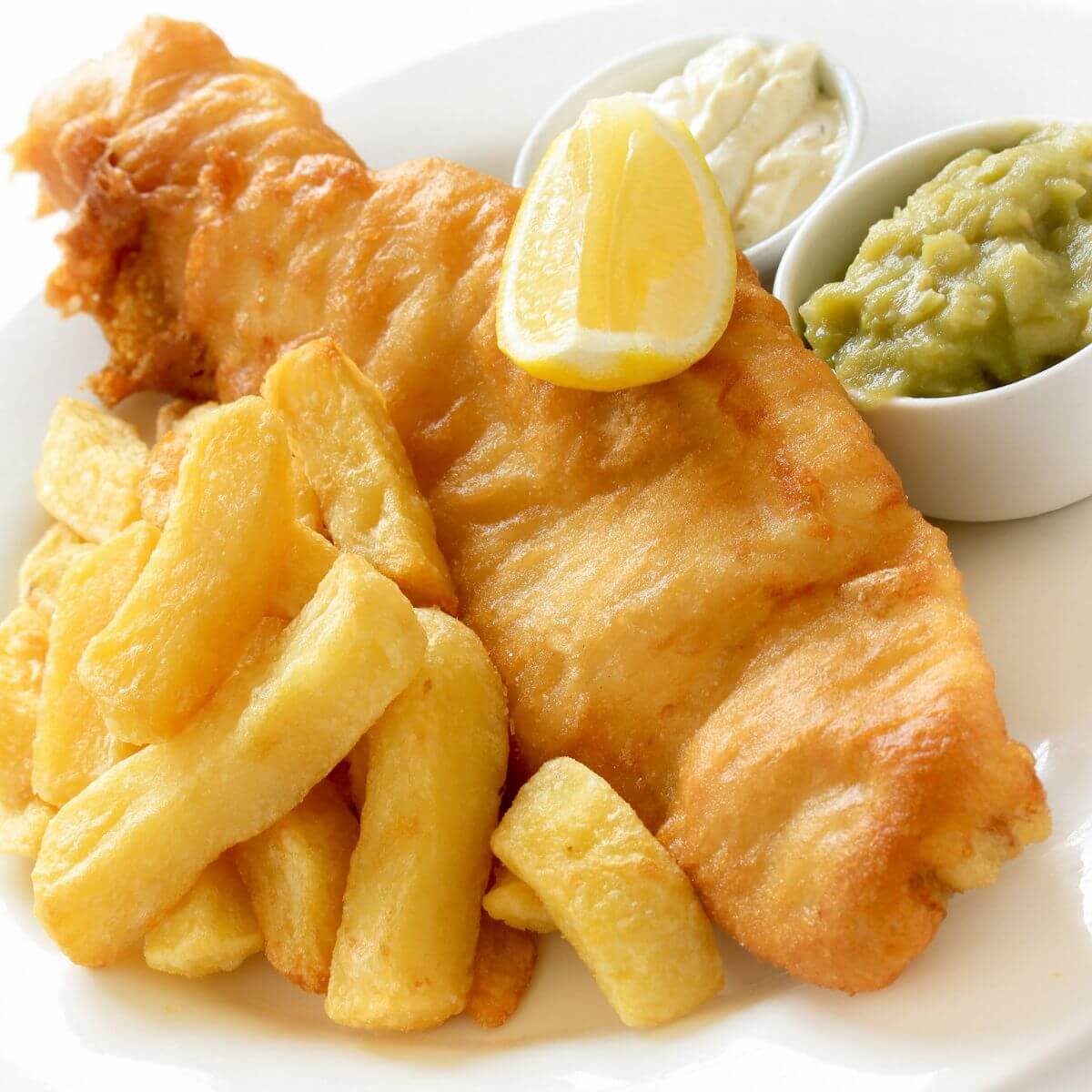

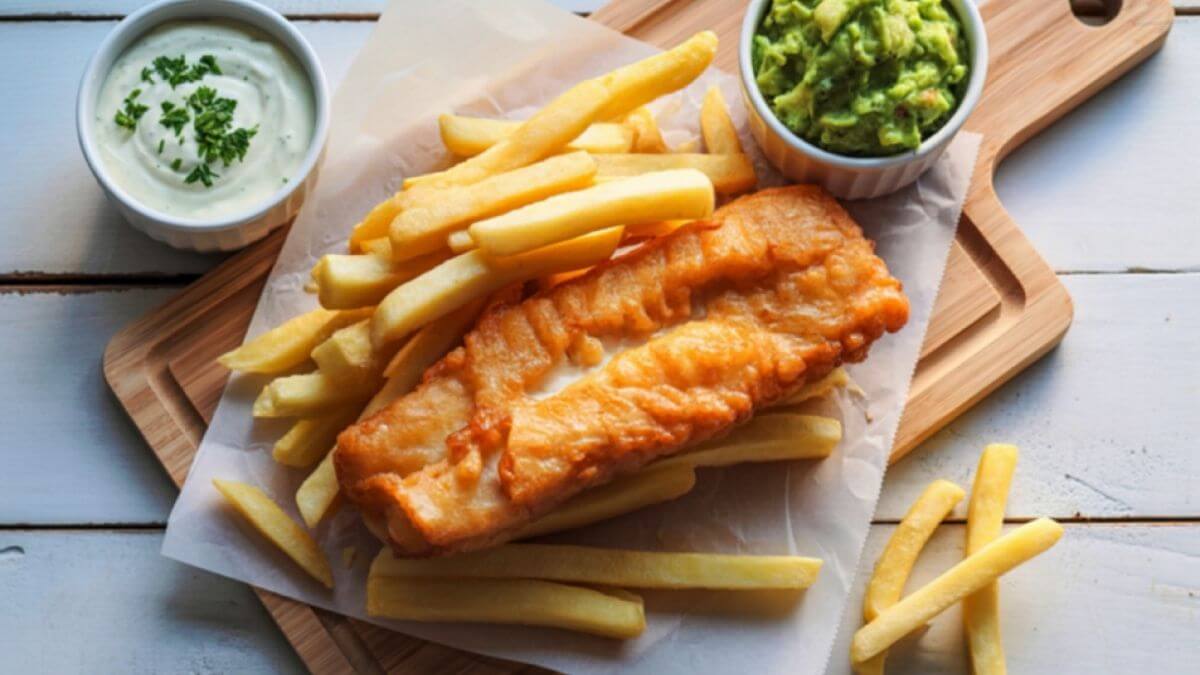
Fish and Chips is a classic British takeaway favourite, and in my airfryer they turn out both crispier and significantly lighter, because I don’t use a single drop of oil. The hot air circulates all the way around the breaded cod pieces, and the result is a golden, crunchy crust with a juicy, steaming interior — without the smell of frying fat that lingers in the kitchen for hours.

Advertisement: The page displays ads and contains advertising links (affiliate links). See our advertisers here.
I always serve my fish and chips with a fresh, homemade tartar sauce, a lemon wedge to squeeze over and a pile of airfryer chips on the side. It’s the kind of weeknight dinner where kids and adults agree at the table, and you’re not left with a pan full of used oil afterwards. In 25 minutes you have a complete meal that both tastes authentic and is easy to handle.
Estimated reading time: 4 minutes
Table of Contents:
Why I love Fish and Chips in the airfryer
It's one of those dishes where the airfryer really proves its worth. I get the same crunchy panko crust you know from a good pub, but completely without the heavy greasiness that comes with a deep fryer. The fish stays juicy inside, the coating turns golden and crunchy on the outside, and the chips cook away in the other basket at the same time — it all lands on the table in one go.
What really makes the difference for me is the absence of oil. I save both calories and washing-up, and I don’t have to deal with a pot of hot oil, which makes the dish significantly more kid-friendly to prepare on a weeknight. Tartar sauce ties it all together with acidity and freshness.
Why the airfryer beats both the oven and the deep fryer
In the oven, fish and chips takes longer, and the bottom rarely gets really crispy, because the heat doesn’t circulate the same way. In the deep fryer you of course get the classic crispiness, but you pay for it in the form of oil that soaks into the coating, and a calorie-heavy meal. The airfryer hits the sweet spot — crispy surface on all sides thanks to the air circulation, but with a coating that stays light because it doesn’t soak up oil.
My kitchen test of Fish and Chips
I’ve tested the dish thoroughly in my Cosori Dual Blaze, because the two-zone function is perfect for having fish in one basket and chips in the other at the same time. 200 °C is the sweet spot for the coating — hot enough for panko to turn golden, but not so hot that the fish dries out. After 10 minutes, the core temperature of the cod fillet reached 60 °C, and the meat flaked exactly as it should. The chip batch got 15 minutes with a single shake midway through, so they came out evenly crispy on all sides.
If you have a single-basket airfryer like the Philips XXL, do the chips first, keep them warm on a plate under tin foil, and cook the fish afterwards. The short wait doesn’t matter for the final result, and the fish is ready faster than the chips.
An extra sprinkle of panko on top during the last 3 minutes is what lifts the crispiness from nice to you can’t keep your fingers off it.
Tips and tricks from the author: Morten Jensen
The typical mistakes and how to avoid them
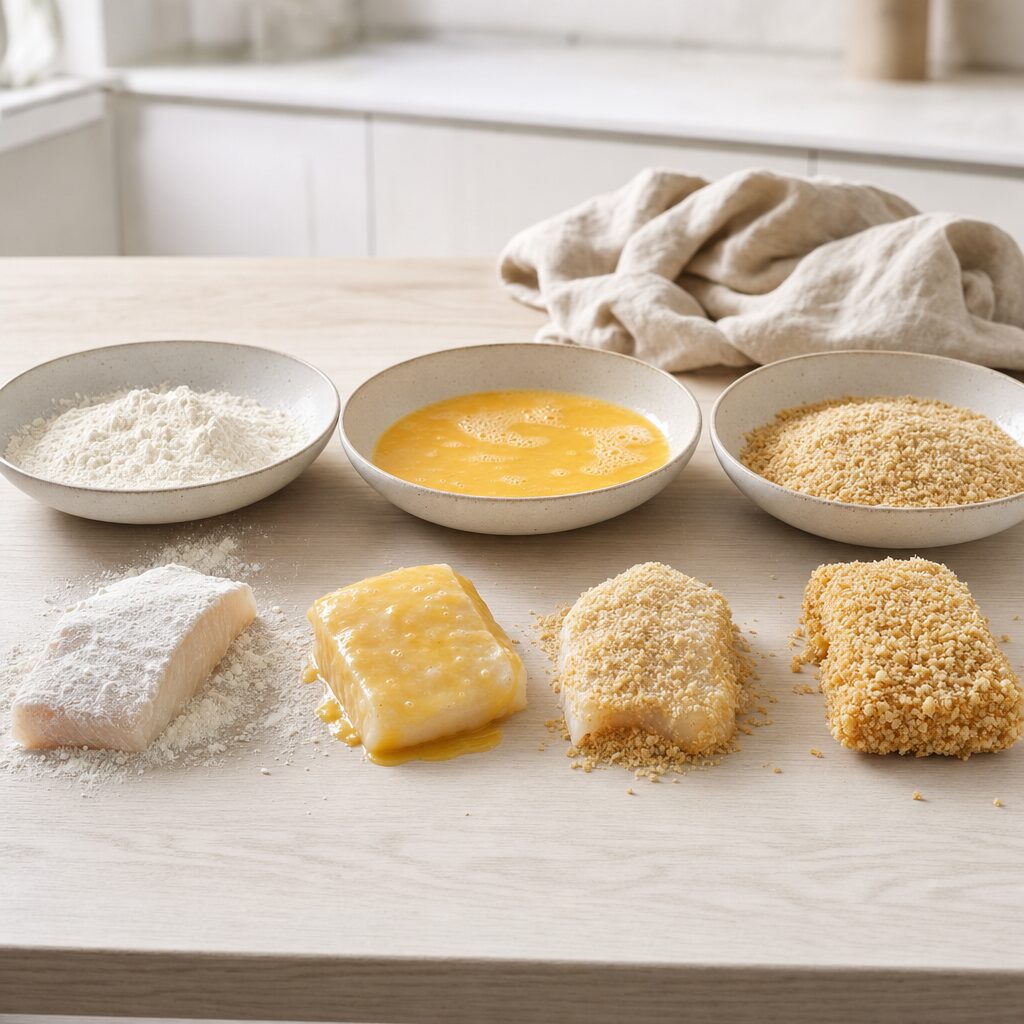
The most common mistake is a wet fish fillet that makes the coating slide off in the basket, so always pat the fish thoroughly dry with kitchen paper before turning it in flour. Just as important is the order in the breading: a thin dry layer of flour first, then a good dip in beaten egg, and finally a firm press into panko — if you skip the flour, the egg and panko don’t stick properly. The third classic is stuffing the airfryer basket full of chips, because then the air can’t circulate properly; stick to a maximum of half a basket and give space so the heat can reach all sides.
How to serve Fish and Chips
The classic stands or falls with the right accompaniments. Here’s what I always put on the table when fish and chips comes out of the airfryer:
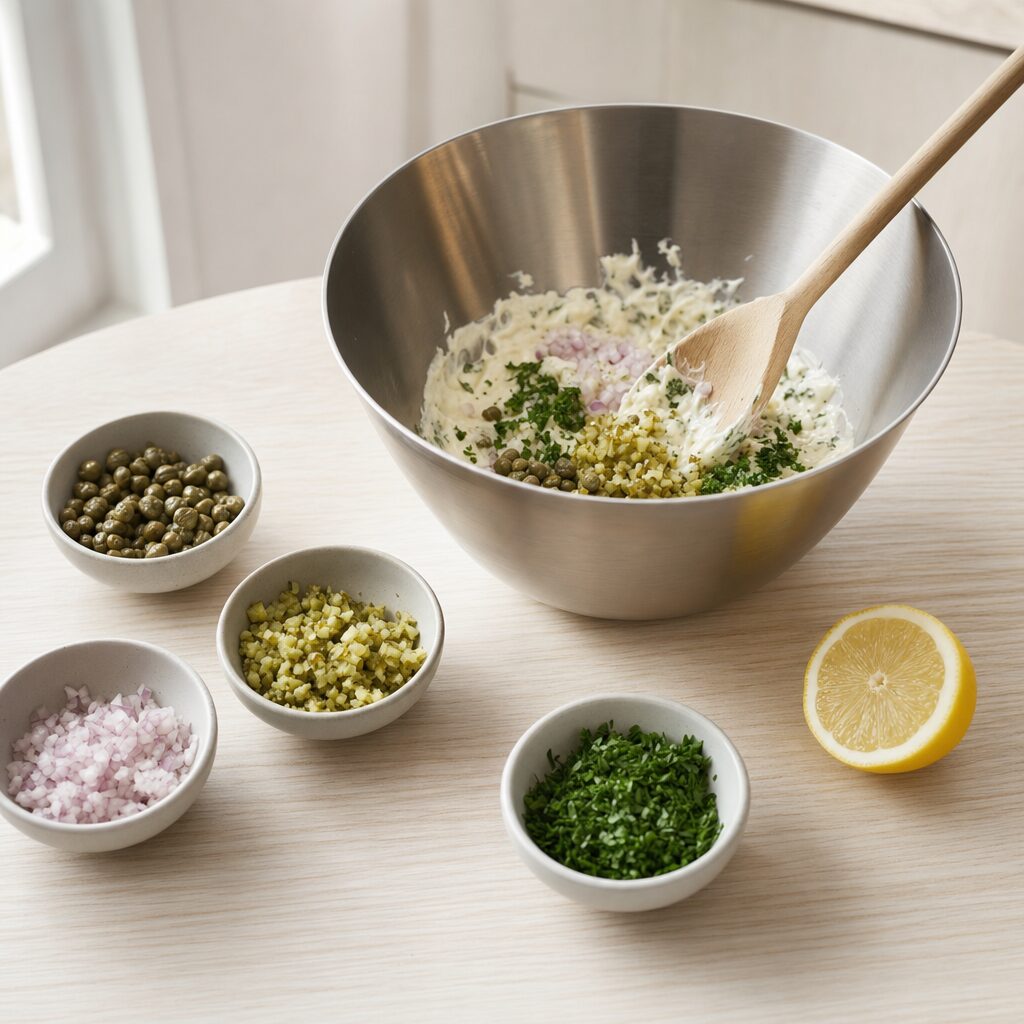
- Homemade tartar sauce with finely chopped pickled cucumbers, capers and fresh dill
- A freshly cut lemon wedge to squeeze over the fish just before serving
- Mushy peas — the British pea purée — for the completely authentic takeaway bite
- Malt vinegar to drizzle over the chips (sounds strange, but it’s magic)
- A cold lager beer or a crisp cider on the side for the adults
Storage and reheating
Leftovers are kept in an airtight container in the fridge and stay fine for up to two days. When you need to heat them again, forget the microwave — it makes the coating soft and dull. Put them instead back in the airfryer at 180 °C for 4-5 minutes, and you get the crispy surface and warm interior back, almost as if they were just made. Tartar sauce is stored separately and keeps for 2-3 days in the fridge.
It’s a classic takeaway dish that gets new life when the airfryer takes over the deep fryer’s job — the crispiness is there, the fat is gone, and the washing-up is minimal.
FAQ
Yes, but thaw the fillets completely first, and pat them extra thoroughly with kitchen paper. Frozen fish has excess water that prevents the coating from sticking and turns to steam instead of crispiness during cooking.

Recipe
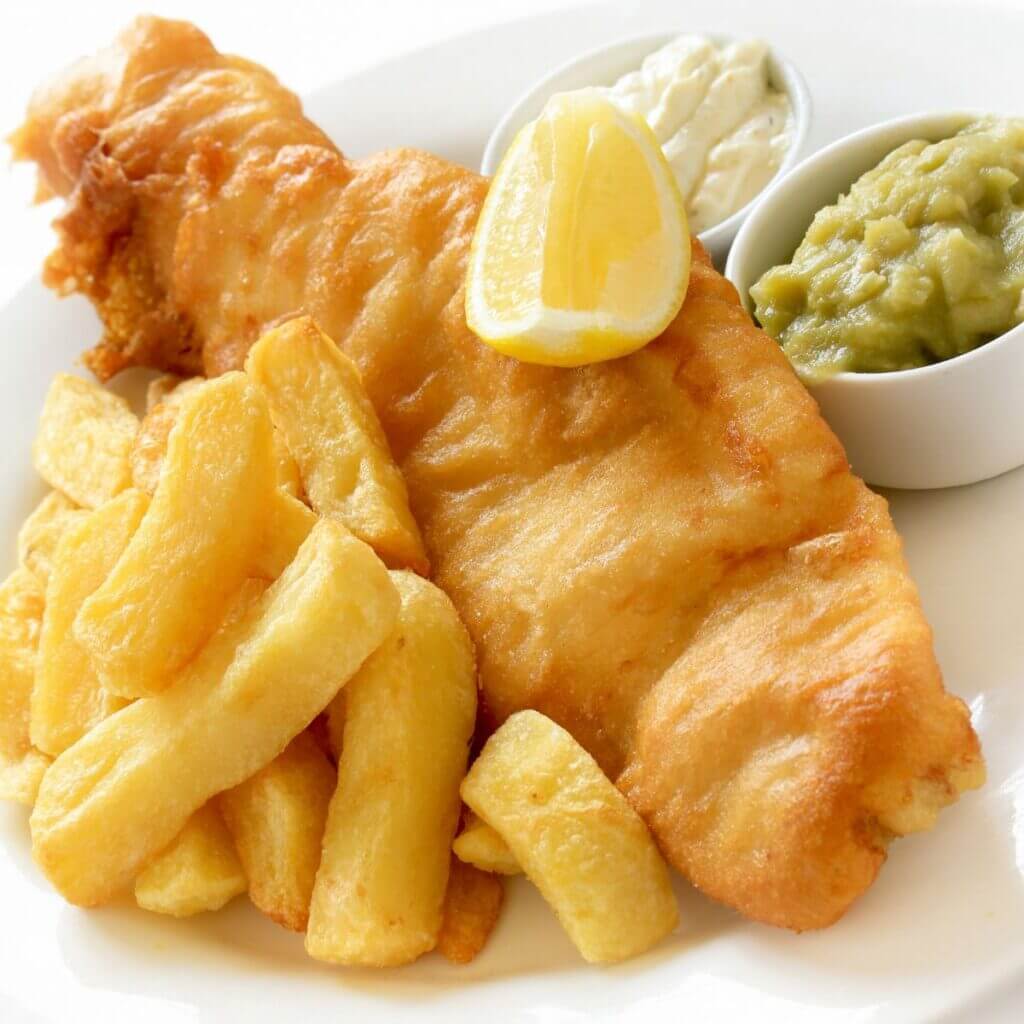
Fish and Chips in the airfryer
Cooking Guide
Keep the screen on and follow the recipe step by step while you cook.
Step 1:
Avoid the screen turning off while you cook.
Step 2:
Start the guide and follow the recipe one step at a time.
Cost of the dish
Prices may vary depending on where you shop.
Our estimate is based on average food prices for the current year 2026.
Estimated price for the whole dish:
Airfryer size
All our recipes are tested in a Philips Airfryer 2000 Series NA230/00 – 6.2 L
Does the recipe fit my Airfryer?
If you’re unsure, you can always reduce by one serving in the recipe, or click the 0.5x button.
You can also Ask the AI Chef
It’s easy! Just press the Ask the AI Chef button you see at the bottom.
Recommended equipment
- 1 Air fryer
- 1 Cutting board
- 1 Knife
- 3 Deep plates - For breading
- 1 Bowl - For soaking the potatoes
- 1 Mixing bowl - For the tartare sauce
- 1 Bagepapir (til airfryer)
Shopping list


How to make it
Preparation
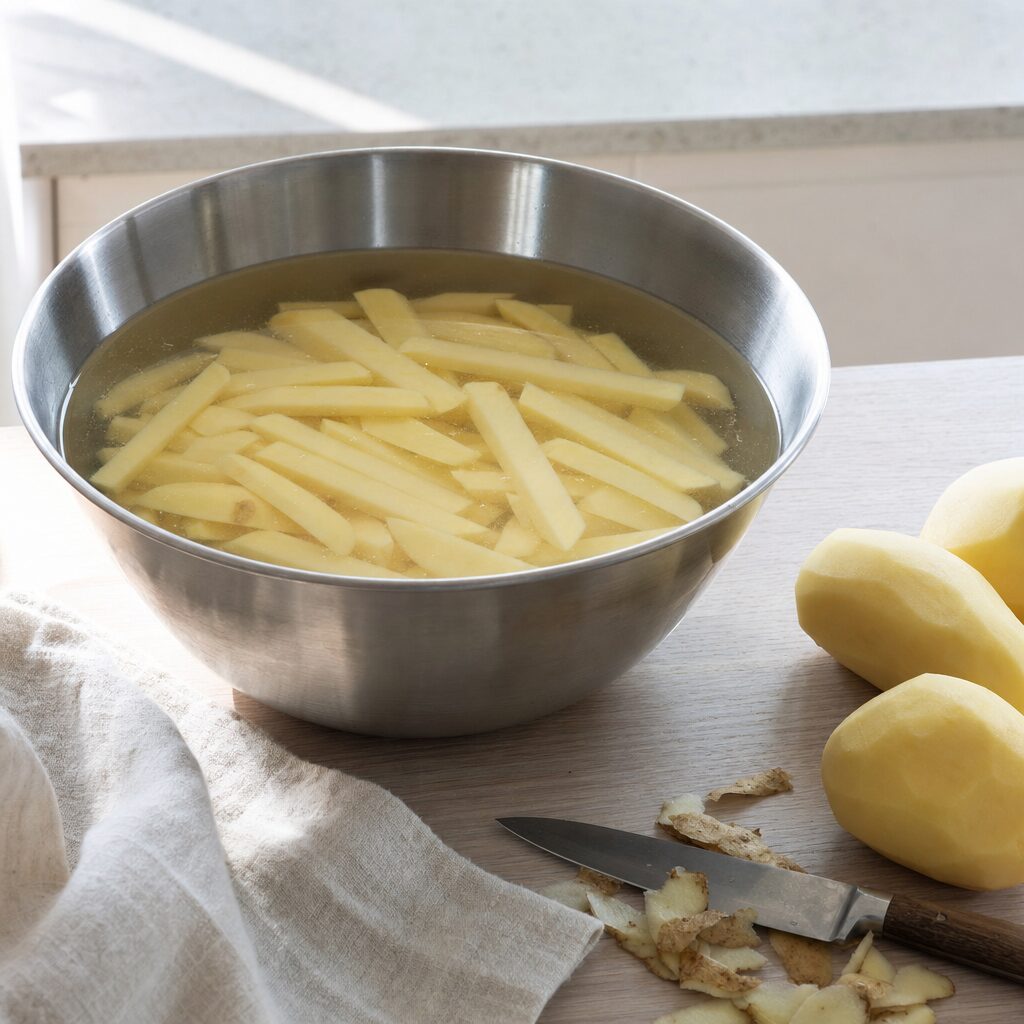
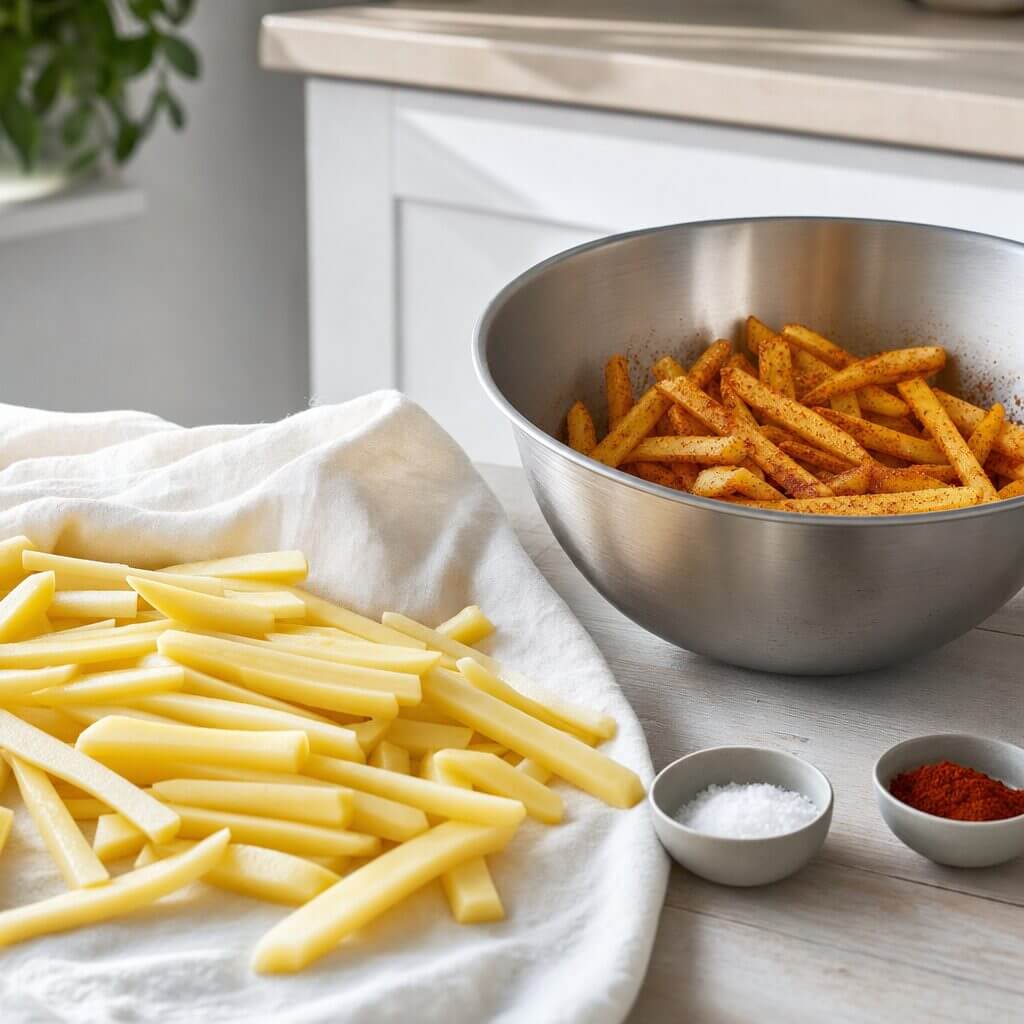
- Peel 800 g baking potatoes and cut them into chips about 1 cm thick. Place them in a bowl of cold water and let them soak for 30 minutes — this is the key to crispy chips without oil, because the starch is drawn out.

- Dry the potatoes thoroughly with a clean tea towel so they are completely dry on the surface. Mix them with 1 tsp salt and 0,5 tsp paprika in a bowl.

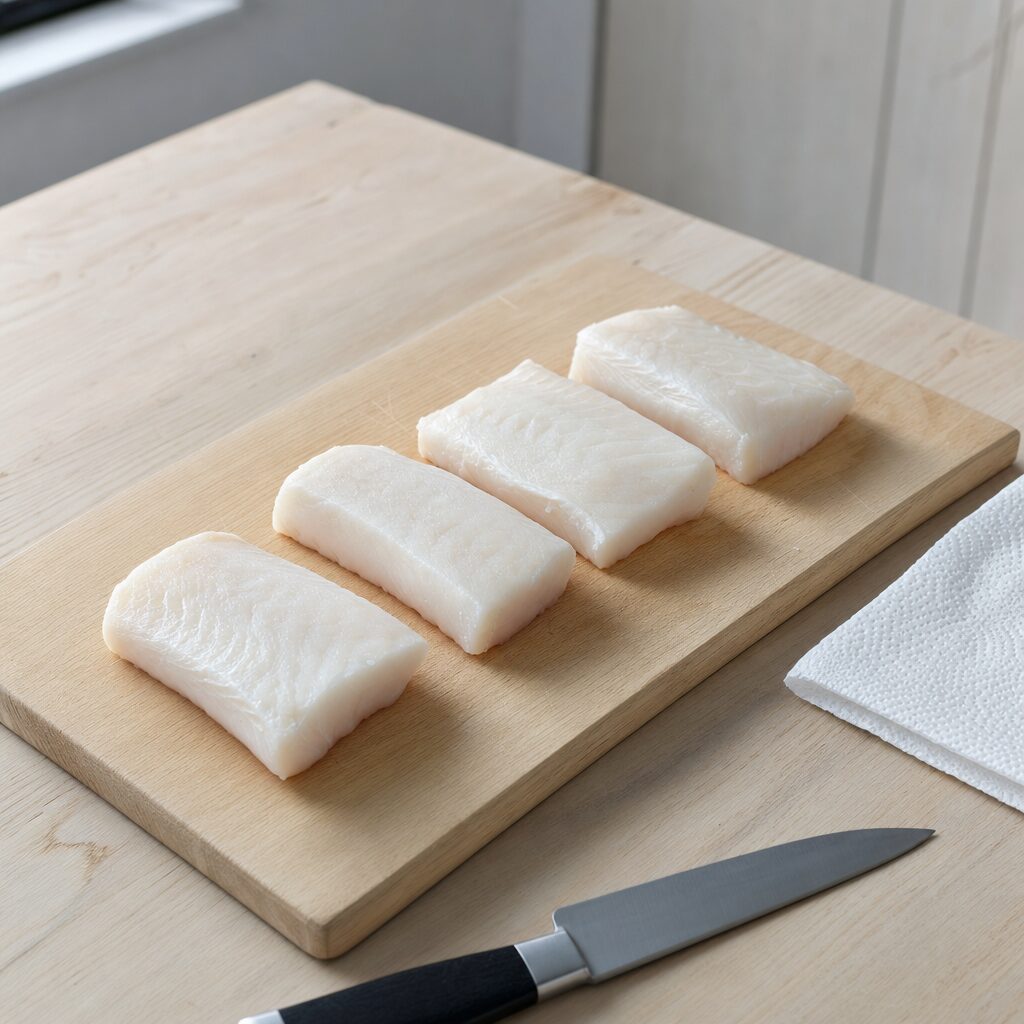
- Cut 600 g white fish into 4 equal pieces and pat them dry with kitchen paper.
- Prepare three deep plates: one with 50 g plain flour, one with 2 pcs eggs (beaten), and one with 100 g panko. Coat the fish pieces first in flour, then in egg and finally in panko, so they are completely covered.
Cooking in airfryer
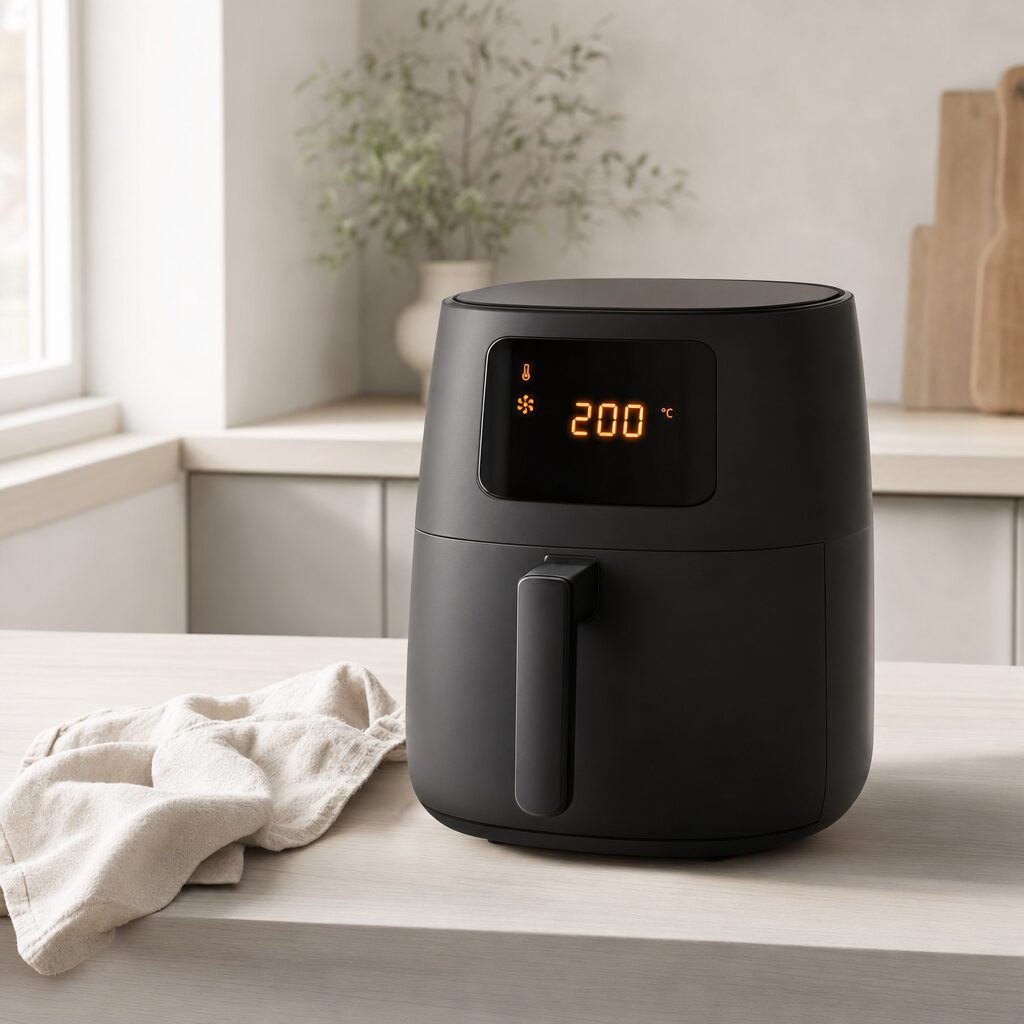
- Preheat the airfryer to 200 °C on fan setting.
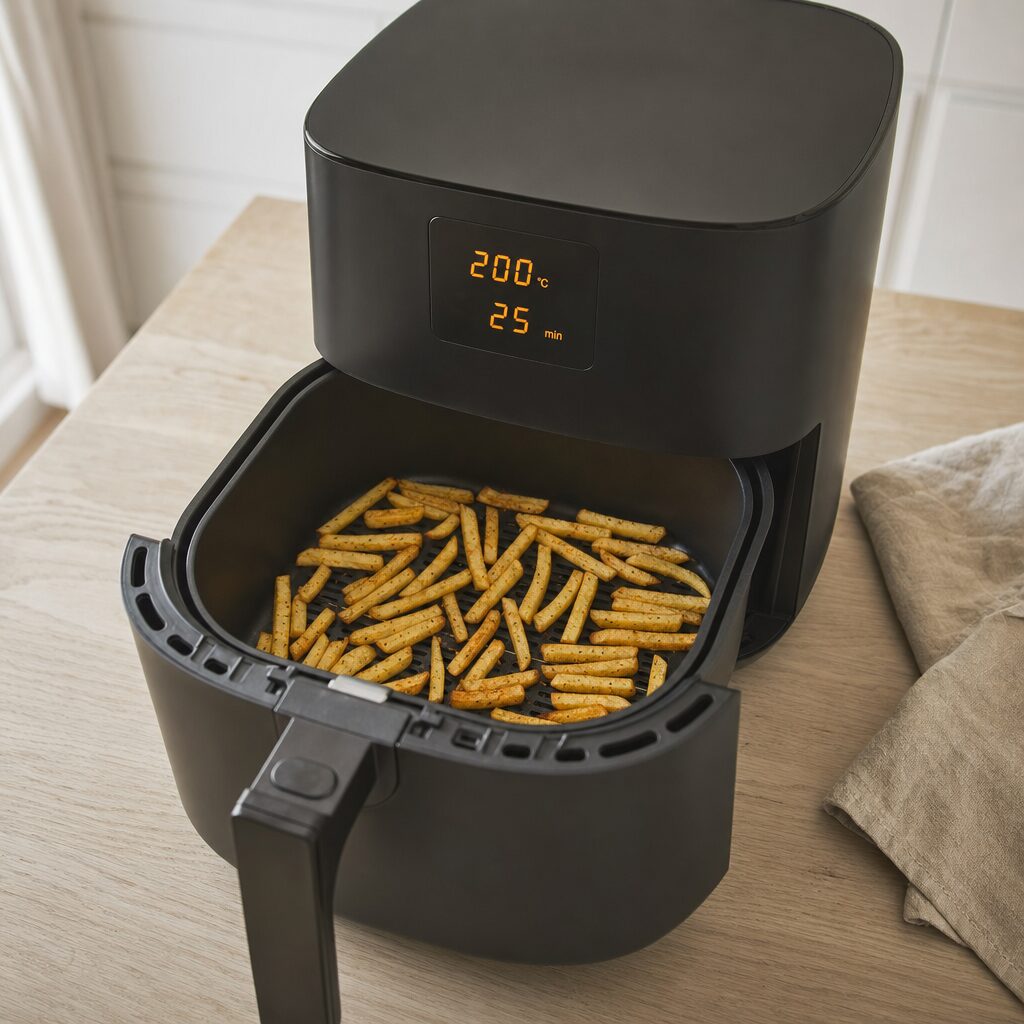
- Place the dried potato chips in a single layer in the airfryer basket and cook at 200 °C for 20-25 minutes, until they are golden and crispy. Shake the basket every 5-7 minutes for even crispiness.
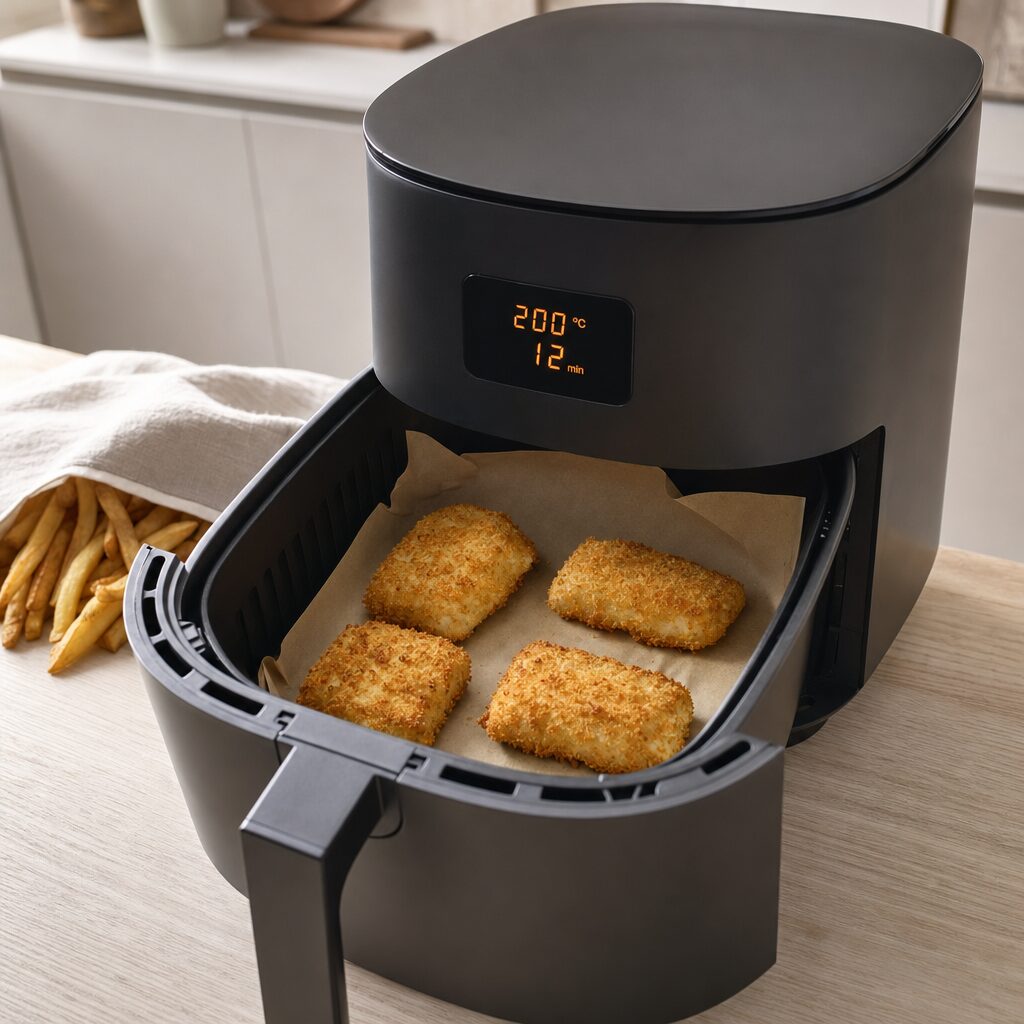
- Take out the chips and keep them warm under a tea towel. Place a piece of baking paper in the basket, lay the fish pieces on top and cook at 200 °C for 10-12 minutes, until the breading is golden and the fish flakes easily with a fork.
Tartare sauce
Serving
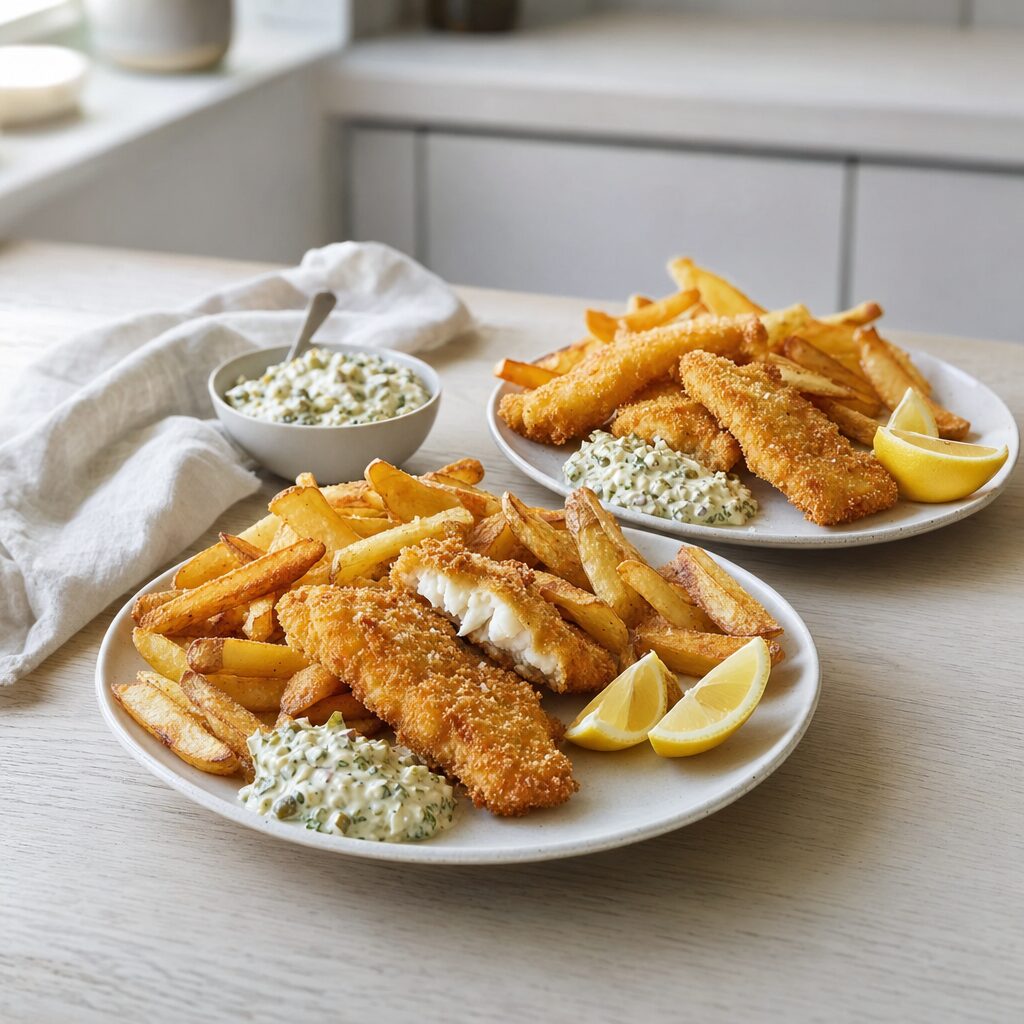
- Arrange the crispy chips and the breaded fish on plates. Serve with a generous dollop of tartare sauce and 1 pcs lemon cut into wedges on the side.
Our notes for the recipe
The secret to crispy airfryer chips without oil is drawing out the starch in cold water for 30 minutes and drying the potatoes thoroughly before cooking. Panko gives the fish breading extra crispiness without using oil — regular breadcrumbs work too, but panko gets crispiest. Fish choice:
Cod and pollock are classic, but haddock, hoki or Alaska pollock also work well. Choose thick fillet pieces so the fish does not dry out. Variation:
Swap panko for coarsely grated rye bread for a Scandinavian twist, or add grated parmesan and lemon zest to the breading for extra flavour. Sprinkle a little cayenne pepper on the breading if you want a bit more kick. Serving:
Serve classically with lemon wedges and a fresh green salad, or add classic British mushy peas as a side. Portion size:
If your airfryer is smaller, you can cook the dish in two batches — chips first, then the fish. Keep the chips warm under a tea towel while the fish cooks.
Your notes for the recipe
Nutrition per serving (Guideline)
Important about shelf life and nutrition
Nutrition per serving (guideline): Calculations are based on data from the United States Department of Agriculture (USDA). Shelf life (guideline): Shelf life data is provided, as far as possible, by public institutions, including national food authorities. Our information is therefore only indicative, and it is your responsibility to obtain and calculate accurate information about shelf life and nutrition for all recipes on airfryerkogebogen.dk
Easily share the recipe with others:
Via email or on Facebook
Open the recipe on your phone
Scan the QR code with your phone and get the recipe directly on your mobile while you cook.

Author
Airfryerkogebogen.dk