

Chickpeas (Cicer arietinum), also known as garbanzo beans or gram, are round, beige legumes with a nutty flavour and a firm, creamy texture. They are the cornerstone of hummus and falafel and have been an important food source for thousands of years.

Advertisement: The page displays ads and contains advertising links (affiliate links). See our advertisers here.
Today, chickpeas are used in everything from salads and stews to snacks and baked goods. In this encyclopedia entry, you’ll get a thorough introduction to chickpeas, how they’re used, how they’re grown in Danish gardens, and why they’re so healthy and sustainable.
Estimated reading time: 11 minutes
History and origin
What are chickpeas?
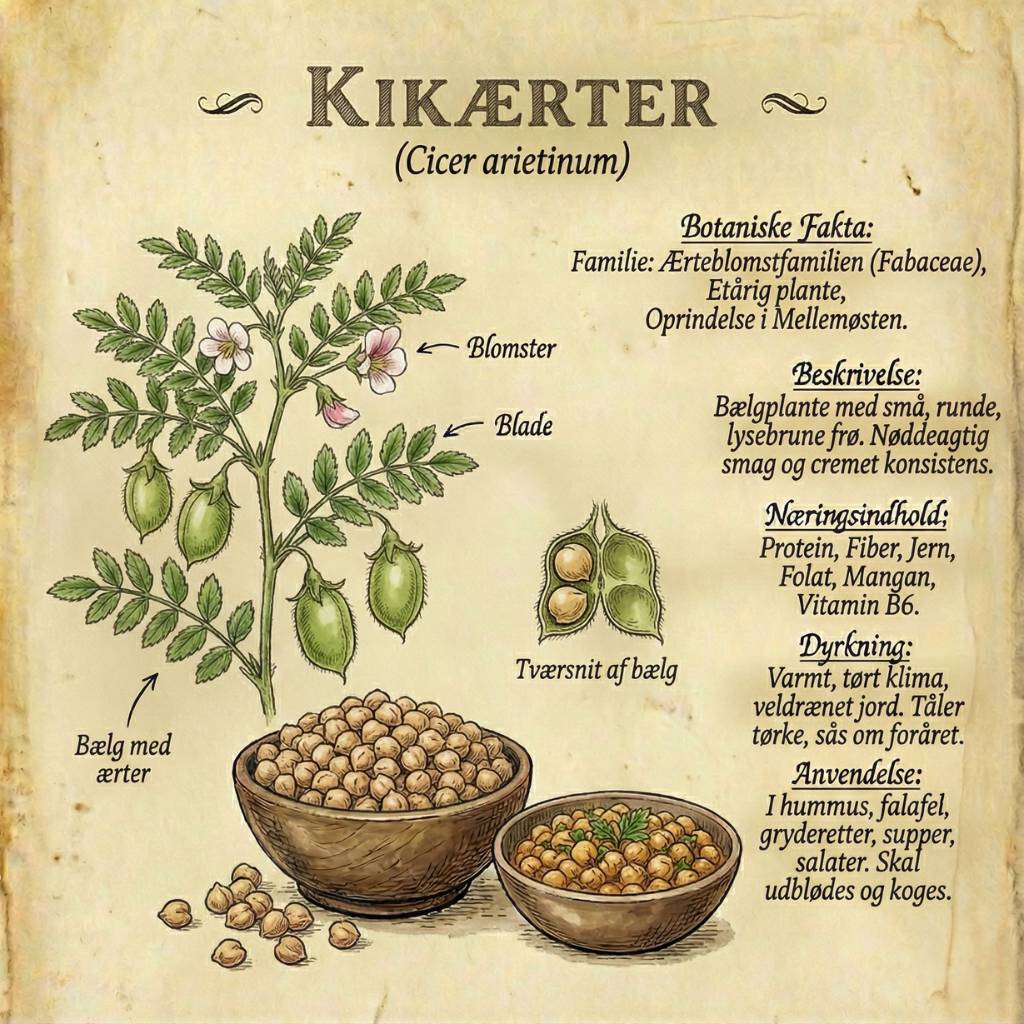
Chickpeas are the seeds of the plant Cicer arietinum, which belongs to the pea family (Fabaceae). There are two main types: the large, pale Kabuli type with a smooth seed coat, most common in Europe and North America, and the smaller, darker Desi type with a more wrinkled seed coat, dominant in South Asia and Ethiopia. The English name chickpea derives from the Latin cicer by way of the Old French chiche, later reshaped by folk etymology into “chick”. They are also known as garbanzo beans, especially in American English.
Early history and spread
Chickpeas are one of the oldest cultivated legumes. Archaeological finds show that they were grown in southwestern Asia 8,000 to 10,000 years ago, particularly in the area around present-day Turkey and Syria, where both wild and domesticated forms have been found. From there, they spread to the Mediterranean countries, North Africa, and India, where they still play a central role in the cuisine.
In Europe, chickpeas became popular in ancient Greece and Rome, and during the Middle Ages they were cultivated in Spain, Italy, and France. Today, India is the world’s largest producer and consumer of chickpeas, and they’re also grown in farming systems from Australia to Canada.
Flavour and aroma
Chickpeas have a mild, slightly nutty flavour and a firm texture that makes them useful in both hot and cold dishes. When cooked, they become creamy but retain a slight bite. Chickpea flour gives a rich, slightly sweet flavour to baked goods and pancakes, while the green, unripe chickpeas taste like fresh peas.
Their neutral flavour means chickpeas easily take on the taste of spices and sauces. They pair especially well with tahini, lemon juice, garlic, cumin, coriander, paprika, chilli, cinnamon, and fresh herbs like parsley and mint.
Culinary uses
Chickpeas are incredibly versatile in the kitchen. They can be used whole, mashed, fried, or ground into flour, and they’re used in cuisines all over the world.
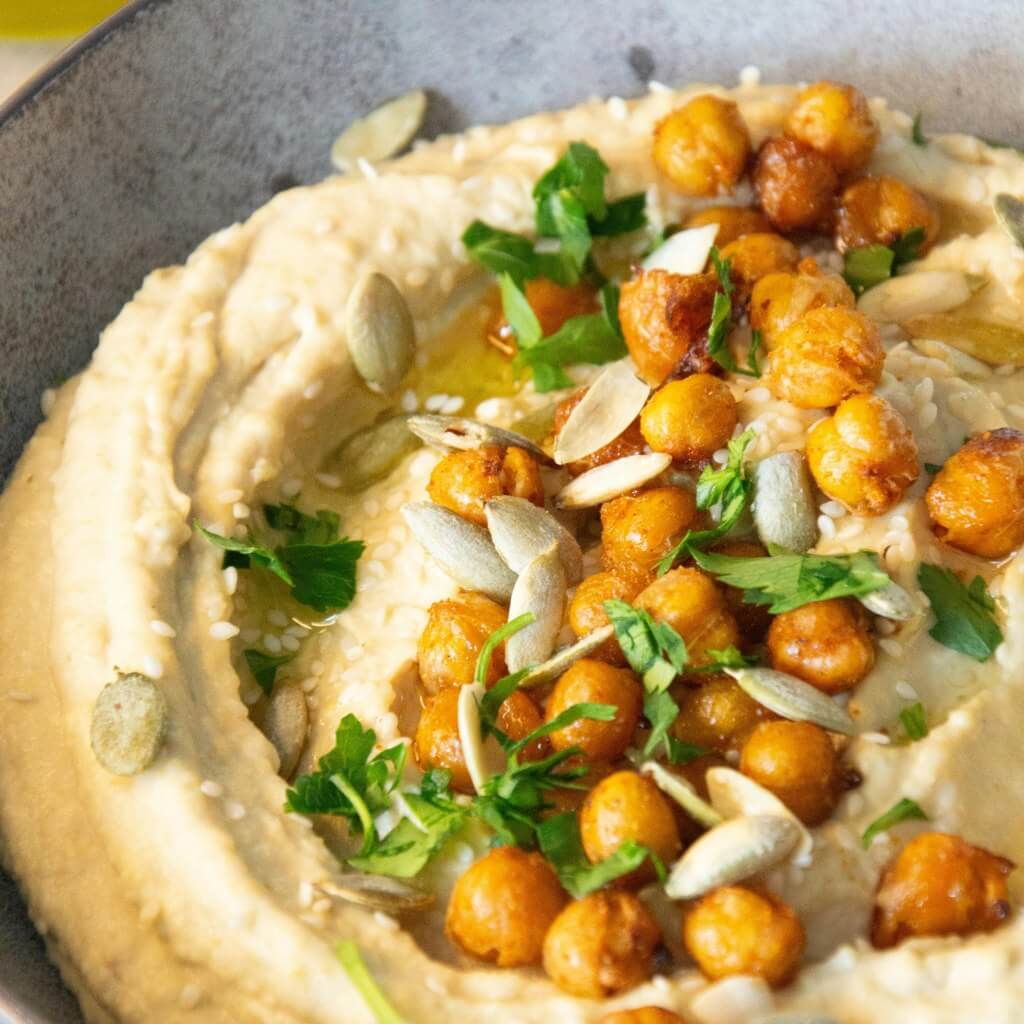
- Hummus: The classic dip is made from cooked chickpeas, tahini, lemon, garlic, and olive oil. Serve as a dip with bread or vegetables.
- Falafel: Small patties made from raw, soaked chickpeas, onion, herbs, and spices, deep-fried or baked.
- Salads: Add cooked chickpeas to green salads, quinoa, or couscous salads for extra protein and texture.
- Stews and soups: Chickpeas are great in Indian curries, Moroccan tagines, Italian minestrone, and Spanish cocido.
- Roasted chickpeas: Cooked chickpeas can be roasted in the oven or air fryer with oil and spices for a crispy snack.
- Chickpea flour: Used in socca and farinata (thin pancakes), besan chilla (Indian pancakes), cakes, pasta, and as a vegan binder.
- Aquafaba: The liquid from cooked or canned chickpeas can be whipped as a vegan substitute for egg whites in meringues and baked goods.
In the Danish kitchen
In Danish kitchens, chickpeas have gained popularity as a meat-free source of protein. They’re used in homemade hummus, in salads, in vegan patties, and as roasted chickpeas from the air fryer. Aquafaba, the thick cooking liquid, is used as a vegan substitute for egg whites in meringue, soufflé, and mousse.
Around the world
Chickpeas have a rich culinary tradition. In the Middle East, they form the base of hummus and falafel. In India, they’re used in dishes like chana masala, where they simmer in an aromatic tomato sauce with garam masala and ginger. In Italy, they’re ground into flour and used in the thin, crispy pancake socca (also called farinata). In Spain and Portugal, chickpeas feature in stews like cocido, and in North Africa they’re used in couscous dishes.
Great pairings
- Spices: Cumin, coriander, paprika, turmeric, cardamom, chilli, cinnamon, allspice, and sumac.
- Herbs: Parsley, coriander leaves, dill, mint, thyme, and rosemary.
- Acidic elements: Lemon juice, lime, yoghurt, or tamarind.
- Fats: Tahini, olive oil, butter, ghee, and coconut milk.
- Vegetables: Tomatoes, aubergine, spinach, green beans, onion, garlic, sweet potatoes, and pomegranate seeds.
- Grains and legumes: Rice, couscous, bulgur, quinoa, lentils, and black beans.
- Cheese and dairy: Feta, halloumi, yoghurt, and labneh.
Preparation and cooking
Chickpeas can be bought dried or precooked in cans. Dried chickpeas have the best flavour and texture but require preparation. Canned chickpeas are quick and easy but often contain salt, so they should be rinsed before use. Chickpeas should never be eaten raw, as they contain lectins and other antinutrients that are only neutralised through soaking and cooking.
How to soak and cook dried chickpeas
Total time: 8-12 hours + cooking
- Sort and rinse
Check the dried chickpeas for small stones and damaged seeds, and rinse them in cold water.
- Soak
Place the chickpeas in plenty of cold water, at least three times the volume, and let them soak for 8 to 12 hours or overnight. This shortens the cooking time and makes them more digestible. If you’re short on time, you can pour boiling water over them and let them sit for 1 hour.
- Discard the water
Drain off the soaking water and rinse the chickpeas. Don’t use the soaking water for cooking, as it contains dissolved oligosaccharides.
- Cook
Put the chickpeas in a pot with fresh water about 3 cm above the beans. Bring to the boil, skim off any foam, and let them simmer covered for 60 to 90 minutes, until tender but still firm. In a pressure cooker or Instant Pot, it only takes 25 to 30 minutes. Add salt toward the end.
- Ready to use
Drain the chickpeas and use them directly in recipes or freeze them in portions. Save the cooking liquid (aquafaba) for baking if you like.
Note: Falafel is traditionally made from raw, soaked chickpeas that are ground into a paste and fried. The high heat of frying breaks down the lectins. The easiest everyday shortcut, though, is precooked canned chickpeas: pour them into a sieve and rinse thoroughly under cold water to remove sodium and canning liquid.
Nutrition and health
Chickpeas are nutrient-dense and provide a wide range of macro- and micronutrients. One cup of cooked chickpeas (about 164 g) contains around 269 calories, 14.5 g protein, 4.2 g fat (mostly unsaturated), 45 g carbohydrates, of which 12.5 g is dietary fibre, as well as significant amounts of folate, iron, magnesium, potassium, phosphorus, and manganese. They’re also a source of B vitamins.
Key nutrients per 100 g
- Protein: about 9 g per 100 g (cooked); chickpeas are a good plant-based protein source
- Dietary fibre: about 7 to 8 g per 100 g (cooked), both soluble and insoluble
- Minerals: folate, iron, magnesium, potassium, phosphorus, and manganese
- Fat: low and mostly unsaturated
Health benefits
- Blood sugar regulation: Chickpeas have a low glycaemic index and contain resistant starch and soluble fibre, which slow glucose absorption and can help stabilise blood sugar.
- Digestion: The high fibre content promotes a healthy gut flora and can prevent constipation. Soluble fibre is converted by gut bacteria into short-chain fatty acids, which benefit the cells of the gut.
- Heart health: Chickpeas are cholesterol-free and contain plant sterols and unsaturated fat. Potassium and magnesium contribute to healthy blood pressure.
- Weight control: The combination of protein and fibre increases satiety and can support weight management.
- Important micronutrients: Folate is important for cell division and is especially recommended for pregnant women.
Although chickpeas are nutrient-dense, people with legume allergies should be cautious, and those who need to limit potassium (for example, due to kidney problems) should moderate their intake. Raw chickpeas contain antinutrients such as lectins and saponins; soaking and heat treatment significantly reduce these. Introduce chickpeas gradually into your diet and drink plenty of water.
Growing
Chickpeas are a heat-loving but fairly robust plant. They tolerate light frost but thrive best in a warm, dry climate. In Denmark, chickpeas can be grown in gardens in the warmest, sunniest spots or in a greenhouse. Varieties with short development times, often of the desi type, are best suited to a northern climate.
Growing conditions
- Light: Full sun is necessary for flowering and pod formation.
- Temperature: Tolerates light frost when young, but flowers and pods form best at 18 to 26 degrees. High heat above 30 degrees can cause the flowers to drop.
- Soil: Light, well-drained soil with moderate humus content and a pH between 6.0 and 8.0.
- Watering: Moderate water needs, even moisture during germination and flowering, but dry conditions during ripening.
- Placement: A warm spot sheltered from wind. The plants grow to about 40 to 60 cm and have a bushy growth habit that doesn’t need staking.
How to grow chickpeas step by step
Total time: 80-100 days
- Choose a variety and prepare the soil
Choose a fast-maturing variety. Chickpeas thrive in light, well-drained soil with a pH between 6.0 and 8.0. Add compost, but avoid too much nitrogen, as it inhibits root nodule formation.
- Sow the seeds
Sow directly outdoors once the soil temperature reaches at least 10 degrees and the risk of hard frost has passed, typically late April or early May. Place the seeds 3 to 5 cm deep, 10 to 15 cm apart.
- Water and tend
Water regularly, especially during germination and flowering, but avoid waterlogged soil. The plant needs full sun and warmth. Remove weeds, and cover with garden fleece if there’s a risk of night frost.
- Harvest
Chickpeas ripen 80 to 100 days after sowing. Harvest fresh green pods while they’re plump and green, or let the plants mature fully into dried chickpeas. Dry them further under cover and thresh the pods to release the seeds.
Like other legumes, chickpeas fix nitrogen from the air through symbiosis with bacteria in the root nodules, so avoid nitrogen-rich fertiliser. Leave the roots in the soil after harvest, and rotate the growing spot from year to year. Since chickpeas need warmth, yields in Denmark are often low, so consider growing them in a greenhouse or polytunnel if you want a larger harvest.
Storage
Chickpeas can be harvested green or dried, and storage depends on the form. When buying dried chickpeas, they should be whole, not cracked, and free of insect damage.
Fresh, dried, and cooked
- Fresh pods: Best eaten right away, or stored in the refrigerator for up to 3 to 4 days.
- Dried seeds: Store in airtight containers for up to a year. The longer they’re stored, the longer the cooking time.
- Cooked chickpeas: Keep for 3 to 4 days in the refrigerator or can be frozen for 2 to 3 months.
- Chickpea flour: Store dry and airtight.
- Canned chickpeas: Long shelf life; check the expiry date and avoid bulging or rusty cans.
Sustainability and biodiversity
Chickpeas are sustainable for several reasons. They form a symbiosis with nitrogen-fixing bacteria in their root nodules, which allows them to fix atmospheric nitrogen for their own benefit and that of subsequent crops. This means nitrogen fertiliser is often unnecessary, which reduces greenhouse gas emissions.
Chickpeas also require relatively little water compared with many other protein-rich crops and can be grown in semi-arid regions, while their deep root system improves soil structure. By varying the cultivars and growing both desi and kabuli types, genetic diversity can be preserved. Chickpeas are also an important part of plant-based diets, which generally have a lower environmental impact than animal-based protein.
Try this recipe
No ingredient shows off the versatility of the chickpea better than falafel. Raw, soaked chickpeas are ground into a spiced paste, shaped into small balls, and turn crispy on the outside and soft inside. In the air fryer, you get that crispy surface with far less oil than deep-frying. Try our Air Fryer Falafel and discover how easily chickpeas become a filling meal.
Equipment and products
If you want to skip the cooking, ready-made hummus is an easy shortcut to the chickpea’s creamy goodness. Our Hummus is made from chickpeas, tahini, and olive oil, and it’s ready to use as a dip for vegetables or as a creamy base in a bowl with roasted chickpeas from the air fryer.
Frequently asked questions
Dried chickpeas should be soaked for 8 to 12 hours to reduce cooking time and antinutrients. Canned chickpeas are already cooked and just need rinsing.
You can use a pressure cooker, Instant Pot, or slow cooker, which reduces the cooking time to 25 to 30 minutes after soaking. Otherwise, you can precook chickpeas and freeze them in portions.
Kabuli chickpeas are larger, paler, and have a smooth seed coat, and are typical in the Middle East and Europe. Desi chickpeas are smaller, darker, and more wrinkled, and more common in India. Desi has a higher fibre content, while Kabuli has a milder flavour.
No. Raw chickpeas contain lectins and other substances that can cause stomach problems. Falafel, however, is made from raw, soaked chickpeas that are heated during frying.
Chickpeas contain oligosaccharides, which are fermented by gut bacteria and can cause gas. Soaking and longer cooking reduce this content, and gradually increasing your intake helps your body adjust.
Chickpea facts
| Field | Value |
|---|---|
| English name | Chickpeas |
| Latin name | Cicer arietinum |
| Family | Pea family (Fabaceae) |
| Plant type | Annual, bushy legume |
| Height | Typically 40 to 60 cm |
| Origin | Southwestern Asia (present-day Turkey and Syria) |
| Light | Full sun |
| Soil | Light to medium, well-drained soil, pH 6 to 8 |
| Sowing/planting | Sown directly from April to May, 3 to 5 cm deep, 10 to 15 cm between seeds |
| Flowering/harvest | Flowers in early summer; fresh pods after about 80 days, dried seeds after 100 days |
| Calories per 100 g | About 164 kcal (cooked) |
| Protein per 100 g | About 9 g (cooked) |
| Key nutrients | Protein, dietary fibre, folate, iron, magnesium, potassium, manganese |
| Flavour | Nutty and mild, creamy texture |
| Culinary uses | Hummus, falafel, salads, stews, snacks, baked goods, flour |
| Soaking time | 8 to 12 hours, shorter with a quick soak |
| Cooking time | 60 to 90 minutes; 25 to 30 minutes in a pressure cooker |
| Storage | Dried seeds airtight (1 year); cooked, 3 to 4 days refrigerated or frozen for 3 months |
