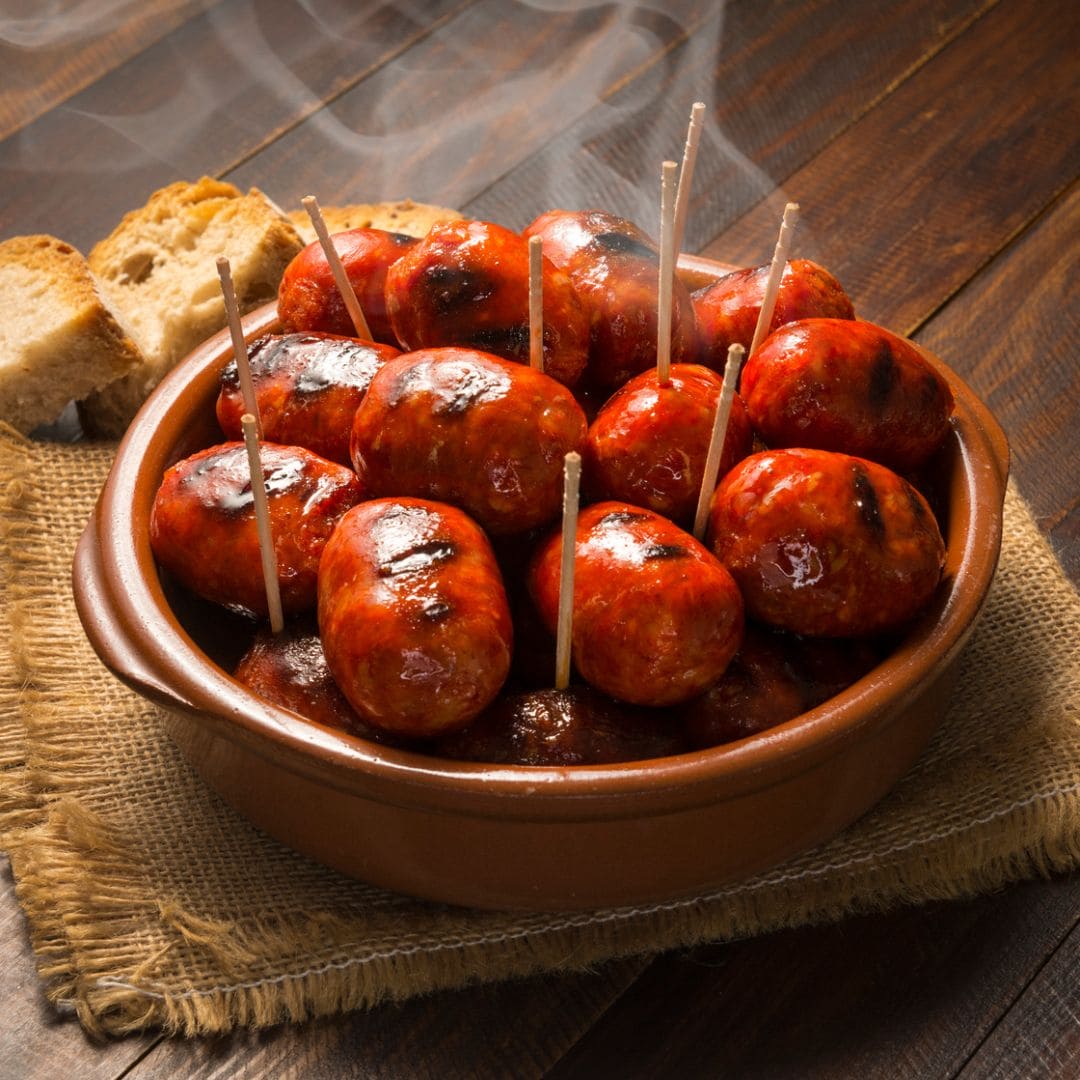
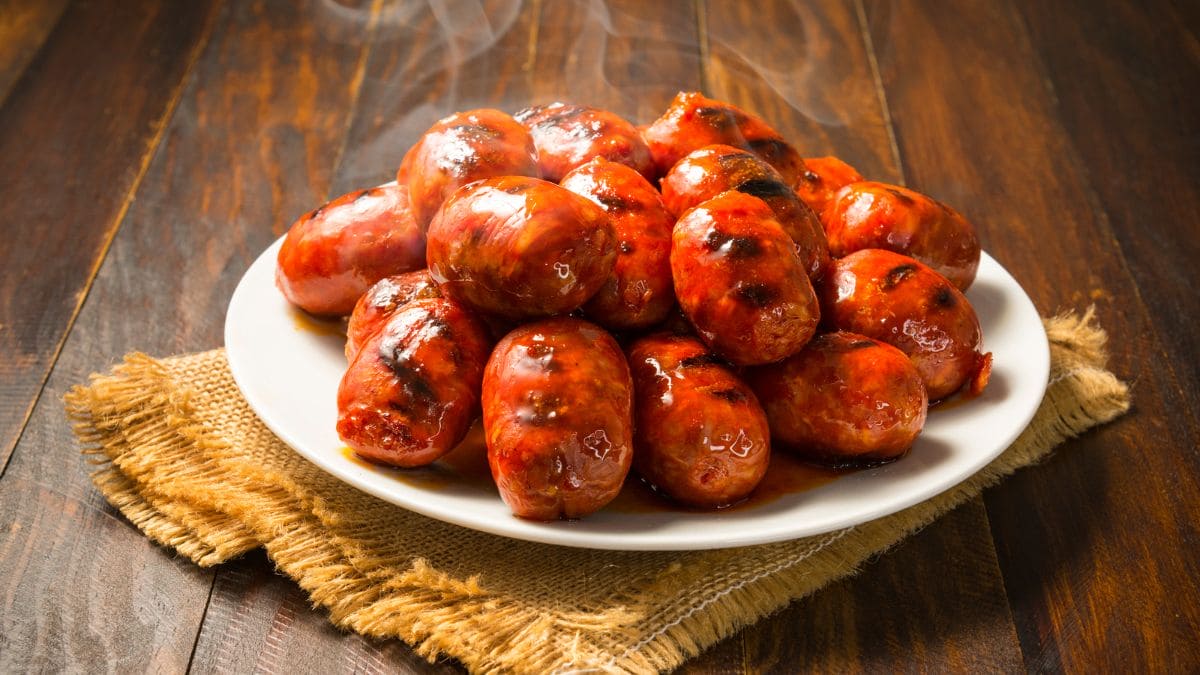
Small, fresh chorizo sausages are one of the most rewarding tapas you can put on the table. They don’t need marinating, breading or dredging in flour — they just need enough heat for the paprika-red fat to melt out and the skin to tighten up until it crackles when you bite into it.

Advertisement: The page displays ads and contains advertising links (affiliate links). See our advertisers here.
One thing is crucial from the start: we’re talking about fresh sausages for frying — not the dry-cured spegechorizo that’s sliced thin and eaten as is. The fresh version is raw inside and has plenty of fat to render, and that fat is half the dish.
Estimated reading time: 4 minutes
Table of Contents:
Why I love roasted chorizo sausages in the air fryer
Chorizo is essentially spiced pork in a casing, and the casing is the whole point. In a pan, the sausages sit in their own fat, and the side touching the metal turns darker than the rest. In the air fryer, the hot air circulates all the way around, the fat drips down into the basket, and with just one flip after 6 minutes the surface turns evenly dark and crisp on all sides.
The deep red colour comes from pimentón and sits in the fat. That’s why I pour both the sausages and the melted fat into a warm bowl and place it in the middle of the table, so everyone can dip their bread.
Fresh chorizo or spegechorizo — the difference that decides the result
Fresh chorizo (chorizo fresco) isn’t dried and needs to be heat-treated like any other raw sausage. Spegechorizo is cured and doesn’t have enough fat to render — in the air fryer it just turns hard and dry. Look for sausages that feel soft to the touch, and for the words “for frying” or “chorizo fresco” on the packaging.
My kitchen test of roasted chorizo sausages
I’ve roasted the sausages in my Cosori Dual Blaze at 190 °C, and 12 minutes is exactly the point where the skin has tightened and darkened without the meat inside drying out. I turn them once after 6 minutes; more isn’t necessary once the air is circulating all the way around. With the prep — patting dry, pricking, a thin layer of olive oil with smoked paprika, and preheating — I land on 22 minutes in total from fridge to table.
The meat thermometer went into the thickest sausage after the 12 minutes and read 75 °C, and that’s the limit I stick to for fresh pork sausage. Thick sausages get 2-3 minutes more at the same temperature, never more heat. The air fryer saves around a quarter of the time compared to my oven at the same temperature, and the surface turns drier because there’s no steam trapped around the sausages.
Prick each sausage 3-4 times, but never cut them open. The holes let the fat seep out into the basket, while the skin holds its shape and turns crisp.
Tips and tricks from the author: Morten Jensen
The typical mistakes and how to avoid them
The first mistake is the wrong chorizo: spegechorizo turns chewy and salty because it gave up its fat long ago — buy the fresh kind for frying, and save the cured kind for a cold tapas platter. The second mistake is an overcrowded basket, where the sausages steam each other soft instead of crisping up; a single layer with about a centimetre between them is the rule, and two batches beat one crammed one. The third mistake is turning up the temperature to save time, because above 190 °C the paprika burns on the skin and turns bitter long before the core has reached 75 °C.
How to serve roasted chorizo sausages
Chorizo needs something to soak up the fat. The Spanish tapas table keeps it simple:
- Thick slices of sourdough bread, ideally warmed for 2 minutes in the air fryer after the sausages
- Olives and marinated peppers to cut through the richness
- Thin slices of manchego with a halved sausage on top
- Flaky salt and roughly chopped parsley sprinkled over just before serving
- 2 tbsp dry sherry stirred into the hot fat — and you’ve got the classic chorizo al vino
Storage and reheating
Leftovers keep covered in the fridge for 3-4 days, and the sausages can be frozen for up to 3 months — thaw them in the fridge overnight before reheating. Warm them in the air fryer at 180 °C for 3-5 minutes, so the skin tightens up again; the microwave makes them soft and rubbery. If there’s fat left in the bowl, I save it in a small jar for frying potatoes in.
Roasted chorizo sausages look like nothing on paper, yet they’re the first thing to disappear from the table. Four servings, 22 minutes in total, and a bread that can soak up the fat — that’s all it takes.
FAQ
No. Use fresh chorizo sausages for frying (chorizo fresco). Spegechorizo is already cured and doesn’t have enough fat to render, so it turns hard and dry instead of crisp.
12 minutes at 190 °C with one flip after 6 minutes. Check with a meat thermometer that the core temperature is at least 75 °C, and give thick sausages 2-3 minutes more.
Yes, prick each sausage 3-4 times with the tip of a knife. This lets the paprika-red fat seep out into the basket, while the skin holds its shape and turns crisp. Never cut them open.

Recipe
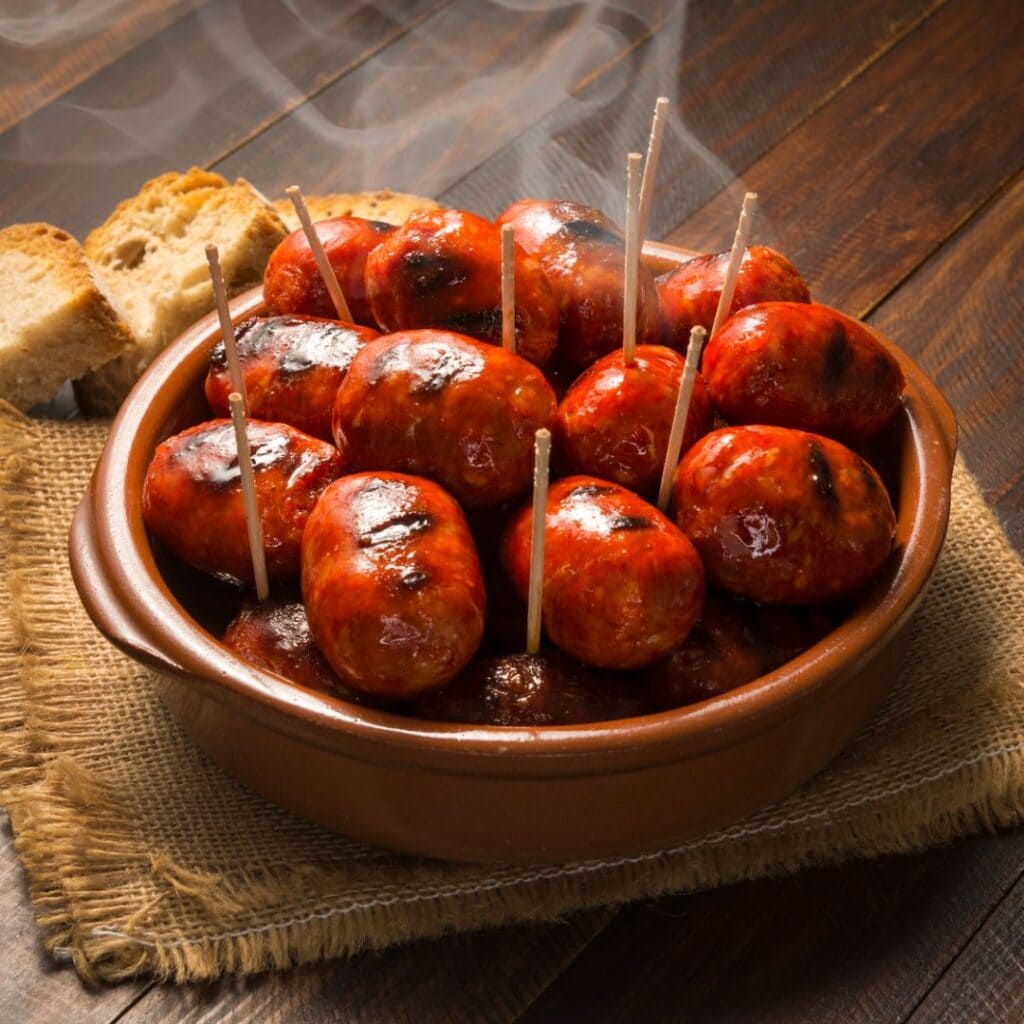
Roasted chorizo sausages in the Air Fryer
Cooking Guide
Keep the screen on and follow the recipe step by step while you cook.
Step 1:
Avoid the screen turning off while you cook.
Step 2:
Start the guide and follow the recipe one step at a time.
Cost of the dish
Prices may vary depending on where you shop.
Our estimate is based on average food prices for the current year 2026.
Estimated price for the whole dish:
Airfryer size
All our recipes are tested in a Philips Airfryer 2000 Series NA230/00 – 6.2 L
Does the recipe fit my Airfryer?
If you’re unsure, you can always reduce by one serving in the recipe, or click the 0.5x button.
You can also Ask the AI Chef
It’s easy! Just press the Ask the AI Chef button you see at the bottom.
Shopping list
Ingredients


How to make it
Preparation
- Pat 500 g fresh chorizo sausages dry with kitchen paper and prick each sausage 3-4 times with the tip of a knife. The holes let the paprika-red fat seep out into the basket while the skin holds its shape.
- Toss the sausages in a bowl with 1 tbsp olive oil and 1 tsp smoked paprika until coated in a thin, even layer. Lightly crush 2 clove garlic with the flat of the knife, but leave the skin on.
Cooking in the air fryer
- Preheat the air fryer to 190 °C fan.
- Place the sausages in the basket in a single layer with about 1 cm between them, and distribute the garlic cloves among them. Don’t overfill the basket — the sausages need to crisp up all the way round.
- Roast the sausages for 12 minutes at 190 °C, turning them after 6 minutes so they turn dark and crisp on both sides. The fat collects in the bottom of the basket and turns deep red as they cook.
- Check with a meat thermometer that the core temperature is at least 75 °C. If the sausages are thick, give them 2-3 minutes more at 190 °C.
Serving
Our notes for the recipe
Use fresh chorizo sausages for frying (chorizo fresco), not dry-cured chorizo — the cured sausage doesn’t have enough fat to render and turns hard and dry in the air fryer. Prick the sausages, but don’t cut them open: the holes let the fat escape while the skin holds its shape and turns crisp. Variation:
Pour 2 tbsp dry sherry or red wine over the finished sausages in the hot bowl and stir it into the fat — and you’ve got the tapas classic chorizo al vino. The sausages can also be halved lengthways after roasting and placed on the bread with a thin slice of manchego. Serving:
Serve with rustic bread, olives and marinated peppers. Set out toothpicks if the sausages are to be eaten with fingers, and place the bowl of fat in the middle of the table so everyone can dip. Portion size:
If your air fryer is smaller, you can make the dish in two batches. The sausages mustn’t overlap if they’re to turn crisp.
Your notes for the recipe
Nutrition per serving (Guideline)
Important about shelf life and nutrition
Nutrition per serving (guideline): Calculations are based on data from the United States Department of Agriculture (USDA). Shelf life (guideline): Shelf life data is provided, as far as possible, by public institutions, including national food authorities. Our information is therefore only indicative, and it is your responsibility to obtain and calculate accurate information about shelf life and nutrition for all recipes on airfryerkogebogen.dk
Easily share the recipe with others:
Via email or on Facebook
Open the recipe on your phone
Scan the QR code with your phone and get the recipe directly on your mobile while you cook.

Author
Airfryerkogebogen.dk