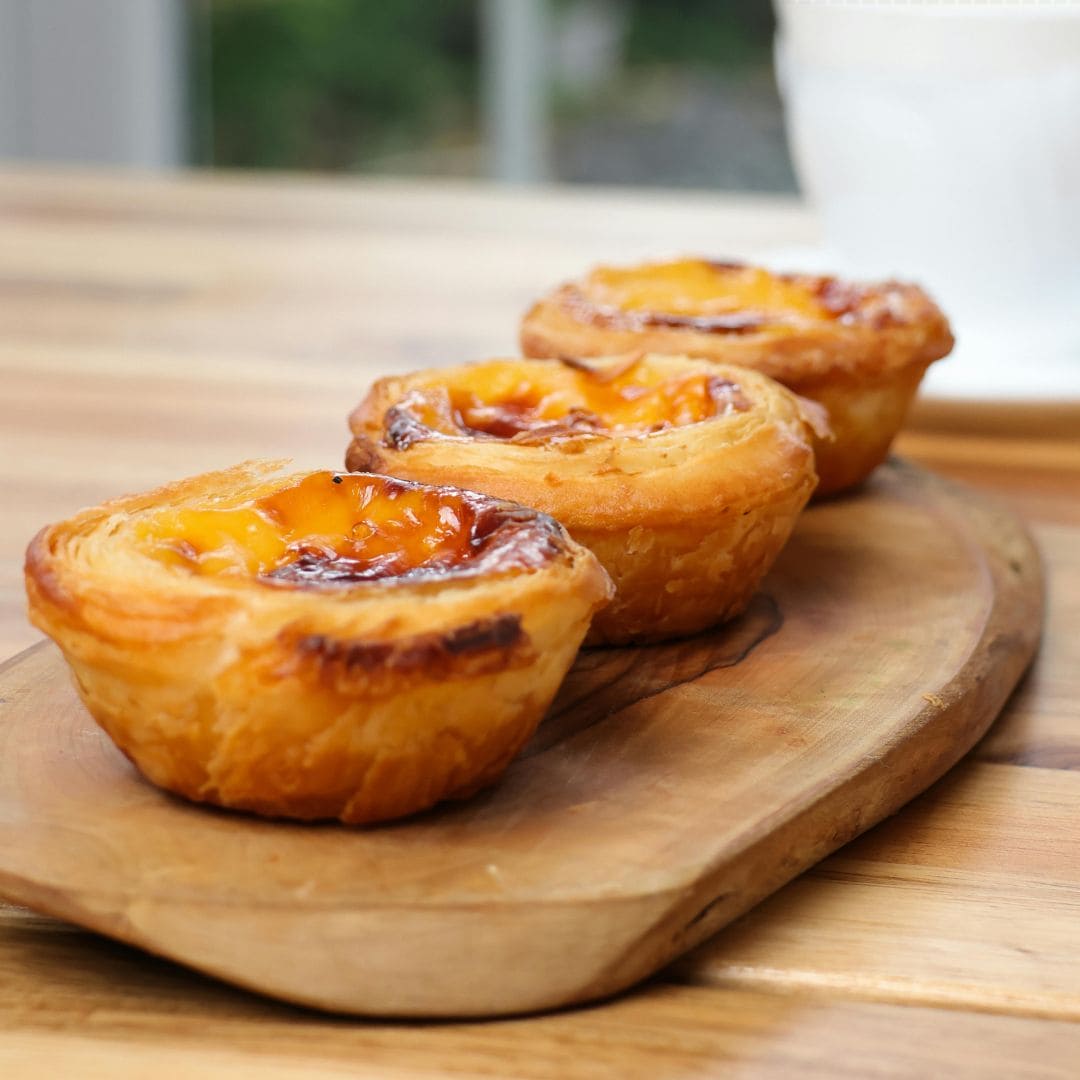
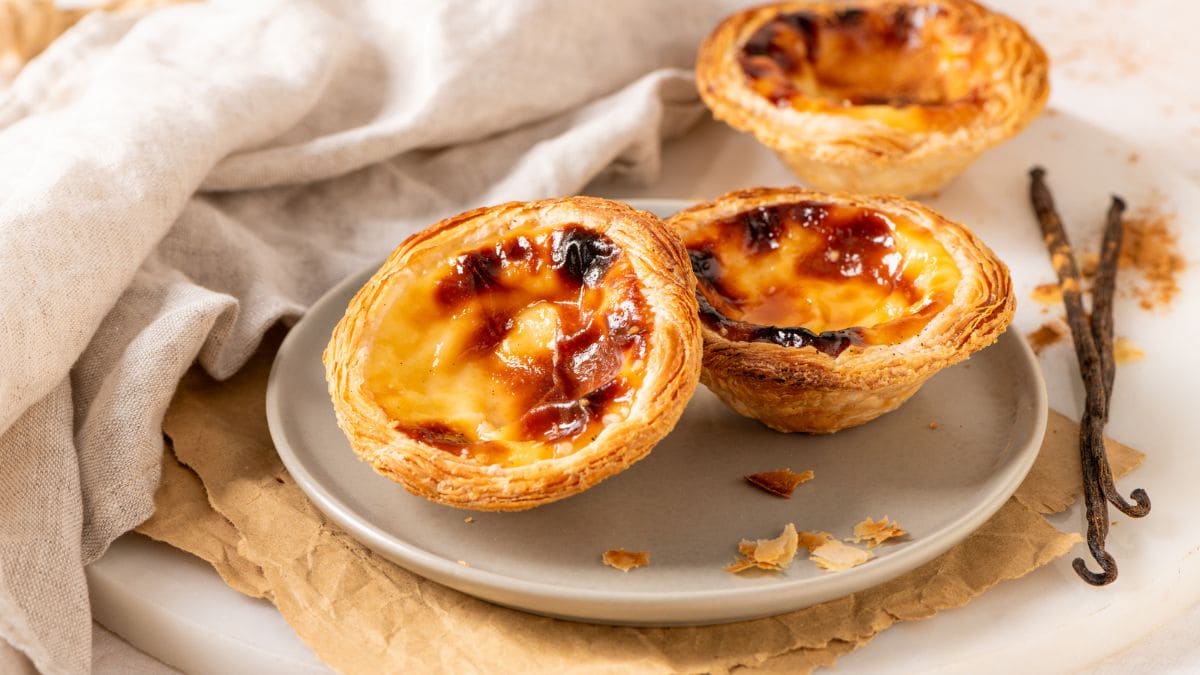
With this recipe for pastéis de nata in the air fryer, you can bring Lisbon’s most beloved pastry home to your own kitchen: small tarts of crisp, layered puff pastry with a soft egg custard that gets dark, caramelised spots on top. If you have ever queued at a Portuguese bakery with an espresso in your hand, you know how hard it is to stop at one.

Advertisement: The page displays ads and contains advertising links (affiliate links). See our advertisers here.
The secret is high heat, and the air fryer delivers it surprisingly well. The puff pastry is rolled up, cut into slices and pressed out thin in small tins that fit in the basket. The custard of egg yolks, whipping cream and sugar is flavoured with cinnamon, lemon peel and vanilla and thickens in a small saucepan.
Estimated reading time: 4 minutes
Table of Contents
Why I love Pastéis de Nata in the Air Fryer
I love them because they look like something from a proper bakery, yet they are easy to make. You don’t have to make the dough yourself – a sheet of ready-rolled puff pastry from the chilled section does the job – and the custard only needs a saucepan, a whisk and a little patience. And in the air fryer, the puff pastry rises and turns crisp while the top of the custard caramelises.
The difference between an air fryer and an oven
The dark spots need strong heat close to the surface. The bakeries in Lisbon use ovens that get far hotter than an ordinary home oven, and that heat is hard to imitate at home. In the air fryer, the heating element sits close above the tarts, and the intense, circulating air gives the custard the caramelised spots that a home oven rarely delivers.
Puff pastry – not shortcrust like in Danish linser
Many people think of linser, a type of Danish tart, when they see pastéis de nata, but the base is completely different. Linser are baked in shortcrust pastry, which gives a dense, cake-like shell. In the Portuguese tarts, the puff pastry is rolled up and cut into slices, so the thin layers form a spiral in the base of each tart – and it is those layers that crunch when you bite into one.
My kitchen test of Pastéis de Nata
I tested the recipe in my Cosori Dual Blaze, which has heating elements both above and below its single basket. That makes a noticeable difference here, because the base needs to be just as crisp as the top is spotted. At 200 °C each batch took 14 minutes, and with six tins at a time it came to two batches and 28 minutes of baking time for all 12 tarts. With 30 minutes of preparation and 15 minutes of cooling on top, it takes 73 minutes from start to serving.
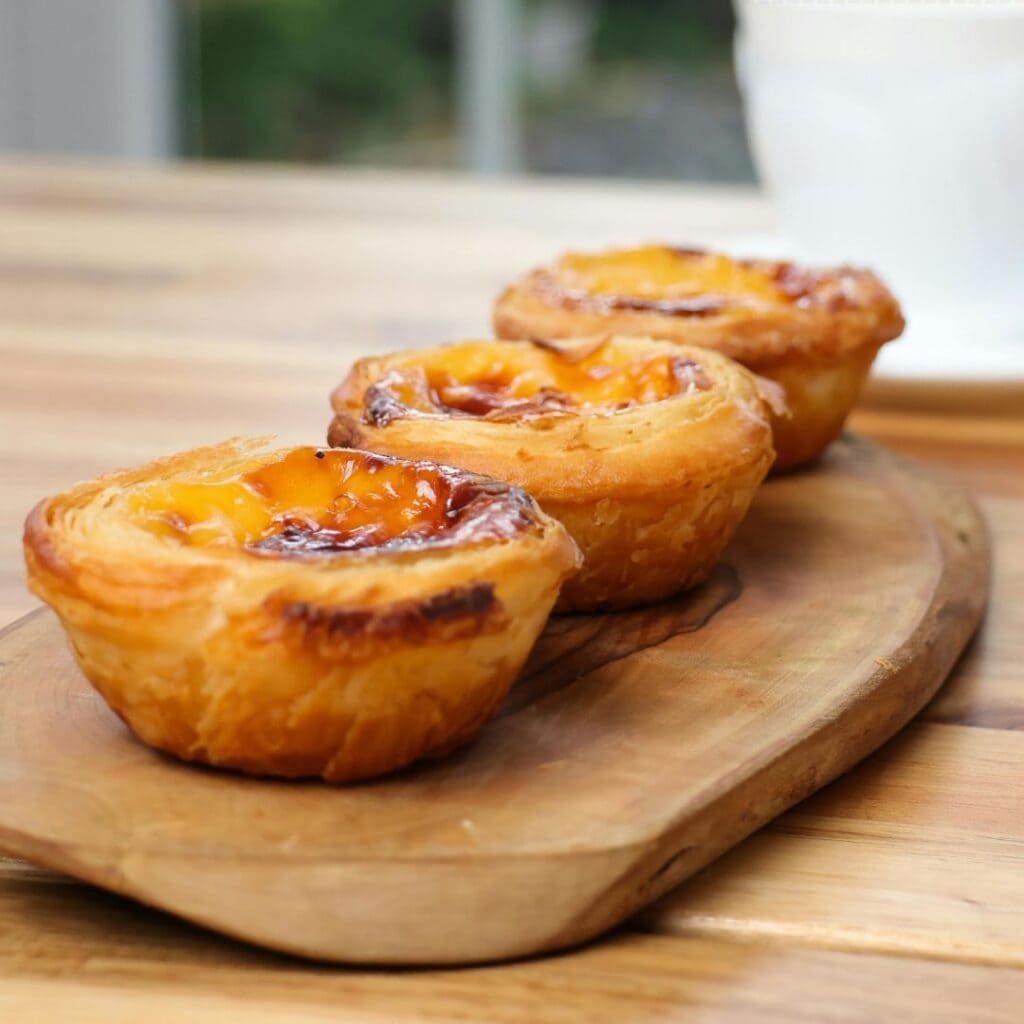
Don’t shake the basket, because the custard is liquid until it sets. If your air fryer bakes unevenly, turn the tins half a turn with tongs halfway through baking. In my kitchen, the pastry was golden brown and crisp right up to the custard, and the top had exactly the dark spots I was after.
Press the dough out very thin at the bottom, and let the edge reach slightly above the tin. It is the crisp, spiral-shaped base that sets a good pastel de nata apart from a soft tart.
Tips and tricks from the author: Morten Jensen
The typical mistakes and how to avoid them
The most common mistake is a base that is too thick, which turns soft under the wet custard instead of crisp. Press the dough out to about 2 mm with a wet thumb: start in the middle and push the dough up the sides. The next mistake is too little heat. At a lower temperature the dark spots don’t appear, and in silicone moulds the base rarely turns crisp, so choose small metal tins and stick to 200 °C in a preheated air fryer. The third mistake happens in the saucepan, where the custard can curdle or turn lumpy. Whisk constantly and take the pan off the heat as soon as the custard thickens like a light pudding and just begins to bubble. Then fill the tins only three-quarters full, because the custard rises slightly.
How to serve Pastéis de Nata
In Lisbon, the tarts are dusted with cinnamon and icing sugar just before serving, and they taste best warm or at room temperature. Here are my favourites:
- With an espresso or a galão – Portuguese coffee with milk
- For weekend breakfast, warm from the basket
- On the brunch table with yoghurt and fresh fruit
- As a dessert with a scoop of vanilla ice cream
Storage and reheating
Pastéis de nata are best on the same day, while the base still crunches. Leftovers keep for 1-2 days in the fridge, covered, and they can be frozen for up to 1 month – thaw them in the fridge overnight. Reheat them in the air fryer at 160 °C for 3-5 minutes so the puff pastry turns crisp again. The 5 egg whites left over can be kept in an airtight container in the fridge for up to 3 days and used for meringue or an omelette.
Portugal’s famous custard tarts look impressive, but they require neither homemade dough nor baking skills – just a sheet of puff pastry, a good custard and an air fryer that is allowed to work at high heat. Bake a batch at the weekend and see how quickly they disappear.
FAQ
You can, but then you won’t get authentic pastéis de nata. Shortcrust pastry gives a soft shell like in Danish linser, while puff pastry gives the crisp, spiral-shaped layers in the base.
The spots need high heat close to the heating element. Bake at 200 °C in a preheated air fryer. If your air fryer can go higher, use the highest temperature and keep a close eye on the tarts towards the end.
Use small metal muffin tins that fit in the basket – metal gives a crisper base than silicone. A standard basket has room for about six tins, so the 12 tarts are baked in two batches.

Recipe
Pastéis de Nata in the Air Fryer
Cooking Guide
Keep the screen on and follow the recipe step by step while you cook.
Step 1:
Avoid the screen turning off while you cook.
Step 2:
Start the guide and follow the recipe one step at a time.
Cost of the dish
Prices may vary depending on where you shop.
Our estimate is based on average food prices for the current year 2026.
Estimated price for the whole dish:
Airfryer size
All our recipes are tested in a Philips Airfryer 2000 Series NA230/00 – 6.2 L
Does the recipe fit my Airfryer?
If you’re unsure, you can always reduce by one serving in the recipe, or click the 0.5x button.
You can also Ask the AI Chef
It’s easy! Just press the Ask the AI Chef button you see at the bottom.
Recommended equipment
- 1 Air fryer
- 12 Muffin pans - Small metal tins that fit in the basket
- 1 Cutting board
- 1 Sharp knife
- 1 Vegetable peeler - For the lemon peel
- 1 Small pot
- 1 Bowl
- 1 Whisk
- 1 Sieve
- 1 Measuring cup - For pouring the custard into the tins
- 1 Tongs
- 1 Cooling rack
Shopping list
Ingredients
- 1 sheet ready-rolled puff pastry (About 275 g, cold from the fridge)
Egg custard
- 5 pcs egg yolks

- 250 ml whipping cream
- 100 g sugar
- 1 tbsp cornflour (E.g. Maizena)
- 1 tsp vanilla sugar
- 1 pcs cinnamon stick
- 1 pcs organic lemon (Peel only, pared into strips)


For serving
- 1 tsp ground cinnamon (For dusting)
- 1 tbsp icing sugar (For dusting)


How to make it
Preparation
- Shape a tight roll from 1 sheet ready-rolled puff pastry: unroll the sheet, then roll it up tightly from the short side, removing the baking paper as you go.
- Cut the roll into 12 slices, each about 2 cm thick, with a sharp knife.
- Place a slice in each muffin tin, with the spiral-shaped cut side facing up.
- Press the dough out with a wet thumb: start in the centre and push the dough up the sides until the base is about 2 mm thick and the edge reaches slightly above the tin. Put the tins in the fridge while you make the custard.
Egg custard
- Heat 250 ml whipping cream in a small saucepan with 1 pcs cinnamon stick and the peel from 1 pcs organic lemon until the cream steams. Take the pan off the heat and leave the cream to infuse for 5 minutes.
- Whisk 5 pcs egg yolks, 100 g sugar, 1 tbsp cornflour and 1 tsp vanilla sugar together in a bowl until the mixture is pale and smooth.
- Pour the warm cream through a sieve into the egg mixture in a thin stream, whisking constantly. The sieve catches the cinnamon stick and the lemon peel.
- Heat the custard again in the saucepan over a medium heat, whisking constantly for 3-4 minutes, until it thickens like a light pudding and just begins to bubble. Take the pan off the heat straight away.
- Leave the custard to cool for 5 minutes in a measuring jug, stirring it a couple of times so it does not form a skin.
Cooking in the air fryer
- Preheat the air fryer to 200 °C fan.
- Fill the cold, dough-lined tins about three-quarters full with the custard – it rises slightly during baking.
- Bake 6 tarts at a time in the basket at 200 °C for 14 minutes, until the pastry is golden brown and crisp and the custard has dark, caramelised spots. Do not shake the basket, but turn the tins half a turn with tongs after 7 minutes if your air fryer bakes unevenly. Bake the rest in the same way.
- Once you have lifted the tarts out of the basket with tongs, leave them to cool in the tins for 5 minutes. Then loosen them from the tins and leave them to cool on a wire rack for 10 minutes more.
Serving
- Dust with 1 tsp ground cinnamon and 1 tbsp icing sugar just before serving, and serve the tarts warm or at room temperature.
Our notes for the recipe
Use small metal tins – they conduct heat better than silicone and give a crisp base. Press the dough out very thin at the bottom, otherwise it will go soft under the custard. The dark spots on top come from the high heat close to the heating element, so bake at 200 °C and no lower. If your air fryer can go higher than 200 °C, use the highest temperature and check the tarts after 11 minutes. Puff pastry – not shortcrust:
Pastéis de Nata are made with puff pastry that is rolled up and cut into slices. This gives the crisp, spiral-shaped layers in the base. Shortcrust pastry, like the kind used for jam tarts, gives a soft, cake-like shell. Variation:
Swap the cinnamon stick for a split vanilla pod, or use the peel from an orange instead of lemon. Serving:
Serve the tarts warm with cinnamon and icing sugar, as they do in Lisbon – ideally with an espresso or a cup of coffee with milk. They go just as well with your morning coffee as with brunch. Portion size:
The recipe makes 12 tarts, which is 3 per portion. A standard air fryer basket holds about 6 tins at a time, so bake in two batches. If you have a large air fryer or two baskets, you can bake all 12 at once. Leftover egg whites:
Keep the 5 egg whites in an airtight container in the fridge for up to 3 days, and use them for meringue or an omelette.
Your notes for the recipe
Nutrition per serving (Guideline)
Important about shelf life and nutrition
Nutrition per serving (guideline): Calculations are based on data from the United States Department of Agriculture (USDA). Shelf life (guideline): Shelf life data is provided, as far as possible, by public institutions, including national food authorities. Our information is therefore only indicative, and it is your responsibility to obtain and calculate accurate information about shelf life and nutrition for all recipes on airfryerkogebogen.dk
Easily share the recipe with others:
Via email or on Facebook
Open the recipe on your phone
Scan the QR code with your phone and get the recipe directly on your mobile while you cook.

Author
Airfryerkogebogen.dk