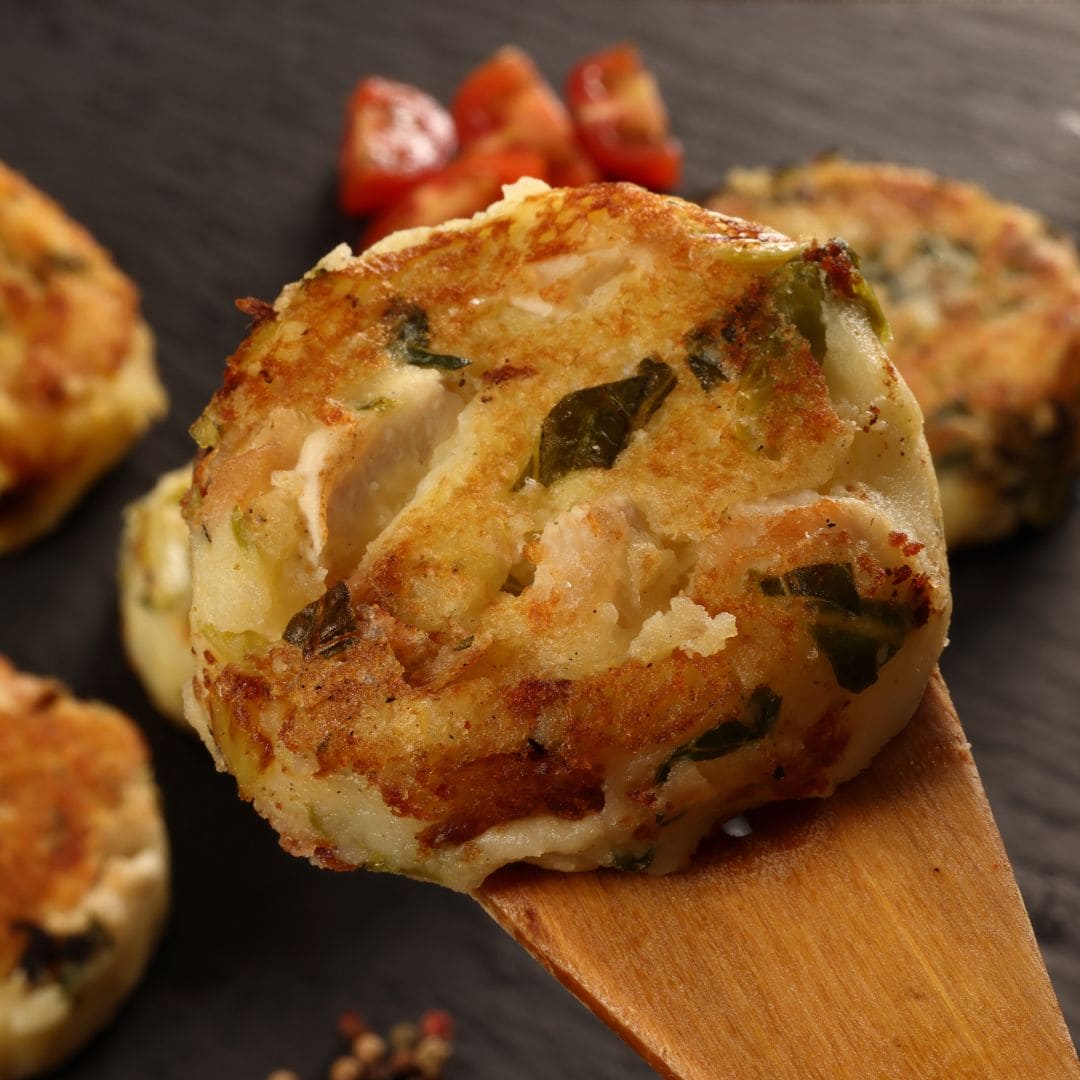
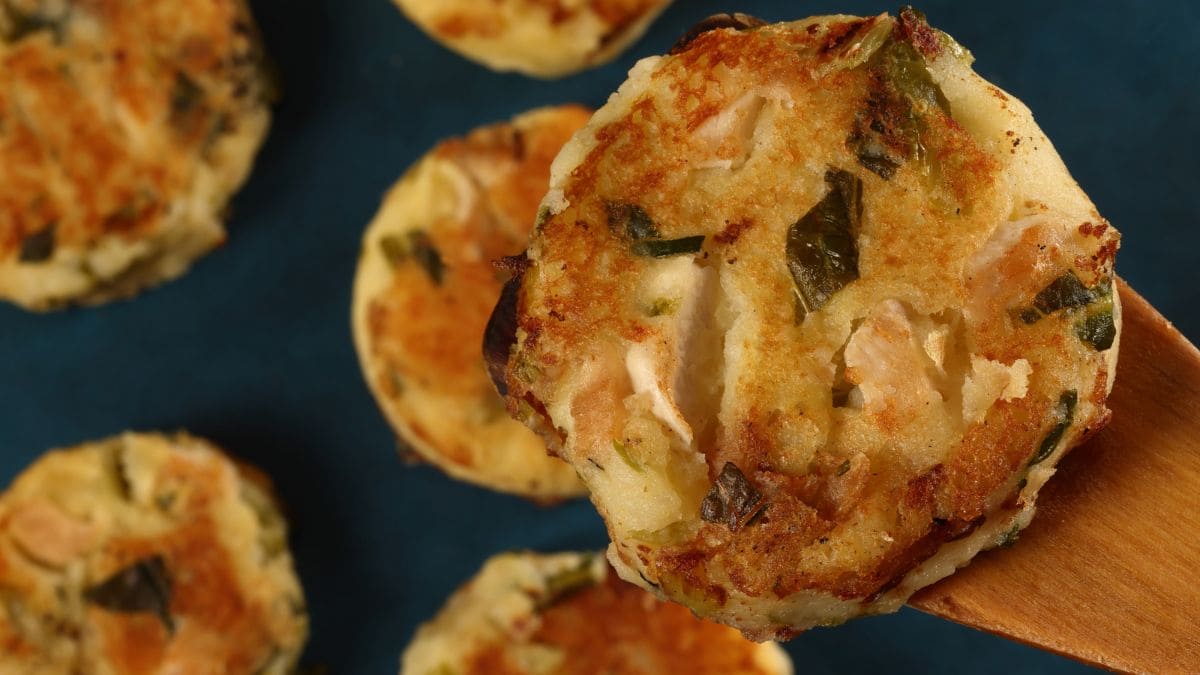
The day after the Sunday roast, there’s often a bowl of cold mashed potato and a bit of cooked cabbage in the fridge. That’s exactly what you need for bubble and squeak in the air fryer. The British classic was born of thrift: the leftovers are mixed with spring onions, shaped into flat cakes and cooked until they’re golden and crispy on the outside and soft on the inside.

Advertisement: The page displays ads and contains advertising links (affiliate links). See our advertisers here.
The name is said to come from the bubbling and squeaking sounds the mixture makes in a hot pan. It’s quieter in the air fryer, but the result is at least as good. The cakes only need a light brush of oil, and then the hot air does the rest while you fry the eggs. The whole dish is ready in 31 minutes and suits lunch just as well as a lazy weekend brunch.
Estimated reading time: 4 minutes
Table of Contents
Why I love Bubble and Squeak in the air fryer
I have a weakness for dishes that rescue leftovers from the bin, and bubble and squeak is one of the best. The cold mash gives the cakes a creamy centre, the cabbage adds sweetness and a little bite, and the spring onions lift everything with a mild, fresh sharpness. It’s honest, no-frills everyday food, and the basic recipe is both vegetarian and gluten-free.
The recipe is also incredibly flexible. Savoy cabbage, pointed cabbage and Brussels sprouts all work, and leftover kale, carrots or peas can replace part of the cabbage. A handful of grated cheddar adds extra richness.
What makes the air fryer better than the frying pan?
Traditionally, bubble and squeak is fried in a pan in a generous dollop of fat, and then you have to stand at the hob and make sure the cakes don’t break apart. In the air fryer, 2 tbsp rapeseed oil is enough for all eight cakes, because they’re simply brushed on both sides. The circulating hot air gives an even, golden crust, and you avoid standing over a pan of sizzling fat. Only place the baking paper in the basket when the cakes are ready to go in, so the paper doesn’t blow up against the heating element during preheating.
My kitchen test of Bubble and Squeak
I tested the recipe in my Cosori Dual Blaze, which has one basket with heating elements both above and below. At 200 °C for 16 minutes, the cakes got a crispy, golden-brown crust and a soft, warm centre. The heat from both sides gives an even colour, but I still turn the cakes carefully halfway through so that both sides get equally crispy. I got the best result with mash that had been in the fridge overnight. If I’m making a bigger batch, I get out my Philips XXL.
Leave the cakes alone until the underside is golden and firm. Then turn them with a wide spatula in one calm movement. That way they hold their shape, even though they’re fragile, until the crust has set.
Tips and tricks from the author: Morten Jensen
Common mistakes and how to avoid them
The most common mistake is using warm or freshly made mash. Warm mash is too soft, so the cakes spread out in the basket instead of holding their shape. Always use mash that is completely cold, preferably from the day before, and give the shaped cakes a short rest in the fridge if the mixture still feels soft. The next mistake is wet cabbage. Cooked cabbage holds a lot of water, which makes the cakes fall apart, so chop it finely and squeeze the moisture out in a clean tea towel before it goes into the mash. The third mistake is overfilling the basket. If the cakes sit close together, they steam instead of turning crispy, so place them in a single layer with a little space between them, and cook them in two batches rather than one.
How to serve Bubble and Squeak
The classic way to serve it is two cakes per person with a soft fried egg on top, but the dish is easy to build on:
- A butter-fried egg, so the yolk runs out over the crispy crust
- Brown sauce or ketchup on the side, as in a British café
- Crispy fried bacon or slices of cold Sunday roast
- Baked beans in tomato sauce for a proper British brunch
- A green salad with a tangy vinaigrette to freshen things up
Storage and reheating
If you have cakes left over, they can be stored covered in the fridge for 1-2 days. Reheat them in the air fryer at 180 °C for 4-6 minutes, until they’re crispy and heated through again. The microwave can be used in an emergency, but then the crust goes soft. The dish isn’t suitable for freezing, as both texture and colour deteriorate.
With bubble and squeak in the air fryer, Sunday’s leftovers become something to look forward to. Cold mash, well-squeezed cabbage and a hot air fryer give you crispy potato cakes with no fuss, and the fried egg on top makes it a proper meal.
FAQ
No. Bubble and squeak is made with cooked mashed potato, and it’s the cooked mash that gives the soft centre and the crispy crust. Raw grated potatoes make a rösti, which is a completely different dish.
Yes. Boil about 900 g floury potatoes, mash them with a little butter and milk, and let the mash cool completely in the fridge, preferably overnight. You can cook the cabbage at the same time and let it cool together with the mash.
Yes. Mix 100-150 g chopped leftover meat from the Sunday roast into the mixture, e.g. roast beef, ham or crispy fried bacon. The cakes become more filling, but the dish is then no longer vegetarian.

Recipe
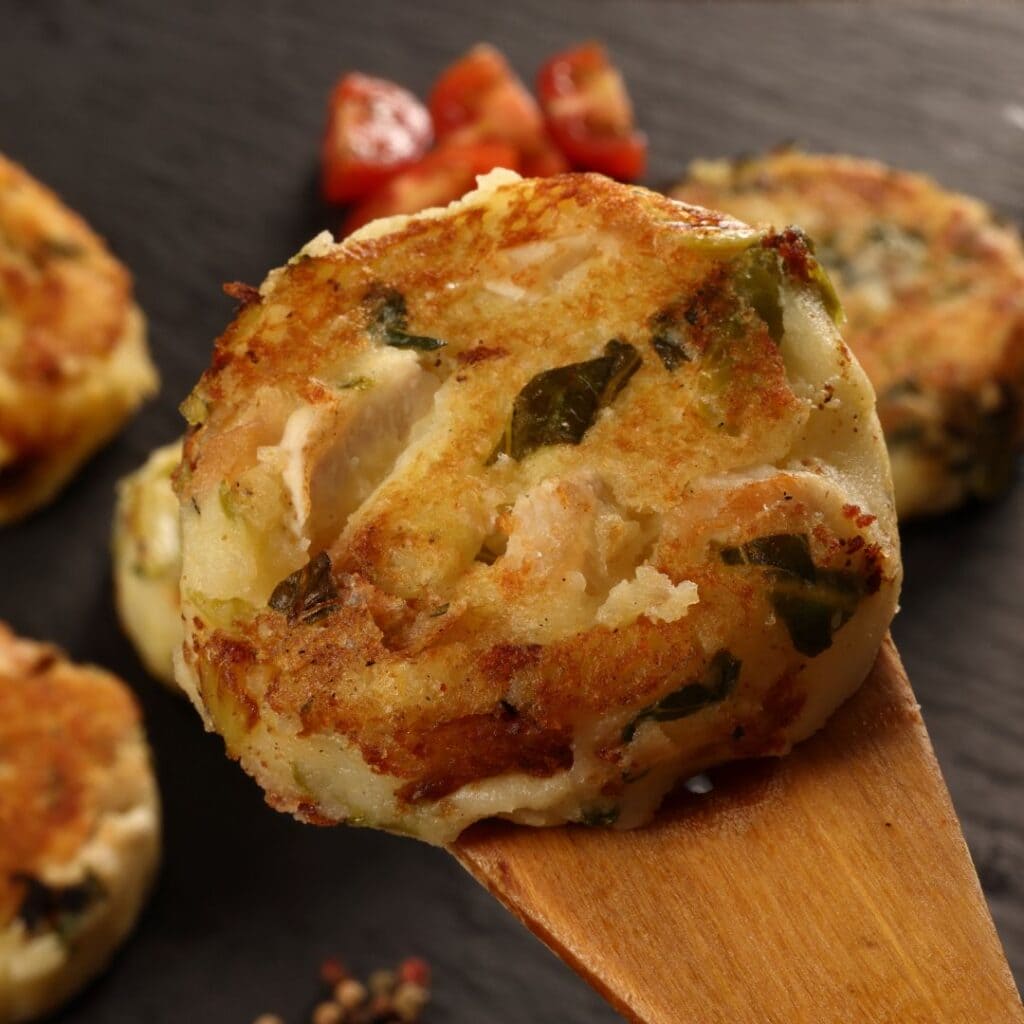
Bubble and Squeak in the Air Fryer
Cooking Guide
Keep the screen on and follow the recipe step by step while you cook.
Step 1:
Avoid the screen turning off while you cook.
Step 2:
Start the guide and follow the recipe one step at a time.
Cost of the dish
Prices may vary depending on where you shop.
Our estimate is based on average food prices for the current year 2026.
Estimated price for the whole dish:
Airfryer size
All our recipes are tested in a Philips Airfryer 2000 Series NA230/00 – 6.2 L
Does the recipe fit my Airfryer?
If you’re unsure, you can always reduce by one serving in the recipe, or click the 0.5x button.
You can also Ask the AI Chef
It’s easy! Just press the Ask the AI Chef button you see at the bottom.
Recommended equipment
- 1 Air fryer
- 1 Cutting board
- 1 Knife
- 1 Kitchen towel
- 1 Large bowl
- 1 Brush
- 1 Parchment paper (for air fryer)
- 1 Turner
- 1 Frying pan
Shopping list
Ingredients


To serve
- 4 pcs eggs (For fried eggs)

- 1 tbsp butter (For frying)


How to make it
Preparation
- Mix 700 g mashed potato, the cabbage and 3 pcs spring onions well in a large bowl. The mash must be completely cold – warm mash makes the mixture too soft, and then the cakes won’t hold their shape. Season with salt and pepper.
Cooking in the air fryer
- Preheat the air fryer to 200 °C fan.
- Cook the cakes at 200 °C for 8 minutes, until the underside is golden and firm.
Serving
- Meanwhile, heat 1 tbsp butter in a frying pan over medium heat. Crack 4 pcs eggs into the pan, and fry them for 3-4 minutes, until the whites have set and the yolks are still soft.
- Serve the cakes warm, two per person, with a fried egg on top.
Our notes for the recipe
The mash must be completely cold, ideally from the day before – otherwise the mixture becomes too soft and the cakes won’t hold their shape. Use cooked mashed potato and not raw, grated potatoes as for rösti. It’s the cooked mash that gives the cakes their soft centre and crispy crust. Brush both sides with oil, and turn the cakes carefully – they are fragile until the crust has set. Without leftovers:
Boil about 900 g floury potatoes, mash them with a little butter and milk, and let the mash cool completely in the fridge, ideally overnight. Variation:
Add 100-150 g chopped leftover meat from the Sunday roast, e.g. roast beef, ham or crispy fried bacon, to the mixture. Leftover Brussels sprouts, kale, carrots or peas can replace part of the cabbage, and a handful of grated cheddar adds extra flavour. Serving:
Serve with a soft fried egg on top and, if you like, brown sauce or ketchup on the side – a classic British lunch or brunch the day after the Sunday roast. Portion size:
If your air fryer is smaller, you can make the cakes in two batches.
Your notes for the recipe
Nutrition per serving (Guideline)
Important about shelf life and nutrition
Nutrition per serving (guideline): Calculations are based on data from the United States Department of Agriculture (USDA). Shelf life (guideline): Shelf life data is provided, as far as possible, by public institutions, including national food authorities. Our information is therefore only indicative, and it is your responsibility to obtain and calculate accurate information about shelf life and nutrition for all recipes on airfryerkogebogen.dk
Easily share the recipe with others:
Via email or on Facebook
Open the recipe on your phone
Scan the QR code with your phone and get the recipe directly on your mobile while you cook.

Author
Airfryerkogebogen.dk